After a brief break, OnePlus has started churning out new software updates for its devices. The brand has just launched new updates for the Nord 3 and Nord 4 smartphones in India, which are likely to arrive in other regions in the coming days. The new updates introduce some important fixes, along with upgrading the security of the devices.
OnePlus Nord 4
The Nord 4 (CPH2661_15.0.0.500) has several new features, including Touch to Share, which allows users to share photos and files with iOS devices. OnePlus has also improved its AI features, such as Audio Summary, Documents AI, Notes AI, and Call Summary, while making the visuals more consistent. The update adds personalized watermarks in the Photos app, fixes app lag in some cases and includes the January 2025 Android security patch. System stability has also been enhanced.
OnePlus Nord 3
For Nord 3 (CPH2491_15.0.0.403), the update focuses on improving system stability and fixing communication issues. It resolves problems with call forwarding and call waiting on 2G and 3G networks, updates fingerprint animation names in certain languages, and integrates the January 2025 Android security patch.
The update is rolling out gradually, starting with a small percentage of users before expanding to more devices in the coming days. Users can manually check for it by navigating to Settings > About Device > OxygenOS > Check for Update.
For more daily updates, please visit our News Section.
boAt has introduced the Nirvana X TWS earbuds in India, offering dual drivers, AI-powered call clarity, and gaming features. The earbuds are currently available at a discounted price for a limited time.
Features and Specifications
The boAt Nirvana X TWS includes 10mm Dynamic and Knowles HiFi Balanced Armature Dual Drivers, designed to enhance audio output. It supports multi-point connectivity, allowing users to pair with two devices at the same time.
For calls, the earbuds feature a quad-mic system with AI-ENx technology for improved voice clarity. Hi-Res Audio with LDAC mode is supported, and users can adjust settings through the boAt Hearables App.
Other features include boAt Spatial Audio, boAt Adaptive EQ (powered by Mimi), Beast Mode for 60ms low-latency gaming, in-ear detection, and Google Fast Pair. The earbuds have an IPX5 rating for dust and splash resistance.
Battery and Charging
The Nirvana X TWS offers up to 40 hours of playback time. A fast charge feature provides 120 minutes of playback with a 15-minute charge using ASAP Charge technology.
Price and Availability
The boAt Nirvana X TWS is listed on Amazon India for INR 2,799. It is also listed as “Coming Soon” on Flipkart. The earbuds are available in four colors: Galactic Red, Cosmic Onyx, Mist Blue, and Smoky Amethyst.
In other news, Realme has recently launched the Realme Buds Wireless 5 ANC in India alongside the Realme 14 Pro series. These neckband earphones feature a 13.6mm dynamic bass driver, 50dB hybrid ANC with adaptive noise reduction, and 360° spatial audio. They support Bluetooth 5.4, 45ms low latency, and dual-device connectivity.
For more daily updates, please visit our News Section.
The Snapdragon 7 Gen 3, announced in November 2023, is a popular mid-range chipset for smartphones. It’s already powering many phones from popular brands such as Vivo, OnePlus, and Honor. We might see some new phones this year using the Snapdragon 7 Gen 3.
The Snapdragon chip in question has four performance cores and four power-efficiency cores. It has a peak CPU frequency of 2.63GHz. The chip is manufactured by TSMC using its 4nm process node. We’ve benchmarked the Snapdragon 7 Gen 3 on multiple platforms, including AnTuTu and Geekbench, to see how performance-friendly the chip is.
[Note: The following benchmark tests have been conducted on the OnePlus Nord CE 4 5G, powered by Qualcomm Snapdragon 7 Gen 3.]
Snapdragon 7 Gen 3 AnTuTu score
AnTuTu is a widely used benchmarking platform that runs a device through a series of tests that measure different aspects of its performance, such as CPU, GPU, memory, and UX. The combined score represents the overall performance of a device.
On AnTuTu 10, the Snapdragon 7 Gen 3 scored 819,655 points. The CPU scored 269,334 points, the GPU scored 256,584 points, the memory scored 129,961 points, and the UX scored 163,776 points.
AnTuTu score
819,655
CPU
269,334
GPU
256,584
Memory
129,961
UX
163,776
The OnePlus Nord CE 4 5G, powered by Snapdragon 7 Gen 3, pulls a modest AnTuTu score. Let’s now look at its performance on Geekbench.
Snapdragon 7 Gen 3 Geekbench score
Geekbench evaluates a device’s CPU performance through a series of tests designed around practical scenarios. The tests include image processing, compression (text and image), speech recognition, and PDF rendering.
On Geekbench 6, the Snapdragon 7 Gen 3 scored 1,154 single-core points and 3,018 multi-core points.
Geekbench 6
Single core
1,154
Multi core
3,018
The single-core score represents the CPU strength of a device when executing tasks using a single core. In contrast, the multi-core score evaluates how well a CPU can handle tasks when multiple cores are at work.
Snapdragon 7 Gen 3 3DMark score
3DMark is a popular gaming benchmarking tool that evaluates sustained GPU performance under heavy workloads.
3DMark Wild Life Test
In the 3DMark Wild Life test, the Snapdragon 7 Gen 3-powered OnePlus Nord CE 4 5G gets an overall score of 5376 with an average frame rate (FPS) of 32.26.
3DMark Wild Life Test
Overall score
5,376
Average FPS
32.36
3DMark Wild Life Extreme Stress Test
In the 3DMark Wild Life Extreme Stress test, the OnePlus Nord 4 CE 5G gets the best loop score of 1,482 and the lowest loop score of 859. The stability is around 58%.
3DMark Wild Life Extreme Stress Test
Best loop score
1,482
Lowest loop score
859
Stability
58%
Snapdragon 7 Gen 3 spec sheet
Snapdragon 7 Gen 3
Announced
November 2023
Process node
4nm
Manufacturer
TSMC
CPU
1 x 2.63 GHz — Cortex-A715 3 x 2.4 GHz — Cortex-A715 4 x 1.8 GHz — Cortex-A510
GPU
Adreno 720 GPU Snapdragon Elite Gaming features
NPU
Qualcomm Hexagon NPU
Memory
LPDDR5, up to 3200MHz
Storage
UFS 2.2, UFS 3.1
USB
USB Type-C version 3.1 Gen 2
Camera
Spectra triple 12-bit ISPs Up to 200MP single camera Up to 64MP single camera with zero shutter lag Up to 32+21MP dual cameras with zero shutter lag Up to 21MP triple cameras with zero shutter lag Up to 4K video recording
Connectivity
Snapdragon X63 5G modem Downlink: 5Gbps Wi-Fi 6E (peak speed: 2.9Gbps) Bluetooth 5.4
Apple M2 MacBook is once again on sale in the US with the retail price down to $800. After a recent price cut, It’s a major discount as the M2 MacBook Air 256GB Model usually retails for $1000. There’s a $150 discount on the Mac, but it is not applicable to the midnight black model.
Apple MacBook M2 Air with 256GB storage and 8GB RAM is effective enough to handle most day-to-day tasks. Its battery efficiency and CPU prowess are capable of doing power-intensive tasks. It can withstand for a straight 18 hours with a single full charge. The powerful performance is further complemented with refined software.
However, the MacBook M2 Air base variant starts with 8GB RAM, while nowadays new MacBooks start with 16GB RAM.
Apple M2 MacBook Air is powered by Apple’s M2 chip, which offers an 8-core CPU and up to a 10-core GPU. The device comes with 8GB of unified memory (expandable up to 24GB) and 256GB or 512GB SSD storage options. It features a 13.6-inch Liquid Retina display that delivers stunning visuals with True Tone technology, a P3 wide color gamut, and up to 500 nits of brightness.
It is available in four color options Midnight, Starlight, Space Gray, and Silver.
Xiaomi is gearing up for the launch of the Xiaomi SU7 Ultra EV and the Xiaomi 15 Ultra soon. But just ahead of their announcement, the company has begun the pre-reservations of its upcoming photography focused flagship smartphone in its home market of China. So here are all the details.
Xiaomi 15 Ultra Pre-reservations go live in China
The Chinese tech giant’s Xiaomi 15 Ultra is the brand’s latest top premium smartphone, which is also the successor of the Xiaomi 14 Ultra. Earlier today (6th February 2025), the brand’s CEO and Founder Lei Jun announced that the Xiaomi 15 Ultra will be introduced later this month. Now, pre-reservations of this model are live ahead of the announcement, which is expected in late February.
Xiaomi 15 Ultra
To recall, the Xiaomi 14 Ultra was announced on February 22, so we can expect a similar launch timeline for the 15 Ultra. This ultra premium device will likely get a global launch as well, which may take place during the MWC 2025 event in March. Just recently, the Xiaomi 15 Ultra was leaked with a dual tone design that is inspired by Leica cameras. This is the same brand that is offering camera optimizations for Xiaomi’s flagship phones.
In a recent GeekBench AI sighting, the Xiaomi 15 Ultra can also be seen with the Snapdragon 8 Elite SoC. The high end camera specs were also spotted in another leak yesterday. The main sensor is a 1-inch 50MP Sony LYT900 camera with OIS support. This is paired with a 50MP Samsung JN5 ultra wide angle lens, a 50MP Sony IMX858 telephoto shooter with 3x optical zoom, and a 200MP HP9 periscope telephoto shooter with a 4.3x optical zoom.
For more daily updates, please visit our News Section.
Samsung is preparing to introduce new Galaxy F series smartphones in India, including the Galaxy F16 5G and Galaxy F06 5G. Both devices have been listed on the BIS certification website and Samsung’s support pages, indicating an upcoming launch.
A Flipkart microsite suggests that Samsung is set to launch a new F series smartphone in India. The teaser features the phrase, “Samsung’s got something fresh on the way,” with a large “F” in the center. However, it does not specify whether the launch will be for the Galaxy F16 5G or the Galaxy F06 5G.
Samsung Galaxy F16 5G Geekbench
So far, only the Galaxy F16 5G has appeared in leaked renders. The images indicate that Samsung may be changing its usual triple-camera vertical layout. The Galaxy F16 was spotted on the Geekbench database, showing that it will use the MediaTek Dimensity 6300 chipset.
Samsung Galaxy F16 render
The Galaxy F05 is also expected to feature the same processor, along with an LCD display and a 50MP primary camera. Samsung has not provided details on whether both models will launch at the same time, so more information may follow. In the meantime, we can check out their predecessor to get a better idea of what to expect.
Samsung Galaxy F05 & F15 features
The Samsung Galaxy F15 5G features a 6.5-inch sAMOLED display with FHD+ resolution and a 90Hz refresh rate. It has a triple rear camera setup with a 50MP main sensor, a 5MP ultrawide lens, and a 2MP macro unit. A side-mounted fingerprint scanner is integrated into the power button for security. The device runs on the Dimensity 6100 processor and is powered by a 6,000mAh battery with 25W fast charging support.
The Galaxy F05, on the other hand, comes with a 6.7-inch HD+ PLS LCD display. It has a dual rear camera setup with a 50MP main sensor (f/1.8 aperture) and a 2MP depth sensor, along with an 8MP front camera. Under the hood, the device has a MediaTek Helio G85 (12nm) chipset, paired with a 5,000mAh battery with 25W fast charging support.


For more daily updates, please visit our News Section.
Google‘s upcoming budget Pixel smartphone has once again been spotted in another leak. But rather than revealing some previously unknown specifications or features, the latest report has uncovered some perks that you might be getting by buying the Pixel 9a. So here are all the details.
Google Pixel 9a may ship with free subscriptions
According to an Android Headlines report, the search engine giant is planning on launching the new Pixel 9a with free subscriptions to some of its popular services. The most notable of the bunch is a free three months subscription to YouTube Premium. This is perfect for those who often use the video sharing platform. Furthermore, you’re also possibly getting a three month subscription to Google One, which offers you 100GB of online storage.
The report adds that the Google One subscription does not include the AI Premium plan that includes Gemini Advanced features. That’s not all, early buyers of the Google Pixel 9a could also get access to Fitbit Premium subscription for around six months as well. If this report is true, then the Google Pixel 9a will launch with the same free offerings as the rest of the flagship Pixel 9 lineup.
Just around a week ago, the Pixel 9a was spotted getting certified on the EMVCo database. Before that, the pre-orders and release dates were leaked as well. The relatively affordable Pixel phone is expected to debut during the Google I/O event that is held around May of each year. However, rumors have hinted at the event being hosted on 19th March 2025. This is still just an unconfirmed report at the moment, so take this news with a pinch of salt for now.
For more daily updates, please visit our News Section.
The mobile phone market has dramatically transformed. The once clear distinction between flagship devices with cutting-edge technology and budget phones with basic functionality has blurred. Flagship prices continue to climb, while budget phones have made impressive strides in performance and features. Why are flagships so expensive, and how have budget options become so good?
Several factors contribute to rising flagship costs. The relentless pursuit of innovation is key. Manufacturers constantly push boundaries, incorporating technologies like foldable screens, under-display cameras, and faster processors. These advancements require substantial R&D investment, driving up prices. Premium components, such as high-resolution displays, advanced camera systems, and faster memory, also add to the expense. Flagships use the latest, driving up material costs.
Marketing and branding also play a significant role. Flagships are positioned as premium, aspirational products. Companies invest heavily in marketing to create exclusivity and desirability, influencing perceived value and justifying higher prices. The prestige of owning the latest model allows manufacturers to command a premium.
Software complexity adds to the cost. Flagships often include advanced features like AI-powered camera enhancements, sophisticated UIs, and enhanced security. Developing and maintaining this complex software requires substantial investment, factored into the phone’s price.
Finally, global economic factors, like currency fluctuations and supply chain disruptions, can influence flagship prices. These factors are often outside manufacturers’ control but impact the final cost.
2. Midrange phones offer better value
Poco X7 Pro
While flagships, such as the iPhone 16 series, Samsung Galaxy S-series, Oppo Find X-series, Vivo X-series have become more expensive over the years, midrange phones priced under Rs 15,000 to Rs 30,000, such as the Poco X7 series, Nothing Phone 2a series, iQOO Z9s series, Samsung Galaxy F55, and so on, have improved dramatically. Even a sub-Rs 9,000 priced Poco C75 sports a flagship-like rear design.
Decreasing component costs are a major factor. As technologies mature, manufacturing costs for components like processors, memory, and displays decrease, allowing manufacturers to incorporate better components into budget phones without significant cost increases.
Poco C75 5G
Intense competition also plays a crucial role. The budget phone market is highly competitive, forcing manufacturers to offer better features and performance at lower prices. Consumers benefit from this competition, gaining access to capable devices at affordable prices.
3. Better SoCs, software, and flagship-like features on mid-range phones
Redmi Note 14 Pro+
System-on-a-chip (SoC) technology has further improved mid-range phones. SoCs integrate multiple components, like the processor, GPU, and memory controller, onto a single chip. This reduces manufacturing costs and complexity, allowing manufacturers to offer powerful, efficient devices at lower prices. SoCs designed for mid-range and budget devices have become increasingly powerful, narrowing the performance gap with flagships.
Open-source software like Android is another factor. Android provides a free and customizable OS, reducing software development costs for budget phone manufacturers. The mature Android ecosystem also means budget phone users have access to a vast library of apps and services.
To attract the attention of the masses, brands have adopted the strategy of offering flagship-like features at an affordable price. For instance, telephoto or periscope cameras, which were once limited to premium phones, are now available in budget-friendly models. A good example is last year’s Realme 13 Pro+, which is currently selling for Rs 26,999. Apart from this, there are a couple of other options, such as the Redmi Note 14 Pro+, Realme 14 Pro+, and Motorola Edge 50 Pro between Rs 25,000 to Rs 40,000 price range.
4. Diminishing returns
Vivo X200 Pro
The diminishing returns of flagship features also play a role. While flagships boast cutting-edge features, their practical benefits aren’t always significant for the average user. For example, the difference between a 120Hz and 90Hz display may not be noticeable to most. Similarly, marginal camera improvements beyond a certain point may not justify the added cost. Budget phones, with slightly older but still capable technology, can offer a similar user experience at a much lower price.
5. Final thoughts
Realme 13 Pro+ 5G
In conclusion, rising flagship prices result from innovation, premium components, marketing, software complexity, and global economics. Simultaneously, budget phones have improved due to decreasing component costs, competition, SoC technology, open-source software, and the diminishing returns of some flagship features.
Consumers now have a wide range of capable, affordable smartphones, making the decision between flagship and budget more nuanced. The shifting dynamics have created a landscape where budget phones offer exceptional value, while flagships cater to a niche willing to pay a premium for the latest technology.
For more daily updates, please visit our News Section.
Hot on the heels of the ROG Phone 9 FEannouncement, Asus today unveiled the Zenfone 12 Ultra —essentially a stripped-down version of the ROG Phone 9 Pro, minus the gaming-focused extras. Instead, it leans into a more conventional smartphone experience while borrowing design cues from last year’s Zenfone lineup.
While the Zenfone 12 Ultra brings the usual generational upgrades, Asus is betting big on AI this time around.
Asus Zenfone 12 Ultra Specs
At the heart of this AI push is Qualcomm’s Snapdragon 8 Gen Elite chipset. Asus claims the SoC delivers a 45% boost in CPU speed, a 40% faster GPU, and a 40% jump in NPU performance compared to the previous generation. Power users can configure the device with up to 16GB of LPDDR5X RAM and 512GB of UFS 4.0 storage.
And all that hardware isn’t just for show—Asus is baking AI directly into the Zenfone 12 Ultra. The phone comes preloaded with Meta’s Llama 3 8B model to run a variety of AI tasks on the device.
For instance, the new AI Call Translator 2.0 reportedly offers real-time voice translation across both the native Phone app and third-party VoIP messaging platforms. The Recorder app also gets AI-powered features, including multi-speaker identification, summarization, and translation of audio recordings.
On the camera front, Asus swapped out the IMX890 sensor for a Sony Lytia-700, which pairs with a fourth-generation 6-axis hybrid gimbal stabilizer that promises a 66% improvement in movement correction.
It’s paired with a 32MP telephoto lens that offers up to 3x optical and 10-30x HyperClarity zoom, while the 120° ultra-wide lens covers broader shots. On the front, you get a 32MP selfie camera with a 90° lens.
The phone’s AI camera features include AI Tracking, AI Portrait Video 2.0, and AI Voice Clarity for videos. For photos, there’s AI Magic Fill (which removes unwanted elements), AI Unblur, AI Panning Shot (for dynamic motion blur), and AI HyperClarity (to sharpen images at 10x zoom).
The Zenfone 12 Ultra retains a 6.78-inch Samsung E6 OLED display with LTPO technology, supporting refresh rates from 1 to 120Hz and a 144Hz mode for games. It peaks at an impressive 2,500 nits of brightness and is protected by Gorilla Glass Victus 2.
Battery life gets a boost with a 5,500mAh dual-cell setup that supports 65W wired charging and 15W wireless charging. Asus claims a full charge in 39 minutes and up to 26 hours of usage on a single charge.
In an era where the 3.5mm headphone jack is becoming a relic, Asus is keeping it alive, that too with Dirac Virtuo for Headphones technology for enhanced audio quality.
The Zenfone 12 Ultra is sustainable as well. It uses 100% recycled aluminum for the frame and 22% recycled glass for the display. The phone is IP68-rated for dust and water resistance and comes in Sage Green, Ebony Black, and Sakura White color options.
Pricing and Availability
The Zenfone 12 Ultra is now available in Europe, Taiwan, and Hong Kong. Priced at €1,100, Asus currently has an early bird discount where buyers can snag the device for €1,000 till February 28.
Samsung has long been praised for offering one of the best software update policies in the Android world. But like all good things, software support eventually comes to an end, no matter how cheap or expensive your device is. The company will soon start rolling out the Android 15 update, which would be the last major release for many Galaxy devices.
One UI 7, based on Android 15, promises to be one of the biggest upgrades in recent years, packed with a host of new features and enhancements. While it sounds too exciting, the rollout has remained equally disappointing so far. Samsung delayed the One UI 7 release, and it hasn’t even started rolling it out. Even flagships like Galaxy S24 series, Galaxy Z Fold 6/Flip 6, and Tab S9 series are yet to taste Android 15.
If you’re holding onto an older Samsung Galaxy, your device might soon find itself on the receiving end of its final Android update. We’ve prepared a list of devices below that will stop getting major updates after Android 15. Check it out below to find out if you’ll need to upgrade your device soon.
Samsung devices that will receive Android 15 as their final OS upgrade
Galaxy S21
Galaxy S21+
Galaxy S21 Ultra
Galaxy Z Fold 3
Galaxy Z Flip 3
Galaxy A14
Galaxy A14 5G
Galaxy M33
Galaxy M14
Galaxy M14 5G
Galaxy F14
Galaxy Tab S6 Lite (2022)
Galaxy Tab Active 4 Pro
We’ve prepared this list by analyzing the software update policy of every Galaxy phone and tablet. This is unlikely to change unless Samsung decides to surprise these device owners with extra OS updates. Anyway, we’ll be tracking changes in update policies from Samsung and modify the list if required.
If Samsung sticks to its originally promised update policy and decides not to offer extra upgrades, the above Galaxy phones, and tablets won’t get OS updates after Android 15. However, they will continue to receive security patches for at least a year.
When your device reaches the end of software support, it’s recommended that you upgrade to a newer model with longer software support to keep enjoying new features, while having the latest security patch for better protection against vulnerabilities.
Samsung has offered extended OS updates to many Galaxy devices in the past. If you get lucky, you can enjoy an additional major release without having to upgrade to a newer model. So, I recommend waiting until the Android 16 rollout is complete before you prepare for a smartphone upgrade.
While you wait for the update to reach your Galaxy, let’s look at the big changes in One UI 7.
What’s new in One UI 7?
One UI 7 offers a host of big upgrades and features that make using your phone smoother and more intuitive. The animations are now smooth, making switching between apps and multitasking a breeze.
The camera app has been cleaned up, offering a simpler, more streamlined experience. Switching between camera modes and zoom levels is now easier, even with just one hand.
Finally, Samsung has added a vertical app drawer — something we’ve been waiting for a long time. While you can still switch to the horizontal layout if you prefer, most users will probably stick with the vertical one.
One of the biggest visual upgrades in One UI 7 is the Now Bar. It’s Samsung’s version of Apple’s Dynamic Island, showing useful info right on the lock screen. It works with music, recording, stopwatch, reminders, and more.
With this update, Samsung also introduces a split notification center and Quick Settings panel, which is already a thing in many Chinese smartphones. Now, you can swipe from the right to access Quick Settings and from the left for the notification center.
Other changes include a redesigned battery indicator, new icons for native apps, and more adaptive charging options, like limiting charging to 80%. Samsung has also added fresh widgets and enhanced Galaxy AI features.
The launch timeline for the Oppo Find N5 might have just been revealed. In a social media post, an executive of the company has confirmed that the upcoming flagship foldable phone will be launching later this month. So here’s what we know so far.
Oppo Find N5: When is being announced?
The latest information arrives from Zhou Yibao, head of the OPPO Find series, stated in a Weibo post that the Find N5 will be arriving in two weeks. Going by this, we can safely estimate that the Chinese tech giant plans on hosting a launch event for the premium foldable phone around the 19th or 18th of February 2025. This imminent launch makes sense considering how the pre-orders for the Oppo Find N5 and Watch X2 went live in China earlier today (6th February 2025).
Oppo Find N5 live shot
Unfortunately, this was all the information that was shared by the company official. So we still don’t have an exact launch date, availability details, pricing, or news regarding its global release. But there are plenty of recent leaks and rumors that have confirmed a bunch of these key details. The Oppo Find N5 recently showed off its slim 4.8mm design in leaked images that compared it to its predecessor. When folded, the Find N5 measures around 9.2mm in thickness.
Realme has confirmed the launch of the Realme P3 Pro in India on February 18, making it the first phone in its segment to feature the Snapdragon 7s Gen 3 chipset.
Realme P3 Pro confirmed features
The brand has confirmed a bunch of details about the upcoming Realme P3 Pro. As mentioned above, the device will be powered by the Snapdragon 7s Gen 3 processor, built on TSMC’s 4nm process, which offers improved CPU and GPU performance over its predecessor. The Realme 14 Pro+ uses the same Snapdragon 7s Gen 3 processor, and the Nothing Phone (3a) is expected to come with this chip as well.
The P3 Pro will offer the GT Boost technology, co-developed with KRAFTON, which aims to enhance BGMI gameplay. Features such as AI Ultra-Steady Frames, Hyper Response Engine, AI Ultra Touch Control, and AI Motion Control are designed to improve responsiveness and touch accuracy.
The Realme P3 Pro will also include a Quad-Curved EdgeFlow Display, designed for better touch response and an immersive viewing experience. The device will feature a 6,000mAh battery with 80W fast charging. To manage heat, Realme has included a 6,050mm² Aerospace VC Cooling System, which is one of the largest in this category.
Other key details of the device are expected to be revealed in the coming days. Its predecessor, the Realme P2 Pro, launched in India with a starting price of Rs 21,999. We can expect the P3 Pro to also launch around the same price range.
For more daily updates, please visit our News Section.
There is no doubt about Rockstar’s next Grand Theft Auto game being the most hyped video game launch of all time. From various leaks, rumors, memes, and much more, GTA 6 already has a massive following even before its launch. So here’s everything we know about this upcoming blockbuster game.
One of the most exciting aspects of GTA 6 is its return to Vice City, Rockstar’s fictional version of Miami. This region now falls within the fictional state of Leonida. The game will parody contemporary culture and also feature numerous references to internet memes and influencer culture as well. So players can expect a modern setting with Rockstar’s satirical filter on American society.
2. Characters: A First for the GTA Series
For the first time in the mainline GTA series, GTA 6 will feature a playable female protagonist. Named Lucia, she is rumored to be one half of a Bonnie-and-Clyde-style criminal duo. While Lucia’s partner hasn’t been officially revealed, leaks suggest players will switch between both characters, similar to GTA 5’s character-switching mechanic.
3. Gameplay and Graphics
GTA 5 already offered an immersive experience with an expansive series of features and activities. So the next gen GTA 6 could take this a step further. We can also expect refinement to the third person shooter formula and upgrades to AI and NPC characters.
With GTA 6 shaping up to be Rockstar’s most ambitious game yet, one aspect that people are looking forward to is the improvement in graphical fidelity. The last Grand Theft Auto game was released over a decade ago, which means the upcoming title will bring next-gen graphics and employ new technology like Ray Tracing.
A leaked release date from Spanish retailer XUruguay listed GTA 6 as launching on 17th September 2025. If this is true, then the game will be arriving exactly 12 years after GTA 5’s announcement. However, newer rumors have questioned the validity of these claims so take this with a pinch of salt for now and stay tuned for more.
For more daily updates, please visit our News Section.
Realme launched its budget C75 smartphone in Vietnam last November. While the phone has yet to make its way to India, it looks like the company is gearing up to introduce a slightly tweaked version, the C75x, in Malaysia.
The device recently appeared in Malaysia’s SIRIM regulatory database with model number RMX5020, confirming that it has received approval for launch. But the bigger reveal comes from a promotional poster that has surfaced online. It shows the phone’s design along with some key specs, so let’s go through it.
Realme C75x specs and features
The leaked poster shows a design that closely resembles the C75, featuring a flat front and back. It also inherits durability features such as an IP69 rating, making it resistant to dust, water, and even drops, along with military-grade certification.
It will pack a 5,600mAh battery, slightly smaller than the standard model but still plenty large. The display, however, gets an upgrade—a 120Hz refresh rate, which should make scrolling and animations feel smoother.
The poster does not reveal which SoC will power the C75x just yet, but the device is expected to ship with 8GB of RAM and 128GB of storage. You will also be able to expand the RAM virtually up to 24GB.
Camera details are still unclear, but for reference, the C75 features a 50MP rear camera and an 8MP front shooter. Moreover, the phone will be available in Coral Pink and Oceanic Blue shade.
There’s no word yet on pricing or availability, but with certification secured and marketing materials already circulating, a launch in Malaysia could be just around the corner. We will keep you posted as more details emerge.
For more daily updates, please visit our News Section.
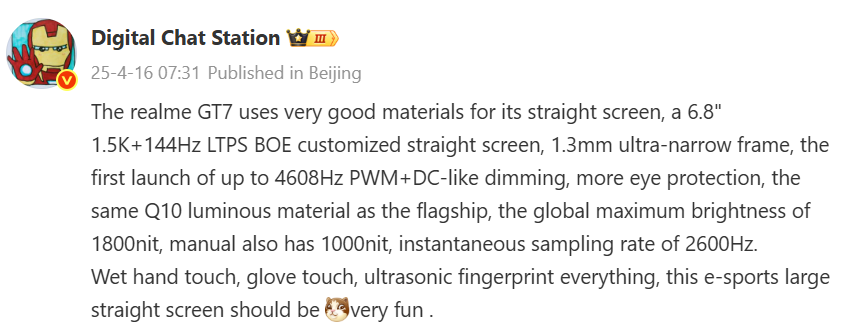
OnePlus is gearing up to launch a compact model in its 13 series, with the OnePlus 13 Mini reportedly arriving in March. Although the phone’s exact details have been subject to leaks, we now have a clearer picture of its specifications, including potential camera features and design aspects, thanks to a leak from trusted tipster Digital Chat Station. Previously, he claimed that the phone would have a triple-camera setup, but the latest leak reveals a dual-camera setup along with a redesigned camera module.
OnePlus 13 Mini camera specs leaked
The OnePlus 13 Mini is expected to feature a bar-shaped dual-camera setup. This design choice, though different from earlier leaks mentioning a triple-camera system, now appears to align with news of OnePlus adopting a new design for its smartphones this year. The rear cameras will include a 50-megapixel primary sensor coupled with a 50-megapixel telephoto lens offering 2x optical zoom.
The OnePlus 13 Mini will be powered by the Snapdragon 8 Elite chipset. The display will be a 6.31-inch LTPO OLED panel, supporting a 1.5K resolution and a 120Hz refresh rate. The device will have a sleek design with a metal middle frame and a glass back.
As for battery features, while the size remains unclear, wireless charging is expected to be part of the package. The device is expected to feature an optical-type in-screen fingerprint sensor. There is a possibility that the device may be called the OnePlus 13T when it hits the market.
OnePlus 13 Mini launch timeframe (rumored)
While there is no official confirmation yet on the OnePlus 13 Mini’s release date, rumors suggest it could launch in the second quarter of 2025. However, it remains unclear whether the phone will be available globally at the time of release.
For more daily updates, please visit our News Section.
Xiaomi entered the flip phone market last year by announcing the Xiaomi Mix Flip. Reports have revealed that the brand is working on its successor. A new leak by Digital Chat Station has shed light on its key specifications and launch timeframe. Here is a look at all that is known about the device.
Xiaomi Mix Flip 2 key specifications leaked
Xiaomi Mix Flip 2 key specs tipped by DCS
According to DCS, the Xiaomi Mix Flip 2 is tipped to arrive with several notable upgrades. It is expected to be powered by the Snapdragon 8 Elite chipset, potentially making it the first flip phone with this chipset.
Design-wise, it is expected to retain the general form of its predecessor, with subtle refinements to the external screen. Additionally, the brand has reportedly focused on minimizing the screen crease. A key improvement is the rumored IPX8 rating for water resistance, a significant addition compared to the original Mix Flip. The device is also said to come with “female-oriented customizations,” including color options.
The battery capacity is now said to be between a 5,050mAh rated value battery (with a typical size of 5,100mAh), slightly larger than its predecessor but smaller than the previous leak that claimed it would have a 5,600mAh battery. Nevertheless, it will be the largest battery ever on a flip phone. DCS has also revealed that the Mix Flip 2 will have support for 50W wireless charging, a feature absent in the first-generation model.
When it comes to photography, the Mix Flip 2 is expected to sport a dual rear camera setup, featuring a 50-megapixel main camera with OIS and a 50-megapixel ultrawide lens, potentially replacing the telephoto lens of the original Mix Flip. Other rumored features include a 6.85-inch foldable OLED panel with support for a 1.5K resolution and a 120Hz refresh rate, NFC, a side-mounted fingerprint sensor, and a slim profile of 7.6mm, weighing in at approximately 190 grams.
Xiaomi Mix Flip 2 launch timeframe (rumored)
Xiaomi Mix Flip 2 launch timeframe tipped by DCS
DCS has also claimed that the Mix Flip 2’s launch is scheduled to happen in the second quarter of 2025, placing it between April and June. While a global release is anticipated, following the pattern of its predecessor, specific details regarding international availability remain unclear.
For more daily updates, please visit our News Section.
AnTuTu’s latest flagship phone performance ranking for January 2025 is out, with MediaTek’s Dimensity 9400 reclaiming the top spot. The Vivo X200 Pro Satellite Edition, powered by the Dimensity 9400, secured first place with an average score of 2,896,624 points, surpassing Snapdragon 8 Elite’s recent dominance.
Honor Magic 7 Pro (Snapdragon 8 Elite) – 2,684,156 points
Ranking Methodology
AnTuTu ranks devices based on those that complete at least 1,000 valid test runs per month. It evaluates a device’s hardware performance by running a series of tests on the CPU, GPU, memory, and storage. These tests simulate real-world tasks and applications to measure the device’s efficiency under various conditions. However, it’s important to note that an AnTuTu score is not an absolute measure of a smartphone’s overall performance, as factors like display quality, camera capabilities, battery life, and software optimization are not accounted for in the benchmark.
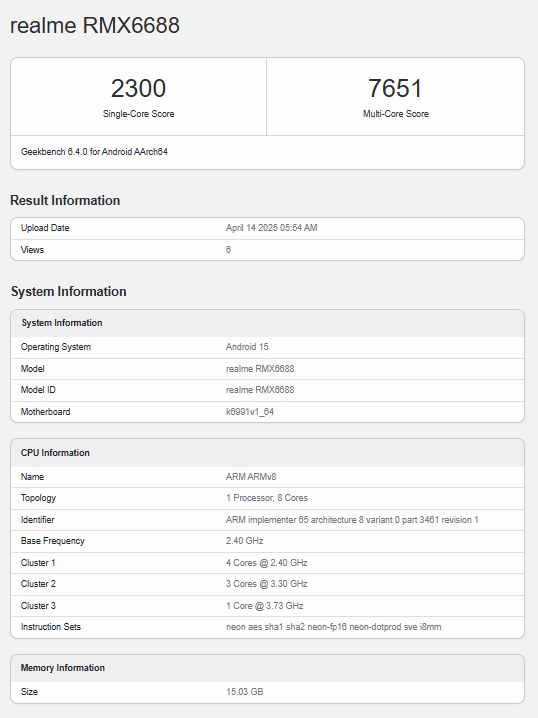
In other news, the upcoming Realme GT 7 Pro Racing Edition, which is expected to be a more affordable, performance-focused version of the GT 7 Pro, has reportedly achieved an impressive AnTuTu score of 3,063,313 points. However, this score is likely an ideal result under optimal conditions, and its average performance might align more closely with devices like the OnePlus Ace 5 Pro.
For more daily updates, please visit our News Section.
The long-running saga surrounding the iPhone 7 and iPhone 7 Plus “Loop Disease” issue is finally coming to an end with compensation to the users. Former owners of these devices are now receiving settlement payment of up to $350, which, of course, is part of the $35 million class action lawsuit.
The issue and the settlement
The iPhone 7 and iPhone 7 Plus were widely praised when they launched in 2016 and 2017. However, some users experienced a problem dubbed “Loop Disease.” This issue, allegedly caused by applying pressure on a specific part of the phone, led to degraded audio quality. Not to mention, it affected the calling experience of the smartphone as well.
A class action lawsuit was filed years ago. After being approved last year, the compensation is finally reaching the users who participated in the class action lawsuit. Most claimants are receiving around $200. Although users who paid for repairs related to that issue could get up to $350.
Apple agreed to the $35 million settlement without admitting any wrongdoing or liability. The deadline to join the lawsuit passed last summer. So only those who filed claims by then are eligible for the compensation.
While the settlement provides some relief for affected customers, the bulk of the $35 million fund, as reported by 9to5Mac, will go to the attorneys who brought the case forward. Still, for former iPhone 7 users, receiving a few hundred dollars in 2025 is a welcome resolution to a frustrating issue.
This isn’t the first time Apple has faced a class action lawsuit though. Last fall, customers who owned MacBooks with problematic butterfly keyboards began receiving payments as part of a separate settlement.
Oppo has officially opened pre-orders for its highly anticipated foldable, the Find N5, and its latest smartwatch, the Watch X2. Customers who reserve their devices early through the Oppo Store can enjoy exclusive perks, including bonus accessories, flexible payment options, and special discounts.
Early buyers of the Oppo Find N5 can lock in their purchase with just 1 yuan, gaining access to exclusive preorder perks. These include a Tencent Video VIP membership (worth 78 yuan), a limited-edition accessories gift box (featuring a power bank and a magnetic case, limited to 7,200 units), and trade-in subsidies for exchanging an old device.
Oppo is also offering up to 24 months of interest-free instalments, along with screen damage protection for a year, where members can enjoy repair discounts of up to 50 percent.
Oppo Watch X2 preorder benefits
For those interested in the Oppo Watch X2, preorders come with a free fluoro rubber strap, adding extra durability and comfort. Customers can also enjoy reward points cashback of up to 3 percent, and flexible financing with six-month interest-free instalments, or 12 months for Huan Tai members. Also, the first 2,500 pre-orders stand a chance to receive 3,000 bonus reward points.
The above-mentioned details are for the Chinese market. However, the company has also confirmed that the Oppo Find N5 will debut in the global market at the same time as the Chinese market.
While Oppo is actively teasing the arrival of the Find N5 in China, its teasers for the global market have yet to begin. It is unclear whether the Watch X2 will also debut alongside the N5 for the global market. As for the launch date, while the company remains silent on it, it is expected to take place within the next two weeks.
For more daily updates, please visit our News Section.
Nikon has introduced the Coolpix P1100, a successor to the P1000 in its super-zoom bridge camera lineup. Known for pushing the boundaries of zoom capabilities, the P1100 retains the impressive 125x optical zoom that made its predecessor stand out, but Nikon has added a few new features to make the deal more enticing.
Familiar Form Factor with Incredible Reach
The Coolpix P1100 comes with a 24-3000mm (35mm equivalent) zoom lens, packed into a 3.1-pound (1,410-gram) body. While the 16.79-megapixel sensor is physically small (type 1/2.3), it allows for the extensive zoom range. The floating aperture starts at f/2.8 and closes at f/8 at the telephoto end.
If 3000mm isn’t enough, the camera supports a digital zoom feature that extends the reach to an equivalent of 12000mm or 600x zoom. Of course, using digital zoom comes at the expense of image quality.
To combat handshakes and provide sharper images, Nikon has equipped the lens with Dual Detect Optical VR, promising vibration reduction equivalent to 4.0 stops at the frame’s center.
Hardware and Features
The P1100 supports 4K video recording at up to 30p, offers a 3.2-inch vari-angle LCD, and includes timelapse functionality. It also supports clean HDMI output for those who want to connect to external displays or recorders.
Eagle-eyed enthusiasts might notice that much of this hardware remains unchanged from the P1000, which launched back in 2018. Still, Nikon has added a few thoughtful upgrades.
New Features for Niche Photography
Nikon clearly has bird watchers in mind with this release. The P1100 introduces a Bird Watching Mode with a selectable AF-area function. This feature lets users assign camera functions to the Fn1/Fn2 buttons on the optional ML-L7 Remote Control, allowing for easier adjustments during shoots.
Another addition is the Fireworks Mode, designed to reduce blown-out highlights during long-exposure captures. On the connectivity side, Nikon has finally adopted the USB-C port for input/output, replacing the older micro-USB port.
Nikon Coolpix P1100 Pricing and Availability
The Coolpix P1100 carries a slightly higher price tag than its predecessor. While the P1000 debuted at $1,000, the P1100 will retail for $1,099.95 and is expected to hit shelves in late February.
For more daily updates, please visit our News Section.
We use cookies on our website to give you the most relevant experience by remembering your preferences and repeat visits. By clicking “Accept”, you consent to the use of ALL the cookies.
This website uses cookies to improve your experience while you navigate through the website. Out of these, the cookies that are categorized as necessary are stored on your browser as they are essential for the working of basic functionalities of the website. We also use third-party cookies that help us analyze and understand how you use this website. These cookies will be stored in your browser only with your consent. You also have the option to opt-out of these cookies. But opting out of some of these cookies may affect your browsing experience.
Necessary cookies are absolutely essential for the website to function properly. This category only includes cookies that ensures basic functionalities and security features of the website. These cookies do not store any personal information.
Any cookies that may not be particularly necessary for the website to function and is used specifically to collect user personal data via analytics, ads, other embedded contents are termed as non-necessary cookies. It is mandatory to procure user consent prior to running these cookies on your website.