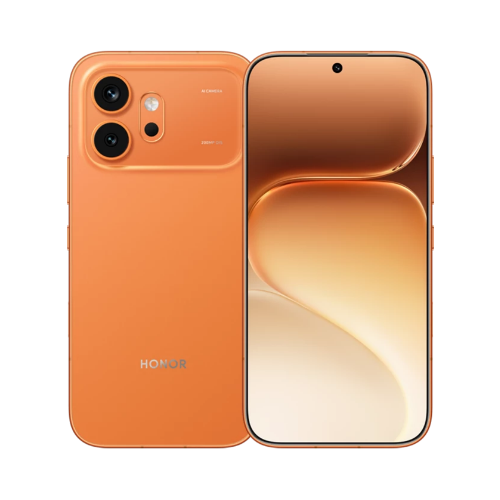
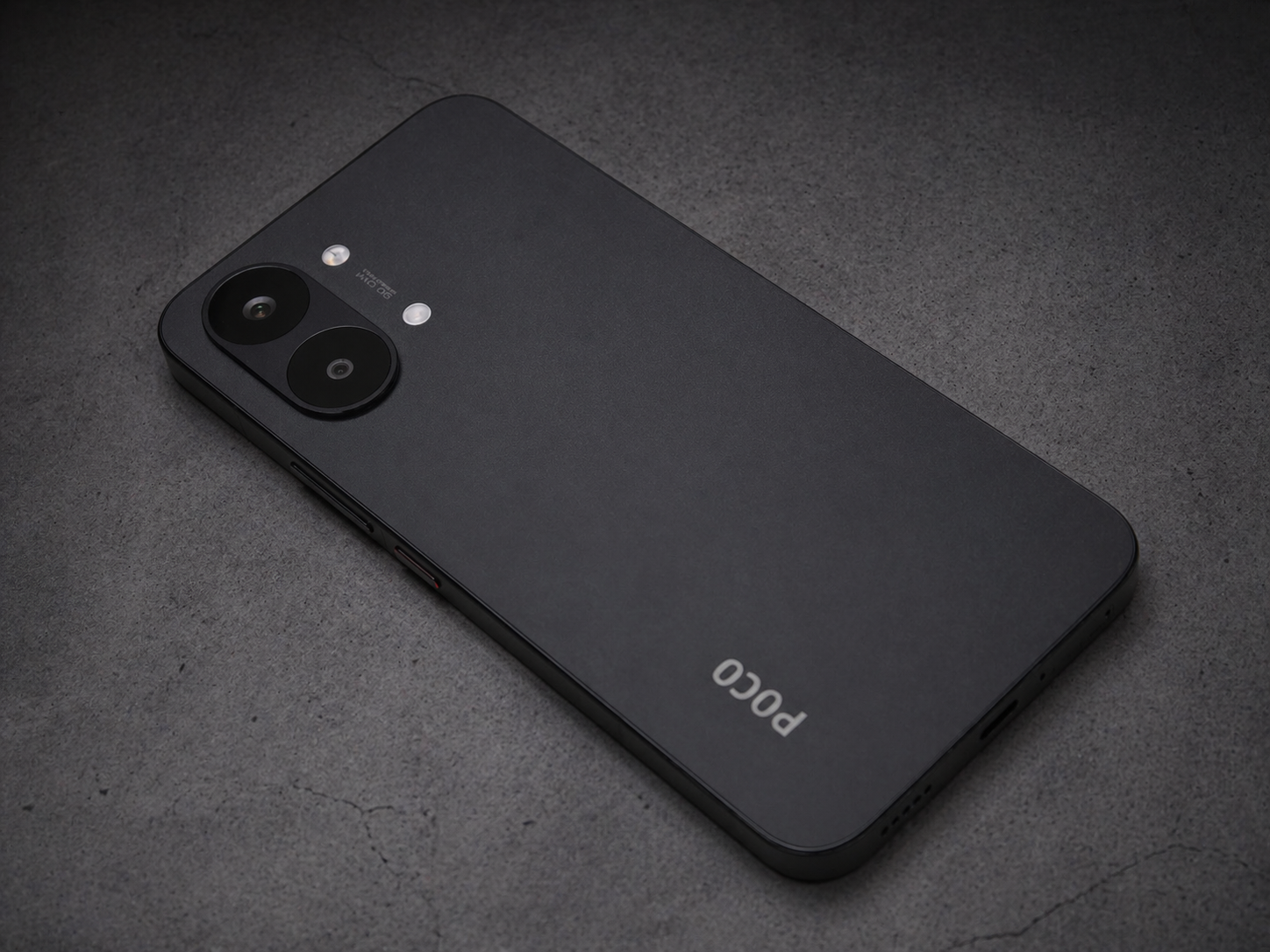
HMD has launched its latest Arc 2 budget smartphone in Thailand. Following up on the HMD Arc from 2024, the device now has new color options, though the design or core specs are not much different from the original. Let’s walk through the specs and pricing details here.
HMD Arc 2 Specifications
The Arc 2 sticks with a 6.52-inch IPS LCD panel running at HD+ resolution and a 60Hz refresh rate, the same as the first Arc. Software-wise, the phone ships with Android 14 Go Edition, the lightweight version of Android built for entry-level hardware.
The main differentiator here is the processor. HMD has swapped out the original Unisoc SC9863A for the newer Unisoc T603. It’s still an entry-level chip built on a 12nm manufacturing process that tops out at 1.8GHz. It is paired with 4GB of RAM and a choice of 64GB or 128GB of onboard storage, with a microSD card slot available for anyone who needs more room.
Around back, the Arc 2 keeps the same single 13MP main camera as its predecessor. Up front, a 5MP selfie camera sits inside a waterdrop-style notch. Powering the device is a 5,000mAh battery paired with 10W charging. The phone also retains a USB-C port and a 3.5mm headphone jack.
Colors, Pricing, and Availability
HMD is offering the Arc 2 in two colorways: Dark Blue and Golden Beige. It will launch in Thailand on July 20 in two storage options. The 4GB + 64GB version is priced at THB 2,290, which comes to about $68 or €60. The 4GB + 128GB version is priced at THB 2,990, which comes to about $89 or €78. HMD has not said if or when the phone will launch in other countries.
For more daily updates, please visit our News Section.
HAYLOU has introduced the Watch Hyper, its latest flagship smartwatch designed for users who enjoy outdoor activities without needing a premium adventure watch. Built around the company’s “Urban Outdoor Smartwatch” concept, the Watch Hyper combines advanced navigation, fitness tracking, and smart features in a device aimed at travelers, casual hikers, cyclists, and everyday explorers. The goal is to offer outdoor-focused features at a more accessible p rice while keeping the watch simple enough for daily use.
Built for Outdoor Navigation
One of the biggest highlights of the HAYLOU Watch Hyper is its navigation system. The smartwatch features L1 + L5 dual-band GPS for improved location accuracy, helping users navigate more reliably in cities, forests, and other challenging environments.
The watch also supports offline maps, allowing users to store maps directly on the device without relying on a mobile network. Full-color topographic maps provide better terrain visibility, while the route backtracking feature helps users retrace their path during hikes or outdoor adventures, even when there is no cellular connection.
Fitness Tracking and Health Features
The Watch Hyper is equipped with a 6-axis motion sensor combined with HAYLOU’s Sevier motion algorithm for accurate activity tracking. It supports more than 170 sports modes, making it suitable for a wide range of workouts and outdoor activities.
The smartwatch also offers intelligent workout recognition, personalized training goals, workout performance insights, and VO₂ Max estimation to help users better understand their fitness levels and monitor their progress.
Smart Features for Everyday Use
Along with its outdoor capabilities, the Watch Hyper includes several smart features for daily convenience. Users can make Bluetooth calls directly from the watch, while Android users can send WhatsApp quick replies. Voice-to-text messaging is also supported, making communication easier while on the move.
The smartwatch further includes an offline AI voice assistant, allowing users to access voice commands even without an internet connection.
Battery, Display, and Durability
HAYLOU claims the Watch Hyper can deliver up to 24 days of battery life under normal use. For outdoor navigation, it offers up to 16 hours of continuous GPS usage.
The smartwatch features a 1.97-inch AMOLED display with adaptive brightness for improved visibility in different lighting conditions. It is also rated 5ATM for water resistance, making it suitable for swimming, rainy conditions, and everyday water exposure.
Available in Black and Silver color options, the Watch Hyper is designed to balance outdoor functionality with everyday practicality.
The Snapdragon 6 Gen 4 and Dimensity 7400 are popular smartphone chips that bring modern capabilities and high performance to lower-mid-range smartphones. The Snapdragon chip aims to offer high-end architecture, including Cortex-A720 cores and elite gaming features, down to a wallet-friendly price point. On the other hand, the Dimensity 7400 prioritizes raw performance with impressive clock speeds and fast 5G download speeds.
Both chipsets arrived at the exact same time, in February 2025, but they take different approaches under the hood. From benchmark battles to real-world gaming and camera capabilities, we’ll compare these two chipsets head-to-head to find out which one has the edge.
Qualcomm Spectra Triple ISP (12-bit) up to 200MP single camera up to 64MP single camera with zero shutter lag up to 32+16MP dual cameras with zero shutter lag up to 16MP triple cameras with zero shutter lag up to 4K video recording at 30 fps
MediaTek Imagiq 950 ISP (12-bit) up to 200MP single camera up to 4K video recording at 30 fps Google Ultra HDR support hardware-based noise reduction (MCNR)
Connectivity
Snapdragon 5G modem download speed: up to 2.9 Gbps Wi-Fi 6E Bluetooth 5.4 sub-6 GHz, mmWave support
MediaTek 5G modem download speed: up to 3.27 Gbps Wi-Fi 6E Bluetooth 5.4 only sub-6 GHz support
Snapdragon 6 Gen 4 vs Dimensity 7400: Benchmark numbers
Note: The benchmark tests were performed on the Realme P3 (powered by the Snapdragon 6 Gen 4) and the iQOO Z10R (powered by the Dimensity 7400).
Geekbench score
The Snapdragon 6 Gen 4 pulls ahead in both single-core and multi-core tests on Geekbench, though the differences are modest. The chip obtains a 1092 single-core score and a 3094 multi-core score. In contrast, the Dimensity 7400 scores 1042 and 3014 in the single-core and multi-core tests, respectively.
That’s a 4.8% gain in single-core and a 2.6% in the multi-core performance for the Snapdragon 6 Gen 4. While they are unlikely to bring drastic changes, users may notice slightly better performance, faster app loading times, and a more responsive experience.
Geekbench 6
Snapdragon 6 Gen 4
Dimensity 7400
Single core
1092
1042
Multi core
3094
3014
AnTuTu score
On AnTuTu v11, the Snapdragon 6 Gen 4 achieves a total score of over 980K, while the Dimensity 7400 gets a lower score of 925K. That top-level score doesn’t tell the whole story, however. You get a clearer picture once you look at the breakdown.
The Snapdragon chip posts a 15% higher CPU score and a 10% higher GPU score. The Dimensity chip is ahead of the Snapdragon chip in memory performance, but the difference is too small to be considered. The user experience (UX) score also favors the Dimensity chip.
Geekbench 6
Snapdragon 6 Gen 4
Dimensity 7400
AnTuTu score
981,557
925,061
CPU
393,468
340,697
GPU
161,350
145,500
Memory
156,590
157,129
UX
270,150
281,735
Both benchmarks suggest the Snapdragon 6 Gen 4 delivers better performance than the Dimensity 7400. Most people would look at the benchmark data and draw a conclusion, but there are important aspects to consider, such as connectivity features and camera capabilities. (more on that below)
Buyers weighing this generation against other options can compare the full lineup in our guide to top Snapdragon processors.
Snapdragon 6 Gen 4 vs Dimensity 7400: Key differences that matter
Performance
Both the Snapdragon 6 Gen 4 and the Dimensity 7400 have been manufactured using TSMC’s 4nm process, but they feature different core configurations.
The Snapdragon chip’s CPU cores are arranged in a traditional ‘1+3+4’ structure to deliver balanced performance and efficiency, while the Dimensity 7400 uses a ‘4+4’ structure, focusing on peak performance.
Snapdragon 6 Gen 4
Dimensity 7400
Prime core
1 x Cortex-A720 at 2.3 GHz
–
Performance core
3 x Cortex-A720 at 2.2 GHz
4 x Cortex-A78 at 2.6 GHz
Efficiency core
4 x Cortex-A520 at 1.8 GHz
4 x Cortex-A55 at 2.0 GHz
While the Dimensity 7400 chip has higher CPU clock speeds, the Snapdragon 6 Gen 4 uses newer, more powerful CPU cores. It’s the reason the Snapdragon chip can achieve higher Geekbench scores.
For graphics-intensive tasks, the Snapdragon chip has an Adreno 810 GPU. The chip integrates select Snapdragon Elite Gaming features for a smooth gaming experience. It includes the Snapdragon Game Super Resolution feature for the first time in the lineup, which upscales gaming scenes in up to 4K without drawing much power.
The Dimensity 7400 is equipped with a dual-core Mali-G615 GPU, paired with MediaTek HyperEngine Gaming Technology features to deliver an enhanced gaming experience with consistent frame rates and improved network connectivity.
Camera
The Snapdragon 6 Gen 4 is equipped with a Qualcomm Spectra Triple ISP, which can process data from three camera sensors simultaneously. The chip supports zero shutter lag across multiple camera combinations, while the Dimensity 7400 adds Google Ultra HDR support.
The Dimensity chip features a 12-bit Imagiq 950 ISP, with support for up to 200MP single camera and 4K video recording at 30fps, something the Snapdragon chip also brings to the table.
Connectivity
Another crucial difference is the higher peak 5G speed on the Dimensity 7400, while the Snapdragon chip supports mmWave, which the other chip lacks.
Snapdragon 6 Gen 4: 2.9 Gbps (peak 5G speed)
Dimensity 7400: 3.27 Gbps (peak 5G speed)
Snapdragon 6 Gen 4 vs Dimensity 7400: Which is better?
The Snapdragon 6 Gen 4 is the clear winner here. It delivers higher CPU performance thanks to newer, more powerful cores. The chip comes with a powerful Adreno GPU, which, paired with Snapdragon Elite Gaming features, delivers a more consistent, lag-free gaming experience compared to Dimensity 7400. The inclusion of mmWave support further strengthens its case.
That said, the Dimensity 7400 is also a very capable mid-range chipset. Except during longer gaming sessions, you will hardly notice a performance difference. It has ISP capabilities comparable to the Snapdragon 6 Gen 4 and offers higher peak 5G speeds.
In short, you should go for the Snapdragon 6 Gen 4 unless gaming isn’t your priority and you can get a Dimensity 7400 phone at a hefty discount.
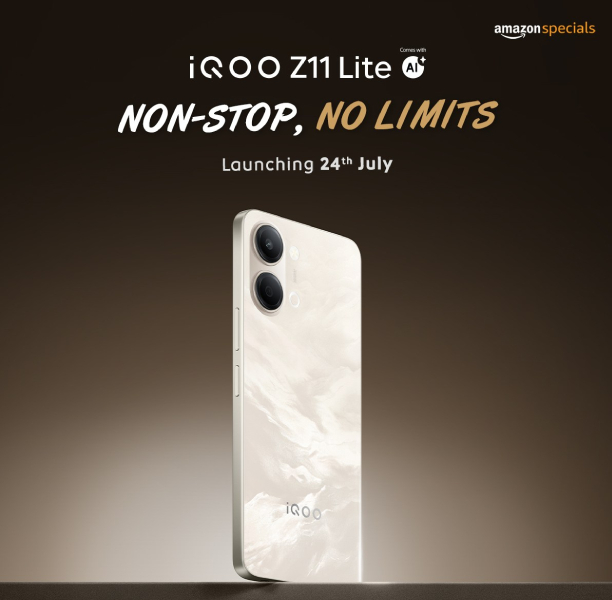
iQOO has finally put a date on the calendar for its next budget phone. iQOO India confirmed on X that the Z11 Lite 5G will launch in the country on July 24, and the phone is set to succeed the iQOO Z10 Lite, which arrived in India last June.
Even though iQOO hasn’t shared the full spec sheet yet, one tipster on X had already leaked most of the important details.
iQOO Z11 Lite Specifications
According to the leak, the iQOO Z11 Lite will run on a MediaTek Dimensity 6300 chipset paired with Mali-G57 MC2 graphics, and it should be available with up to 8GB of RAM and 128GB of storage. On the software side, the phone is tipped to launch with OriginOS 6 built on top of Android 16.
Moreover, the battery is said to come at 6,500mAh, a decent jump from the 6,000mAh unit on the older Z10 Lite. And iQOO is boosting the charging speed too, from 15W to 44W.
IQOO Z11 Lite 5G
– 6.74" IPS LCD 120hz – DM 6300 /590K+ Antutu – UFS 2.2 / LPDDR4X – 50MP Primary – 5MP Front – 3.5mm Jack – IP65 – 6500 mAh /44W -Origin OS 6/ A16 – 4GB/128GB, 8GB/256GB -Launch in Next 10 Days – Sub 22-25K
— PassionateGeekz.com (@passionategkeez) July 8, 2026
On the camera front, the leak suggests a dual rear setup made up of a 50MP main sensor along with a 2MP secondary sensor. The display is expected to measure around 6.74 to 6.78 inches running at a 120Hz refresh rate. The phone is also rumoured to carry an IP64 rating.
Design-wise, an Amazon India listing had already suggested the phone would come in a Solar Flame colourway, and teaser images show a vertical rear camera module with a circular LED ring underneath it for notifications, something like a mini light-up alert system.
iQOO is expected to sell the Z11 Lite through Amazon India, its own official website, and select offline retailers. We’ll keep you updated the moment there’s more to share.
For more daily updates, please visit our News Section.
Multiple reports have claimed that Xiaomi may unveil the Xiaomi 18 Pro series as the first Snapdragon 8 Elite Gen 6-powered phones in September this year. Recently, tipster Digital Chat Station published a Weibo post revealing the key specifications of the Xiaomi 18 Pro Max. Now, he is back with a new post to share the key details of the smaller Xiaomi 18 Pro.
Xiaomi 18 Pro key specifications tipped
According to the tipster, the Xiaomi 18 Pro engineering prototype is being tested with a 2nm flagship chipset, which is the Snapdragon 8 Elite Gen 6 series, expected to debut in Se,ptember just before the Xiaomi 18 Pro series launch.
The leak further reveals that the Xiaomi 18 Pro will feature a custom ultra-high-resolution flat display with large rounded corners and ultra-slim symmetrical bezels. While he has not mentioned the screen size in this leak, he previously revealed that the device will have a 6.4-inch OLED panel equipped with a Samsung-like Privacy Display feature.
The Xiaomi 18 Pro’s camera setup will comprise a 200-megapixel large-sensor main camera and a 200-megapixel large-sensor periscope telephoto camera with macro support. The setup will be rounded out by a 50-megapixel ultra-wide lens.
DCS further claims the prototype packs a 7,000mAh-class battery, supports 100W wired fast charging and wireless charging, and may also receive upgrades such as dual stereo speakers, a larger vibration motor, and several additional refinements before launch. The device is also expected to retain the secondary rear display like the previous generation.
For more daily updates, please visit our News Section.
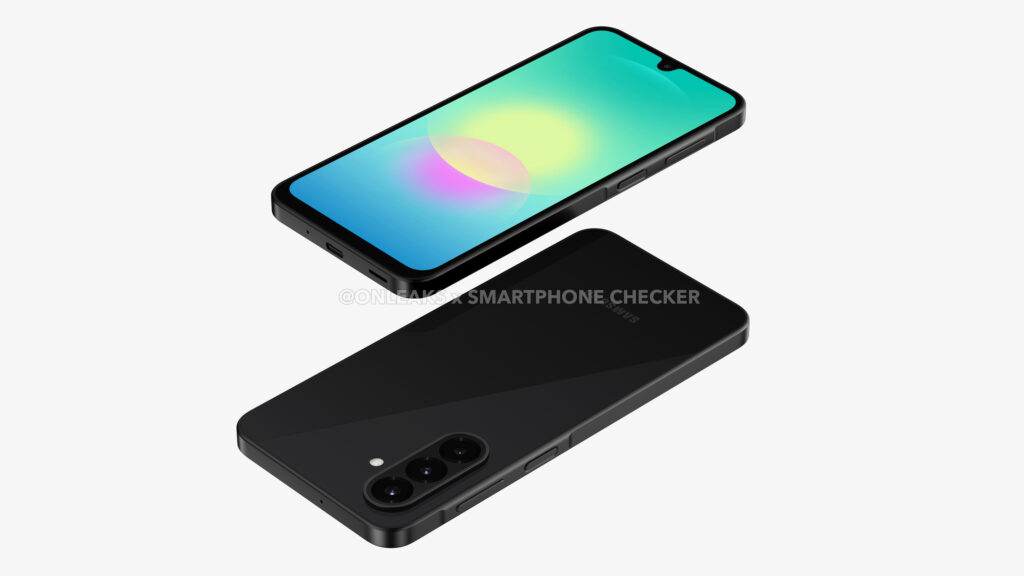
The Galaxy A17 5G launched back in August last year, followed by a 4G variant in September with an identical design and nearly identical specifications. Now the Galaxy A18 has surfaced in high-quality renders, revealing its design ahead of launch.
The renders come from OnLeaks in collaboration with Smartphone Checker and are reportedly based on official factory CAD data shared with case makers. This means the renders should be very close to the actual design.
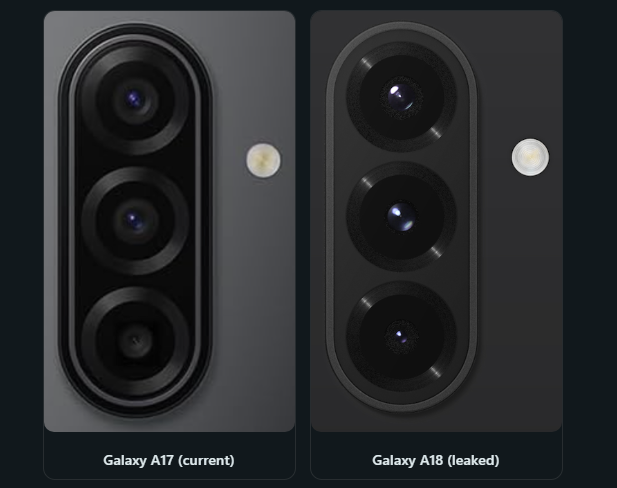
According to the CAD data, the phone measures 164.4 x 77.8 x 7.84mm. This makes it 0.34mm thicker than the Galaxy A17 models. On the back, the renders show a slightly refined pill-shaped camera housing, which also protrudes less than the predecessor’s thanks to the added thickness.
On the front, not much seems to have changed. Samsung is continuing with the “Infinity-U notch” it has been using in its entry-level phones since 2019. While exact bezel dimensions weren’t provided, they should remain similar to last year’s if Samsung’s track record is anything to go by.
Moving on to specifications, a recent report from ZDNet Korea suggests Samsung is dropping Exynos on the 5G model in favor of a Snapdragon chipset. According to rumors, it could be the 6nm-based Snapdragon 6s Gen 3, a slightly overclocked version of the older Snapdragon 695. This chip should be capable of handling most day-to-day tasks and some light gaming.
Both the 5G and 4G versions of the Galaxy A17 series came with a 6.7-inch Super AMOLED panel with FHD+ resolution and a 90Hz refresh rate. They featured a 50MP main camera (1/2.76″), a 5MP ultrawide, and a 13MP selfie shooter.
It will be interesting to see if the 0.34mm increase in thickness finally translates into a battery upgrade for the Galaxy A18. The 5,000mAh battery has been Samsung’s go-to option across different price segments for years. Interestingly, the upcoming top-of-the-line flagship, the Galaxy S27 Ultra, finally seems to be getting a significantly larger battery.
The Xiaomi 17T Pro is an all-round flagship smartphone with a large 6.83-inch AMOLED screen, a MediaTek Dimensity 9500 chip, a huge 7,000mAh battery, and a Leica-built camera system with a 5x zoom lens. For all this, the company is asking around €899-€999 in Europe, depending on storage size.
For a wider comparison across brands, our roundup of top flagship phones this year covers the strongest all-round options.
But the 17T Pro is not the only strong option in this price range. Several other phones offer similar power, and in some cases, better value. So if you are shopping for a new phone in 2026 and want to compare your choices, here are five solid alternatives worth a look.
The Poco F8 Ultra is one of the closest rivals to the Xiaomi 17T Pro, and it comes from the same parent company. Announced in November 2025, it features a large 6.9-inch AMOLED display, but the biggest difference is the chip. Instead of MediaTek, the F8 Ultra runs on the Snapdragon 8 Elite Gen 5. This makes it a great pick for gaming and heavy multitasking.
The phone also has a 6,500mAh battery with 100W wired charging and 50W wireless charging, so it charges fast even though the battery is slightly smaller than the 17T Pro’s. On the camera side, it uses a triple 50MP setup, including a 5x periscope zoom lens. The phone also has Bose-tuned stereo speakers. Why its better is that it’s cheaper at around $729 for the 12GB/256GB model.
2. OnePlus 15R
OnePlus 15R
The OnePlus 15R is a good choice for people who care most about charging speed and smooth software. Like the F8 Ultra, it runs on the Snapdragon 8 Gen 5 chip and packs a massive 7,400mAh battery. The display is a 6.83-inch AMOLED panel with a fast 165Hz refresh rate.
The phone runs OxygenOS 16, which is known for being clean and fast, without much extra clutter. It even supports frame-rate interpolation in games that boosts supported titles beyond their normal frame rates for smoother gameplay.
The camera setup is simpler than the 17T Pro’s, with a 50MP main sensor and an 8MP secondary lens, so it does not match Xiaomi’s zoom range. But for buyers who want strong battery life, fast charging, and a smooth day-to-day experience, the 15R is priced around $699 to $749, undercutting the 17T Pro while offering comparable or better performance.
3. Honor 600 Pro
Honor 600 Pro
The Honor 600 Pro takes a different approach by focusing heavily on the camera and display quality. It has a slightly smaller 6.57-inch AMOLED screen, but it reaches an extremely bright 8,000 nits at its peak. The main camera uses a huge 200MP sensor, paired with a 50MP telephoto lens offering 3.5x optical zoom and up to 120x digital zoom.
While the zoom range is shorter than the 17T Pro’s 5x lens, the image quality from the large main sensor is excellent, especially for detailed daytime shots. The phone runs on the Snapdragon 8 Elite chip and has a 7,000mAh battery with 80W wired charging and 50W wireless charging. It also holds strong IP68, IP69, and IP69K ratings for dust and water resistance.
The Honor 600 Pro retails starting at €799 in Europe.
4. Poco X8 Pro Max
Poco X8 Pro Max
For shoppers who want similar power to the 17T Pro but at a much lower price, the Poco X8 Pro Max is worth serious consideration. It is Poco’s first “Pro Max” phone, and packs in surprisingly high-end specs for its price. It uses the MediaTek Dimensity 9500s chip, a slightly toned-down version of the same chip family found in the 17T Pro, along with a 6.83-inch AMOLED display that closely matches Xiaomi’s screen size and quality.
Where the X8 Pro Max really stands out is battery life. It comes with an enormous 8,500mAh battery, one of the largest ever placed in a regular smartphone, along with 100W fast charging. It also carries an IP69K rating, meaning it can survive high-pressure water jets, not just splashes.
The camera setup is more basic, though, housing a 50MP main sensor and no dedicated telephoto lens. Still, with prices starting around $414 to $485, it delivers exceptional value for anyone who wants long battery life and solid performance without spending flagship-level money.
5. Samsung Galaxy S25 FE
Samsung Galaxy S25 FE
For buyers who prefer Samsung’s software and long-term update support, the Galaxy S25 FE is a worthwhile alternative. It starts retailing at $649, and for the price, you get extremely long software support along with the Galaxy AI features.
The trade-off is that the S25 FE has a smaller battery and slower charging speeds compared to the 17T Pro, and its camera system does not match Xiaomi’s zoom capabilities. However, it still offers a reliable AMOLED display, solid daily performance, and access to Samsung’s One UI software and ecosystem features, including easy connections with Galaxy tablets, watches, and earbuds. It is a strong pick for people who want a dependable, well-supported phone rather than the most powerful camera or battery on paper.
For more daily updates, please visit our News Section.
When Xiaomi announced the 17T and 17T Pro in May, a lot of the focus was on the Leica-branded cameras and the new high-brightness OLED displays. However, the feature that arguably has the biggest impact on everyday use is the battery technology under the hood.
By using silicon-carbon battery technology, Xiaomi managed to fit a 6,500mAh battery into the standard 17T and a rather large 7,000mAh battery into the 17T Pro. Those capacities offer a lot of headroom for heavy use, but they also mean you need a capable charger if you don’t want to leave your phone plugged in for hours.
Navigating fast charging standards can be confusing, especially when companies mix proprietary tech with universal standards. Here is a practical guide to the wattage you actually need for the Xiaomi 17T and 17T Pro, along with a few reliable chargers and power banks that fit the bill.
What Wattage Do You Actually Need?
Before buying any accessories, it helps to know what your specific phone model can handle. Xiaomi split the charging capabilities between the two devices, but they also included broad support for third-party PPS standards, which makes finding compatible chargers much easier.
For the Xiaomi 17T
This model supports 67W wired HyperCharge and up to 50W PPS charging. You really don’t need anything more powerful than a 65W or 70W charger.
Buying a 100W or 140W brick for the standard 17T won’t make it charge faster; the phone will just pull the maximum wattage it was designed for.
For the Xiaomi 17T Pro
The Pro model increases the limit to 100W wired HyperCharge and 50W wireless HyperCharge. More importantly, it supports 100W PPS compatibility for third-party chargers.
In the past, getting the maximum charging speed on many phones meant you had to use the proprietary brick included in the box. Now, you can use standard high-output GaN (Gallium Nitride) chargers and still get those 100W speeds.
Wall Chargers for the Xiaomi 17T
If you have the standard Xiaomi 17T, your ideal charger will sit right around the 65W to 70W mark.
Xiaomi 67W GaN Charger 2C1A
If you prefer to stick with first-party accessories to ensure exact compatibility with Xiaomi’s HyperCharge protocol, the official brick is a safe bet. It features two USB-C ports and one USB-A port. It uses GaN technology to manage heat, and it conveniently comes with a 1.5-meter 6A cable in the box, saving you from having to buy one separately.
Anker Nano 70W
If you want something a bit smaller for travel, the Anker Nano Charger (70W, 3 Ports) is a solid choice. It is significantly smaller than older chargers of this wattage and includes a foldable plug for easy packing.
Ugreen Nexode Pro 65W
Alternatively, the Ugreen Nexode Pro 65W 3-Port GaN Mini is a very compact option that provides enough power to fast-charge your 17T while taking up minimal space on a desk or in a bag.
Wall Chargers for the Xiaomi 17T Pro
For the 17T Pro, you will want a charger that can hit that 100W ceiling to take full advantage of the phone’s capabilities.
Anker Prime Charger 100W
Anker’s Prime lineup is a reliable choice for multi-device charging. This 100W charger is quite small but provides enough power to charge the 17T Pro efficiently. It uses Anker’s ActiveShield 2.0 to monitor temperatures, which helps keep the charger and your phone’s 7,000mAh battery from getting too warm during a fast charge.
Baseus PicoGo AE21
If you like to see exactly how much power your devices are drawing, the Baseus PicoGo AE21 100W includes a built-in digital display. It’s a helpful feature if you want to verify your charging speeds.
Ugeen Nexode Pro 100W
The Ugeen Nexode Pro 100W is another good GaN-powered alternative that delivers a full 100W from its primary USB-C port, making it a straightforward, dependable option.
High-Capacity Power Banks
When you are using a phone with a 7,000mAh battery, a standard 10,000mAh power bank will only give you about one full charge. If you are traveling or away from an outlet for a few days, you might want something larger.
Anker Laptop Power Bank (25K, 165W)
This is a great pairing for the 17T Pro. With a 25,000mAh capacity, it holds enough power to charge the 17T Pro a few times over. It can output up to 100W from a single USB-C port, matching the Pro’s maximum input. It also features built-in retractable cables, which is convenient if you tend to forget your charging cords.
Baseus EnerGeek GP12 145W
If you want a balance of high output and a straightforward design, the Baseus EnerGeek GP12 is a reliable choice. It provides up to 145W of total power across its ports, meaning it can comfortably handle the 100W draw of the 17T Pro while leaving room to charge a smaller accessory at the same time. It includes a clear digital display to monitor your remaining battery percentage and has enough capacity to get you through a weekend trip.
Ugreen Nexode Power Bank 20K 165W
Similar to the Anker model, this Ugreen power bank includes a built-in retractable USB-C cable and a digital screen that shows your remaining battery percentage and port power. It easily outputs the 100W needed for the 17T Pro, and the 20,000mAh capacity falls within the limits for airline carry-on rules.
Lightweight Power Banks
You don’t always need to carry a heavy battery. If you just want a portable pack to get your 17T or 17T Pro through a long day, there are some great compact options that won’t take up much space in your bag.
Baseus PicoGo AC22 Ultra Mini Power Bank
This is a very practical everyday option. It has a 10,000mAh capacity and is noticeably smaller than standard power banks. It features a built-in 45W USB-C cable, which acts as a carrying strap and provides enough power for a solid top-up on your phone. It also includes a digital display so you can easily check how much battery you have left.
Anker Nano Power Bank
If you like the idea of a built-in cable but want something a bit longer, this Anker model includes a 2.3-foot retractable USB-C cord. It offers the same 10,000mAh capacity and 45W output, making it a convenient choice for daily use. It also has a smart screen to monitor your charging status and uses Anker’s temperature control system to keep things cool while charging.
Ugreen Nexode Power Bank 20K 100W
While 20,000mAh batteries are usually on the heavier side, this Ugreen model is designed to be about 20% lighter and more compact than similar power banks, making it surprisingly easy to carry every day. It can output a full 100W, which is perfect if you want to maximize the charging speed on the 17T Pro, and it holds enough power to keep your devices running for a few days without feeling like a brick in your backpack.
If you’re looking for magnetic charging solutions for the 17T Pro, be sure to check out our roundup of the best magnetic power banks (a compatible case is required).
For more daily updates, please visit ourNews Section.
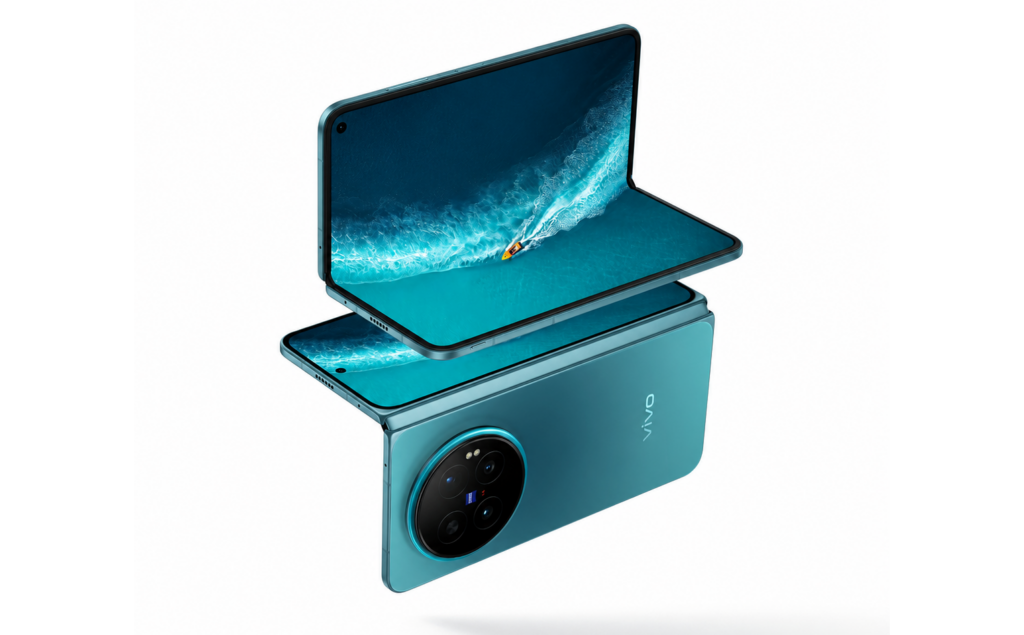
Last month, Vivo unveiled the Vivo X Fold 6 in China, and the foldable is expected to begin its global rollout soon. While the Vivo X Fold 5 made its global debut in July 2025, its successor has neither been officially teased nor spotted on any certification platform until now. In a new development, the global variant of the Vivo X Fold 6 has received an important certification, indicating that its international launch could be inching near.
Vivo X Fold 6 SDPPI certified
Vivo X Fold 6 SDPPI listing
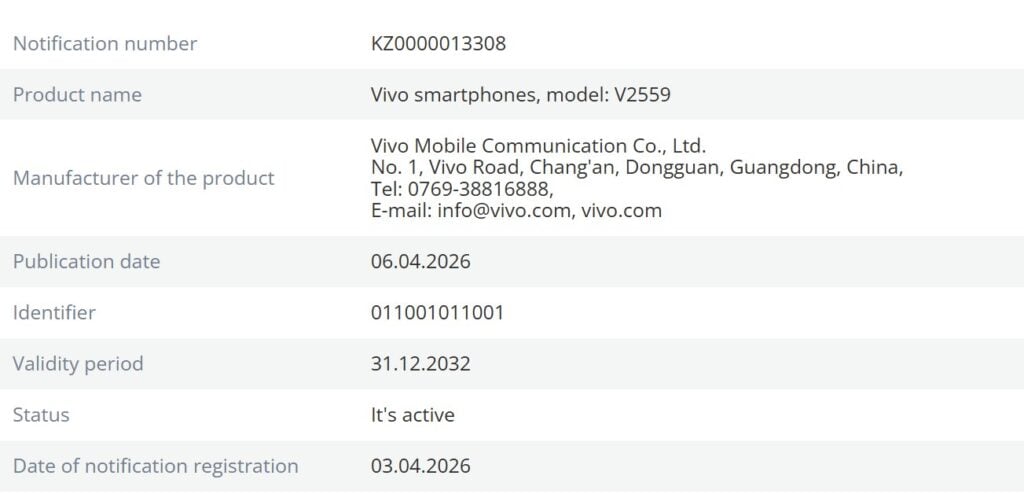
As can be seen above, the Vivo X Fold 6 with model number V2559 has emerged in the database of Indonesia’s SDDPI certification platform. This is the first time the device has appeared in the global certification database. While the listing has no information about the device’s specifications, but those should mirror the already available Chinese variant.
Vivo X Fold 6 EEC listing
The V2559 was previously spotted at Europe’s EEC certification back in April, but it is only through the SDPPI listing that its final marketing name has been confirmed.
Vivo X Fold 6 specifications
Vivo X Fold 6
The Vivo X Fold 6 features an 8.02-inch LTPO AMOLED foldable display paired with a 6.53-inch LTPO AMOLED cover screen. Both panels support a 120Hz adaptive refresh rate, offer up to 5,000 nits of peak brightness, and include eye protection features.
Powering the device is the MediaTek Dimensity 9500 Super Edition chipset, paired with up to 16GB of RAM and as much as 1TB of storage. It houses a 7,000mAh BlueVolt battery with support for 80W wired charging and 40W wireless charging. It runs OriginOS 6 Fold-based Android 16, bringing multitasking tools such as the upgraded Atomic Workbench for improved productivity on the large foldable display.
The X Fold 6 is equipped with a 200-megapixel primary camera, accompanied by a 50-megapixel ZEISS APO periscope telephoto lens and a 50-megapixel ultra-wide camera. The imaging setup is backed by Vivo’s V3+ imaging chip and comes with support for a telephoto extender accessory. It has a 20-megapixel camera on the outside and a 20-megapixel sensor on the inner screen.
It offers IP58 and IP59 levels of dust and water resistance. In China, it is available in four shades, such as green, white, gray, and black/gold.
At present, there is no information about the X Fold 6’s global launch timeframe. Some vague reports suggest that its India arrival could be delayed to October this year.
For more daily updates, please visit our News Section.
Redmi has shared new details about the upcoming Redmi Note 17 Pro ahead of its July 14 launch in China. The company has now confirmed the phone’s battery capacity, charging capabilities, and a new after-sales program that is designed to keep the battery in good condition for years after purchase.
Redmi Note 17 Pro battery and charging confirmed
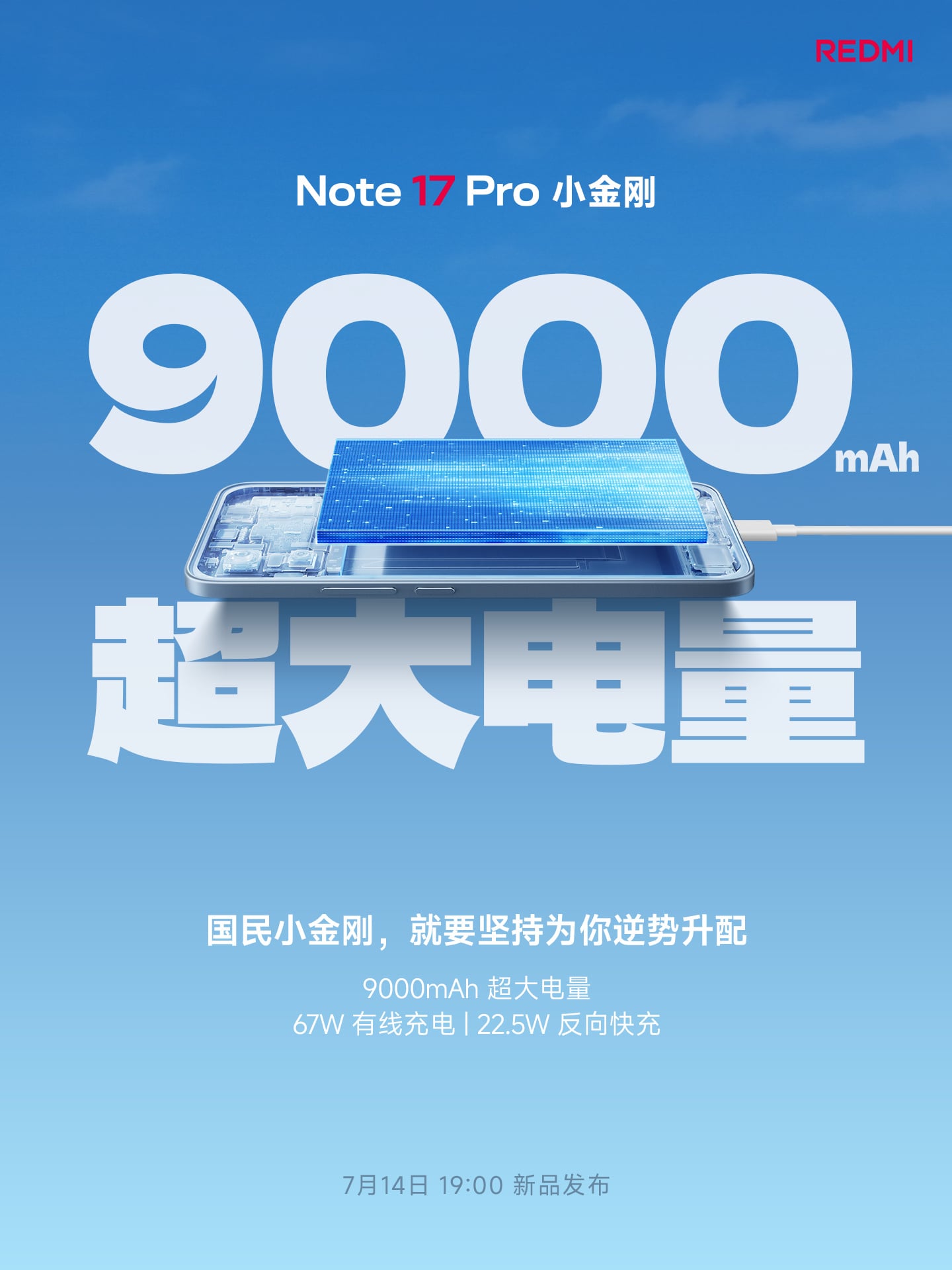
The Redmi Note 17 Pro will feature a massive 9,000mAh Xiaomi Jinshajiang battery, making it one of the largest batteries seen in its segment. The battery has received TÜV SÜD’s five-star multidimensional battery quality certification and supports 67W wired fast charging. The phone also supports 22.5W wired reverse charging, allowing it to power compatible accessories and other devices when needed.
Alongside the hardware, Redmi has announced a complimentary five-year battery upgrade programme for customers who purchase the device during its first sale. If the battery health drops below 80 percent within the first four years, users will receive a free battery replacement.
If the battery health falls below 80 percent in the fifth year, Redmi says it will replace it with a higher-capacity 10,000mAh battery instead of another 9,000mAh unit, provided the service terms are met.
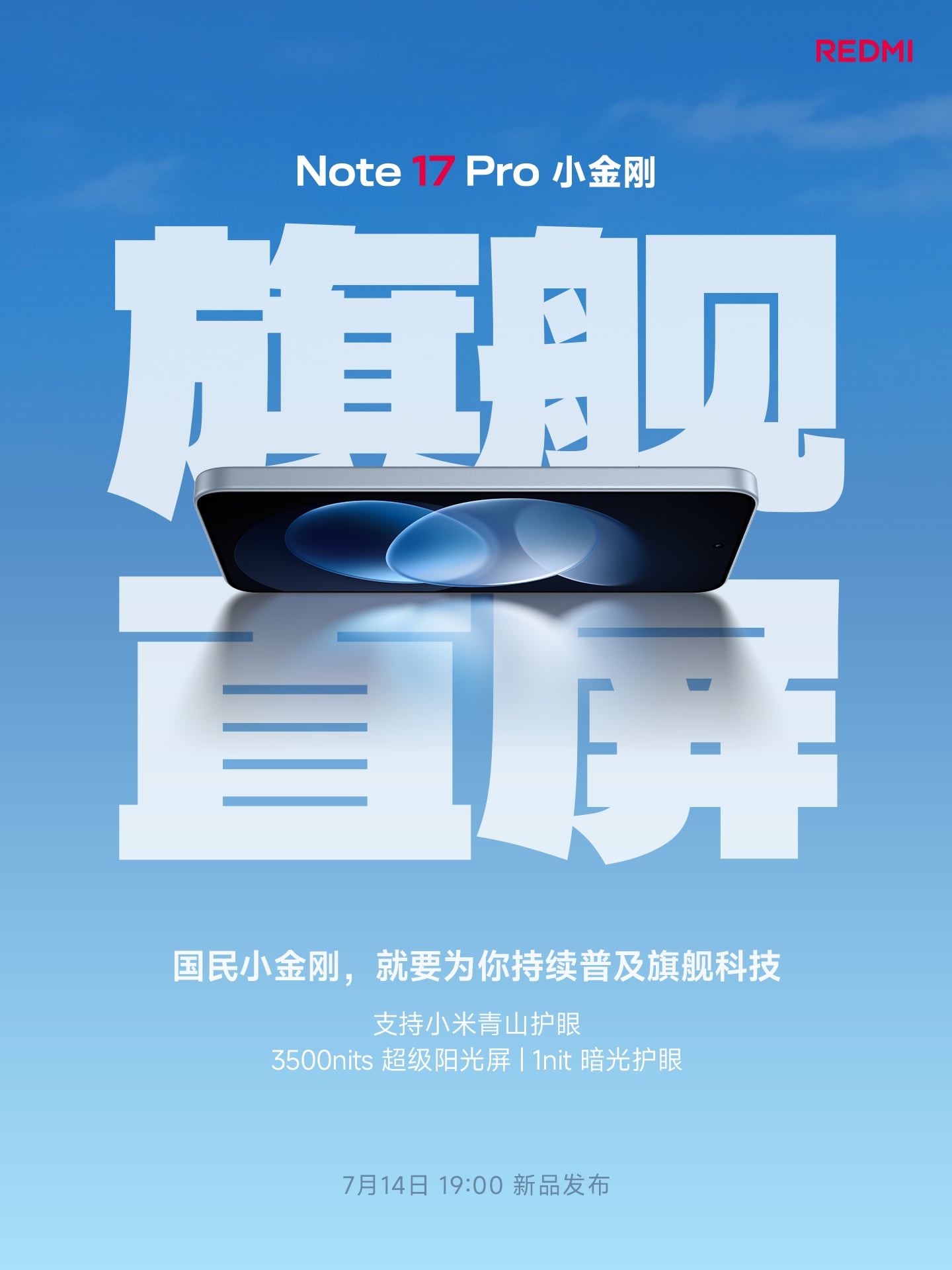
The other poster confirms that the Redmi Note 17 Pro has a flat display that offers a 1.5K resolution and 3500 nits of brightness under sunlight. The phone features Corning Gorilla Glass Victus 2 protection and has passed SGS and CQC dual five-star drop resistance certifications after surviving a 3-metre marble drop test. Official demonstrations also showed the display remaining intact after repeated impacts from objects such as a football, nuts, and even a durian.
The Note 17 Pro also carries IP66, IP68, IP69, and IP69K ratings, along with TÜV SÜD certification for surviving 2 metres underwater for up to 72 hours. Previous teasers have revealed dual stereo speakers and a power-efficient Snapdragon 6-series chipset.
For more daily updates, please visit our News Section.
Oppo is reportedly working on its next foldable phone, the Find N7. Multiple leaks have claimed that it will sport a wide foldable design similar to the forthcoming Samsung Galaxy Z Fold 8 Wide and Apple’s rumored iPhone Ultra foldable. Reliable tipster Digital Chat Station has been consistently leaking details about the N7, and today, he shared another Weibo post revealing more information, including its battery size.
Oppo Find N7 battery size tipped
The above leak suggests that the Oppo Find N7 is currently being evaluated with a 2nm Snapdragon flagship chipset, which is believed to be the forthcoming Snapdragon 8 Elite Gen 6 (SM8950). It is also said to be testing an on-device AI accelerator.
DCS further claims the Find N7 is currently planned to feature a battery starting with “6,” with the early engineering target set at around 6,500mAh. If accurate, the N7 is expected to offer a larger battery than competing foldable offerings from Samsung and Apple.
In the comments section, DCS added that early prototype designs are testing two different camera module layouts: a classic large circular camera island and an iPhone Air-like horizontal-style camera design, asking followers which design they prefer.
The Find N7 is reportedly scheduled for a Q1 2027 launch window. If true, it is expected to debut as the world’s first foldable phone equipped with the Snapdragon 8 Elite Gen 6 chip.
A previous leak from the same source revealed that the Find N7 will feature a 5.5-inch outer display and a 7.6-inch inner display. Both Samsung Display (SDC) and BOE are reportedly involved in supplying the panels. Its advanced hinge mechanism is expected to deliver a crease-free experience on the foldable screen.
For more daily updates, please visit our News Section.
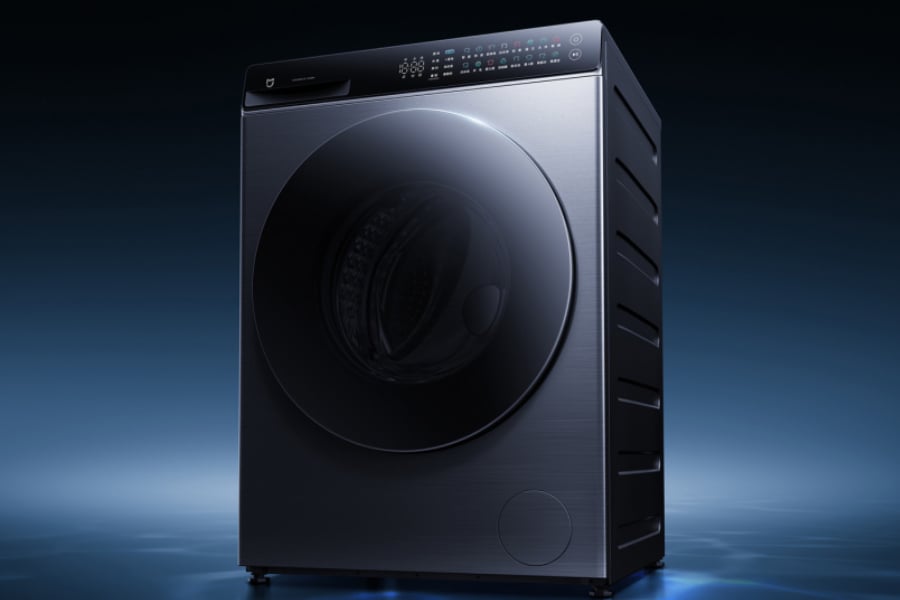
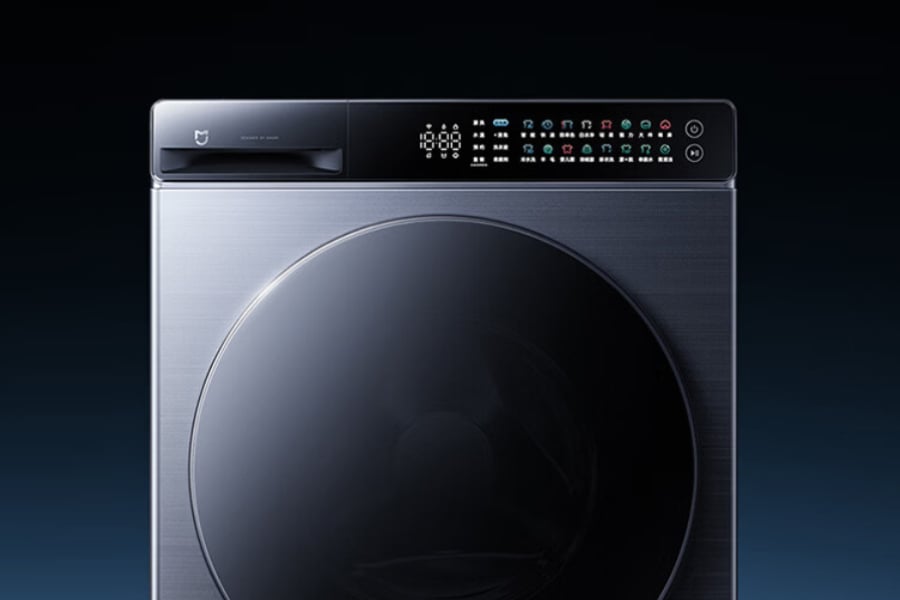
Xiaomi has introduced another washing machine in its popular Mijia Pro lineup. The new model is called the Mijia Washing Machine Pro 10kg, and it’s now up for pre-sale in China. It is priced at 2,699 yuan (~ $396).
The star feature here is Xiaomi’s Super Electrolysis technology. The machine uses a diamond-coated electrode to instantly charge water, boosting active oxygen levels by 15 times. This active oxygen works its way into fabric fibers to break down dirt and bacteria naturally, without needing any added chemicals. Xiaomi says the process leaves zero residue.
This technology is put to work in a few practical ways. It can tackle 20 common stain types, including soy sauce, juice, and blood, while also whitening yellowed white clothes and protecting colors from fading, matching the effect of about 15 color-guard sheets. On the hygiene side, the machine claims a 99.99% sterilization rate on its own, and when paired with high-temperature steam, that jumps to 99.999% for bacteria and viruses, with 100% mite removal.
Wash modes, built-in AI and more
Its washing performance is rated at a 1.3 wash ratio, well above China’s 1.03 national standard. The machine also handles detergent and softener automatically, dosing within ±0.75ml accuracy based on load weight, with a single fill lasting about a month. Among its wash modes are a 36-minute quick wash, a 12-minute express cycle, and specialty programs for down jackets, wool, and pet hair (claimed 92% hair removal).
The Mijia Washing Machine Pro also includes an AI assistant that learns washing habits over time, off-peak energy scheduling, and remote control through the Mi Home app or Xiaomi speakers. The design uses a star-silver metallic finish with a black mirrored door, and it supports flush, built-in installation. Xiaomi backs the machine with a 10-year warranty on its DD direct-drive motor and 3 years of coverage on the whole unit.
Tenda has released the A33 V2.0, a new Wi-Fi 6 range extender and wall-plug router in China. It is priced at 169 yuan ($24) during the introductory sale period and will later retail for 209 yuan ($30). The device is a budget-conscious utility designed to patch up wireless dead zones in homes and small offices.
Tenda A33 V2.0 Specifications
The A33 V2.0 operates on a dual-band AX3000 wireless platform, delivering a combined theoretical throughput of up to 2,976Mbps. This splits into 2,402Mbps on the 5GHz band, which utilizes the 802.11ax standard and 160MHz channel widths, and 574Mbps on the 2.4GHz band.
Internally, the extender is powered by a dual-core 1.2GHz processor. Tenda says this chip is designed to handle routing, signal amplification, and mesh networking tasks efficiently, maintaining network stability when multiple devices are connected at once.
On the hardware side, the A33 V2.0 is a white, wall-mounted unit measuring 86 x 37.5 x 196 mm. The design integrates the power supply directly into the chassis. This eliminates the need for an external power brick and reduces cable clutter around the outlet.
It features two external omnidirectional dual-band antennas paired with two external Front-End Modules (FEMs). According to Tenda, this configuration improves overall signal strength by 38% compared to its older Wi-Fi 5 1200M extenders, specifically aiding 5GHz wall penetration.
The A33 V2.0 supports four operating modes: Signal Extension, Router, AP Wired Repeater, and Mesh Networking. It also supports Tenda’s Mesh ecosystem, enabling seamless whole-home coverage under a single Wi-Fi network name.
For physical connectivity, the device includes a single Gigabit Ethernet port. Depending on the selected operating mode, this port can function as a WAN input or a LAN output.
Tenda says the A33 V2.0 is optimized for spaces measuring between 90 and 100 square meters (roughly 960 to 1,070 square feet).
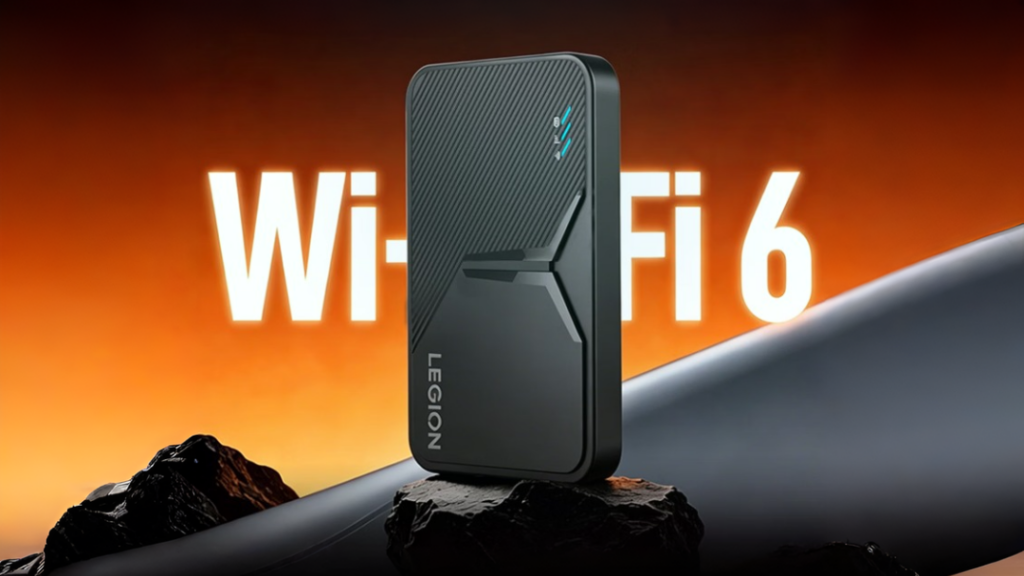
In related news, Lenovo has recently introduced the Legion LM50S portable Wi-Fi hotspot, featuring Wi-Fi 6 connectivity, 4G LTE support, and up to 12 hours of battery life.
For more daily updates, please visit ourNews Section.
Memory prices have gone up sharply in the last few quarters, and it now appears the situation isn’t going to get better anytime soon, at least for the next two years. DDR5 is already facing price surges, and the latest supply chain reports suggest a significant price increase would affect older DDR4 and DDR3 modules, which far exceeds initial expectations.
According to a DigiTimes report, memory contract prices are still being finalized, and that’s only going to worsen the situation. Citing supply chain sources, the report reveals that the older DDR4 memory is expected to see a price increase of over 50% in Q3 2026. The report specifically targets DDR4 8Gb DRAM modules.
Earlier, some industry analysts predicted that the rate at which memory prices were rising could narrow to 10–20%, but the reality is just the opposite. Based on the current scenarios, it doesn’t look like it’s going to get better soon.
The spot prices for DDR4 16Gb memory are already high, and in some cases, they are more expensive than DDR5 memory with the same specifications. Their main application largely revolves around PCs. The demand for DDR4 memory rose significantly in Q2, leading to an unexpected price increase. The report also mentions that Taiwanese-made DDR4 memory is priced much higher than Samsung’s offering. The South Korean giant has shifted its production capacity to focus on DDR5 and next-gen premium memory to capture a larger share of revenue from AI customers.
Contract prices for DDR4 8Gb continued their strong upward trend in the third quarter. Due to severe capacity shortages, some industry players reportedly received information from Taiwanese memory manufacturers that DDR4 8Gb prices would increase by 50% in the third quarter compared to the second quarter, breaking through the previously expected price ceiling.
via DigiTimes
Enterprise-grade SSDs, equipped with DRAM, are also contributing to a surge in DDR4 demand. Having DRAM offers various benefits, including lower latency and higher speeds through caching. With large data centers moving towards high-capacity, enterprise-grade SSDs, the need for DRAM will continue to rise.
The three major companies, Samsung, Micron, and SK Hynix, have largely moved away from DDR4 production. Samsung produces in smaller volumes for a few long-term customers, while Micron recently announced mass production of DDR4 and LPDDR4 using the 1α process at its Manassas plant in Virginia, USA. The Taiwan-based Nanya Technology and Winbond Electronics handle the majority of DDR production, which is far below the actual global demand.
The crisis that originally began in the DDR5 segment has trickled down to the legacy DDR3 networks. Prices of 4Gb DDR4 and DDR3 are expected to surge through the second half of 2026. Based on spot prices in early July, here’s the average price of DDR3 and DDR5:
Average price (July 2026)
DDR4 4Gb (512MB x 8) — $12.75
DDR5 16Gb (2GB x 8) — $47.07
Price per Gb
DDR3 4Gb — $3.19
DDR5 16Gb — $2.94
As the production capacity of every major company has already been utilized, the supply-demand gap will continue to rise. According to some industry experts, the DRAM prices for DDR5, DDR4, and DDR3 will continue to surge at least until 2028. That also means we’re likely to see more price hikes in the near future.
TCL has released the 27C2A, a new 27-inch gaming monitor in China that brings dual-mode display technology to a lower price bracket. The monitor is currently listed on JD.com for 2,299 yuan, which converts to roughly $338.
TCL 27C2A Monitor Specifications
The 27C2A operates at a native 4K (3840 x 2160) resolution with a 160Hz refresh rate. This setting is standard for general use, media consumption, and playing graphically demanding games.
However, users can toggle the display into a Full HD (1920 x 1080) mode that increases the refresh rate to 320Hz. This lower-resolution, higher-framerate option is intended for competitive multiplayer games where motion clarity and input response are prioritized over image detail.
The display uses a QD-Mini LED panel equipped with 1,196 local dimming zones. This hardware setup is designed to limit the blooming effect often seen on standard LCDs by providing more precise control over the backlight. TCL says the monitor reaches a peak brightness of 1,200 nits and holds a DisplayHDR 1000 certification.
For color reproduction, the 10-bit panel covers 99% of both the DCI-P3 and sRGB color spaces. It also ships with factory color calibration, promising a Delta E value below 2.
On the gaming side, the monitor has a standard 1ms gray-to-gray response time, with TCL claiming it can reach an effective 0.2ms when using specific motion clarity settings. It supports AMD FreeSync Premium and is G-Sync Compatible to manage screen tearing.
The software includes standard overlays like crosshairs and frame rate counters, though TCL says that some of the advertised software features will be added later through an OTA update.
The physical design includes an ergonomic stand that offers 125mm of height adjustment, tilt, swivel, and a 90-degree pivot for vertical use, alongside standard VESA mounting support.
For connectivity, it includes two HDMI 2.1 ports, one DisplayPort 1.4 input, and a headphone jack. The display also utilizes DC dimming for flicker-free operation.
In related news, Hisense has recently launched a new lineup of ultra-affordable 180Hz Full HD gaming monitors, with prices starting at just $65. Meanwhile, Dell has introduced the Alienware AW3426DW, a 34-inch 280Hz QD-OLED gaming monitor, in European markets.
For more daily updates, please visit ourNews Section.
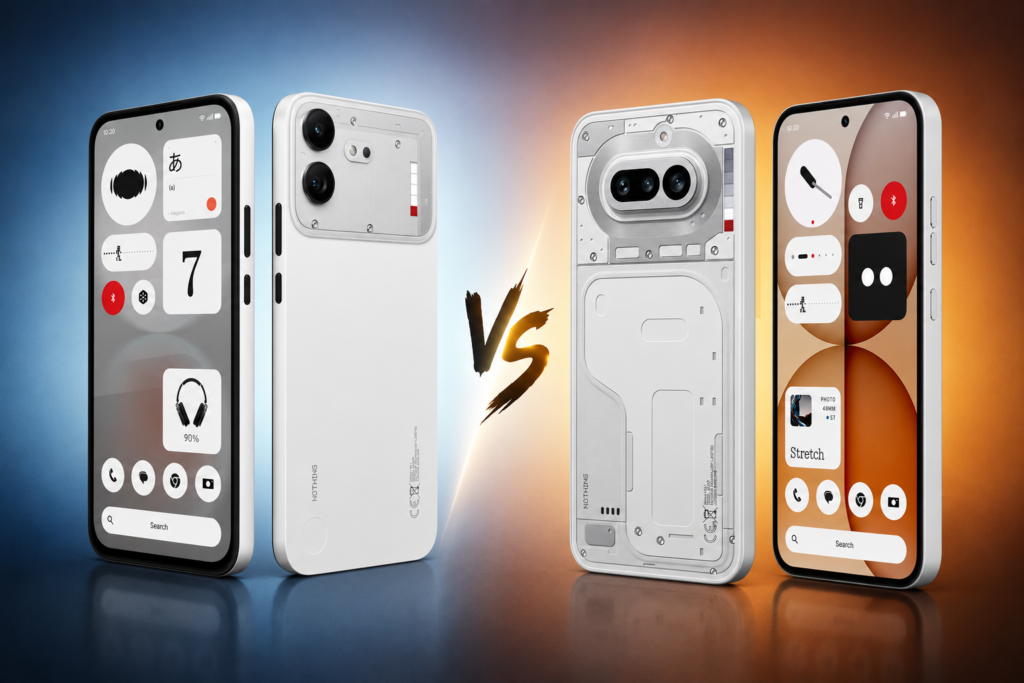
Nothing has expanded its mid-range lineup with the Phone (4a) (launched March 2026) and the newer Phone (4b). Both deliver the brand’s signature transparent design and Glyph interface but target slightly different users. The 4a is the more premium mid-ranger, while the 4b focuses on value with a bigger battery. Here’s a head-to-head breakdown.
Nothing Phone 4b vs Phone 4a
8Verdict: Which One Should You Buy?
Choose the Nothing Phone (4a) if you want the best overall experience. It wins in display quality, performance, camera versatility (especially the telephoto lens), and charging speed. It feels like the more complete and future-proof phone for photography enthusiasts, gamers, or anyone who values a sharp, bright screen.
Choose the Nothing Phone (4b) if you prioritize battery life and value for money. At a lower effective price (especially with offers), it delivers the signature Nothing design, solid daily performance, and class-leading endurance. It’s ideal for users who mainly scroll, watch videos, and want maximum screen-on time without frequent charging.
If you are getting the Nothing Phone (4a) at its launch price of Rs 31,999, then it is the better choice. At those prices, the superior display, camera system, and performance easily justify paying a bit more than the 4b. However, at the current or rumored post-4b prices, the Nothing Phone (4b) offers stronger value, especially if battery life is your priority.
For more daily updates, please visit our News Section.
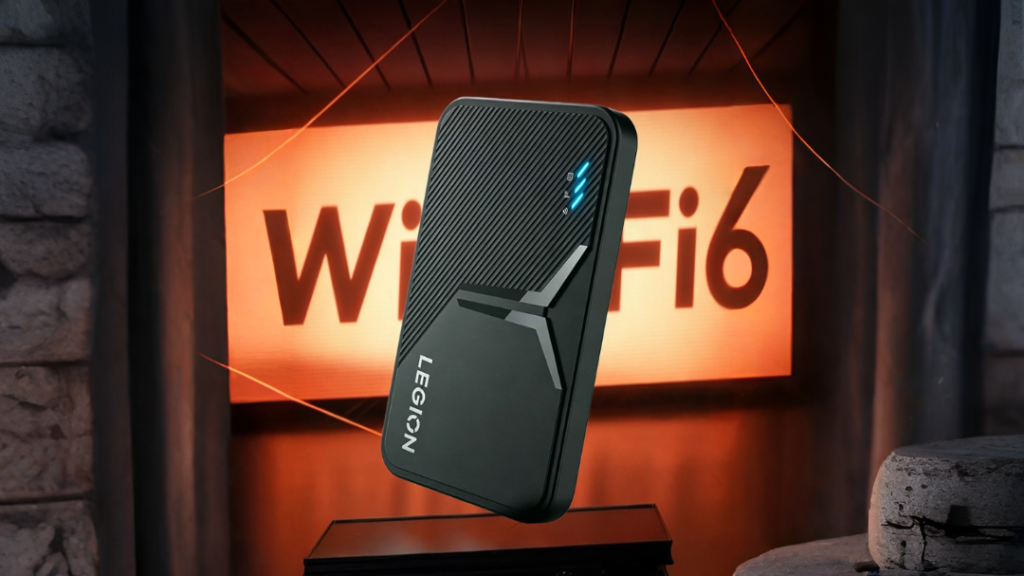
Lenovo has released a new portable Wi-Fi hotspot in China under its Legion brand. The Legion LM50S is a straightforward 4G LTE device priced at 59 yuan, which converts to about $8. Alongside the hardware, Lenovo is bundling the device with 1,500GB of promotional data.
Lenovo Legion LM50S Specifications
While the Legion name is usually attached to Lenovo’s gaming laptops and accessories, the LM50S is a basic connectivity tool rather than a performance-focused gaming device. It operates on 4G LTE networks and caps out at download speeds of 150Mbps. That speed is standard for 4G and is sufficient for routine tasks like checking email, streaming video, attending online classes, and remote work, though it will not match the bandwidth of modern 5G alternatives.
To distribute that connection locally, the LM50S uses Wi-Fi 6. This is a practical inclusion, as Wi-Fi 6 handles multiple connections more efficiently than older standards. The hotspot can support up to 10 devices at once. Lenovo also says the device includes high-frequency wall penetration technology to help maintain a steady signal between rooms in indoor environments.
Inside, the hotspot runs on a 28nm chipset developed by ZTE, which is designed to keep power consumption low while maintaining network stability. For users in China, the device’s most useful feature is likely its network flexibility.
It is programmed to automatically switch between the country’s three major telecom operators, China Mobile, China Unicom, and China Telecom, depending on which network provides the strongest signal in a specific location.
In terms of hardware, the LM50S is built for portability. It weighs approximately 90 grams and measures 110.5 x 68 x 10.5 mm, which is small enough to fit into a pocket or the side compartment of a backpack.
The device is powered by a 3,000mAh battery. Lenovo says this capacity provides up to 12 hours of use under normal conditions, supported by built-in power-saving algorithms to reduce idle drain. Charging is handled via a standard USB-C port.
In related news, ZTE has recently introduced the U15S 4G portable Wi-Fi hotspot, featuring Wi-Fi 6 connectivity, a massive 10,000mAh battery, and up to 26 hours of claimed battery life on a single charge.
For more daily updates, please visit ourNews Section.
Noise has announced the REP Band, marking its entry into the growing screenless wearables segment in India. Instead of focusing on notifications and display interactions, the new wearable is centred on continuous health tracking, AI-powered wellness insights, and a subscription-free experience, offering users access to premium health features without recurring charges.
Noise REP specifications and features
Noise REP
The Noise REP features a screenless design housed in a sandblasted stainless steel body with a dual-finish treatment. Weighing just 27 grams, it is designed for all-day and overnight wear. It comes with a hypoallergenic dual-tone twill weave strap and a one-handed clasp for easy fastening. The wearable is also rated 5 ATM for water resistance and delivers up to 10 days of battery life on a single charge.
For health tracking, the REP includes a circular optical sensor featuring four photodiodes, four green LEDs and multi-wavelength LEDs covering green, red and infrared light. Noise says the sensors have been calibrated for Fitzpatrick skin types II to VI to improve tracking accuracy across different Indian skin tones. The company also claims the wearable delivered a mean heart rate difference of just -0.06 BPM against a Polar chest strap during testing.
The wearable packs a 6-axis motion sensor comprising a 3-axis accelerometer and a 3-axis gyroscope for automatic workout detection. It can recognise activities such as walking, running, cycling, rowing, and elliptical workouts across indoor and outdoor environments.
Health features include 24/7 heart rate monitoring, HRV, recovery score, sleep analysis, stress tracking, VO2, stamina, respiratory rate and SpO2 monitoring. Through the NoiseFit app, users also receive AI-generated daily health highlights without paying any subscription fee.
Noise REP price and availability
The Noise REP is priced at Rs 9,999 as a special introductory offer for customers who pre-book the device. Pre-bookings begin on July 8 via Noise’s official website, Amazon and Flipkart. Buyers can choose from Vivid Orange, Navy Blue, Classic Black and Sand Beige colour options.
Apple’s ultra-slim iPhone Air captured widespread attention with its remarkably thin profile, yet early buyers frequently criticized its limited battery life and basic camera capabilities. Fortunately, recent supply chain leaks indicate that the technology giant is planning a major hardware overhaul for its successor. According to industry insider Digital Chat Station, the second-generation model will introduce several internal re-engineering feats to address these major complaints. Here are the four key improvements arriving on the upcoming device.
iPhone Air 2
4Thinner Display Packaging
Fitting these hardware additions into an ultra-slim phone requires clever space optimization. Reports indicate Apple is implementing Samsung’s CoE (Color Filter on Encapsulation) OLED technology. By printing the color filters directly onto the encapsulation film, the entire screen assembly becomes significantly thinner, clearing the necessary internal depth to house the larger battery.
Launch Timeline
By fixing previous bottlenecks, Apple is poised to deliver a thin smartphone that doesn’t compromise on utility. The device is slated to go official alongside the standard iPhone 18 in spring 2027.
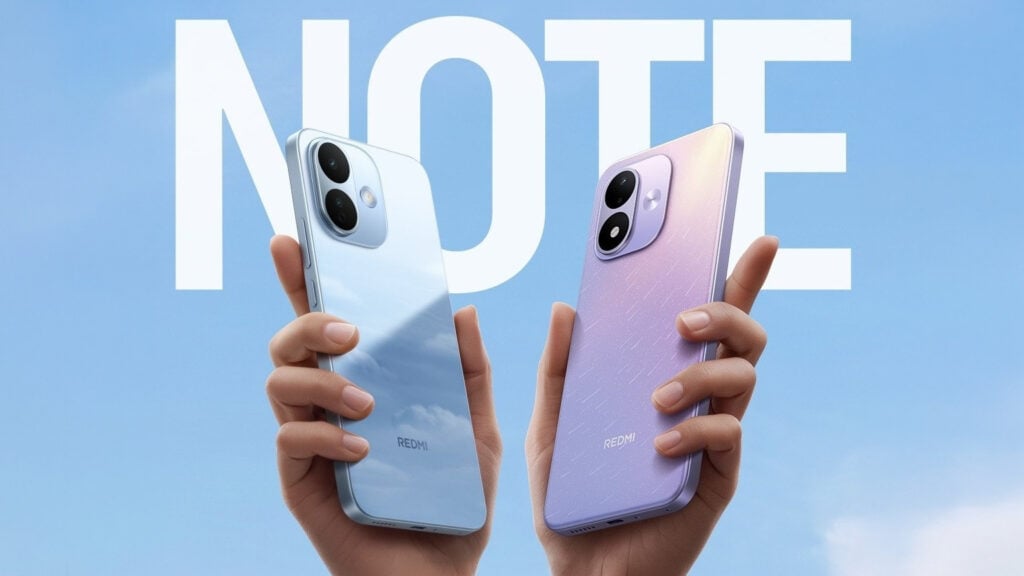
The REDMI Note 17 series is set to launch on July 14 in China, but leaks around the chipsets of the base and Pro models have been all over the place. According to a recent report covering a 3C listing, the Xiaomi 2607DRA18C is expected to be the Pro model. It is tipped to use the Dimensity 7500 and the Snapdragon 6 Gen 5 in separate instances.
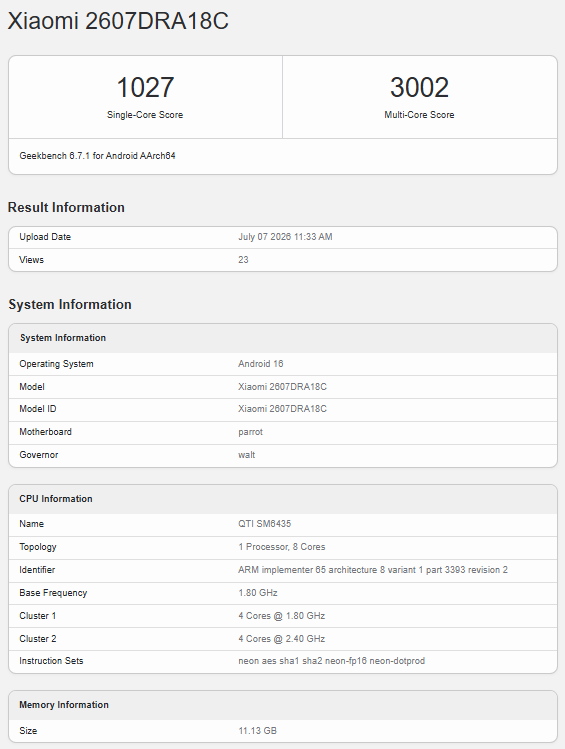
Now the Xiaomi 2607DRA18C has appeared on Geekbench, revealing some solid details about the chipset. The silicon, as per Geekbench, has a 4+4 core architecture with clock speeds of 1.8GHz and 2.4GHz. Both the Dimensity 7500 and the Snapdragon 6 Gen 5 hit higher clock speeds, while these numbers match those of the Snapdragon 6s Gen 4. This will be a small upgrade over the Snapdragon 6 Gen 3 used in the REDMI Note 15 last year.
While the Geekbench listing does not confirm the exact model name of the Xiaomi 2607DRA18C, the chipset strongly suggests it could be the standard REDMI Note 17.
As for performance, don’t expect any major improvement over the predecessor. The test unit scored 1,027 points in the single-core test and 3,002 points in the multi-core test, which is very similar to the scores of the predecessor. That said, the Snapdragon 6s Gen 4 is positioned as a capable mid-range 4nm processor, and the Geekbench numbers suggest it should be sufficient for most day-to-day tasks, including some light gaming.
The company has already revealed the design of the Note 17 series, and there are some significant changes. The rounded square camera island (a shift from last year’s squircle design) has moved to the left. One of the two models showcased includes two camera cutouts alongside a smaller one for the flash, while the other one (possibly the base model) includes only one camera cutout and a flash.
Upon closer inspection of the high-resolution official render, multiple lens openings are visible inside the larger camera cutouts. However, a low-resolution auxiliary lens seems more likely to sit alongside the main sensor instead of an ultrawide on the base model. And yes, the base model has ditched the curved design of the Note 15 and now looks more similar to the Pro.
We use cookies on our website to give you the most relevant experience by remembering your preferences and repeat visits. By clicking “Accept”, you consent to the use of ALL the cookies.
This website uses cookies to improve your experience while you navigate through the website. Out of these, the cookies that are categorized as necessary are stored on your browser as they are essential for the working of basic functionalities of the website. We also use third-party cookies that help us analyze and understand how you use this website. These cookies will be stored in your browser only with your consent. You also have the option to opt-out of these cookies. But opting out of some of these cookies may affect your browsing experience.
Necessary cookies are absolutely essential for the website to function properly. This category only includes cookies that ensures basic functionalities and security features of the website. These cookies do not store any personal information.
Any cookies that may not be particularly necessary for the website to function and is used specifically to collect user personal data via analytics, ads, other embedded contents are termed as non-necessary cookies. It is mandatory to procure user consent prior to running these cookies on your website.