Add GIZMOCHINA as Preferred Source on Google
As an Amazon Associate, Gizmochina earns from qualifying purchases. Links on this page may earn us a commission at no extra cost to you.
Not everyone’s a tablet person. Plenty of people buy one, use it for a week to watch a few shows in bed, and then let it sit in a drawer next to the charger it came with. That’s usually a sign the tablet wasn’t matched to what they actually needed it for. But the ones who do get it, who use their tablet daily for notes, sketching, reading, or genuinely replacing a laptop, tend to swear by them.
The difference in 2026 is that tablets have gotten good enough across the board that almost anyone can find one that earns its keep, whether that’s a massive screen for spreadsheets and Photoshop or something small enough to toss in a bag without a second thought.
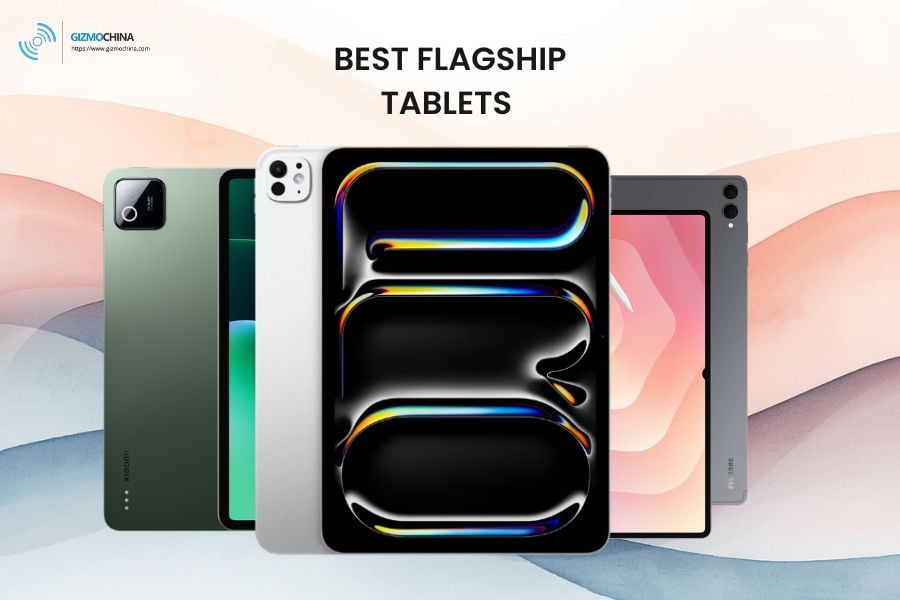
Prices have shifted a bit this year too, following the same memory cost squeeze that’s been hitting phones, so a few of these cost more than you might remember from last year’s shopping. Here are five tablets worth considering in 2026.
1. Apple iPad Pro M5
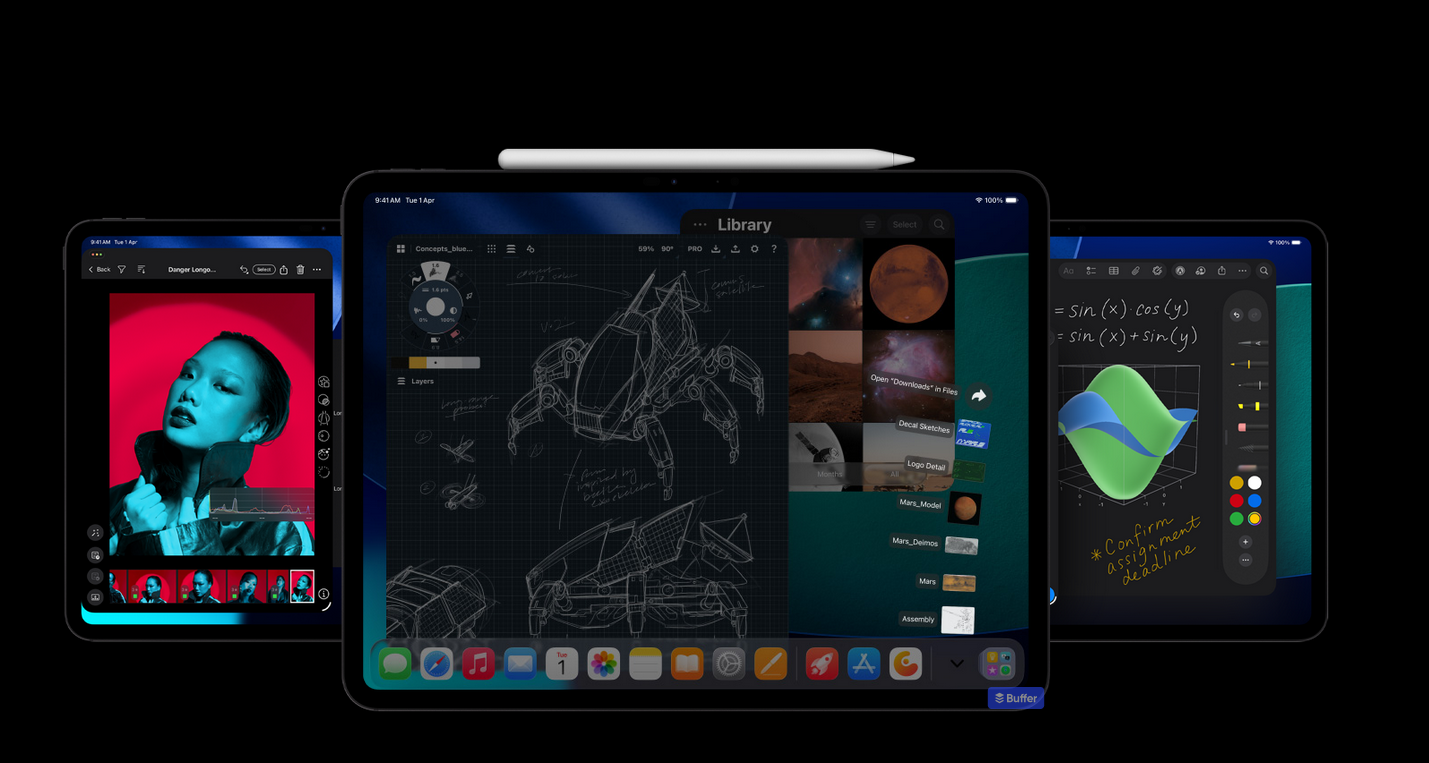
Apple didn’t make major changes to the iPad Pro‘s design this year, and that’s probably fine. The 13-inch model is still just 5.1mm thick, while the Wi-Fi version weighs 579 grams. Its Ultra Retina Tandem OLED display runs at 120Hz and supports HDR10 and Dolby Vision, with peak brightness of 1,600 nits.
The biggest upgrade is inside. The iPad Pro now runs on Apple’s M5 chip, which brings a noticeable performance boost over the previous generation. Apple claims up to 3.7 times faster performance than the M1 iPad Pro in ray-traced 3D rendering, while gaming tests have also shown better sustained frame rates than the M4 model in demanding games.
Apple has also added its C1X modem and N1 wireless chip. That brings support for Wi-Fi 7 and Bluetooth 6, while 40W charging can take the tablet to 50% in around 30 minutes.
You can get it in 256GB, and it goes all the way up to 2TB. Pricing starts at around $999 for the 11-inch model.
The iPad Pro has always been more expensive than most tablets, and that hasn’t changed. You’re paying not just for the hardware but also for iPadOS, Apple’s ecosystem, and the large selection of apps designed for the platform.
2. Samsung Galaxy Tab S11 Ultra
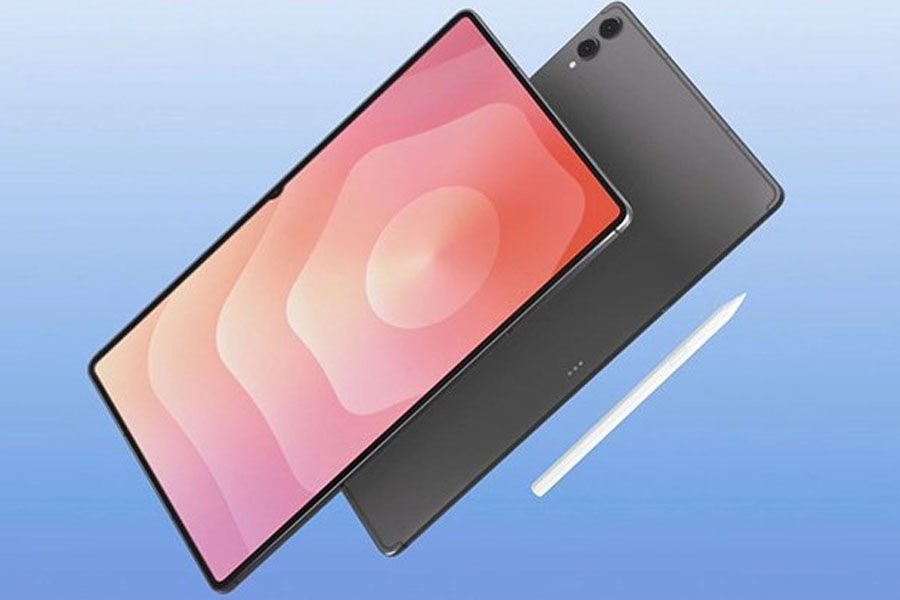
Samsung has gone all-in on size with the Galaxy Tab S11 Ultra. It features a huge 14.6-inch Dynamic AMOLED 2X display with a 120Hz refresh rate and up to 1,600 nits of peak brightness. Despite the massive screen, the tablet is only 5.1mm thick.
It is powered by MediaTek’s Dimensity 9400+ chip with OneUI on top, and you also get S Pen support, which makes the tablet particularly useful for note-taking, drawing, and other productivity tasks. There’s also an 11,600mAh battery with 45W charging.
Samsung has also given the tablet an IP68 rating for ingress protection. The company has confirmed seven years of software updates for the S11 series, which should keep the tablet useful for a long time.
The Tab S11 Ultra starts at $1,299.99 with 256GB of storage and goes up to $1,899.99 for the 1TB model. Samsung also offers a Pro Keyboard that connects through the tablet’s Pogo Pin connector, making it much closer to a small laptop.
3. OnePlus Pad 4
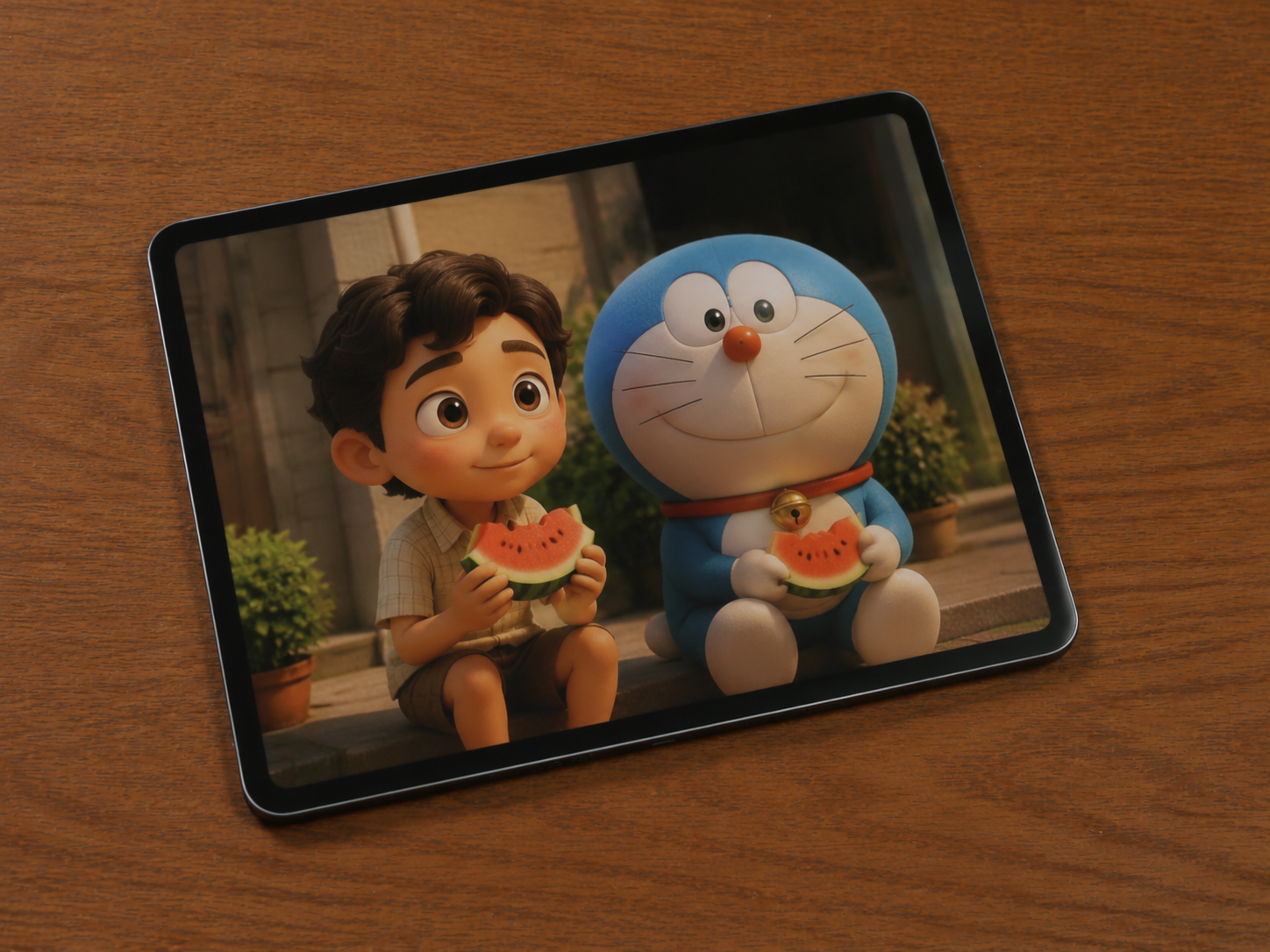
The OnePlus Pad 4 is built around the idea that a tablet can be a laptop replacement without costing as much as one. Its 13.2-inch LCD has a 3.4K resolution, a refresh rate of up to 144Hz, Dolby Vision support, and peak brightness of 1,000 nits.
Under the hood is Qualcomm’s Snapdragon 8 Elite Gen 5 chip, so there’s plenty of power for gaming and multitasking. But the battery is arguably the bigger selling point. The tablet packs a huge 13,380mAh battery and supports 80W fast charging.
The large battery means you can go for a long time without reaching for the charger, even with heavy use. OnePlus has also equipped the Pad 4 with an eight-speaker system for entertainment.
Depending on the market and storage configuration, the tablet costs around $630 to $700. That’s considerably less than the iPad Pro and Galaxy Tab S11 Ultra while still giving you flagship-level hardware.
4. Xiaomi Pad 8 Pro
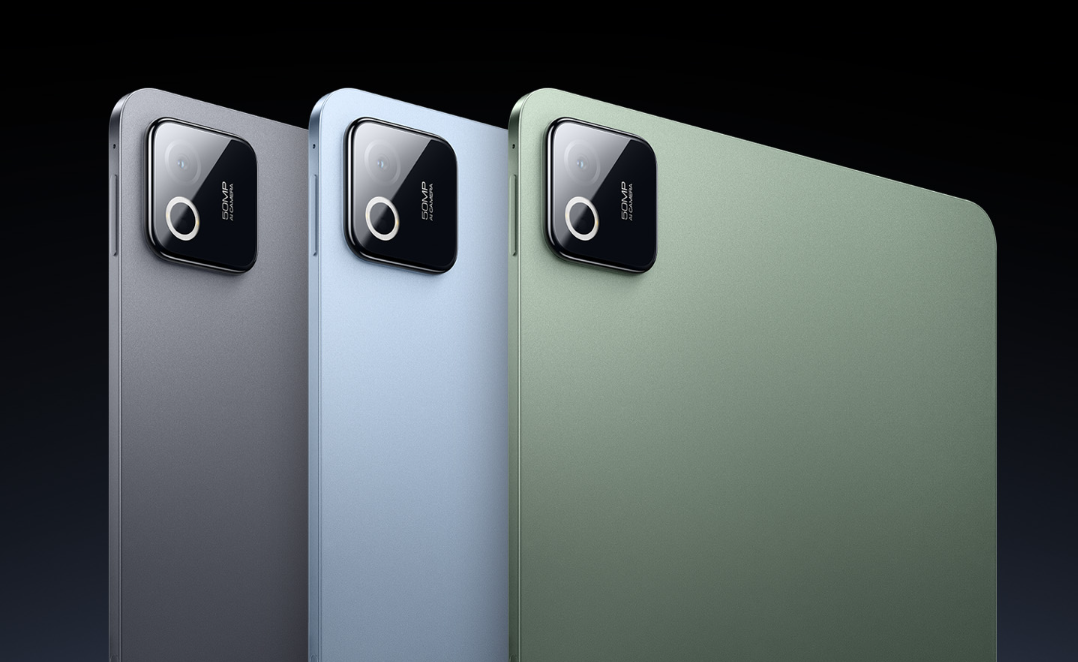
Not everyone wants a massive 14-inch tablet. The Xiaomi Pad 8 Pro takes a more balanced approach by offering plenty of power in a smaller and easier-to-carry package.
It has an 11.2-inch 3.2K LCD with a 144Hz refresh rate, 12-bit color, Dolby Vision, and up to 800 nits of brightness. Xiaomi also offers a Matte Edition with nano-etched anti-glare glass. It gives the screen a more paper-like finish and makes it particularly comfortable for reading and taking notes.
The tablet runs on Qualcomm’s Snapdragon 8 Elite chip, and has a 9,200mAh battery with 67W fast charging. Xiaomi even fitted a 50MP rear camera and a 32MP front camera, although cameras aren’t exactly the main reason to buy a tablet.
Its price starts at €649.99 for the 8GB/256GB version and goes up to €769.99 for the Matte Glass model with more storage. That makes it one of the more affordable ways to get flagship-level performance without carrying a huge tablet.
5. Honor MagicPad 4
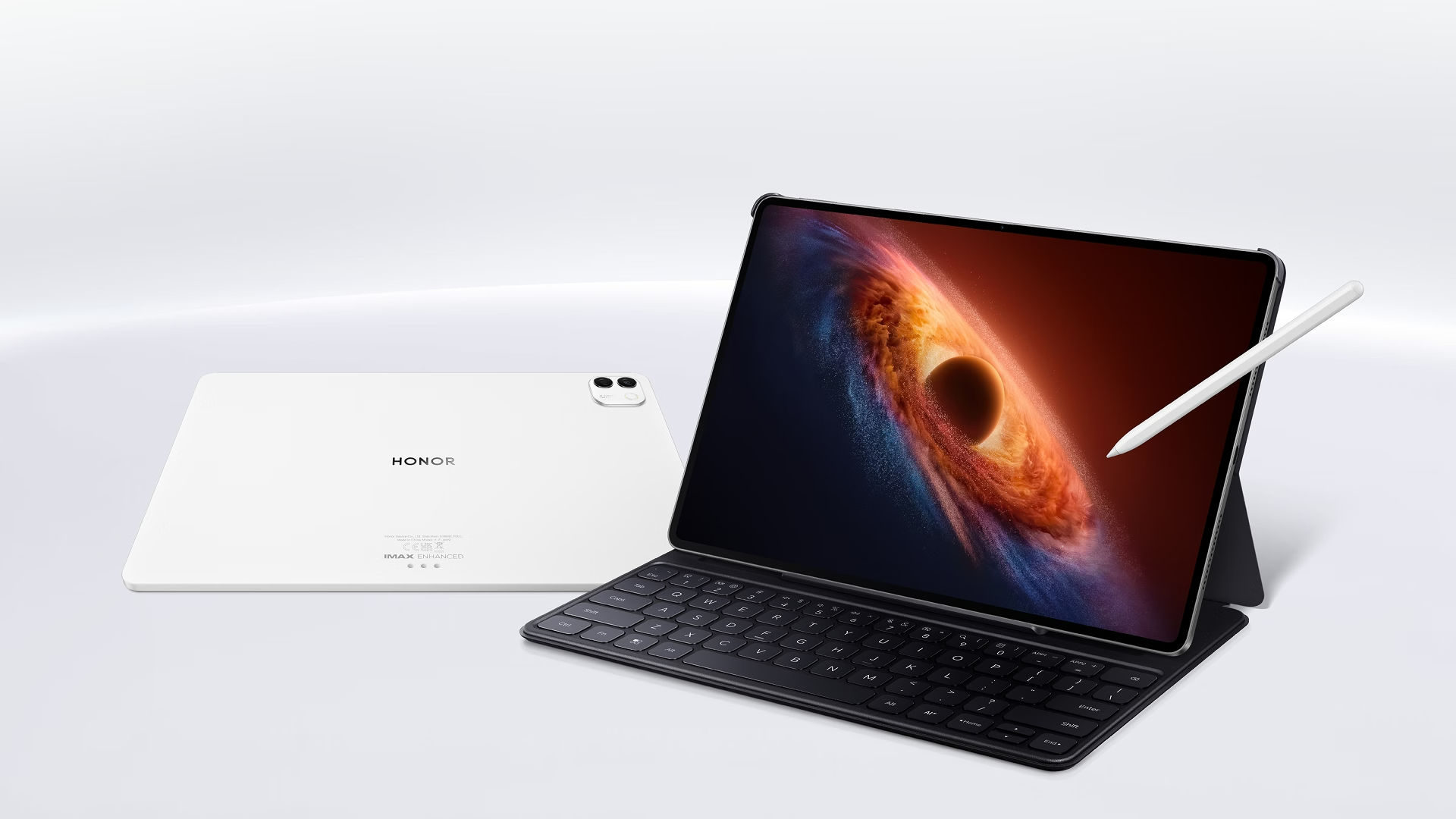
The Honor MagicPad 4 is built to be impressively slim at just 4.8mm thick and 450 grams. Despite the ultra-slim body, it packs a 12.3-inch OLED display with a 3000 × 1920 resolution, a 165Hz refresh rate, and up to 2,400 nits of HDR brightness. Those are flagship-level numbers, especially for a tablet this thin.
The tablet is powered by Qualcomm’s Snapdragon 8 Gen 5 chip and comes with up to 16GB of RAM and 512GB of storage. It also has a 10,100mAh battery with 66W fast charging, which is impressive considering how little space Honor had to work with inside that 4.8mm body.
It also supports the Honor Pencil 3 stylus and Smart Keyboard, but they are sold separately for €50 or £50 each. MagicOS, for what it’s worth though, may not be as polished as iPadOS or Samsung’s One UI in some areas. But if portability matters to you, the MagicPad 4 is an easy one to consider.
6. Which Tablet Should You Actually Buy?
The iPad Pro M5 is the best overall choice if you want polished software, powerful hardware, and a strong selection of tablet apps. It’s also the obvious pick for creators and professionals who don’t mind paying more.
The Galaxy Tab S11 Ultra is the better option if you want a huge display, S Pen support, and a tablet that can double as a desktop-style workstation with Samsung DeX. The OnePlus Pad 4 makes more sense if performance and battery life are your priorities. It gives you flagship hardware without the price of Apple’s and Samsung’s top-end tablets.
Go with the Honor MagicPad 4 if you want a stunning display in the thinnest, lightest body you can find. And if you want something smaller and easier to carry, the Xiaomi Pad 8 Pro offers a strong mix of performance, display quality, and price.
Don’t miss a thing! Join our Telegram community for instant updates and grab our free daily newsletter for the best tech stories!
For more daily updates, please visit our News Section.