Xiaomi is set to unveil a brand-new smartwatch for kids: Xiaomi Kids Smartwatch 7C! We know Xiaomi is known for its diverse range of products. The company is now launching a new watch specifically designed for children very soon. We have spotted the upcoming Smartwatch 7C in our IMEI database.
Xiaomi Kids Smartwatch 7C
We have spotted the Xiaomi Smartwatch 7C with the model number MTSB28XUN, in our database. Unfortunately, this is the only information we have. Our latest findings confirm that this watch will debut soon, though we don’t have any details on the specs yet. Nevertheless, Xiaomi’s devices aimed at kids are usually very useful for both children and their parents.
Xiaomi Kids Smartwatch 7C MTSB28XUN
The upcoming Xiaomi Kids Smartwatch 7C will feature 4G connectivity support, which is actually a crucial element for a kid’s smartwatch. This allows children without phones to make audio calls to their parents with only the smartwatch. Parents worried about their children spending too much time on phones may buy this watch to maintain basic communication. While it might not be a perfect use case scenario, it’s great to see Xiaomi introducing a device specifically for kids.
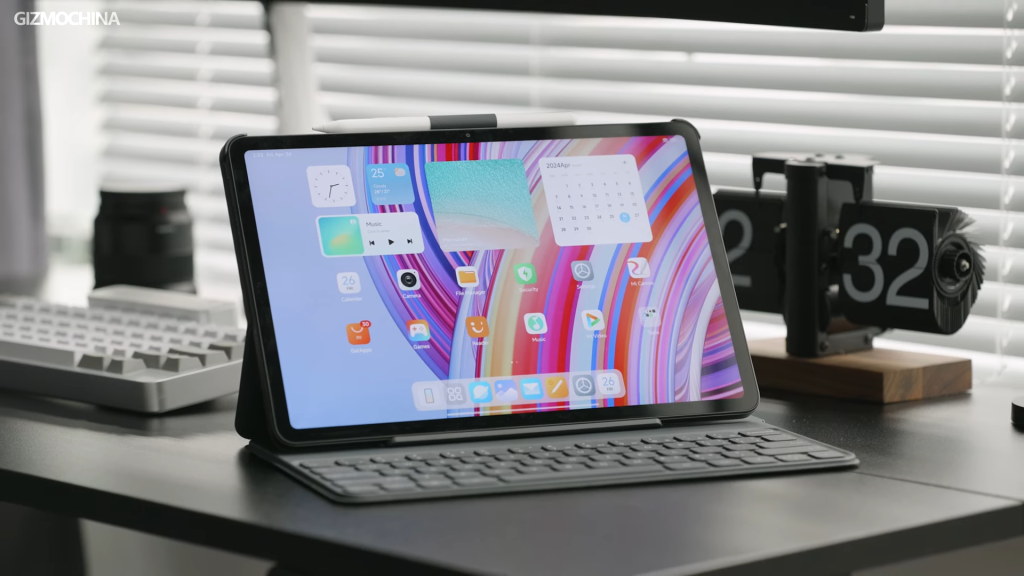
Xiaomi has launched the Redmi Pad SE 4G, adding to its tablet lineup with a focus on affordability and functionality. It has a relatively compact display and hardware that’s capable of handling day-to-day tasks. One of the key selling points of this tablet is its 4G connectivity.
Redmi Pad SE 4G specs:
This new Redmi Pad SE 4G model features an 8.7-inch HD+ LCD screen with a 90Hz refresh rate and a peak brightness of 600 nits. The display is protected by Corning Gorilla Glass 3 and is TÜV Rheinland certified for low blue light and flicker-free use.
The tablet is powered by a MediaTek Helio G85 processor, offering 4GB of RAM and storage options of 64GB and 128GB, expandable up to 2TB via a microSD card. It has stereo speakers with Dolby Atmos support, a 6650mAh battery with 10W fast charging, and includes voice calling capability. Connectivity options include dual SIM slots, Wi-Fi, Bluetooth 5.3, and a USB Type-C port. It also features an 8MP rear camera with an LED flash and a 5MP front camera.
Pricing & availability
The Redmi Pad SE 4G comes in Forest Green, Ocean Blue, and Urban Grey colors. The 4GB + 64GB model is priced at Rs. 10,999, while the 4GB + 128GB model costs Rs. 11,999. A cover that doubles as a stand is available for Rs. 999. Launch offers include a Rs. 1000 discount with ICICI Bank credit cards and credit card EMIs.
The tablet will be available from August 8th on Flipkart, mi.com, and Xiaomi Retail stores.
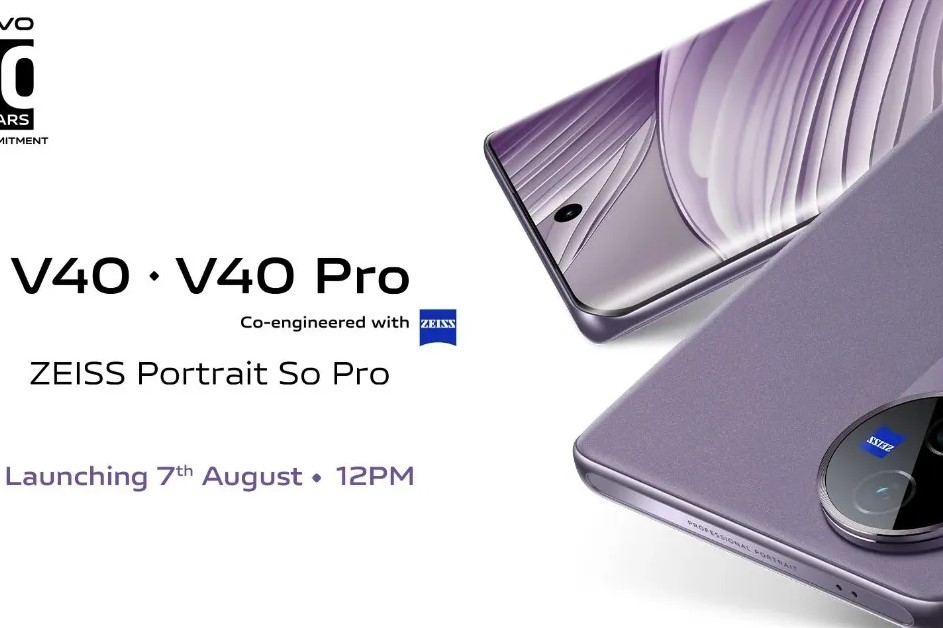
Vivo has officially announced the launch date of the V40 series smartphones in India. It is set to launch in the country next week. The lineup is confirmed to comprise of the V40 and V40 Pro. They will arrive as the successors to the last year’s Vivo V30 and V30 Pro. The V40 series microsite is now live on the official website as well as on Flipkart. The latter confirms the upcoming offering’s availability from the e-commerce platform. Read on to learn all the details.
Vivo V40 series India launch date out
The Vivo V40 series is set to launch in India on August 7 at 12 pm IST. The V40 and V40 Pro have a pill-shaped camera island comprising of a circular module that houses two sensors and an oblong module accommodating an aura LED flash unit and a third lens (only on the pro model). Both phones will pack ZEISS-branded cameras and a 50MP selfie snapper. As per the microsite, the setup on the V40 Pro is confirmed to comprise a 50MP OIS-enabled main lens paired with a 50MP telephoto and 50MP ultra-wide-angle unit. The upcoming offerings will come with a ZEISS multifocal portrait that will allow you to shoot at multiple focal lengths such as 24, 35, 50, 85, and 100mm.
The Vivo V40 and V40 Pro have a slim profile. They sport an IP68 dust and water-resistant certification ensuring reliability under 1.5 meters for half an hour. The brand says that the devices have undergone over 70 rigorous test for protection against accidental bumps and knocks.
The Vivo V40 Pro is confirmed to be the slimmest smartphone backed by a 5,500mAh battery unit. It will support 80W fast charging. The smartphone will be offered in Ganges Blue and Titanium Grey color. The standard V40 will also be available in the same options along with an additional Lotus Purple shade.
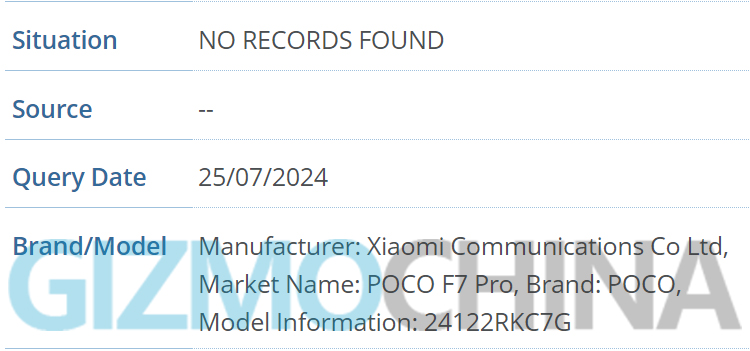
Hot on the heels of announcing the POCO F6 series, POCO has officially started working on the POCO F7 series. Gizmochina has spotted the new smartphones in the IMEI database. The POCO F7 series will be launched in 1 year, most likely in May 2025. The top-end model of the series, the POCO F7 Pro, promises to bring significant improvements and new features over the predecessor POCO F6 Pro.
The POCO F7 series is in the works, but don’t get excited
The POCO F7 Pro will be officially announced in 1 year, marking the next evolution in Xiaomi’s popular POCO F series. The POCO F7 series has been spotted in the HyperOS source code, while the IMEI database offers important clues as to which regions the device will be available in. In this article, we will focus on the details of the POCO F7 Pro. We will also publish an article on the regular POCO F7 soon.
POCO F7 Pro 24122RKC7G
The POCO F7 Pro is a model for the global market. For China, this device is called the Redmi K80. Both devices have exactly the same specifications. The POCO F7 Pro’s model number is “24122RKC7G” and this model number has a “G” at the end. This indicates that it’s a smartphone for the global market. Redmi K80 has the model number “24122RKC7C“. The “C” at the end of this model number indicates that it’s exclusive to the Chinese market. Redmi K80 will be rebranded as POCO F7 Pro for different markets.
POCO F Pro and Redmi K series phones will be codenamed after painters. The POCO F7 Pro will be codenamed “miro“. And this codename also applies to the Redmi K80. Both devices are being developed under a common codename. The codename “Miro” comes from Joan Miro. Joan Miro was a painter born in Barcelona, Spain on April 20, 1893.
The POCO F7 Pro (Redmi K80) is expected to be powered by the Snapdragon 8 Gen 3 chipset. In the POCO F6 Pro (Redmi K70), this chipset was Snapdragon 8 Gen 2. Other specifications remain under wraps. The official launch date has not yet been announced, but since the POCO F6 Pro was introduced in May 2024, the POCO F7 Pro should be introduced exactly 1 year later, in May 2025. The Chinese version of the POCO F7 Pro, the Redmi K80 is expected to be unveiled in November 2024.
Realme has launched a new Narzo smartphone in India. It is dubbed the Narzo N61. The device packs various impressive specifications and features at an entry-level affordable price tag. Some of these include an interactive waterdrop notch, a durable body, high-refresh rate display, and more. Read on to know what the device offers out of the box.
Realme Narzo N61 specifications
The Realme Narzo N61 comes with an IP54 rating and ArmorShell protection with aluminium chassis ensuring durability. It has a flat frame and a side-mounted fingerprint scanner embedded in the power button. On the front, the device features a 6.74-inch display surrounded by thin bezels albiet a thicker chin and a waterdrop notch. It bears an HD+ resolution, a 90Hz refresh rate, and a 560 nits peak brightness. The device also has Realme UI’s Mini Capsule 2.0 feature for interactive notifications. Additionally, it features Rainwater Touch technology allowing users to interact with the screen even with wet hands.
The Realme Narzo N61 features a 32MP main sensor paired with a 2MP depth lens. There is a 5MP front-facing selfie snapper.
Under the hood, the Realme Narzo N61 is equipped with a Unisoc T612 chipset. It packs up to 6GB RAM and 128GB storage. The smartphone draws its power from a 5,000mAh battery unit with support for 15W charging. Software-wise, it runs on Realme UI 4-based on Android 14.
The Realme Narzo N61 costs Rs 7,499 and Rs 8,499 for the 4GB + 64GB and 6GB + 128GB variants. It is offered in Marble Black and Voyage Blue colors. The smartphone can be purchased from Flipkart starting August 6. Those purchasing from Realme’s website will be eligible for an instant discount of Rs 500.
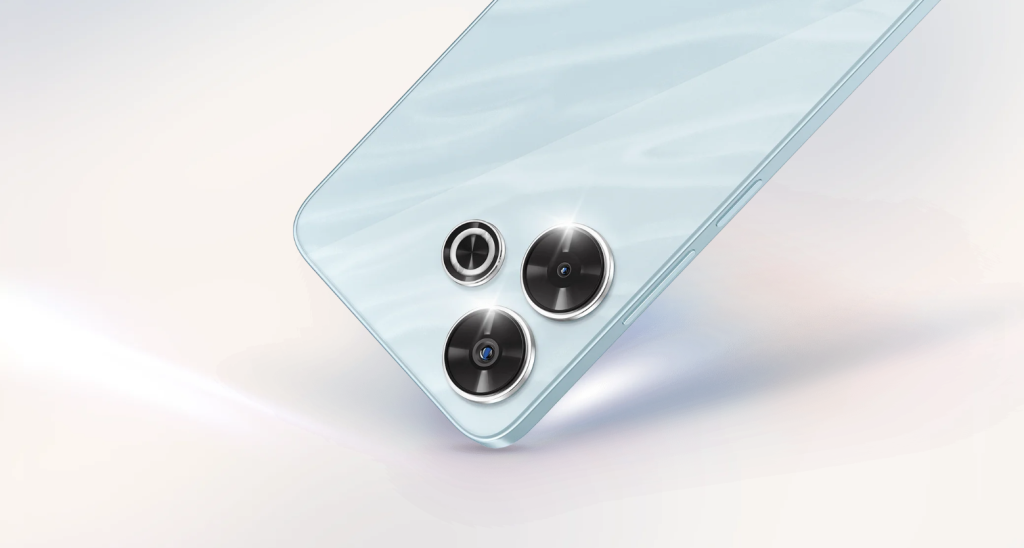
The POCO M6 Plus was recently confirmed to launch in India soon. But ahead of the official announcement, a fresh teaser revealed one of its key specifications. The upcoming phone is a budget device that is set to launch next month.
POCO M6 Plus Teaser
The Chinese smartphone brand is gearing up to unveil the POCO M6 Plus in India on 1st August 2024. Just last week, the landing page of the device surfaced on Flipkart. This listing revealed its dual tone rear design, flat back panel, and rounded corners. Meanwhile, the front sports a punch hole cutout for the selfie camera. Now, we know that the smartphone will be equipped with the Qualcomm Snapdragon 4 Gen 2 AE SoC (Accelerated Edition). This was confirmed via a short teaser video, which was shared on POCO India’s official X account (formerly Twitter).
Unfortunately, other finer details like its other specs and pricing are still at large. But based on what we know so far, the POCO M6 Plus could be a tweaked version of the Redmi Note 13R. To recall, this device was announced a couple of months back in China. The Note 13R sports a tall 6.7-inch IPS LCD panel that offers an FHD+ resolution and a 120hz refresh rate.
It was also equipped with a Snapdragon 4 Gen 2 SoC, which is paired with up to 8GB of RAM and up to 128GB of internal storage. For optics, the rear features a 108-megapixel dual camera setup, while the front houses a 13-megapixel selfie shooter. A large 5,030mAh battery pack powers this device, which supports 33W wired fast charging. The M6 Plus is expected to be a budget mid range device that will likely cost between 13,000 INR to 15,000 INR. So stick around for more as we will be covering the launch event later this week.
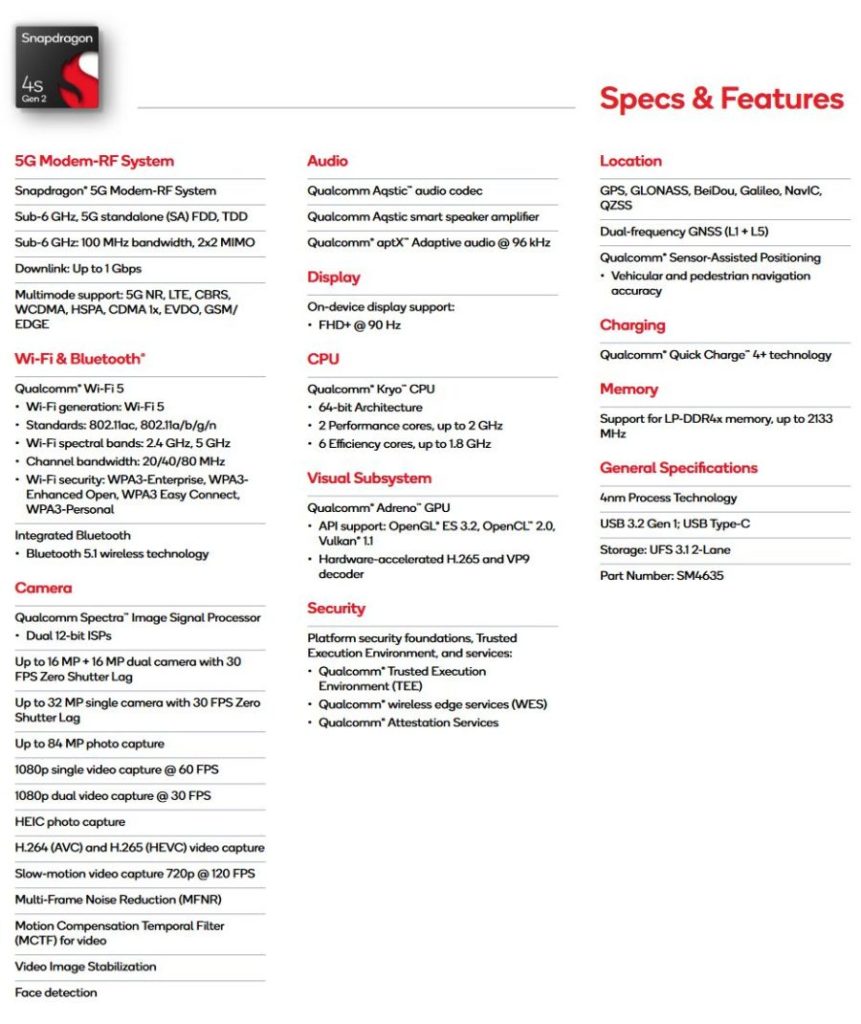
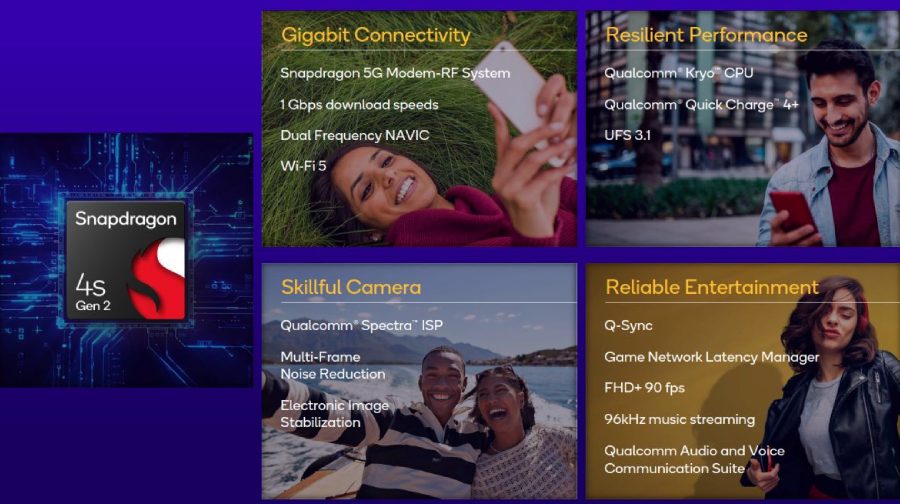
Qualcomm‘s “4” series processors typically cater to the budget-conscious smartphone market. Last year, the company introduced the Snapdragon 4 Gen 2, which improved on its predecessor with a 4nm manufacturing process and support for faster RAM and storage. Now a new leak suggests the chipmaker might be adding another variant – the Snapdragon 4s Gen 2.
Leaked by Evan Blass on X (formerly Twitter), the Snapdragon 4s Gen 2 appears to slot in between the existing Snapdragon 4 Gen 1 and 4 Gen 2 in terms of performance. It retains the 4nm process and an octa-core CPU configuration, but with a slight downgrade in clock speed (up to 2.0GHz) compared to the 4 Gen 2’s 2.2GHz.
But the biggest trade-off seems to be in display support. While the 4 Gen 2 boasted a smooth 120Hz FHD+ experience, the 4s Gen 2 scales back to a more standard 90Hz FHD+.
Another area of cost-saving is in RAM compatibility. Unlike its siblings, the 4s Gen 2 opts for the more established LPDDR4x RAM, with speeds up to 2133MHz, instead of the more advanced LPDDR5x. While this might not significantly impact everyday tasks, it could affect multitasking and app loading times.
Surprisingly, the 4s Gen 2 even lacks support for 108MP cameras. Even the base Snapdragon 4 Gen 1 offers this, while the 4s Gen 2 seemingly prioritizes lower megapixel sensors that will limit image quality on phones powered by this chip.
Looking at the bigger picture, the Snapdragon 4s Gen 2 positions itself as a budget-friendly option for manufacturers looking to create affordable 5G smartphones.
However, the downgrades in display refresh rates, RAM compatibility, and camera capabilities suggest users might face some compromises in performance and user experience. It’s still uncertain which phone brands will adopt the Snapdragon 4s Gen 2.
There have been numerous leaks about the Pixel 9 series, and Google has released official teasers afterwards. A new microsite on Flipkart has now revealed the launch date for Pixel 9 series in India.
While it’s still unclear which devices in Pixel 9 series will launch in India but the teaser image showcases the black Pixel 9 Pro Fold and the white Pixel 9 Pro. This actually marks Google’s first foldable device launch in India. Previous rumors suggest the Pixel 9 series will feature Pixel 9, Pixel 9 Pro, Pixel 9 Pro XL, and Pixel 9 Pro Fold.
Pixel 9 series Indian launch date
We’re not sure if the entire Pixel lineup will be unveiled, but the teaser image on Flipkart seems to confirm the availability of the Pixel 9 series in India. Visit Flipkart’s Pixel 9 series page from the given link.
Xiaomi has officially announced new tablets in the Indian market. The new Redmi Pad Pro lineup was highly anticipated and brings some capable specs and features for its mid range price tag. So here’s everything you need to know about the Redmi Pad Pro and Redmi Pad Pro 5G.
Spec and Features
The Chinese tech giant’s latest Redmi Pad Pro series are practically identical in terms of specs and features. However, the base model only supports Wi-Fi connectivity, while the 5G variant has mobile networking support (n1/3/5/8/28/40/78 bands). The Redmi Pad Pros sport a tall 12.1-inch LCD panel that offers 2.5K resolution, up to 120Hz variable refresh rate, 180Hz touch sampling rate, DC Dimming, Dolby Vision, Corning Gorilla Glass 3 for protection, and up to 600 nits of peak brightness.
Under the hood, these are equipped with Qualcomm’s Snapdragon 7s Gen 2 SoC with Adreno 710 GPU. The processor is coupled with up to 8GB of LPDDR4X RAM and 256GB of UFS 2.2 internal storage. Users can even expand the storage via a microSD card slot by up to 1TB. The 5G variant supports a Hybrid Dual SIM tray as well (nano + nano / microSD). So, the Redmi Pad Pro 5G is more versatile as you don’t require a separate device for internet connectivity on the go. Both models run on the Android 14 OS based HyperOS custom skin out of the box.
For optics, the rear features a lone 8-megapixel camera (accompanied by an LED flash), while the front also houses an 8-megapixel sensor for selfies and video calls. A massive 10,000mAh battery pack powers these tablets, which support 33W wired fast charging. Xiaomi’s Redmi Pad Pro series has a slim 7.52mm design, with the body built using metal for a premium feel.
You also get Redmi’s first Smart Pen stylus that has 4096 levels of pressure sensitivity, 5ms latency, and the brand’s first keyboard cover (stylus and keyboard cover sold separately). The new tablets offer a quad speaker setup that supports Dolby Atmos for a more immersive listening experience. There are also dual microphones on the devices. But unfortunately, there is no official IP rating for water or dust resistance.
Pricing and Availability
The base Redmi Pad Pro was announced in India in two color options, namely Mist Blue and Graphite Grey. Meanwhile, the Pad Pro 5G arrives in Quick Silver and Graphite Grey variants. So let’s have a look at the pricing:
Redmi Pad Pro
6GB + 128GB – 21,999 INR (roughly 263 US Dollars)
Redmi Pad Pro5G
8GB + 128GB – 24,999 INR (roughly 299 US Dollars)
8GB + 256GB – 26,999 INR (roughly 322 US Dollars)
The Redmi Smart Pen is being sold for 3,999 INR, while the Redmi Pad Pro Keyboard and Redmi Pad Pro Cover cost 3,999 INR and 1,499 INR respectively. These tablets will go on sale via the brand’s official website, Flipkart, Amazon India, and Xiaomi’s retail stores starting from 2nd August 2024. The company also offers a 2,000 INR discount to ICICI Bank and HDFC Bank credit card holders.
This limited-edition Panda model is available in a premium 12GB+512GB configuration, which is part of the reason for its high price. It’s launching at Rs. 48,999, but thanks to an ICICI Bank offer, you can grab it for Rs. 45,999 with a Rs. 3,000 discount. The Panda Edition is offered in three standout colors: Hot Pink, Aqua Blue, and Panda White. It features a stylish design with a vegan leather and glass back together.
Xiaomi 14 CIVI
The only real difference between the Panda Edition and the regular Xiaomi 14 CIVI is actually the design. Otherwise, both phones share the same specs. Note that the Panda Edition is available only in the 12GB+512GB variant.
Xiaomi 14 CIVI Panda Edition is powered by Snapdragon 8s Gen 3 chipset. Xiaomi paired it with 12GB of RAM and 512GB of UFS 4.0 storage. The phone also has a 4700 mAh battery and supports 67W fast charging. The phone has a display 6.55-inch in size with 1.5K curved AMOLED screen panel and 120Hz refresh rate with up to 3,000 nits of peak brightness.
For the cameras, it features a 50 MP f/1.6 main camera, a 50 MP telephoto camera, and a 12 MP ultra-wide-angle camera. There’s also a 32 MP front-facing camera for selfies. These all are packed in thin 7.8mm body. You can purchase the phone through Flipkart and Xiaomi India’s official website.
OPPO has launched the K12x 5G in India, a new addition to its K series. The phone comes with MIL-STD-810H certification, ensuring durability in extreme conditions, including heat, moisture, and shocks. It also has an IP54 rating for dust and water resistance.
OPPO K12x 5G specs:
The K12x 5G features a 6.67-inch HD+ display with a 120Hz refresh rate and up to 1000 nits of peak brightness. It includes Splash Touch technology, allowing users to operate the touchscreen even when it’s wet. Powered by the MediaTek Dimensity 6300 SoC, the phone offers up to 8GB of RAM and comes with a 32MP rear camera, a 2MP portrait camera, and an 8MP front camera. The device is slim at 7.68 mm and has a matte finish for a comfortable grip.
The phone includes a 5100mAh battery and a 45W SuperVOOC charger, ensuring quick recharges. Specifications include up to 256GB of storage, expandable to 1TB via microSD, and features like 5G connectivity, dual 4G VoLTE, Wi-Fi, Bluetooth 5.1, GPS, and a USB Type-C port. It runs on Android 14 with Color OS 14.
Pricing & availability
The OPPO K12x 5G is available in Breeze Blue and Midnight Violet. The 6GB + 128GB model costs Rs. 12,999, and the 8GB + 256GB model is priced at Rs. 15,999. It will be available from August 2nd on Flipkart, OPPO India online stores, and offline stores. Launch offers include a Rs. 1000 discount with HDFC Bank, SBI, and Axis Bank cards, and a no-cost EMI for up to three months.
Apple has permanently slashed the prices of the iPhone 15 Pro and iPhone 15 Pro Max for the first time in India. The Cupertino-based tech giant follows the tradition of discontinuing the flagship models with the launch of the new generation. The current generation is due to get their successors in September. The reduction in prices of the iPhone 15 Pro models is likely attributed to the import duty rate cut from 20 to 15 percent by the Indian government at the recently announced budget session.
iPhone 15 Pro, Pro Max get a price cut in India
Apple has slashed the prices of the iPhone 15 Pro and Pro Max in India by Rs 6,000. This is applicable to all storage configurations of the device. The brand has not explicitly revealed the reason behind the price cut. The revised pricing is also visible on the company’s official website. It’s worth noting that the prices could be even lower at Apple Authorised Resellers and third-party stores.
The iPhone 15 Pro now starts at Rs 1,29,800 for the base 128GB variant down from Rs 1,34,900. Meanwhile, the 256GB and 512GB are now available for Rs 1,39,800 and Rs 1,59,700 compared to their original retail prices of Rs 1,44,900 and Rs 1,64,900 respectively. The 1TB variant of the smartphone can be purchased at Rs 1,79,400 instead of Rs 1,84,900.
As for the iPhone 15 Pro Max, the 256GB, 512GB, and 1TB configurations now retail at Rs 1,54,000, Rs 1,73,900, and Rs 1,93,500 respectively. They were previously available for Rs 1,59,900, Rs 1,79,900, and Rs 1,99,900.
Going by the aforementioned revised pricing, the iPhone 15 Pro has become cheaper by up to Rs 5,500 whereas the prices of the Pro Max have dropped by up to Rs 6,000.
Should you wait before purchasing the iPhone 15 Pro, Pro Max?
With the festive season around the corner, we would recommend holding off buying any iPhones even after the price cut. The devices could be even available for cheaper during the sale season along with lucrative bank offers. Many authorised resellers are selling the Pro models at a slightly cheaper price than Apple’s store and website. There could also be an exchange bonus with the trade-in value of your old iPhone depending on the retailer and the timing. Additionally, the iPhone 16’s launch in September means that the current-generation non-Pro models will also get an official price cut.
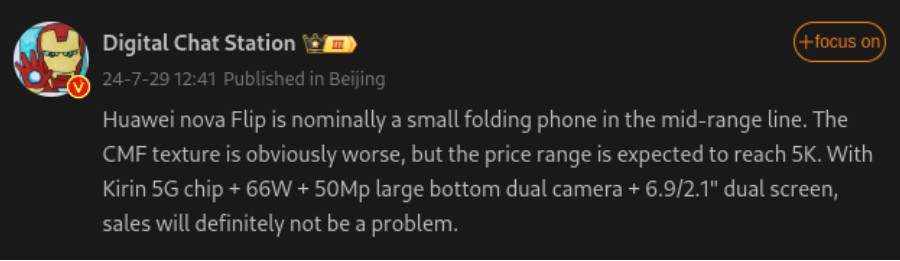
Huawei today officially confirmed the launch of its new clamshell-foldable, the Nova Flip. Although the company hasn’t revealed the phone’s specifications yet, a leak from tipster Digital Chat Station (DCS) sheds some light on what to expect.
The Nova Flip is expected to be a more affordable option in the growing foldable market. However, this affordability may come at the cost of a less premium feel compared to high-end foldable.
DCS suggests the foldable is “inferior in CMF texture” likely hinting at the use of lower-cost materials compared to premium foldables. However, this trade-off could be offset by its price which is said to be around 5,000 yuan (approximately $690).
Moreover, the leak reveals that the Nova Flip will be powered by a Kirin 5G chip, though the specific model remains unknown. Charging is said to be 66W which is considerably faster than the Galaxy Z Flip 6’s 25W charging support. However, there is no mention of wireless charging as of now.
As for the camera system, it seems to include a dual setup with a 50-megapixel main sensor, likely paired with a secondary sensor for depth or ultrawide shots.
Huawei Nova Flip
Coming to the screen, the larger main display is said to measure 6.9 inches. Its cover screen is rather small, quite evident from the official renders, and DCS says it measures just 2.1 inches. Details on resolution and refresh rate are missing, but these specs fall in line with what’s expected in a mid-range foldable.
Although the Nova Flip may not have the top-tier specs or premium materials of a flagship foldable, its rumored price could make it an appealing choice for budget-conscious users interested in foldable phones. We’ll have to wait for the official launch on August 6th to see how the Nova Flip stacks up.
Samsung recently pulled the curtains off of its new foldable phones, the Z Fold 6 and Flip 6. However, these might not be the only foldable devices from the brand this year. There have been rumors circulating for months about a third, “slimmer” version of the Galaxy Z Fold 6 – the aptly Galaxy Z Fold 6 Slim.
This new model is hoped to bridge the gap between Samsung’s foldables and the increasingly thin offerings from Chinese competitors. However, a recent report casts doubt on the possibility of a truly ultra-thin Z Fold 6 Slim in 2024.
According to TheElec, the Z Fold 6 Slim might be around 11mm thick when folded. The standard Fold 6 measures 12.1mm, so the Slim version’s reduction to 11mm is a noticeable decrease in thickness.
But it may come with a compromise: the lack of S-pen support. The stylus digitizer reportedly adds 0.6mm to the device (0.3mm on each half of the screen), so Samsung may opt to exclude it, resulting in a thickness of approximately 11.5mm for the Galaxy Z Fold 6 Slim.
Despite this, it’s still not as sleek as Chinese foldables, which typically range between 9-10mm thick. Samsung is reportedly working hard to make its slim foldable as thin as a regular phone, but this requires extra effort.
Additionally, Samsung may not want to compromise on the durability side of things. Unlike many Chinese foldables, Samsung’s devices boast an IP48 rating for dust and water resistance, a feature many users value and would not want to sacrifice for a thinner profile.
The Z Fold 6 Slim reportedly features larger displays than its standard counterpart, with a 6.5-inch cover screen and an 8-inch main display. However, the company does not appear fully confident in its success, as production estimates for the Z Fold 6 Slim are between 500,000 and 600,000 units, and it may only launch in South Korea and China.
Lenovo introduces this new mini-PC as a powerhouse for AI tasks. It fits an RTX 4070 and Core i7-14700 into a compact form. The device measures 19.5×19.1×10.8 cm and weighs 3.5 kg.
Lenovo YOGA Portal specs
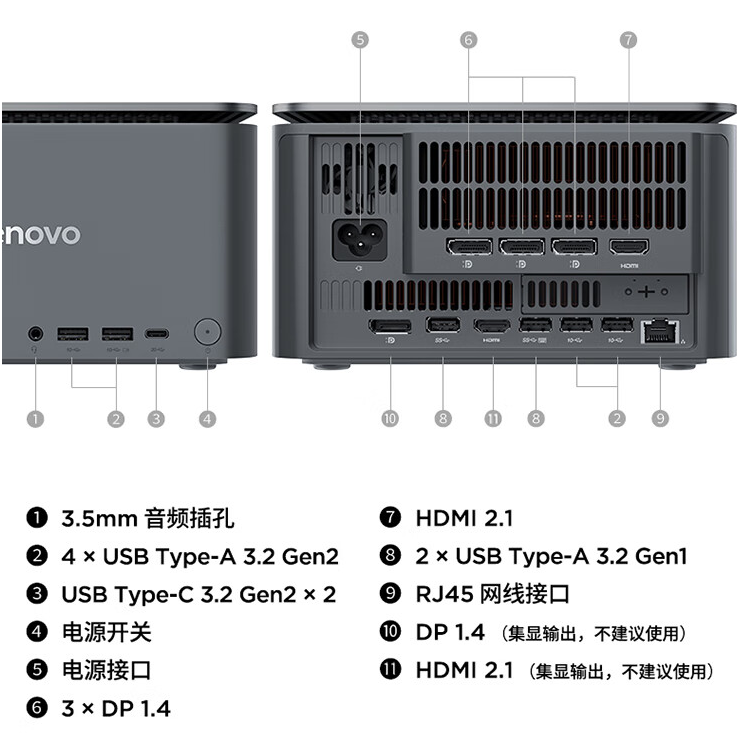
The new Lenovo YOGA Portal comes with 32 GB DDR5 RAM and 1 TB PCIe 4.0 SSD, with two M2 slots for storage expansion. It has a built-in 350W power supply. The front has a 3.5mm headphone jack, 2x USB Type-A 3.2 Gen2, and 1x USB Type-C 3.2 Gen2 ports. The back features 3x DP 1.4, 1x HDMI 2.1, 2x USB Type-A 3.2 Gen 1, 2x USB Type-A 3.2 Gen 2, and an RJ45 port. Additionally, if you want to use the integrated GPU, there are also 1x HDMI 2.1 and 1x DP 1.4 ports.
Lenovo YOGA Portal ports
In China, Lenovo YOGA Portal with i7-14700, RTX 4070, 32GB RAM, and 1TB SSD variant is priced at 17999 CNY which is approximately $2500.
Lenovo has unveiled a new iteration of its business-focused ThinkPad T14s laptop, this time packing a Qualcomm Snapdragon X Elite processor under the hood. Let’s walk through its details here.
Lenovo ThinkPad T14s (Snapdragon) specifications
The star of the show here is the 12-core Snapdragon X Elite processor, which boasts a 3.4GHz peak clock speed. Paired with 32GB of speedy LPDDR5x memory and a 1TB solid-state drive, the T14s 2024 promises solid performance for everyday productivity tasks.
The highlight, however, might be the battery life. Lenovo claims the laptop can muster up to 29 hours of video playback on a single charge, a figure that could be enticing for frequent travelers or those who simply despise the constant scramble for a power outlet.
The display is another noteworthy aspect. It’s a 14-inch OLED panel boasting a sharp 2880 x 1800 resolution and HDR True Black 500 certification. Additionally, it covers 100% of the DCI-P3 color gamut, making it suitable for content creation or media consumption, while the anti-glare, anti-reflection, and anti-stain coatings provide a user-friendly experience in various lighting conditions. Eye health isn’t forgotten either, with Eyesafe low blue light certification included.
For video conferencing or occasional selfies, there’s an FHD RGB+IR camera with a physical privacy shutter. There are noise-reduction microphones that ensure clear audio during calls. Security comes in the form of a face recognition login, facilitated by the IR camera. The multimedia experience is further bolstered by Dolby Vision and Dolby Atmos support.
Despite packing a powerful processor and a vibrant display, the T14s 2024 maintains a relatively slim profile at 16.9mm thick and a manageable weight of 1.24kg. Connectivity options include two USB-A ports, two Thunderbolt 4 ports, an HDMI 2.1 port, and a 3.5mm headphone jack. Notably, there’s also a SIM card slot for mobile network connectivity, expanding the laptop’s utility beyond Wi-Fi 7 access.
The Lenovo ThinkPad T14s 2024 (Snapdragon) enters a crowded market of business-oriented laptops. While its ARM-based architecture might raise questions about compatibility with certain software, the long battery life and vibrant display are undeniable draws. It’s priced at 11,999 yuan (roughly USD 1,780) in China and is available to purchase via e-commerce stores.
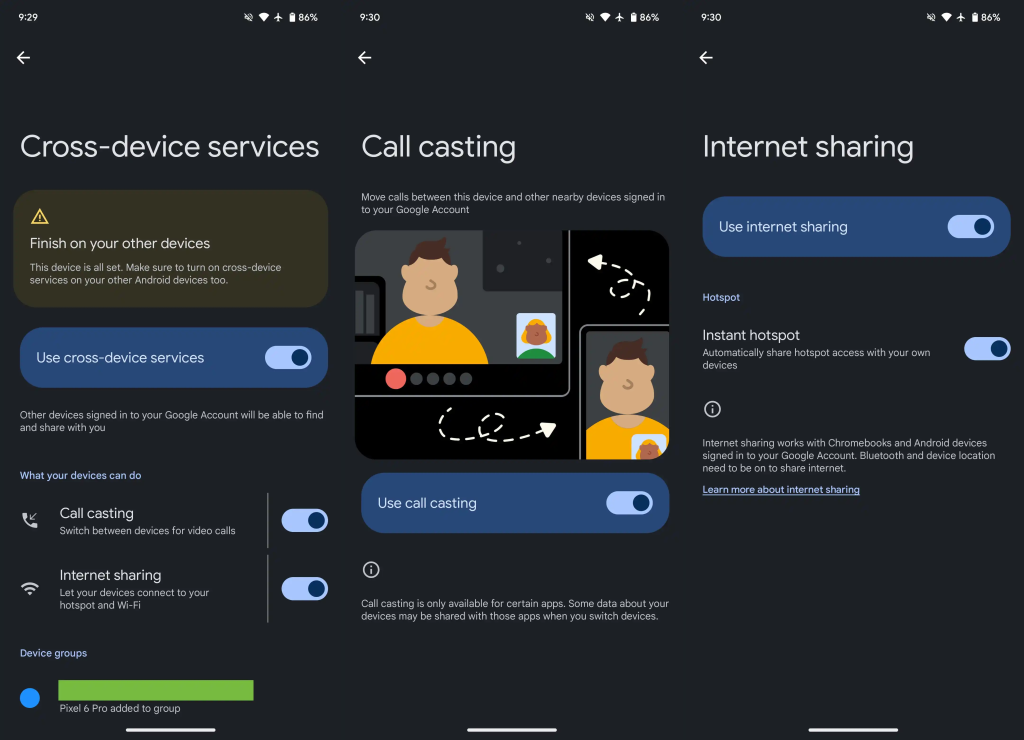
Google has finally started working on “Cross-device services” to provide a more seamless experience. Since it’s still in the roll-out phase, it might not be available on all devices yet. However, once it is, you can activate it in your Android device settings under Settings > Google > Devices & Sharing > Cross-Device.
Cross-device services enable simultaneous calls and password-free internet sharing across your devices
Cross-Device Services enable smooth data transfer between devices signed in with the same Google Account. According to images shared by 9to5Google, two new features are underway: Call Casting and Internet Sharing (Instant Hotspot).
Call Casting feature allows you to effortlessly cast an ongoing video call to another device and continue the call there. Currently, it’s only available for Google Meet calls, but we can expect support for more apps in the future. Let’s say you joined a video call on your phone, but you want to view it on your tablet since it has a bigger display. Instead of ending the call and rejoining on your tablet, you can simply cast the call with one tap.
Google | Cross-device services
Instant Hotspot makes sharing your internet connection easier. After adding your devices to the same Google Account, you can toggle the Instant Hotspot feature to share the internet without manually activating the hotspot on one device and entering the password on another. One tap will instantly share the internet connection without entering any password.
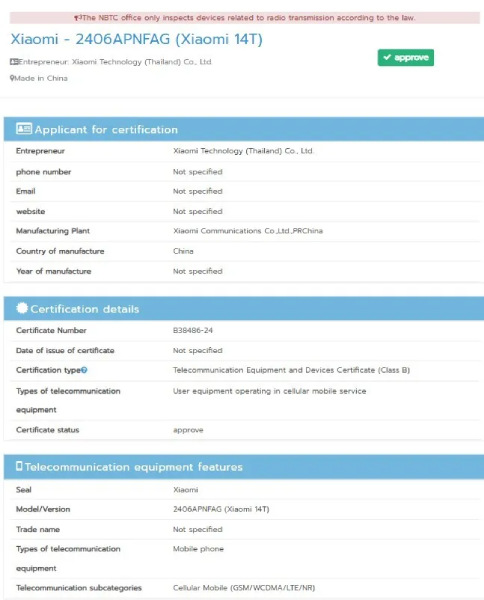
Xiaomi‘s next T-series smartphone, the Xiaomi 14T, seems to be close to launch. It has been now spotted on Thailand’s NBTC certification website, which, while not revealing much, does confirm some key details.
The NBTC certification confirms that the model number “2406APNFAG” belongs to the vanilla Xiaomi 14T. The listing also reveals support for 5G connectivity, a standard feature in most contemporary smartphones.
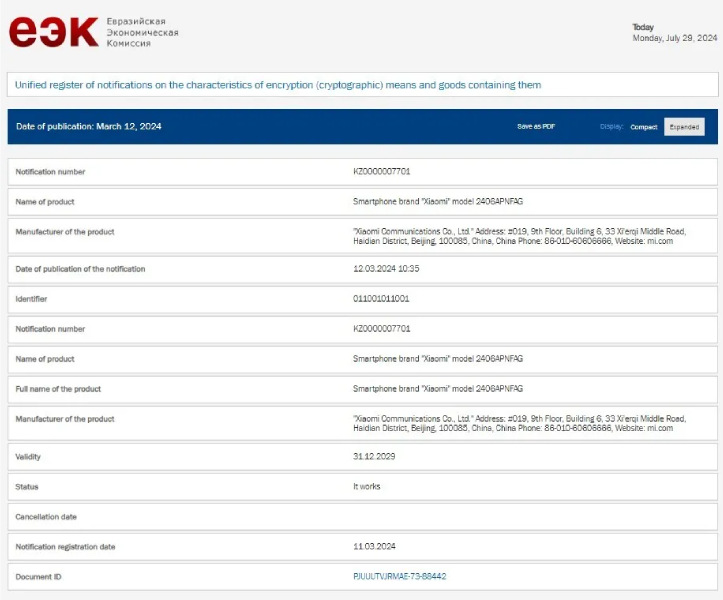
This sighting follows the smartphone’s previous appearances on other certification sites, such as IMDA from Singapore and Telecom Authority from Indonesia. Additionally, the 2406APNFAG model number has appeared on the EEC certification database, suggesting Xiaomi is also preparing for the Europen launch of the 14T smartphone.
As for the specifications, an earlier report suggests that the Xiaomi 14T might be powered by a MediaTek Dimensity 8000 series chipset, possibly the Dimensity 8100 or 8200. There are also rumors that the device may support a 67W fast charging solution.
On the other hand, the Pro variant of the Xiaomi 14T series has been recently spotted on the Geekbench database, revealing a more powerful configuration. It is likely to sport the flagship MediaTek Dimensity 9300+ SoC and boast faster 120W wired charging alongside wireless charging support. Notably, the Xiaomi 14T Pro might be the first in the T-series lineup to support wireless charging.
While the NBTC certification does not reveal many details about the smartphone, its frequent appearances on certification websites suggest that its launch could be imminent.
We can likely expect the Xiaomi 14T series to appear on additional certification platforms in the coming weeks that may reveal more concrete details about the device’s specifications and availability. We’ll keep you updated as more information becomes available.
Vivo is expected to announce the Vivo X200 series of smartphones in October of this year. In the previous week, tipster Digital Chat Station leaked details about the periscope telephoto camera of the alleged X200 Pro. In a new leak, DCS seemingly mentioned the details about the X200 Pro’s primary camera.
Vivo X200 Pro primary camera details (rumored)
The leaker has not provided the name of the device in the above-shown Weibo post. However, the post’s comments section suggests that the device in question might be the Vivo X200 Pro.
The leak suggests that the X200 Pro will feature a customized 22nm Sony sensor. Specifically, it mentions a 50-megapixel sensor with a 1/1.28-inch size and an impressive f/1.57 aperture.
To recall, the Vivo X100 Pro, which debuted in October 2024 in China, features a one-inch Sony IMX989 50-megapixel primary camera. In comparison, the X200 Pro seems to have a smaller primary camera sensor. Despite this, given its high-quality sensor and aperture specifications, we expect the X200 Pro to deliver excellent low-light performance and depth of field control.
According to earlier reports, the Vivo X200 Pro may feature a 200-megapixel periscope telephoto camera. The series is expected to arrive with True-TCG HDR technology, the self-developed VCS 3.0, and the first generation of Vivo’s imaging chips. These advancements are expected to significantly enhance night scene photography, backlit portrait shooting, and telephoto capabilities.
The Vivo X200 Pro is likely to feature a 6.7-inch OLED panel with curvature on all four sides. It is expected to offer a 1.5K resolution, a 120Hz refresh rate, and an ultrasonic in-screen fingerprint sensor. Under the hood, the device will be equipped with the Dimensity 9400 chipset.
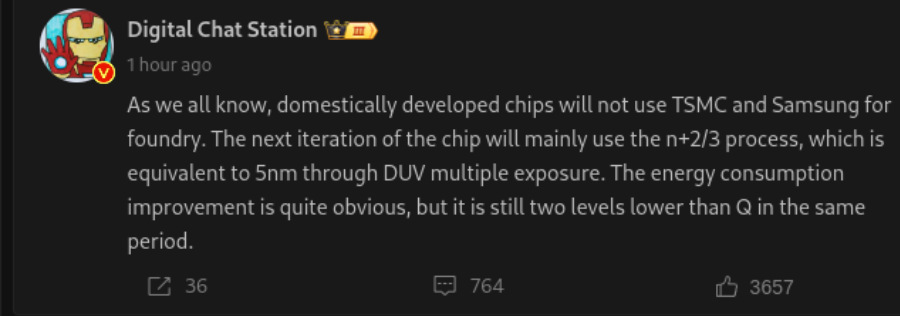
Earlier this week, a leak from prominent tech tipster Digital Chat Station (DCS) hinted at a new Kirin chip in the works at Huawei. Today, DCS made a follow-up on Weibo, China’s social media platform, revealing some additional details.
The leak suggests Huawei will likely adopt a “domestically developed n+2/3 process” to manufacture its next Kirin chip, likely dubbed the Kirin 9100. This translates to a 5nm node with DCS explaining that it will use Deep Ultraviolet (DUV) lithography with multiple patterning for manufacturing.
While Huawei will be able to achieve 5nm-like transistor sizes via this approach, it will not be identical to the leading-edge EUV (extreme ultraviolet) lithography used by TSMC and Samsung.
Additionally, since DUV lithography requires multiple exposures to achieve the desired pattern on the chip, it can lead to higher production costs and potentially lower chip yield compared to EUV, which can print out more intricate designs even with a single exposure.
Regardless of this, DCS notes that the new chip will offer “quite obvious” improvements in energy efficiency compared to the previous Kirin chip.
However, it may not quite match the efficiency of Qualcomm’s latest offerings as it is set to be on par with the Snapdragon 8 Gen 2, as per tipster. If not, DCS says the new Kirin chip would definitely be more efficient than the Snapdragon 8+ Gen 1.
It’s important to note that these are still leaks, and details like the specific Kirin model number, core configuration, and targeted release date are still unknown.
Moreover, the leak does not clarify which foundry will manufacture the chip. While DCS mentions that it will be domestically produced since TSMC and Samsung are not options due to US restrictions, it’s unclear which Chinese foundry has the capability for a 5nm DUV process. SMIC is a potential candidate, but it is under scrutiny from the US government regarding its ability to produce advanced chips.
We use cookies on our website to give you the most relevant experience by remembering your preferences and repeat visits. By clicking “Accept”, you consent to the use of ALL the cookies.
This website uses cookies to improve your experience while you navigate through the website. Out of these, the cookies that are categorized as necessary are stored on your browser as they are essential for the working of basic functionalities of the website. We also use third-party cookies that help us analyze and understand how you use this website. These cookies will be stored in your browser only with your consent. You also have the option to opt-out of these cookies. But opting out of some of these cookies may affect your browsing experience.
Necessary cookies are absolutely essential for the website to function properly. This category only includes cookies that ensures basic functionalities and security features of the website. These cookies do not store any personal information.
Any cookies that may not be particularly necessary for the website to function and is used specifically to collect user personal data via analytics, ads, other embedded contents are termed as non-necessary cookies. It is mandatory to procure user consent prior to running these cookies on your website.