Advertisement

Nintendo Switch 2 Release Date: Announced, But Not Yet Revealed

Nintendo Switch continues to shatter sales records. Released in 2017, the hybrid console has sold over 140 million units in its lifetime, closing in on the PlayStation 2’s all-time record. As the company celebrates this success, it is also carefully planning its next generation of hardware.

At the center of these plans is, of course, the highly anticipated Nintendo Switch 2. Rumors regarding the console’s release date have been swirling for a long time, with speculation ranging from immediate availability to an imminent launch. However, Nintendo President Shuntaro Furukawa has yet to announce a release date for the Switch 2. Here are the details…

When Will Nintendo Switch 2 Be Released?

The question of “When will the Nintendo Switch 2 be released?” has been on everyone’s mind for a long time. However, during a meeting with shareholders, Nintendo President Shuntaro Furukawa provided an answer.

In his speech, Furukawa stated that they would announce the release of the Nintendo Switch 2 within this fiscal year, guaranteeing its release before April 2025. Nintendo’s fiscal year ends on March 31st.

Furukawa also emphasized that they would host an event in June, but it would solely focus on Nintendo games, with no details about the Switch 2. The Nintendo Switch 2 is expected to debut between July 2024 and March 2025.

Expectations for the new console include stronger graphics, better battery life, a smoother experience with technologies like DLSS, and more. While it’s still unclear how many of these expectations the company will meet, we’ll likely have a clearer picture after the June event.

RELATED:

OnePlus Buds 3 with 49db ANC gets a 100 Yuan discount in China

This OnePlus Buds 3 was first introduced in China towards the end of last year along with the OnePlus 12 and OnePlus Ace 3. Later it was released in the global market towards the end of January with a price tag of $99.99 (499 Yuan, Rs 5,499).

OnePlus Buds 3

OnePlus Buds 3 could be yours for only 389 Yuan

Now the home country’s JD.com is celebrating Mother’s Day with a special offer: an instant discount of 50 yuan, along with a limited-time coupon worth 50 yuan. This brings the total payment down to 399 yuan, payable in three interest-free installments. Additionally, placing an order and posting also offers you a chance to qualify for an extra 10 yuan reward, making the effective price just 389 yuan. That being said, let us take a look at what this TWS earphone has to offer.

This TWS earphone from OnePlus offers noise cancellation of up to 49db, and it apparently uses AI for call noise cancellation. The earbuds can offer 6.5 hours of playback with noise cancellation turned on, and 10 hours with noise cancellation turned off. With the charging case, the earphones offer 28-hour and 44-hour playback with noise cancellation turned on and off respectively. Once the batteries are exhausted, charging takes 80 minutes and 120 minutes for the earbuds and the charging case respectively. The product boasts a USC Type-C port for charging.

Each of the earbuds and the charging case contain 58mAh, and 550mAh batteries inside. The earbuds are not too heavy weighing at less than 5 grams (4.81 grams). The charging case weighs 40.8 g and 50.4 g without and with the earbuds respectively.

For connectivity, the Buds 3 TWS uses Bluetooth 5.3 and offers a range of 10 meters. It equips support for AAC/SBC/LHDC 5.0 codec for better audio transmission with supported devices.

The product comes in two different colors – Space Gray and Sunny Blue. As an additional feature, the Buds 3 equips IP55 dust and water-resistant rating.

Related:

Xiaomi Mix Fold 4 and Mix Flip launch timeframe tipped, camera specifications detailed

Xiaomi is rumored to be working on its next-gen foldables for some time now. The company will follow its Mix Fold 3 from 2023 with Mix Fold 4 this year. And there are rumors of the first clamshell-folding phone from Xiaomi, possibly called the Mix Flip.

Reputed leaker Digital Chat Sation shared a few details of these upcoming smartphones today via a Weibo post. According to the insider, Xiaomi might launch the Mix Fold 4 and Mix Flip in the third quarter of 2024.

Both the foldable are said to have similar camera specifications. The main sensor will be a 50-megapixel shooter with a 1/1.55” sensing area and optical image stabilization. It will be accompanied by an Omnivision OV60A with a ½.8” sensor for the 2x telephoto camera. 

Additionally, the Mix Fold 4 will also feature a 12MP ultrawide and a 10MP periscope telephoto camera with 5x optical zoom. 

The tipster adds the phones will have wireless charging support, although the actual battery size and charging speed are up in the air. There will also be protection against water, says DCS. 

It would be a welcome upgrade as none of the Xiaomi foldable so far has any sort of protection against water or splashes. Last but not least, the insider hints at an exceptionally slim profile for the foldable, possibly making it the thinnest on the market upon release.

Other rumors for the Mix Fold 4 and Mix Flip suggest that they will have Qualcomm Snapdragon 8 Gen 4 SoC at the helm, and will bring support for satellite connectivity.

Related:

POCO F6 Pro could arrive in June, Everything you need to know

Xiaomi is preparing to launch a new smartphone in the global market called the Poco F6 Pro. Leaks so far have revealed that this device is most likely a rebrand of the Redmi K70. Ahead of any official announcements by the brand, tipster Sudhanshu Ambhore has hinted at the launch timeline of the Poco F6 Pro.

Sudhanshu’s tweet suggests that the Poco F6 Pro is set to be unveiled in June. Following the usual trend of Poco F series releases, it’s likely that the F6 Pro will first launch in India before making its way to other global markets.

Redmi K70
Redmi K70

The device was recently spotted on Geekbench featuring a Snapdragon 8 Gen 2 processor and 16GB RAM. Assuming that the device is indeed a rebranded version of the Redmi K70, we can expect it to feature a 6.67-inch OLED display with 2K resolution and 120Hz refresh rate. It could feature a large 5,000mAh battery pack, paired with 120W fast charging.

For optics, we expect the device to come with a 50MP OIS primary camera paired with an 8MP ultra-wide unit and a 2MP macro lens. On the front, it could feature a 16MP selfie snapper. There is also a chance that the brand could decide to tweak some of these specifications before launching the device globally, so we suggest our readers take these specifications with a pinch of salt and stay tuned for more.

RELATED:

Lenovo Tab K11 Launch: Big battery & premium apps for Indian businesses

Lenovo has just announced a new gadget that is targeting businesses and IT professionals in India. The latest product is the Lenovo Tab K11, which arrives with long battery life and preloaded premium apps to make your work seamless and uninterrupted. The Lenovo Tab K11 Plus is also rumored to hit the global markets soon as well, but now, let’s have a look at the Tab K11.

Lenovo Tab K11: What makes it special?

Lenovo Tab K11

As per the brand, the new Lenovo Tab K11 blends “performance, security, manageability, and durability for users.” It tablet comes preloaded with premium software that makes it more attractive to working professionals, businesses, and IT teams. This includes Nebo for converting handwriting to text, MyScript Calculator to solve equations in real time, and WPS for users that prepare documents.

It also comes with support for the Lenovo Freestyle as well as the Lenovo Tab Pen Plus. The device sports an 11-inch 90Hz display that offers WUXGA resolution and TÜV Rheinland Low Blue Light certification. Under the hood, it is equipped with the MediaTek Helio G88 SoC that is paired with up to 8GB of RAM and 128GB of internal storage. A massive 7,040mAh battery pack powers this device.

Lenovo Tab K11

All of this is packed in an ultra-slim 7.1mm body that measures 465 grams in weight. For photography, you get a 13MP camera on the rear and an 8MP selfie shooter on the front. Other notable features include quad speakers with Dolby Atmos, Android 13 OS out of the box, 3.5mm headphone jack, and IP52 water and dust resistance.

Pricing and Availability

Lenovo unveiled the Tab K11 in two color options, namely Luna Gray and Seafoam Green. It is also available in two storage configurations, namely 4GB + 128GB and 8GB + 128GB. The former costs 17,990 INR, while the latter is priced at 19,990 INR. Buyers also get a 1 year Accidental Damage Protection and 1 year warranty support. It is currently listed on the brand’s official website.

RELATED:

Oppo Reno 12: Leak hints at an all-new Dimensity chip

Oppo is gearing up to unveil the next gen smartphones from its popular Reno series. The new Reno 12 lineup is expected to launch soon, but ahead of any official announcement, a fresh leak has hinted that the new phones will also debut with a brand-new chip from MediaTek.

Oppo Reno 12 with Dimensity 8250

Oppo Reno 12 mock render

The MediaTek Dimensity Developer Conference (MDDC) was just held and the company unveiled the new Dimensity 9300+ SoC. Although, it appears that a new Dimensity 8000 series chipset is also in the works and will debut with the Reno 12 series. According to known tipster Digital Chat Station, the Reno 12 may feature a brand-new Dimensity 8250 chip, which will reportedly feature MediaTek’s “Star Speed Engine”.

This is usually exclusive to high end Dimensity 9000 series and even the Dimensity 8300 processors. Simply put, the Star Speed Engine allows for an enhanced gaming performance with stable frames over long periods and minimal thermal throttling. So the Reno 12 could also deliver a flagship level mobile gaming experience. The tipster stated that the Dimensity 8250 has a 3.1GHz Cortex-A78 core, three 3.0GHz Cortex-A78 cores, and four 2.0GHz Cortex-A55 cores configuration.

Oppo Reno 12

These will be paired with Mali-G610 GPU. DCS further added that the Reno 12 Pro may come with the Dimensity 9200+, which could be marketed as the Dimensity 9200+ Star Speed Edition. Based on what we know so far, the Reno 12 Pro is expected to launch with either the Diemsnity 9200+ SoC. The Oppo Reno 12 series is rumored to launch by the end of this month. So stay tuned for more, as we will be providing updates.

RELATED:

Moto Edge 50 Fusion India Launch Teased: All You Need to Know

Motorola recently launched the Edge 50 Pro smartphone in India and has plans to release the Edge 50 Ultra and Edge 50 Fusion in the country soon. The Edge 50 Ultra has already received BIS certification, while the launch of the Edge 50 Fusion has been recently teased by the brand.

The teaser announcement confirms the arrival of the Motorola Edge 50 Fusion in Marshmallow Blue color variant for the Indian market. While the specifications are likely to mirror those available globally, there’s uncertainty regarding which variant will be offered in India. Internationally, there are two versions powered by the Snapdragon 7s Gen 2 (for Europe & Middle East) and the Snapdragon 6 Gen 1 (for Latin America).

Moto Edge 50 Fusion specs:

The Snapdragon 7s Gen 2 variant comes with a 6.7-inch FHD+ P-OLED display and 144Hz refresh rate. On the other hand, the Snapdragon 6 Gen 1 variant has a 120Hz refresh rate display.

Other than that, the device offers up to 12 GB RAM, paired with 512 GB storage. It has a 5,000mAh battery with 68W fast charging. For optics, the phone comes with a Sony LYT-700C 50-megapixel primary camera with OIS support, paired with a 13-megapixel ultrawide lens. On the front, it has a 32-megapixel selfie snapper. It has an Android 14-based operating system and an IP68-rated frame which ensures water resistance.

We expect the Edge 50 Fusion to cost around ₹25,000 in the country, where it will have to go against devices like the Nord CE 4, the Nothing Phone (2a), and more.

RELATED:

First Look: iQOO Neo 9s Pro and Vivo X100s in Real Life

MediaTek unveiled its latest top-of-the-line chip, the Dimensity 9300+, at their developer conference today. At the same event, Vivo showcased two phones that will be powered by this chip: the X100s and the iQOO Neo 9s Pro.  images from the event, showing the actual phones on display, have now been circulating on Weibo.

As can be seen, the iQOO Neo 9s Pro maintains the design language of the Neo 9 Pro, featuring a flat screen and a punch-hole camera.

The phone’s settings page reveals that it will have an impressive 1TB of storage and 16GB of RAM. iQOO will also be packing its in-house Q1 chip for improved gaming performance.

We also got a glimpse of the Vivo X100s, which keeps the design of other X100 series phones.
As for the specs, the Neo 9s Pro is expected to feature a 6.78-inch flat OLED display with a 1.5K resolution and 144Hz refresh rate. 

While the battery capacity remains unconfirmed, it might follow suit with the Neo 9 Pro and offer a 5,160mAh battery with speedy 120W fast charging. The back of the phone is expected to sport a triple camera system with a main 50-megapixel sensor equipped with image stabilization.

The Vivo X100s is expected to share most specs with the X100, except for the screen and chip. This means it will probably have a 6.78-inch AMOLED display with a 120Hz refresh rate, an in-screen fingerprint reader, and a triple camera system with a 32-megapixel front camera and a 50-megapixel main sensor, an ultrawide sensor, and a 3x telephoto lens.

Related:

(Via 1, 2)

GC Daily: Huawei could be working on a powerful chip for smartphones, Galaxy S25 to have better battery life

Last month, Huawei launched its latest Pura 70 flagships with a new Kirin 9010 chip. While the SoC shares a similar manufacturing process and core architecture with the Kirin 9000s, Huawei has optimized it further to deliver performance in their latest smartphones.
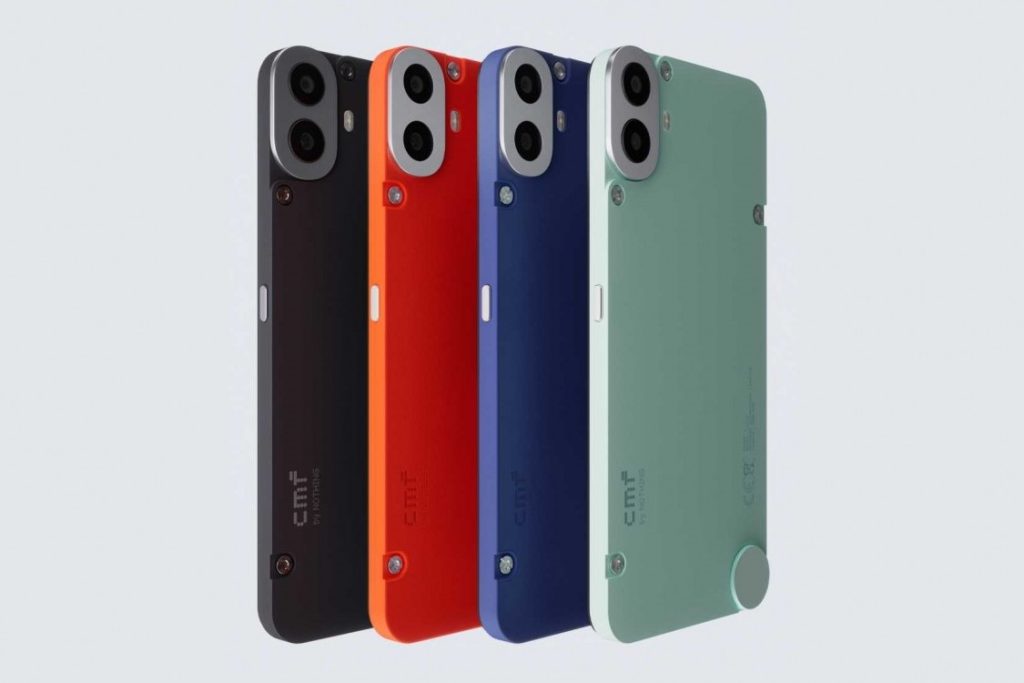
A new rumor suggests that the company is working on yet another Kirin chip, likely for the Mate 70 series smartphones.

The rumor comes from the Weibo tipster @DirectorShiGuan, who revealed that Huawei has well-reformed its upcoming Kirin chip for the Mate 70 series, and it performs comparatively well in benchmarks.  

Full details here.

TSMC, the world’s leading semiconductor manufacturer, has announced that its advanced packaging capacity is fully booked for the next two years. This development comes as Nvidia, AMD, and Guanghuida secure TSMC’s cutting-edge packaging technologies for their high-performance computing (HPC) ventures.

More details here.

⚠️ DEAL ALERT: Get $200 OFF on the Red Magic 9 Pro Plus Bumblebee Edition at GeekWills

Samsung has plenty of time to develop the Galaxy S25 series of smartphones. But a new rumor already suggests that Samsung might use AI to improve battery life in the S25 series without needing to increase the physical battery capacity.
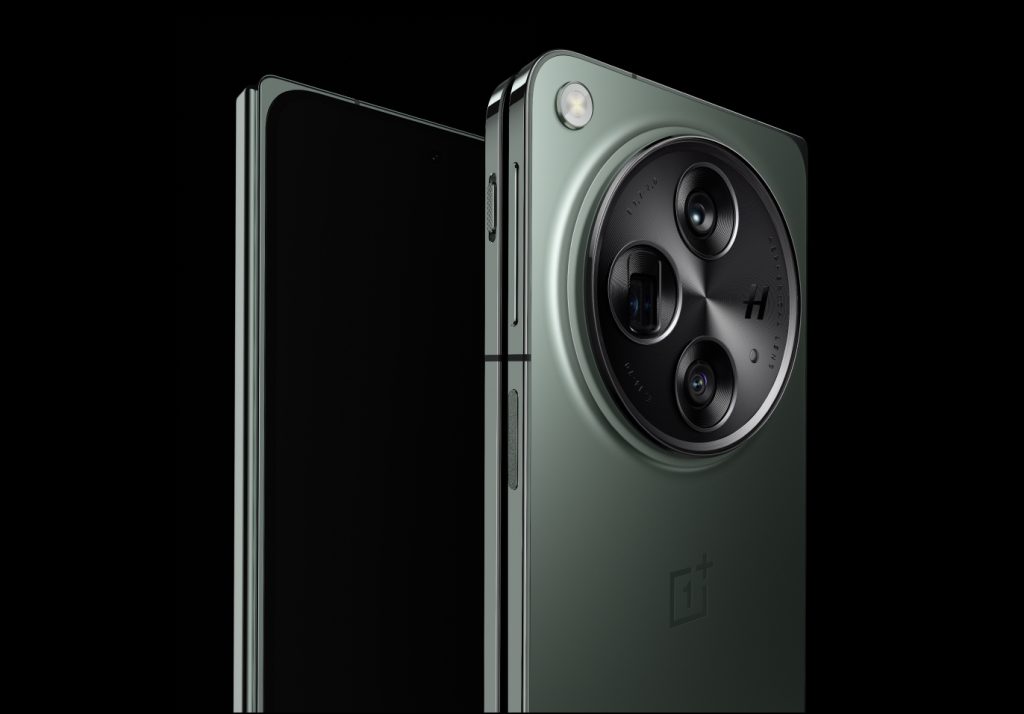
More details are in our story here.

🔥 Additional Headlines Worth Reading!

Xiaomi 15 Pro to boast a periscope telephoto camera, a 2K micro-curved screen

Tipster Digital Chat Station has shared some information about an upcoming Xiaomi flagship, which is expected to be the Xiaomi 15 Pro.

According to the early prototype, the phone will have a 2K micro-curved screen. He has not revealed the screen size, however, he mentioned that it will not be much different than the predecessor.

Read more here.


Huawei Unveils 1TB SSD Version for the MateBook D 16 SE 2024, Pricing Starts at 4,249 Yuan ($589)

Huawei is giving users more storage freedom with a new 1TB solid-state drive (SSD) option for their popular MateBook D 16 SE 2024 laptop. This addition complements the existing lineup, which features a 13th Gen Intel Core i5-13420H processor and 16GB of memory. The 1TB SSD variant comes in at a price of 4,249 yuan (around $589 USD).

More details are here.


Here are the Official Promo Images for the Sony Xperia 1 VI that Just Got Leaked

The highly anticipated Sony Xperia 1 VI is back in the spotlight, this time with a leak of official promotional images courtesy of Evan Blass. These images offer a clear look at the phone’s design and confirm some previously rumored details.

More details here!


Samsung 10,000mAh And 20,000mAh Power Banks Announced In India

Earlier in March this year, Samsung launched 20,000mAh and 10,000mAh power banks in its home market. This debuted in China last month. Now, the South Korean brand has introduced the charging accessory in the Indian market. There are major differences between the two newly announced power banks. Both offer impressive specs and features.

Here are all the details.


LG CineBeam Q Projector With Portability, 4K Resolution Launched In India

Last month, LG announced MyView smart monitors and affordable monitors with 100Hz refresh rate in the Indian market. Now the brand has introduced a projector in the country. It is dubbed the CineBeam Q. The projector is compact and offers portability, making it easier to carry around. It packs a host of features and carries a premium price tag.

More details in our story here.


Vivo Pad 3 could be world’s first tablet with Snapdragon 8s Gen 3 chip: Here’s expected specifications

Vivo unveiled the Vivo Pad 3 Pro as the world’s first tablet equipped with the Dimensity 9300 chipset last month. Speculation suggests the existence of a standard version of the device, known as the Vivo Pad 3. While there is no clarity on its launch date, there is a possibility that the company may unveil it alongside the Vivo X100 Ultra, the X100s, and the X100s Pro which are slated to launch on May 13 in China.

Vivo Pad 3 Pro
Vivo Pad 3 Pro

1. Vivo Pad 3 to be world’s first Snapdragon 8s Gen 3 tablet

The 3C authority in China recently approved a Vivo tablet with the PA2455 model number. The tablet, which was spotted with a 44W fast charger, is said to be the standard Vivo Pad 3.

A previous leak by tipster Digital Chat Station revealed that the Vivo Pad 3 tablet will feature the Snapdragon 8s Gen 3. For those who don’t know, the said chipset is a toned-down version of the Snapdragon 8 Gen 3, which powers most of the recently released Android flagship phones.

A couple of recently launched phones, such as the Xiaomi Civi 4 Pro, the Redmi Turbo 3, and the iQOO Z9x Turbo, feature the Snapdragon 8s Gen 3. The upcoming Realme GT Neo 6 will also feature the SD8G3. The Vivo Pad 3 will be the first-ever tablet to come equipped with the Snapdragon 8s Gen 3 chip.

2. Vivo Pad 3 specifications (rumored)

The rumor mill is yet to leak concrete details about the Vivo Pad 3. A few details that have emerged so far reveal that it has an LCD panel, a Snapdragon 8s Gen 3 chipset, and supports 44W fast charging. While the Pad 3 Pro offers up to 16 GB of LPDDR5x RAM and up to 512 GB of storage, the Pad 2 may offer up to 12 GB of RAM and up to 512 GB of storage.

There is a possibility that the Pad 3 could be similar to the Vivo Pad 2, which debuted last year in April. The Pad 2 has a 12.1-inch LCD panel that offers a 2.8K resolution and a 144Hz refresh rate. It has an 8-megapixel front, camera, a 13-megapixel dual-camera system, and a 10,000mAh battery with 44W fast charging.

3. Vivo Pad 3 price (rumored)

The Vivo Pad 3 Pro has a starting price of 2,999 Yuan (~$425). Hence, it appears that the Pad 3 may start at around 2,500 Yuan (~$350).

MediaTek launches Dimensity 9300+ with support for Google Gemini Nano, Meta Llama

MediaTek has launched the Dimensity 9300+, a new chipset designed for flagship smartphones. While a modest upgrade in specifications compared to the Dimensity 9300, the new chip focuses on improved on-device AI processing and broader support for large language models (LLMs).

The chip is compatible with various LLMs, including Google’s Gemini Nano and Meta’s Llama 2 and 3. MediaTek claims this broad LLM compatibility, coupled with its on-device LoRA (Low-Rank Approximation) Fusion technology, will foster a rich ecosystem of generative AI applications.

In fact, the Dimensity 9300+ is claimed to be the industry’s first to achieve high-speed operation for specific LLMs. MediaTek touts a speed of 22 tokens/second for Meta’s Llama 2 7B model. 

Beyond AI, the Dimensity 9300+ promises power efficiency improvements. It reportedly reduces power consumption by 20% for specific gaming scenarios. The chipset also integrates a “star speed engine” to optimize network connectivity and supports dual network concurrency.

Technical Specifications

Built on a 4nm process, the Dimensity 9300+ packs an octa-core CPU with one high-performance Arm Cortex-X4 core clocked at 3.4 GHz, three additional Cortex-X4 cores clocked at 2.85 GHz, and four Cortex-A720 cores running at 2.0 GHz.

The chipset features MediaTek’s new NeuroPilot technology for improved AI processing. The APU 790 AI engine allows for running LLMs with varying parameter sizes, from 1 billion to 33 billion. Notably, it is said to have double the speed of competing solutions for 7 billion parameter LLMs.

For gamers, the Dimensity 9300+ integrates a second-generation hardware raytracing engine with an Arm Immortalis-G720 GPU. 

The chipset also includes MediaTek’s Imagiq 990 ISP for improved camera capabilities and MiraVision 990 for improved visual content processing.

In terms of connectivity, the Dimensity 9300+ boasts a 5G R16 modem with support for Sub-6GHz networks and downlink speeds of up to 7Gbps.

Availability

The Vivo X100S will be the first device to use the Dimensity 9300+. Additionally, the upcoming iQOO Neo9S Pro, slated for release this month, will also be equipped with the new chipset.

Related:

iQOO Pad 2 Pro to feature Dimensity 9300 Plus, key specifications leaked

There have been reports that iQOO is gearing up to launch the iQOO Pad 2 series of tablets in China. The 3C authority in China recently approved the Pad 2 and Pad 2 Pro, bearing respective model numbers iPA2453 and iPA2475. Today, the brand released an official confirmation that the Pad 2 Pro will feature the Dimensity 9300 Plus chipset.

iQOO Pad 2 Pro to be world’s first tablet with Dimensity 9300 Plus

Today, MediaTek unveiled the 3.4GHz Dimensity 9300 Plus chipset in China. It is an enhanced version of the Dimensity 9300 that powers the likes of the Vivo X100, X100 Pro, and Vivo Pad 3 Pro. Vivo and its sub-brand iQOO confirmed today that the Vivo X100s, X100s Pro, and iQOO Neo 9S Pro will feature the all-new Dimensity 9300+ SoC.

The iQOO Pad 2 Pro will be the world’s first tablet to feature the Dimensity 9300 Plus chipset. The Neo 9S Pro is scheduled to launch this month (May) in China. It remains to be seen whether the Pad 2 Pro also launches alongside the Neo 9S Pro.

iQOO Pad 2 Pro specifications (rumored)

Reliable leaker Digital Chat Station revealed on Weibo that the iQOO Pad 2 Pro will have a 13-inch LCD panel with 3.1K resolution and a 144Hz refresh rate.

The inclusion of a Monster+ performance mode will allow the tablet to squeeze out top-notch gaming performance. The tablet is rumored to have an 11,500mAh battery that supports 66W fast charging. The USB-C port of the tablet will come with support for the USB 3.2 standard.

Vivo Pad 3 Pro
Vivo Pad 3 Pro

It seems that the iQOO Pad 2 Pro shares the same specs as the Vivo Pad 3 Pro, announced last month in China, except for the new chip. Hence, the Pad 2 Pro is likely to feature an 8-megapixel front camera, a 13-megapixel rear camera, eight speakers, and Android 14 OS with a layer of OriginOS 4.0 on top.

RELATED:

TCL Thunderbird 100MAX 2024 giant-screen TV with 540-zone backlight, no ads launched in China

TCL has unveiled the Thunderbird 100MAX 2024 TV. The giant-screen smart TV comes with a 540-zone backlight system and a no-ads setup. The no-ads arrangement means that the new TV’s factory setting omits ads. The TCL Thunderbird 100MAX 2024 has a 100-inch display and joins a growing list of giant-screen TVs released recently.

TCL Thunderbird 100MAX 2024

The TCL Thunderbird 100MAX is focused on cost effectiveness although in comparison, it is more expensive than the Xiaomi Redmi MAX 100 2025 model recently released. It however comes with significant improvement in its configuration compared with the Redmi model. The TV’s 100-inch screen is capable of 4K resolution and 144Hz refresh rate. It has 540 backlight partitions and up to 120 nits of brightness. The Thunderbird 100MAX 2024 has a dynamic contrast ratio of 12 million: 1 and 95% coverage of the DCI-P3 color gamut.

Apart from a greater display effect than the latest Redmi giant-screen TV, it also comes with an improved audio output. It is equipped with a 50W 7-unit 2.1 audio system with four full-range units, two tweeters, and one bass unit. The Redmi model comes with only four speakers, hence the TCL model delivers a better audio performance. Additionally, the new TCL giant-screen TV’s factory setting does not display ads, unlike the Redmi model which needs to be adjusted to turn off the ads service.

The TCL Thunderbird 100MAX 2024 has a MediaTek MT9653 chip with 4GB/ 128GB of memory/ internal storage. It supports Bluetooth 5.2 connectivity, as well as WiFi 6.0. The TV is equipped with two HDMI 2.1, two HDMI 2.0, one AV input, one USB-A 3.0, and one USB-A 2.0 interface. A single RJ45 interface is also featured in the Thunderbird 100MAX 2024.

Pricing & Availability

The TCL Thunderbird 100MAX 2024 giant-screen TV is available on retail platforms like JD.com for 10,999 yuan ($1,526).

RELATED:

(via)

Xiaomi launches the MIJIA 8kg drum washing machine with an embedded control knob

The latest home appliance released under Xiaomi‘s MIJIA brand is the MIJIA 8kg drum fully automatic washing machine. The product has been launched in China and is available from retail platforms like JD.com.

Features

The Xiaomi MIJIA 8kg drum washing machine has an ultra-thin design and a fully embedded physical knob in place of a touch screen. The body of the washing machine is 495mm thick and can be placed in smaller spaces in the home.

MIJIA 8kg drum washing machine

The MIJIA 8kg drum washing machine has a simple design and can be easily operated by the elderly. It has a 95ºC high-temperature threshold and can achieve a 99.99% sterilization rate, delivering deep sterilization of bacteria in dirty fabrics. The washing machine also supports 60ºC mite removal. This enables the easy destruction of mites adsorbed on clothes at a removal rate of 100%.

The machine is powered by a BMC sealed BLDC motor which reduces wear and improves noise reduction. The device supports intelligent sensing of the weight of the items being placed on the machine. It then offers an intelligent water supply and optimal duration of the washing operation.

MIJIA 8kg drum washing machine

The Xiaomi MIJIA 8kg drum automatic washing machine has a unique feature of supporting the addition of fabrics while the machine is already running. You can also pause adding clothes at any time. The washing machine is available in a cream color design.

Pricing

The MIJIA 8kg drum fully automatic washing machine is priced at 999 yuan ($139). There are no global availability details for the model at this time. However, it is expected that Xiaomi will ship the model to a sprinkling of several overseas markets subsequently.

Related:

Rabbit R1 Controversy: Is It Just an Android App?

The controversy surrounding Rabbit Inc’s Rabbit R1 device has stirred significant debate and discussion in the tech community. Rabbit R1, marketed as a cutting-edge AI-powered gadget, has been the center of attention not just for its innovative claims, but also due to the nature of its software and operational framework. This has raised questions about the legitimacy and functionality of such standalone devices.

Rabbit R1

1. Background of Rabbit R1

Rabbit R1 is an AI device launched by Rabbit Inc., a company that transitioned from its previous involvement with NFTs and the metaverse under its former name, Cyber Manufacture Co. The device, priced at $199, is intended to serve as a portable AI assistant, offering various functionalities powered by Rabbit OS, a system allegedly built upon a highly customized version of the Android Open Source Project (AOSP).

2. The Controversy

The core of the controversy began when Mishaal Rahman from Android Authority reported that the Rabbit R1’s operating system, Rabbit OS, could actually be installed as an APK on Android devices. This revelation came after Rahman received a tip-off and successfully installed the Rabbit R1 APK on a Google Pixel 6a, effectively emulating the Rabbit R1 experience on a standard smartphone. Later he also added that the R1 specifically runs on Android 13.

This discovery was significant because it suggested that the Rabbit R1, despite being marketed as a unique and standalone device, might merely be replicating an experience that could be achieved through a smartphone app. This raised questions about the necessity and value of the Rabbit R1 as a separate hardware device.

3. Rabbit Inc’s Response

In response to these revelations, Rabbit issued a statement clarifying that the Rabbit R1 is not an Android app but a distinct AI hardware device designed to work in tandem with cloud-based services. The company emphasized that while the device’s software was indeed based on AOSP, it included bespoke modifications and cloud integrations that could not be fully replicated on other Android devices without proper authorization and cloud support.

4. Broader Implications

The incident has broader implications, particularly in how AI devices are perceived and marketed. The ability to install Rabbit OS on a regular smartphone suggests that the underlying technology is not as unique or proprietary as initially claimed, which could mislead consumers about what they are purchasing. This has led to criticisms regarding transparency and honesty in marketing such devices.

5. Historical Context and Consumer Trust

Adding to the controversy is Rabbit’s historical context. The company, previously involved in NFTs and metaverse projects that were abruptly discontinued, has a history of pivoting its business model without significant transparency. This past has contributed to current mistrust, as consumers and critics question the long-term viability and integrity of Rabbit’s products.

6. Market Reaction and Consumer Sentiment

The market reaction has been mixed. While some consumers remain intrigued by the potential of a dedicated AI device, others feel betrayed or skeptical about the value of the Rabbit R1, especially when similar functionalities are available through existing smartphones and apps. The discovery that the device’s unique software could run on standard smartphones has led to further criticism that Rabbit might be repackaging accessible technology in a more expensive and less practical format.

7. Conclusion

The Rabbit R1 controversy highlights a critical debate in the tech industry about innovation versus repackaging, transparency in marketing, and the ethical implications of business pivots in technology companies. As AI technology becomes more integrated into consumer products, companies must maintain clear and honest communication about their products’ unique values and functionalities to build and retain consumer trust. The controversy serves as a reminder of the importance of these factors in fostering a sustainable and consumer-friendly tech ecosystem.

RELATED:

Vivo X100 Ultra real-life images show the gigantic camera bump

Vivo‘s launching new additions to its X100 series phones, including the top-of-the-line X100 Ultra, on May 13th in China.

While the company has already revealed renders of these phones, real-life images of the Vivo X100 Ultra have now surfaced on Weibo, courtesy of tipster Digital Chat Station.

Vivo X100 Ultra real-life image -1

The leaked image shows a white X100 Ultra with the same crescent-shaped camera ring as the X100 and X100 Pro. The island houses three cameras, with the main highlight being the rumored 200MP telephoto sensor with a large 1/1.4-inch sensor size.

In addition, the X100 Ultra will feature a Sony LYT-900 50-megapixel primary camera with CIPA 4.5-level gimbal stabilization, along with a 50-megapixel ultra-wide lens. 

Even with all the beefy hardware, the tipster notes that the protrusion of the camera island is “acceptable.” Vivo has already teased the phone’s camera capabilities with some impressive samples.

Furthermore, the Vivo X100 Ultra will have a 6.78-inch AMOLED E7 display with a 2K resolution and 120Hz refresh rate.

Under the hood, it will be powered by a Snapdragon 8 Gen 3 chip, coupled with up to 16 GB of LPDDR5x RAM, up to 1 TB of UFS 4.0 storage, and support for 80W fast charging.

As for the price, a report earlier this week suggests that the phone’s 16GB+512GB variant will be priced at 7,499 Yuan, approximately $1,040, while the 12GB+256GB option will be priced at 6,699 Yuan, roughly $930.

Additionally, there are talks of a satellite variant of the phone. It will come in 16GB RAM and 1TB of storage, which is expected to retail for 8,499 yuan or around $1,180.

Related:

Realme GT Neo 6 purple variant revealed before May 9 launch

Realme released an official confirmation today that it will unveil the Realme GT Neo 6 at 2pm (local time) on May 9 in China. In addition, it rolled out another poster to showcase the design of the purple edition of the device. The official image reveals that its design will be identical to the Realme GT Neo 6 SE, which made its announcement last month in China.

Realme GT Neo 6 design

The image above shows the silver and green variants of the Realme GT Neo 6 SE. The Realme GT Neo 6, which has an identical design as the “SE” model, will be available in a purple option. At present, there is no information about the other color options of the device.

Two of the three rings on the back panel of the Realme GT Neo 6 have an OIS-enabled 50-megapixel primary camera and an auxiliary lens. The third one has a pair of LED flash units.

Chinese retailer JD.com has already listed the Realme GT Neo 6 for reservations. The listing has confirmed that the device will feature the Snapdragon 8s Gen 3 chipset, 1 TB of storage, and 120W fast charging. The GT Neo 6’s other specifications remain undisclosed. However, its other specifications could likely be the same as those of the SE model.

Therefore, the Realme GT Neo 6 may come equipped with a 6.78-inch curved-edge OLED panel that offers a 1.5K resolution and a 144Hz refresh rate. It may offer up to 24 GB of LPDDR5x RAM, a 5,500mAh battery, a 32-megapixel front camera, and a 50-megapixel (main) + 8-megapixel dual-camera system. The device is likely to arrive with a sub-3,000 Yuan (~$420) price tag in China.

RELATED:

Machenike Mini GTX gaming mini PC with AMD Ryzen 9 option launched in China

Machenike has launched the Mini GTX gaming mini PC with up to AMD Ryzen 9 processor in China. The flagship model is available in four different configurations and the top model is powered by the Ryzen 9 7940HS. The base model is powered by the AMD Ryzen 7 8845HS which is a solid offering from the AMD Hawk Point series.

Machenike Mini GTX

The base model of the Machenike Mini GTX has 16GB of DDR5 RAM and 1TB of PCIe 4.0 SSD. The flagship model in the lineup has 32GB of RAM and 1TB of storage. The other two variants in the Mini GTX lineup differ from the base and top variants via their RAM capabilities. All the variants of the gaming mini PC are equipped with the Radeon 780M iGPU which allows the gadget to easily run modern games with a decent frame rate. The gadget has a USB 4 port, allowing the user to pair with an eGPU. It however lacks the more capable OCuLink port for a more thrilling gaming experience.

Machenike Mini GTX Gaming mini PC

The Machenike Mini GTX gaming mini PC has an integrated cooling system that helps to sustain its performance. Three performance modes are available to the user and the Quiet mode sees the PC operating at a minimum noise level of 32dB. The product comes in a compact 0.82L housing, as well as VESA mount support. The Mini GTX has three USB 3.2 Gen 1 Type-A, one DisplayPort 1.4, an HDMI 2.0, and a 10Gbps Type-C port with PD. There are also two 2.5G Ethernet ports on the device and it can simultaneously handle four displays.

Pricing & Availability

The Machenike GTX gaming mini PC is priced at 2,899 yuan ($400) in China. Going by recent trends in its marketing strategy, it is unlikely that the model will be available overseas.

RELATED:

iQOO Neo 9s Pro, Neo 9s Pro+ with Dimensity 9300 Plus, Snapdragon 8 Gen 3 in works

In December 2023, iQOO unveiled the iQOO Neo 9 and Neo 9 Pro in China. These devices came equipped with the Snapdragon 8 Gen 2 and Dimensity 9300 chipsets, respectively.  It appears that the brand is now working on the Neo 9S Pro series of smartphones, which is most likely to be an incremental upgrade over the Neo 9 lineup.

iQOO Neo 9s Pro, Neo 9S Pro+ chipsets revealed

IQOO Neo 9S Pro May launch
IQOO Neo 9S Pro launch in May

The above poster confirms that iQOO will unveil the Neo 9S Pro equipped with the all-new Dimensity 9300 Plusv chip this month in China. The above teaser showcases the white variant of the device.

A Chinese leaker claims that another model, the iQOO Neo 9S Pro+, will join the Neo 9S Pro. This device is said to be equipped with the Snapdragon 8 Gen 3. The Neo 9 series is expected to rival flagship phones from Redmi, OnePlus, and Realme around July. These rival brands are likely to announce the Redmi K70 Ultra, OnePlus Ace 3 Pro, and Realme GT 6, respectively. While the Redmi flagship is expected to include the Dimensity 9300+, the Ace 3 Pro will have the Snapdragon 8 Gen 3. At present, there is no clarity about the chipset that will power the Realme GT 6.

The specifications of the iQOO Neo 9S Pro and Neo 9S Pro+ have yet to be confirmed. It is likely that, apart from packing different chipsets, both phones have the same specs as the Neo 9 and Neo 9 Pro.

Vivo, the parent brand of iQOO, is currently teasing the Vivo X100s, X100s Pro, and X100 Ultra, set for launch in China on May 13. Therefore, it appears that the Neo 9S Pro will debut in the second half of this month.

RELATED:

Samsung Shakes Up Budget OLED Market with New S85D Series TVs, Starting at $1,699.99

Samsung has thrown a curveball in the OLED TV game with the S85D series. Targeting LG’s stronghold on entry-level models, the 55-inch, 65-inch, and 77-inch S85Ds start at $1,699.99. Here’s a surprising twist, these sets likely use LG Display panels, indicating towards a possible shift in the competitive landscape.

Interestingly, the Samsung TVs likely use LG display panels

Samsung remains tight-lipped about the panels but emphasizes its NQ4 AI Gen2 processor for a top-notch viewing experience. This downplays the potential lack of Dolby Vision, a feature present on LG’s OLEDs. However, Samsung counters with a unique advantage: a native Xbox cloud gaming app on their Tizen OS, something LG currently lacks.

Samsung OLED

Gamers will also appreciate the standard-setting 120Hz refresh rate across all four HDMI ports. Interestingly, Samsung avoids mentioning quantum dots with the S85D. Instead, they highlight “Pantone-validated colors” and “pure blacks and bright whites,” suggesting the use of more affordable WOLED panels to hit their price targets.

The S85D series seems to be a strategic move for Samsung. It offers a budget-conscious entry point for OLED TV buyers, while fostering an unexpected collaboration within the industry. Considering Samsung prides itself on its LED panels, this crossover to LG may be suggestive of new things to come in the future.

RELATED:

(VIA)