
Add GIZMOCHINA as Preferred Source on Google
OnePlus is hosting a launch event on 26th September where the company is all set to launch its new OnePlus 7T series flagship smartphones as well as the all-new OnePlus TV for the first time.
In a rare step, OnePlus CEO Pete Lau recently shared the renders of the OnePlus 7T smartphone on the community forum, revealing the smartphone’s design. Now, the OP7T has appeared on Geekbench with model number OnePlus HD1903.
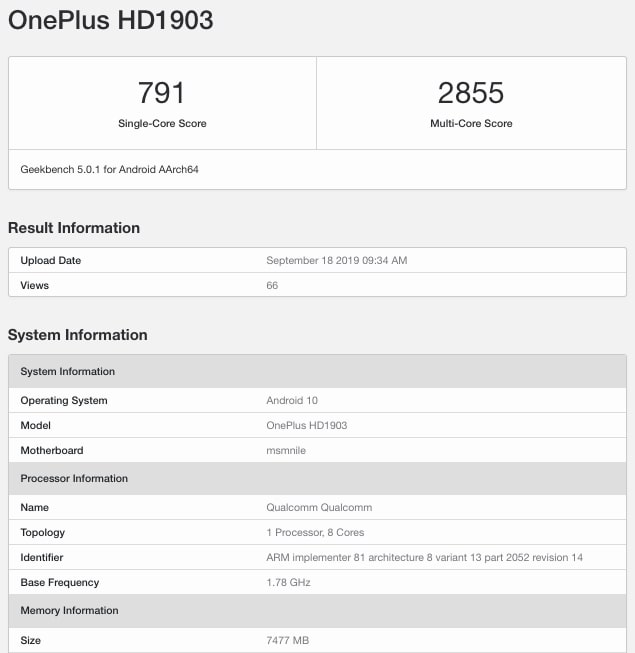
The listing shows that the smartphone is powered by 8GB of RAM and is running the latest Android 10 operating system out-of-the-box. The phone is certainly running OxygenOS on top of the base Android, as usual.
The benchmark score of the OP7T is slightly higher than the OnePlus 7 given that the new device comes powered by the Qualcomm Snapdragon 855 Plus octa-core processor. The phone has scored 791 points in the single-core test and 2,855 points in the multi-core test. Do note that these scores are from the updated Geekbench version 5.0.1.
Editor’s Pick: Xiaomi Mi 9 Pro 5G to come with Snapdragon 855 Plus chipset, custom VC Liquid Cooling, and custom vibration motor for advanced haptics
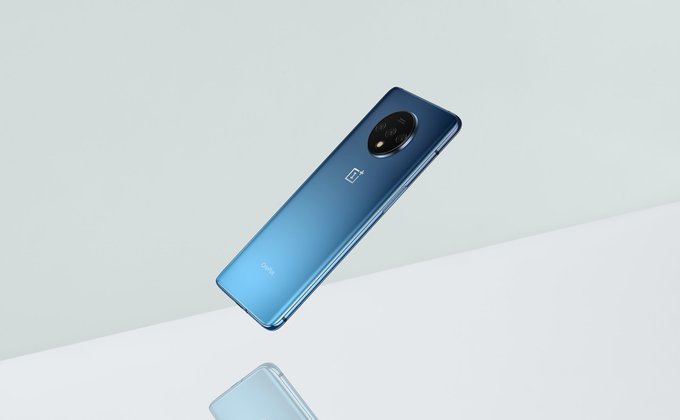
The design of the OnePlus 7T (Details) looks familiar given that it has popped online several times. The phone comes with a new circular camera module at the middle on the back side. The circular housing houses the triple camera setup with the three sensors making a perfect symmetry when viewed from any direction.
OnePlus CEO has also hinted that the design was selected after perusing over fifty design iterations. The rear panel is made from the 4th generation matte-frosted glass and the company has also showcased the “Haze Blue” color variant in the shared renders.
The OnePlus launch event is going to take place on September 26th in India and the United States while it’ll be held in London on October 10th. The company’s fans can also purchase tickets to attend the event.
Up Next: OnePlus will fix ‘Background App Management’ issues and promote Custom ROMs for EOL devices
(Source)



Comments