
Add GIZMOCHINA as Preferred Source on Google
Less than two days are separating us from the awaited official launch of the Huawei P40 series. One device from the lineup was already launched last month: the Huawei P40 Lite, which is a rebranded version of the Nova 6 SE. But the affordable P40 Lite is a totally different device from the upcoming flagships Huawei P40, P40 Pro and the alleged P40 Pro Plus 5G previously known as the P40 Premium Edition. In this rumor roundup, we collected all the most reliable leaks and the official info surfaced about the Huawei P40 series so that you can have the chance to know everything about the new lineup ahead of the launch. Note that a lot of details are only based on rumors, so you should take a lot of info provided with a pinch of salt.
Huawei P40, P40 Pro and PE Rumor Roundup
Design
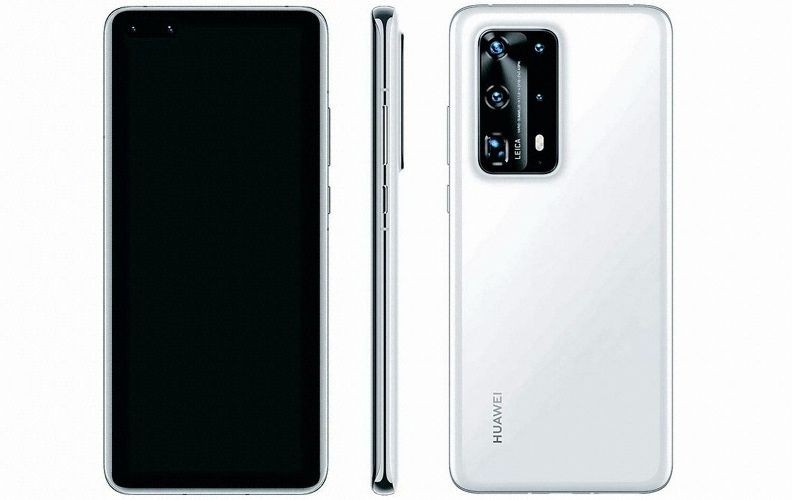
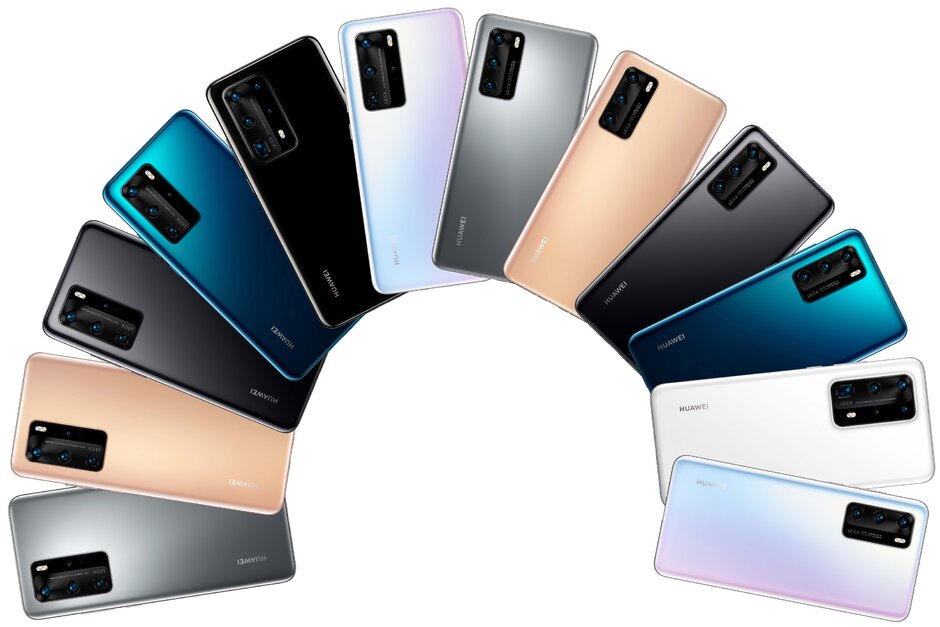
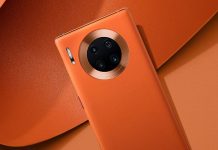
According to renders, the rear side of Huawei P40, P40 Pro and P40 Pro+ 5G will share the same aesthetics. There will be a huge camera module placed on the upper left part of the rear, while the Huawei logo will be placed vertically on the bottom left part. The rest of the back will be completely clean and it will have curved borders. Huawei P40 series will be available in several colors but also in various materials: there will be a classic variant with a glass back, a ceramic version and a vegan leather version just like the Oppo Find X2 Pro. Coming to the front panel, Huawei P40 is expected to have a flat display, while P40 Pro and Pro+ 5G are tipped to sport curved displays. The screen-to-body ratio will be amazingly high and there will be a dual punch-hole cutout for front cameras and sensors. Huawei P40 Pro will weigh 203 grams and it will have a thickness of 8.95 mm. The vanilla version will have a thickness of 8.5 mm and a weight of 175 g. The handset will also be waterproof with the IP68 certification.
Display
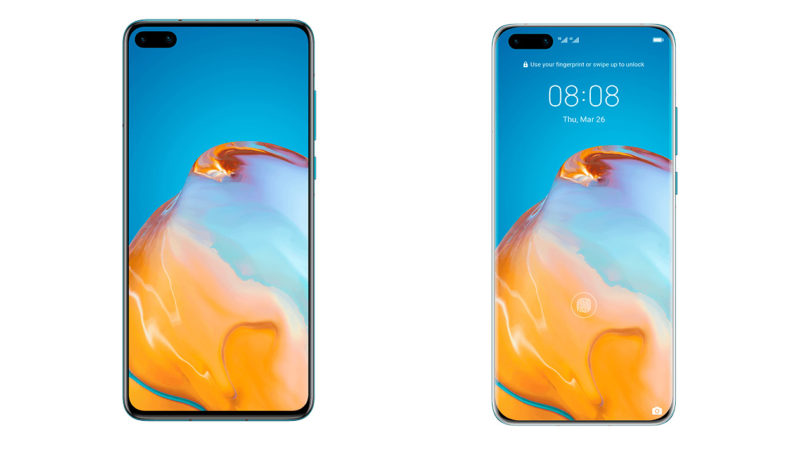
The display found on the Huawei P40 will have a 6.1-inch diagonal and it will show images at a Full HD+ resolution with 2340 x 1080 pixels. It will naturally be an OLED panel and it will sport an integrated fingerprint reader. Huawei P40 Pro will boast a bigger 6.58-inch display: still an AMOLED panel, but with a higher resolution and a higher refresh rate. It is supposed to come with a resolution of 2640 x 1200 pixels and a 90 Hz refresh rate. Note that only the display of the Huawei P40 Pro and Pro+ 5G is supposed to be a curved screen, while the vanilla version is expected to come with a flat display.
Specs & Hardware
The Huawei P40 series will be powered by a Kirin 990 chipset. They will support 5G connectivity, but there will also be variants with 4G only. However, the company is supposed to launch only the variants with a 5G modem in the European market. The flagship-class Kirin 990 chipset built at 7 nm will be supported by 8 GB of RAM on the Huawei P40 and P40 Pro. The vanilla version is expected to have 128 GB of internal storage, while the Pro variant will hit the shelves in two configurations with 128 and 256 GB of UFS native storage expandable thanks to a nano memory card slot.
The Kirin 990 5G will have the SuperCool cooling system with an insert made of three-dimensional graphene film in combination with an ultra-thin vapor chamber. It will be able to dissipate a lot of heat even at maximum load. Android 10 will be obviously preinstalled and customized by EMUI, but in the global market, there won’t be Google services out of the box due to the U.S. ban. Instead, users will find Huawei Mobile Services, an alternative suite of apps to Google services. Among the other specs, there will be NFC and Gigabit WLAN.
Camera

On the camera side, you will surely get an awesome setup which will make these handset three of the best camera phones ever. The vanilla P40 will sport a triple camera setup including a 50 MP main sensor with RYYB filter and an f/1.9 focal aperture. The secondary sensors will be a 16 MP ultrawide lens with an f/2.2 aperture and an 8 MP telephoto sensor with f/2.4 aperture. Both the main sensor and the telephoto lens are expected to boast OIS. P40 Pro will sport a quad rear camera with two RYYB sensors on board, one for photos and the other for videos, with a 50 MP resolution. The UltraVision camera will support optical stabilization and Octa Phase Detection autofocus, as well as pixel binning and XD Fusion Engine which should enable faster processing of the data and “unmatched clarity at the pixel level”.

The phone will be able to shoot 4K images n 1.7 seconds and to capture multiple photos, then choose the best one with the aid of AI and a dedicated NPU. The phone is also rumored to feature a dual telephoto lens with 40 and 12 MP resolution and up to 3x and 10x optical zoom respectively, as well as 50x SuperSensing zoom without loss of quality. It would be a big deal since there is no smartphone in the market with a 10x optical zoom. Last but not least, there will be a TOF 3D depth sensor. The dual punch-hole will house a 32 MP front camera, a depth sensor, and an IR sensor, while the Huawei P40 will only get a single 32 MP front camera. The P40 Pro+ 5G is tipped to come with a penta-camera including a 52 MP main sensor, two telephoto lens, a 3D TOF sensor, and temperature sensor, and a 40 MP Sony IMX650 ultrawide lens.
Battery
The battery capacity of the Huawei P40 will be 3800 mAh and it will support 22.5W fast charging, while P40 Pro will have a 40W fast charging technology and a 4200 mAh battery. We do not know the battery capacity of the Huawei P40 Pro+ 5G, but we expect it to boast an even bigger battery than P40 Pro.
Huawei P40 – Launch, price and availability
Despite all the issues that came after the U.S. ban and the absence of Google services, Huawei kept launching its smartphones globally and it will be the same with the P40 lineup. The new series will be officially announced on March 26. The vanilla Huawei P40 is expected to hit the global market with prices ranging around €799-899 depending on the configuration. P40 Pro will have a starting price of €999 and it will reach €1,099 in its most expensive configuration, while the so-called Premium Edition will range from €1,199 to €1,299. Prices will vary by €50-100 depending on the country. The phones should be available in China on April 8.

Comments