
Add GIZMOCHINA as Preferred Source on Google
US Commerce Department and other regulatory authorities approved around 70% of licenses for export to China in 2022. This is despite the ongoing US-China tech war and the extreme sanctions on semiconductor export to China.
Alan Estevez, the Under Secretary of Commerce for Industry and Security said that in 2022 the US government approved around 69.9% of export applications involving China. This means only 30.1% of applications were rejected or returned without action.
He further added that even though the approval rate is high, there are no loopholes when it comes to approvals for China. The average processing time for approvals was 40 days but for applications related to China, the average time for approval was 77 days or more.
According to Reuters, Eztevez who is going to attend the US Foreign Affairs Committee hearing on “Combating the Generational Challenge of CCP Aggression”, is going to present his case and reassure the government that China remains the main focus of the enforcement bureau and he and his team will continue to work towards this goal in 2023. The Combating the Generational Challenge of CCP Aggression hearing is happening today before the House of Representatives at the US Capitol Building.
US-China Trade War:
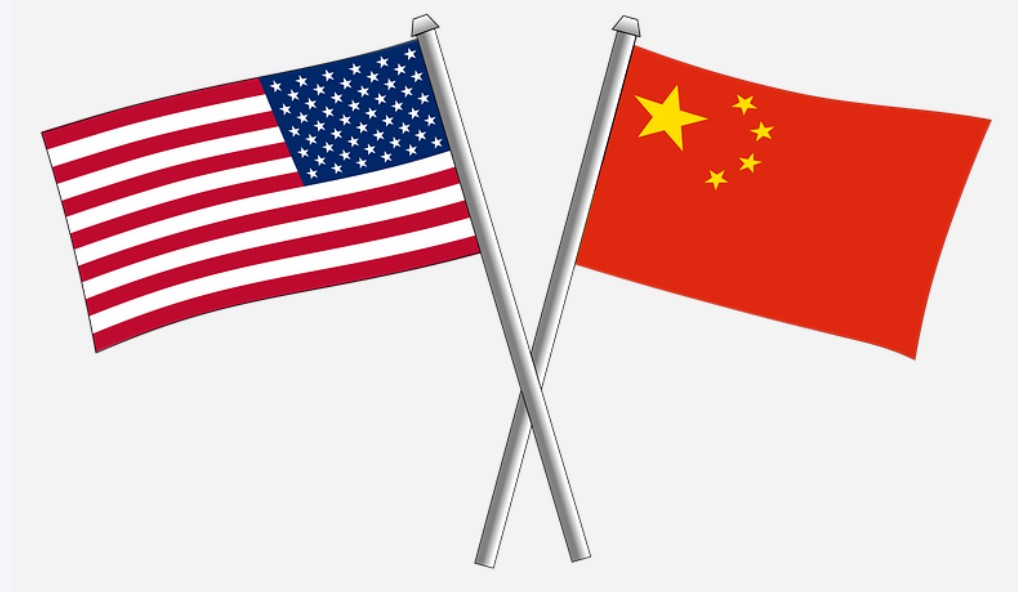
The US-China trade war started in 2018 when then-president Donald Trump imposed sanctions and tariffs on exports to China in order to stop alleged unfair trade practices and intellectual property thefts. China plans to become the global leader in artificial intelligence, military weapons system, and quantum computing and the US wants to limit this progress in order to safeguard its economic and military interests. The current Biden administration also continues to impose sanctions and restrictions on exports to China, to control and crush the Asian economy.
The US has already added Chinese tech giants Huawei and ZTE to the infamous entity list. The list has more than 639 Chinese or China-related businesses and individuals on the trade blacklist. Companies on the entity list are banned from receiving US-origin goods, services, and technology.
The US has mainly banned the export of semiconductor machinery, technology, personnel, and technical know-how to China, which is the largest consumer of semiconductors in the world. The Biden administration also successfully roped in allies like the Netherlands, Japan, and South Korea to impose restrictions on their semiconductor exports to China.
Eztevez justified these restrictions by saying that the sanctions were imposed to address concerns related to the production of advanced semiconductors. He further added that these controls are not intended to stop the production of legacy semiconductors, and are neither tools of economic protectionism instead they are national security and foreign policy tools.
US-China Record Trade Despite Ongoing Sanctions:
Despite the ongoing trade war, US and China set a record high trade figure in 2022. The total import and export increased by 2.5% YoY reaching a whopping $690 billion. The previous record was set in 2018 for $658.8 billion.
The US trade deficit with China also increased to $382.9 billion reaching 8.3% YoY. In 2022, China was the third largest trading partner of the US after Canada and Mexico and the largest source of imports for the country. On the other hand for China, the US was the largest single-country trade partner and the third largest trading partner after ASEAN and EU.
The record trade figures show that the US and Chinese economies, heavily rely on each other and despite the ongoing tech war and diplomatic stand-offs decoupling both economies does not seem viable.
- US May Set a Cap on South Korean Semiconductors Made in China
- ASML CEO says that attempting to restrict chip shipments to China will fail
- US Export Controls Could Cause Long-Term Harm to Global Semiconductor Industry: CSIA Warns
- MWC 2023: Best Products & Announcements From Day 1
(via)

Comments