Add GIZMOCHINA as Preferred Source on Google
Xiaomi recently introduced the 14 Civi as a new competitor in the crowded mid-range smartphone market in India. Its starting price and target audience are similar to those of the Vivo V30 Pro.
With both phones appealing to similar users, it’s natural for us to wonder which one provides better value for the money. In this comparison, we’ll explore the design, display, cameras, performance, battery life, and software of both phones to help you make an informed decision.

1. Display and Design
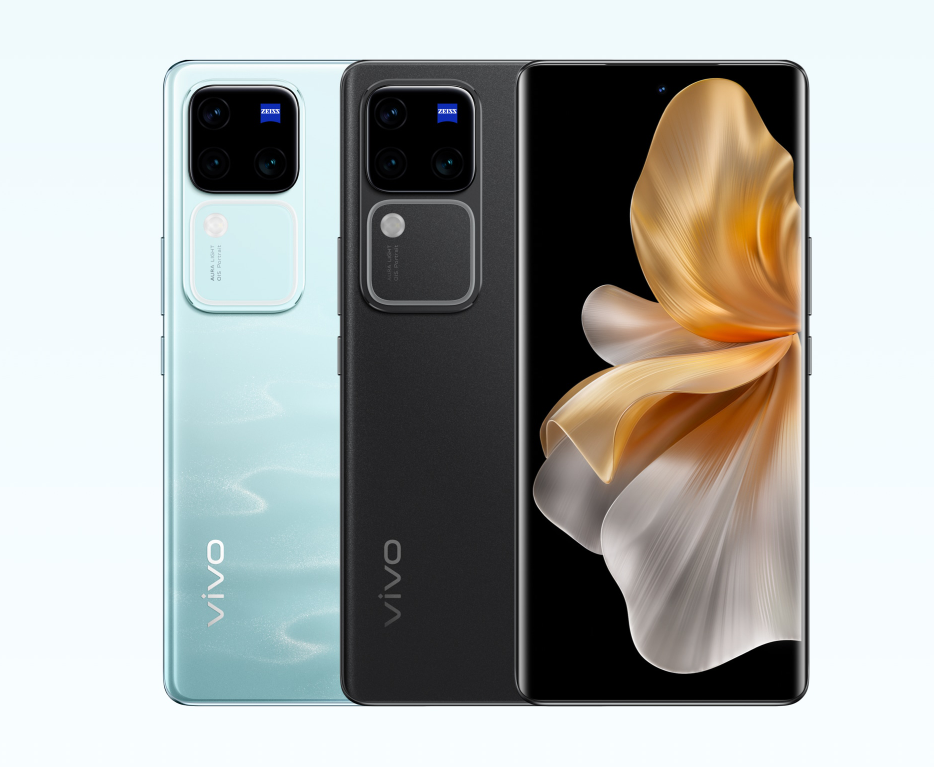
The Xiaomi 14 Civi features a 6.55-inch AMOLED display with a 120Hz LTPO refresh rate, allowing the refresh rate to adjust based on content. The screen has a resolution of 1236 x 2750 pixels and is protected by Corning Gorilla Glass Victus 2.

In contrast, the Vivo V30 Pro offers a larger 6.78-inch AMOLED display, also with a 120Hz refresh rate and 1260 x 2800 pixel resolution. However, it lacks LTPO technology and comes with a slightly inferior Schott α glass. Both phones offer excellent contrast and vivid colors typical of AMOLED panels.
Design-wise, both phones feature a sleek and lightweight build with a 7.5mm thin profile. They come with a glass back, and the Xiaomi 14 Civi also has a leather finish on the Cruise Blue variant of the phone. The V30 Pro has an IP54 rating for dust and water resistance for ingress protection, while the Xiaomi 14 Civi lacks an official IP rating.
2. Performance and Software
The Xiaomi 14 Civi packs a punch in terms of performance with the latest Snapdragon 8s Gen 3 SoC. It’s a flagship-grade processor built for demanding tasks that can even run resource-heavy games with ease.
The Vivo V30 Pro takes a different approach, opting for a more modest MediaTek Dimensity 8200 SoC. This processor is no slouch either; it can offer excellent performance for everyday use and most games. However, it will fall behind the Snapdragon 8s Gen 3 in benchmarks and raw power. So for users who demand top-tier performance and future-proofing, the Xiaomi 14 Civi holds the edge.
Both phones offer up to 12GB of RAM paired with up to 512GB of storage. On the software front, the Xiaomi 14 Civi runs HyperOS based on Android 14, while the Vivo V30 Pro runs FunTouch OS 14, also based on Android 14.
Notably, the Xiaomi 14 Civi will receive 3 Android upgrades and 4 years of security updates, whereas the Vivo V30 Pro will get one year less for both software upgrades and security updates.
3. Camera System
The rear camera setups on both phones feature triple-lens configurations. The 14 Civi includes a 50MP main, a 12MP ultrawide, and a 50MP telephoto sensor all of which are equipped with a Leica Summilux lens as a result of the partnership between renowned camera brand Leica and Xiaomi.
The Vivo V30 Pro, on the other hand, is equipped with a 50MP main sensor and two additional 50MP sensors—one for ultrawide and another for telephoto capabilities. These lenses are co-engineered with Zeiss, another globally recognized camera brand.
Without in-depth camera tests, it’s hard for us to say which is a better camera phone. But since both the devices have a dedicated telephoto lens, you will be able to capture good portraits along with detailed zoomed-in shots of other objects.
The front camera setup is where the Xiaomi 14 Civi stands out. It features dual 32MP lenses, one for wide and one for ultrawide shots, compared to a single 50MP wide lens on the V30 Pro.
The dual cam arrangement on Xiaomi naturally provides more versatility for situations like taking group selfies with a large group of friends.
4. Battery and Charging
The Vivo V30 Pro takes the lead in battery capacity with a 5,000mAh unit compared to the Civi 4 Pro’s 4,700mAh battery. However, the difference may not be significant in everyday use, depending on how well each phone is optimized.
Both phones support fast charging, with the Vivo V30 Pro offering 80W speed and the Xiaomi 14 Civi supporting just 67W.
Xiaomi claims that the 14 Civi can charge to 100% in 40 minutes, whereas Vivo says the V30 Pro takes 43 minutes to go from 1% to 100%. As a result, charging times will likely be similar, and the Xiaomi 14 Civi may even charge slightly faster due to its smaller battery. However, you can expect the Vivo V30 Pro to have better screen-on time due to its larger battery.
5. Price and Availability
Both phones offer similar pricing structures. The Xiaomi 14 Civi starts at Rs 42,999 for the 8GB RAM and 256GB storage variant, while the Vivo V30 Pro starts slightly lower at Rs 41,999 for the same configuration.
The price difference narrows for the higher storage options, with the 12GB RAM and 512GB storage variants priced at Rs 47,999 and Rs 46,999 for the Xiaomi and Vivo respectively.
6. Conclusion
So, which one should you choose between the Xiaomi 14 Civi and the Vivo V30 Pro? It depends on what matters most to you. The Civi 4 Pro offers a more powerful processor, a better front-facing camera, and other small benefits like better software support and a modern LTPO display.
On the other hand, the V30 Pro has a slightly larger battery and is priced slightly lower. So when you compare the specs, the Xiaomi 14 Civi seems like a better option overall.
However, we suggest you go through detailed reviews or direct comparisons to understand how they differ in terms of user experience, camera qualities, and overall usability to understand if the Xiaomi 14 Civi is the right buy for you.