
Add GIZMOCHINA as Preferred Source on Google
Earlier it was rumored that the Huawei Nova series flip phone could be released in July. However, a new leak claims that the phone could be released in early August.
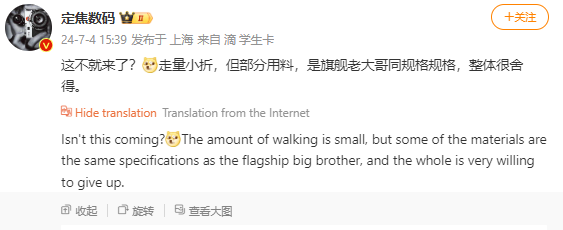
The news comes from Weibo (Chinese microblogging site) tipster “Dingjiao Digital”. The Nova series flip phone will be priced relatively lower than the Huawei Pocket 2, launched in February this year. The Nova series flip phone could be priced around 4,000-5,000 yuan (~$550 – $688), which will attract many new users to join the realm of foldable devices. However, the tipster claims that the phone will pack the same processor as the recently released Pura 70 Satellite Messaging Edition.
For those unaware, the Huawei Pura 70 Satellite Messaging Edition is powered by the Kirin 9010E chipset. It features one 2.19GHz Taishan core, two 2.18GHz Taishan cores, three 1.55GHz Cortex-A510 cores, and a Maleoon 910 GPU clocked at 750MHz. Compared to the Kirin 9010, the CPU runs at a 111MHz lower clock speed, while the other cores operate at almost the same frequencies.
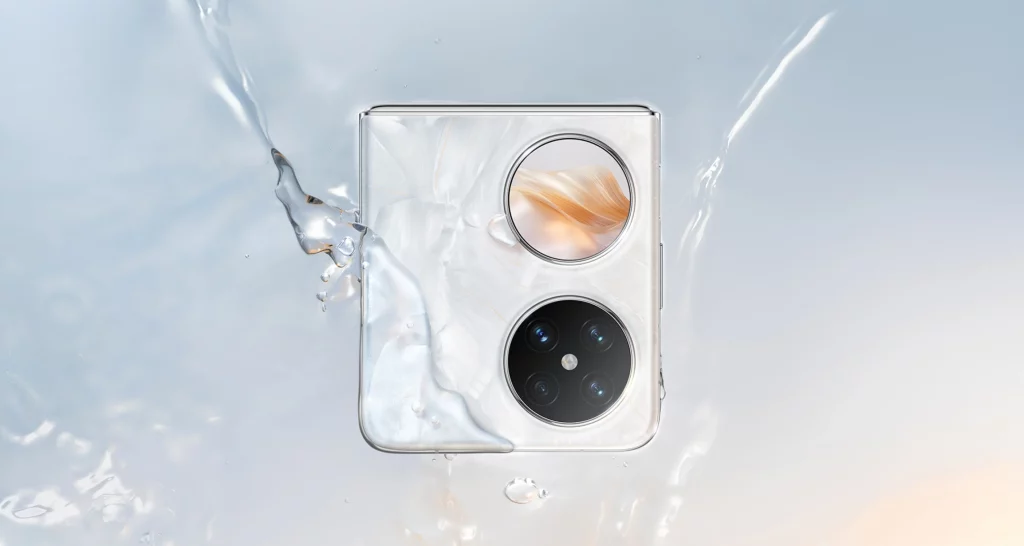
The Nova series flip phone will reportedly have a different outer design as compared to the Huawei Pocket 2. As you can see in the image above, the Huawei Pocket 2 comes with a small circular external display. The new flip phone is expected to offer a bigger outer display which will be more functional than that of the Pocket 2.
In order to give you an idea of what to expect, the Huawei Pocket 2 equips a 6.94 inches LTPO OLED inner display that offers a resolution of 1136 x 2690 pixels (~420 ppi) and reaches a peak brightness of 2200 nits. The outer circular display also boasts an LTPO OLED panel, which is measured at 1.15″ and has a resolution of 360 x 360 pixels. The phone packs an XMAGE branded 50MP + 8MP + 12MP + 2MP quad camera setup on the back. The 50MP main and the 8MP 3x telephoto comes with OIS support. The 2MP hyperspectral camera reportedly uses AI. There is a 10.7-center punch-hole selfie camera on the front. The Pocket 2 is powered by the Kirin 9000S chipset.




Comments