Add GIZMOCHINA as Preferred Source on Google
Samsung‘s Galaxy Z Flip series has redefined the pocket-sized phone with its foldable design. With each iteration, Samsung has improved the hinge, display technology, cameras, and overall user experience. The latest release, the Galaxy Z Flip 6, comes with several upgrades. Here’s a comprehensive breakdown comparing the latest Galaxy Z Flip 6 with its predecessors – Flip 5, Flip 4, and Flip 3 – so you can understand the upgrades these devices have received over the years.
1. Display
Across the board, all Z Flips boast a spacious 6.7-inch main display with a smooth 120Hz refresh rate. However, the Z Flip 6 takes the crown for brightness, with a peak of 2600 nits compared to the 1600 nits of the Flip 5 and the 1200 nits of the Flip 3 and 4. This significant improvement makes the Z Flip 6 ideal for outdoor use or situations with bright light.
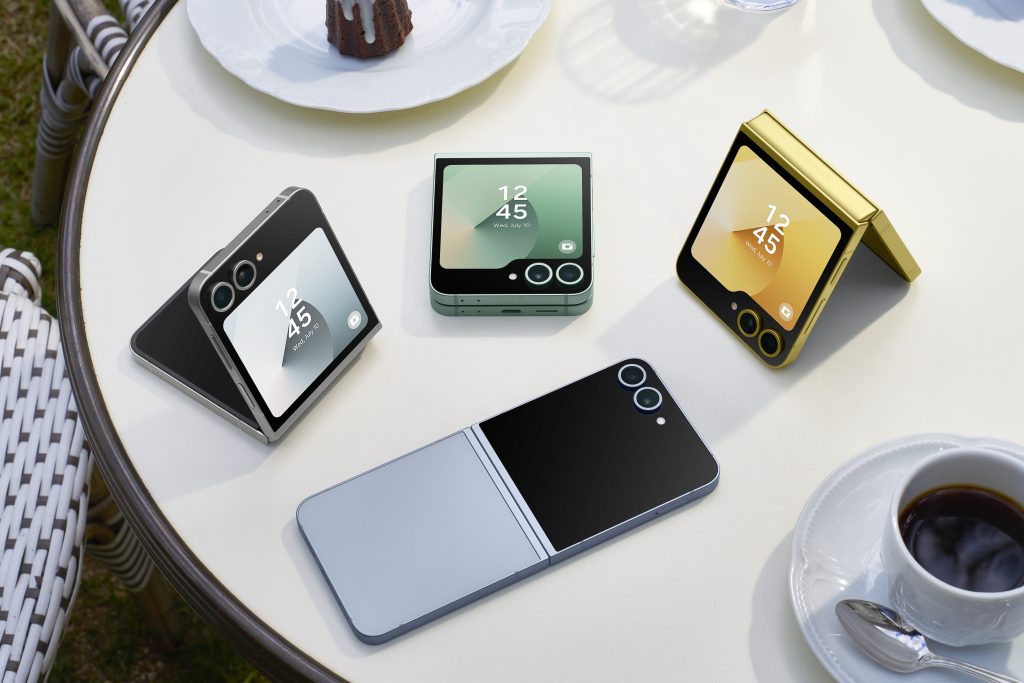
Coming to the cover display, the Flip 3 and Flip 4 retain the smallest 1.9-inch display, while the Flip 5 offers a more practical 3.4-inch option. The Z Flip 6 maintains the 3.4-inch cover display size introduced in the Flip 5, making it perfect for quick notifications, music controls, and even some app interactions without unfolding the phone. However, the refresh rates remain the same across all the devices. Some users had expected the cover display to receive a 120Hz refresh rate upgrade.
2. Performance and Storage
When it comes to processing power, the Z Flip 6 boasts the latest Snapdragon 8 Gen 3 processor, offering a significant leap in performance compared to the Snapdragon 888 in the Flip 3 and the Snapdragon 8+ Gen 1 in the Flip 4. The Flip 5 utilizes a Snapdragon 8 Gen 2 processor, placing it between the Flip 4 and 6 in terms of raw power.
All phones come with 8GB of RAM in their base variants, with higher storage options offering additional RAM. The Z Flip 6 raises the bar with a 12GB RAM option for the most demanding users. Storage options remain consistent across all models, with 256GB and 512GB choices available.
3. Cameras
The camera department sees a shift in the Z Flip 6. It ditches the dual 12MP setup of the previous models and introduces a new 50MP main sensor alongside the existing 12MP ultra-wide sensor. This upgrade promises sharper photos with better detail capture, especially in low-light conditions. The 10MP front camera remains consistent across all models.
Software features like Nightography and AI-powered image processing are present across all models, but the Z Flip 5 and 6 might offer further refinements due to their newer processors.
4. Design and Durability
The foldable design remains a mainstay across the Z Flip range. Samsung has consistently improved its hinge mechanism, with the Z Flip 6 boasting a “dual rail structure” that promises better shock absorption and a slimmer profile when folded (14.9mm) compared to the Flip 5 (15.1mm). The Flip 3 and Flip 4 have a thickness of 17.1mm when folded.
Material choices see a mix of improvements and downgrades. All models use Armor Aluminum for the frame, but the Z Flip 6 comes with improved IP48 dust and water resistance, whereas the Flip 3, Flip 4, and Flip 5 have an IPX8 rating. The Z Flip 5 and 6 utilize Corning Gorilla Glass Victus 2 for better scratch resistance, while the Flip 3 and 4 use Victus+.
5. Battery and Charging
The battery capacity has seen a slight increase throughout the generations. The Z Flip 3 has a 3300mAh battery, while the Z Flip 4 and Z Flip 5 bump it up to 3700mAh. The Z Flip 6 boasts the largest battery at 4000mAh, offering potentially longer usage time.
Fast charging capabilities have also seen improvement. The Z Flip 3 offers 15W fast charging, while the Z Flip 4 and Z Flip 5 take it up to 25W. The Z Flip 6 retains the 25W fast charging and 15W Qi wireless charging.
6. Software
On the software front, the Flip 3 launched with Android 11 and One UI 3.1. The Flip 4 and Flip 5 come with Android 12/13 and One UI 4.1/5.1 respectively. The Flip 6 takes the lead with the latest Android 14 and One UI 6.1.1. The Flip 6 will also get seven generations of OS upgrades and seven years of security updates.
The Z Flip 4 introduced FlexCam, which allows for hands-free video capture or selfies at various angles by partially folding the phone. The Z Flip 5 expands on this functionality with a larger Flex Window and the ability to switch between widgets with a pinch gesture.
The Z Flip 6 takes AI features a step further with features like Note Assist, Circle to Search, Interpreter, Live Translate, and more. It also boasts a vapor chamber cooling system, a first for the Flip series, to handle the increased processing power without overheating.
7. Pricing and Availability
The pricing for the base model (with 256GB storage) has remained relatively consistent across the Flips, starting at around $999. The Z Flip 3 and Z Flip 4 are no longer available for purchase directly from Samsung, but you might find them from retailers or carriers. The Z Flip 5 starts at $999.99, while the Z Flip 6 starts at $1099.99, reflecting the upgraded processor and camera.
8. Conclusion
The Samsung Galaxy Z Flip series has undoubtedly matured over time, with each generation building upon the strengths of its predecessors. The Flip 6 with its brighter displays, upgraded processor, enhanced camera capabilities, improved durability, and larger battery, offers a compelling upgrade over its predecessors. While the design language remains largely consistent, the internal and functional improvements make the Z Flip 6 a more refined and capable foldable smartphone.
If you’re considering upgrading from an older Z Flip model or venturing into the world of foldable phones, the Galaxy Z Flip 6 presents a compelling option. However, for users who prioritize cost savings, the Z Flip 5 could still be an attractive choice, as it offers many of the same core features at a lower price point.