
Add GIZMOCHINA as Preferred Source on Google
Android 15 development is in full swing, as multiple beta builds are already out. It has already entered the platform stability phase, which is the final phase of development before it’s released to the public.
Google announced Android 15 at the Google I/O developer conference in May. Xiaomi was among the few early brands to participate in the beta program. As of writing this post, the Android 15 beta is available for Xiaomi 14T, Xiaomi 13T Pro, and Xiaomi Pad 6S Pro 12.4, with more devices to be added to the list in the coming weeks and months.
Early builds have revealed a host of new and exciting features coming to Android 15, making people eagerly wait for the stable release. Although it’s an exciting upgrade, it will be the last OS update for many Xiaomi devices.
Review the list below to find out which Xiaomi, Redmi, and Poco will reach their end of OS updates after Android 15.
Android 15: The Last OS Upgrade for These Xiaomi, Redmi, Poco Devices
[Xiaomi devices]
- Xiaomi 13 Lite
- Xiaomi 12 Pro
- Xiaomi 12
- Xiaomi 12T Pro
- Xiaomi 12T
- Xiaomi 12S Ultra
- Xiaomi 12S Pro
- Xiaomi 12S
- Xiaomi Civi 2
- Xiaomi Civi 1S
- Xiaomi Mix Fold 2
- Xiaomi Pad 5 pro 12.4
[Redmi devices]
- Redmi Note 13 5G
- Redmi Note 13
- Redmi Note 13R Pro
- Redmi Note 12
- Redmi Note 12 Turbo
- Redmi Note 12 Pro Speed
- Redmi Note 12R
- Redmi Note 12R Pro
- Redmi Note 12T Pro
- Redmi Note 12S
- Redmi K60E
- Redmi K50 Ultra
- Redmi K50i
- Redmi 13C 5G
- Redmi 13C
- Redmi 13R
- Redmi 12 5G
- Redmi 12
[Poco devices]
- Poco M6 Pro 5G
- Poco M6
- Poco X6 Neo
- Poco F5 Pro
- Poco F5
- Poco C65
- Poco C61
This is an unofficial list we’ve prepared by analyzing the software update policies for each Xiaomi, Redmi, and Poco device.
Xiaomi typically offers a maximum of three Android updates to its flagship phones. However, recent models, including the Xiaomi 14 series and 13T series, do come with a promise of four OS updates.
Not just flagship models, newer mid-range phones, including the Redmi Note 13 series, are also getting an extra year of Android updates, while earlier models get a maximum of two.
Like the Redmi phones, Xiaomi has been offering a maximum of two OS updates to its Poco phones. However, recent models, such as Poco X6, X6 Pro, and M6 Pro 4G, are promised three years of Android updates.
The extended software support for newer Xiaomi phones sounds like a sweet deal, but the brand still lags behind its competitors, such as Samsung and Google, which are now offering seven Android updates.
Also Read: 10 Amazing Features Coming to Android 15
When Will Xiaomi Start Rolling Out Android 15?
The official Android 15 timeline is similar to last year’s Android 14. So, naturally, you’d expect the new OS to drop around the same time as last year in October. But Google seems to be in a hurry this time around.
The Made by Google event, where the company showcases new hardware usually happens in October, but this year it’s happening in August. As past leaks suggested, the official website confirmed the Pixel 9 series launch at this event.
The upcoming Pixel models are expected to run Android 15 out of the box. This means the stable version of the new OS could be released in August. The worst case here is October.
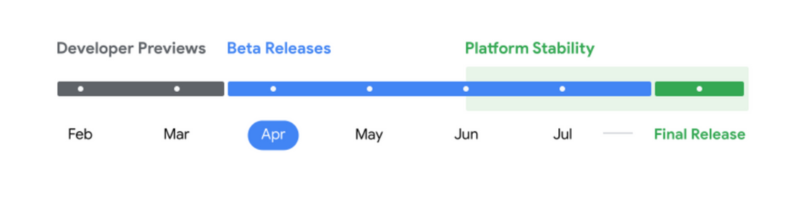
Once the stable Android 15 build is out, smartphone brands, including Xiaomi, take additional time to polish their custom skins (such as HyperOS) to work with the latest Android version. This usually takes a few days to weeks.
Thankfully, not everyone has to wait that long to enjoy the latest features. Xiaomi has already opened access to Android 15 beta to test the new OS before the public release. Currently, it’s available for Xiaomi 14, Xiaomi 13T Pro, and Xiaomi Pad 6S Pro 12.4, and should expand to more models in the coming days and weeks. Please note that these beta builds might contain bugs and problems, and several features may not work.
Android 15: What to Expect?
Android 15 has plenty of new features and enhancements. Here, I have highlighted the most important ones:
1. Satellite Connectivity Support
Android 15 “extends platform support for satellite connectivity.” It provides support for SMS, MMS, as well as, native RCS apps to use satellite connectivity for sending and receiving messages. The OS also adds some UI elements to ensure a consistent user experience.
All Android 15 phones may not support satellite connectivity as they will likely require special chip and carrier support.
2. Private Space
Private space is a privacy-focused addition to Android 15 that allows users to protect apps and files from prying eyes. It uses a different Google account, and you can use a different lock for better protection.
The files/apps you download and use in private space aren’t visible to other users.
3. Theft Detection Lock
Google recently rolled out the Find My Device network to help users find their lost Android devices. It uses a crowdsourced network of over a billion Android devices. This is rolling out to older Android phones as well, but Android 15 is taking it to another level by adding a Theft Detection Lock.
The new Theft Detection Lock feature automatically locks the device when someone snatches your phone and runs away. It does so by automatically detecting the motion. The best part is that the device needs to be logged into the same Google account after a factory reset.
4. App Pairs
Android 15 will let you save your favorite app combinations for the split-screen mode. An icon is created for this that shows both apps. This is a time-saving feature for people spending most of their time doing multitasking in the split-screen mode.
5. Partial Screen Sharing
This Android 15 feature lets you share or record a single app rather than the entire screen. Previous Android versions record everything that appears on your screen, such as notifications, reminders, etc, which most of us don’t want others to see. Hence, this is a useful privacy-focused addition to the new OS.
6. App Archiving
Similar to offloading apps on iPhones, Android 15 will allow users to uninstall unnecessary apps while keeping the user data around. There won’t be any data loss; you can continue where you left off after reinstalling/unarchiving the app.
Android already has app archiving via the Google Play Store. This means you can only archive and restore apps through the Google Play Store. However, Android 15 integrates this feature at the OS level, allowing users to archive/restore apps, even those installed outside of the Google Play Store.
7. High-Quality Webcam
Android 15 dramatically improves the output video quality when you use your Android smartphone as a webcam to your computer. A new “HQ” symbol will appear in the webcam camera preview to enable the high-quality webcam. This disables the power optimizations to improve the video quality.
Is Android 15 the final OS update for your Xiaomi device? Let us know your thoughts on the new OS in the comments below.
More Android 15 Stories:
1. Android 15 Update: Complete List of Eligible Devices
2. How to Download and Install Android 15 Beta



Comments