
Add GIZMOCHINA as Preferred Source on Google
Some researchers at the University of Kaunas, Lithuania have developed indoor solar cells with 37% charging efficiency. It has been a challenge previously to convert artificial light to energy when compared to solar energy conversion. The Lithuania-based research group has developed a new type of perovskite solar cell with high efficiency and capability for drawing power from artificial light.
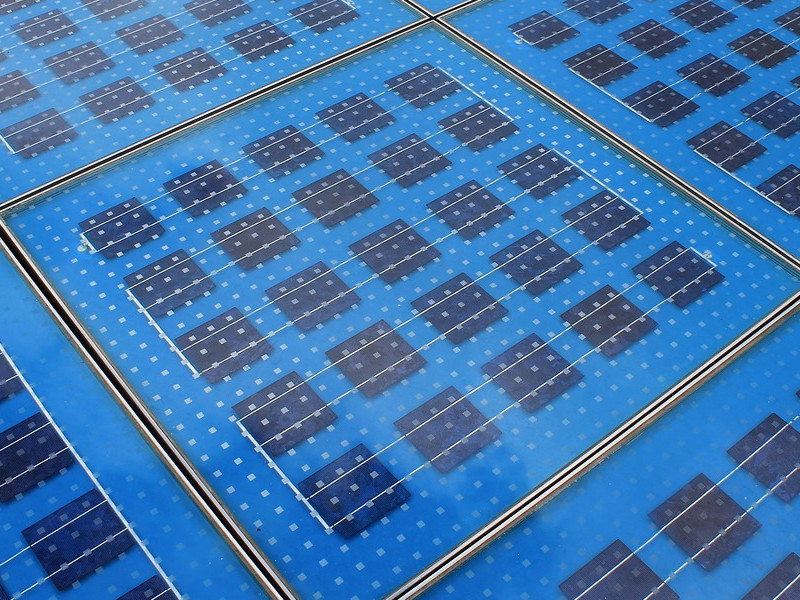
Current photovoltaic cells hardly work indoors where artificial light with a smaller spectrum and less energy is present. There are a lot of small devices such as smart sensors, digital clocks, and similar low-energy devices that function at night when solar energy is not available. The new indoor solar cells therefore provide new vistas for many possibilities. The cells could provide power for these devices based on minimal artificial light which is almost always available at night.
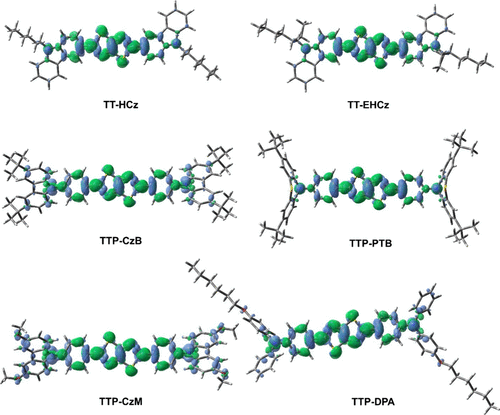
The new solar cells were developed to be efficient and capable of handling energy from a limited light spectrum. The material is made from an organic semiconductor combined with perovskite resulting in a decent energy conversion rate. The light source used in the experiments conducted by the research team was a warm white LED with a temperature of 3,000 Kelvin, corresponding to the typical room temperature for living rooms. The spectrum is similar to that of natural light but it lacks infrared radiation. Apart from a special layer of perovskite, the cell utilizes thiazole molecules to conduct positive charges. The extensive experiments yielded a 37% efficiency using light from a standard LED. The efficiency of the new solar cell technology is just 19% when utilizing solar energy.
There are no indications yet on the timelines for the transition of indoor solar cell technology into a commercial product. The optics are however good that the model will become a reality later.
(via)

Comments