
Add GIZMOCHINA as Preferred Source on Google
As an Amazon Associate, Gizmochina earns from qualifying purchases. Links on this page may earn us a commission at no extra cost to you.
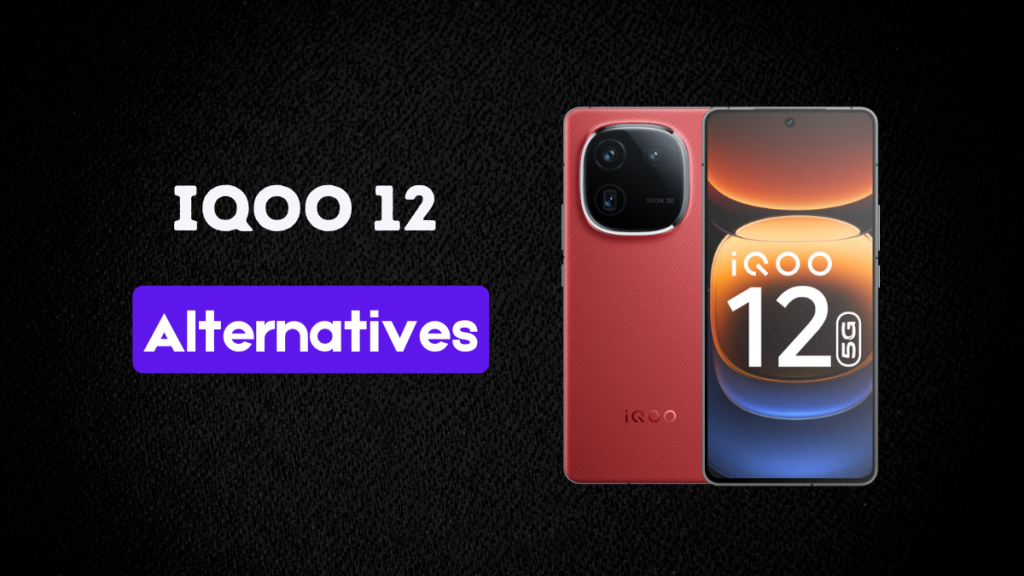
iQOO 12 was released in December 2023 as a flagship smartphone. Though many flagship phones launched in between, it’s still one of the best at the price points it’s currently available for.
The iQOO smartphone rocks Qualcomm’s most powerful mobile SoC, Snapdragon 8 Gen 3. It features a high-quality screen, a gigantic camera setup on the back, and a large battery with super-fast charging support, making it ideal for anyone looking for a high-end smartphone.
However, there are alternatives from other brands that are better than the iQOO 12 in one or many ways. Here, I’ll show you the six best alternatives you can consider.
Before that, let’s quickly take a look at the iQOO 12 spec sheet:
| iQOO 12 Specs | |
|---|---|
| Body | 163.2 x 75.9 x 8.1mm 198.5g or 203.7g |
| Display | 6.78″ 144Hz LTPO AMOLED 1260 x 2800 pixels resolution HDR10+, 3000nits (peak) |
| Chip | Qualcomm Snapdragon 8 Gen 3 (4nm) Adreno 750 GPU |
| Rear Camera | 50MP (main) – OIS, f/1.7, 1/1.3″ 64MP (periscope telephoto) – OIS, f/2.6, 3x optical zoom 50MP (ultrawide) – f/2.0, 119° FOV Video: 8K @ 30fps, 4K @ 24/30/60fps, 1080p @ 30/60/120/240fps |
| Front Camera | 16MP – f/2.5 Video: 1080p @ 30fps |
| RAM/Storage | 12GB/16GB RAM 256GB/512GB storage |
| Battery | 5,000mAh capacity 120W (wired) |
| Software | Android 14, Funtouch OS 14 3 Android upgrades |
| Connectivity | 5G/4G/3G/2G Wi-Fi 7/Wi-Fi 6 Bluetooth 5.4 NFC (supported) USB Type-C 2.0 |
1. Samsung Galaxy S24 (Snapdragon)
| Galaxy S24 Specs | |
|---|---|
| Body | 147.0 x 70.6 x 7.6mm 167g |
| Display | 6.2″ 120Hz Dynamic LTPO AMOLED 2X 1080 x 2340 pixels resolution HDR10+, 2600nits (peak) Corning Gorilla Glass Victus 2 |
| Chip | Qualcomm Snapdragon 8 Gen 3 (4nm) Adreno 750 GPU |
| Rear Camera | 50MP (main) – OIS, f/1.8, 1/1.56″ 10MP (telephoto) – OIS, f/2.4, 3x optical zoom 12MP (ultrawide) – f/2.2, 120° FOV Video: 8K @ 24/30fps, 4K @ 30/60fps, 1080p @ 30/60/240fps |
| Front Camera | 12MP – f/2.2, 89.6° FOV Video: 4K @ 30/60fps, 1080p @ 30fps |
| RAM/Storage | 8GB/12GB RAM 128GB/256GB/512GB storage |
| Battery | 4,000mAh capacity 25W (wired) 15W (wireless) 4.5W (reverse wireless) |
| Software | Android 14, One UI 6.1 7 Android upgrades |
| Connectivity | 5G/4G/3G/2G Wi-Fi 6E Bluetooth 5.3 NFC (supported) USB Type-C 3.2 Gen 1 |
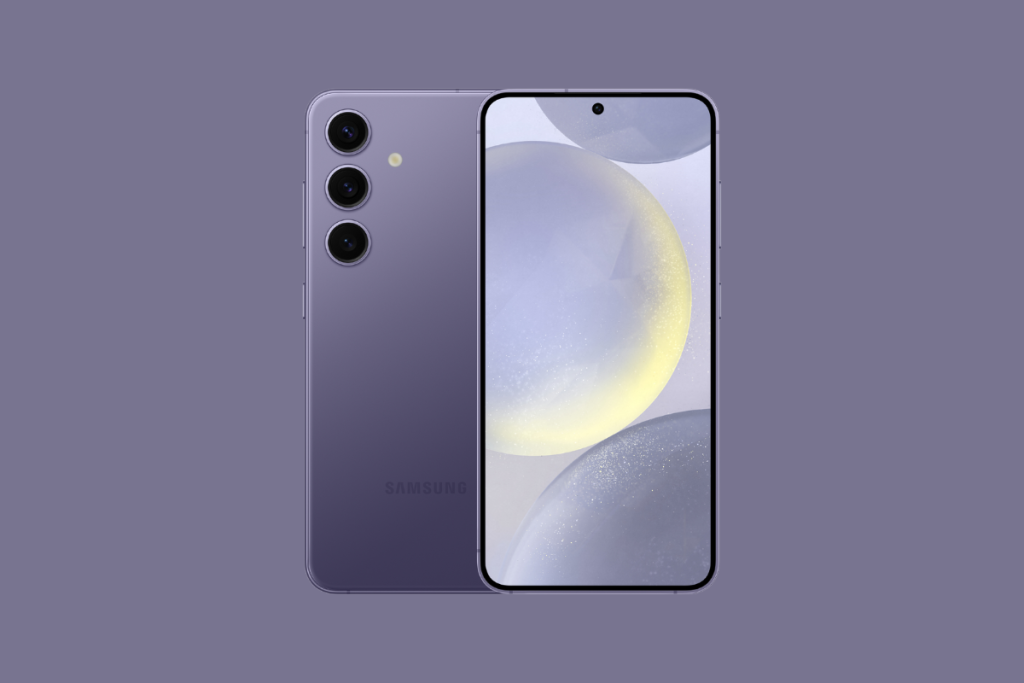
The Galaxy S24 comes with the Snapdragon 8 Gen 3 in the US, Canada, and China, while other regions get the Exynos 2400 variant. We recommend the Snapdragon variant as it offers better performance and power efficiency.
The Galaxy S24 is a compact flagship phone, around 30g lighter than the iQOO 12. It has a solid build quality and features Gorilla Glass Victus 2 protection on both sides, which the iQOO phone lacks. The Galaxy device also has better protection against dust and water as it’s IP68 certified (vs. IP64 on the iQOO 12).
The iQOO 12 boasts a slightly bigger screen and supports a higher refresh rate. The peak brightness is also higher on this phone, although the difference is not significant.
Both smartphones run the same chip. So, you’ll get a similar performance. However, the iQOO 12 may have a slight edge in gaming, as it’s primarily optimized for that and features a better cooling system.
The iQOO 12 and Galaxy S24 boot Android 14 out of the box, but there’s a significant gap in software support. The iQOO phone will get three Android updates, while Samsung has promised seven for the Galaxy S24. So, the Galaxy phone will run the latest Android features until January 2031.
The Galaxy S24 has a clean camera setup, whereas the iQOO 12 features a big rectangular camera module. Both have a 50MP primary sensor with OIS that takes excellent photos. The 3x telephoto camera in both phones also performs similarly, but in some scenes, the Galaxy S23 does better, and sometimes, the iQOO 12 does better. However, the 10X photos are better on the iQOO 12, with better details and sharpness.
In terms of video recording, both have similar performance with their 50MP main camera. However, the Galaxy S23 videos are slightly warmer and saturated. Both smartphones can record up to 8K videos using their rear cameras, but the selfie video quality on the iQOO 12 is limited up to 1080p, while the Galaxy S23 offers 4K recording, which looks much better.
The Galaxy S23 has a slightly lower battery capacity and does not charge as quickly as the iQOO 12. This may be a downside, but overall, it is a solid alternative to the iQOO 12.
| Preview | Product | |
|---|---|---|

|
Samsung Galaxy S24 5G AI Smartphone (Marble Gray, 8GB, 128GB Storage) | Check Price on Amazon |
Please Note: When you buy something using the links in our articles, we may earn a small commission at no cost to you.
2. Xiaomi 14
| Xiaomi 14 Specs | |
|---|---|
| Body | 152.8 x 71.5 x 8.2mm 193g |
| Display | 6.36″ 120Hz LTPO OLED 1200 x 2670 pixels resolution HDR10+, Dolby Vision, 3000nits (peak) Corning Gorilla Glass Victus |
| Chip | Qualcomm Snapdragon 8 Gen 3 (4nm) Adreno 750 GPU |
| Rear Camera | 50MP (main) – OIS, f/1.6, 1/1.31″, 85° FOV 50MP (telephoto) – OIS, f/2.0, 3.2x optical zoom 50MP (ultrawide) – f/2.2, 115° FOV Video: 8K @ 24fps, 4K @ 24/30/60fps, 1080p @ 30/60fps |
| Front Camera | 32MP – f/2.0, 89.6° FOV Video: 4K/1080p @ 30/60fps |
| RAM/Storage | 12GB LPDDR5X RAM 256GB/512GB UFS 4.0 storage |
| Battery | 4,610mAh capacity 90W (wired) 50W (wireless) 10W (reverse wireless) |
| Software | Android 14, HyperOS 4 Android upgrades |
| Connectivity | 5G/4G/3G/2G Wi-Fi 7/Wi-Fi 6E/Wi-Fi 6 Bluetooth 5.4 NFC (supported) USB Type-C 3.2 |
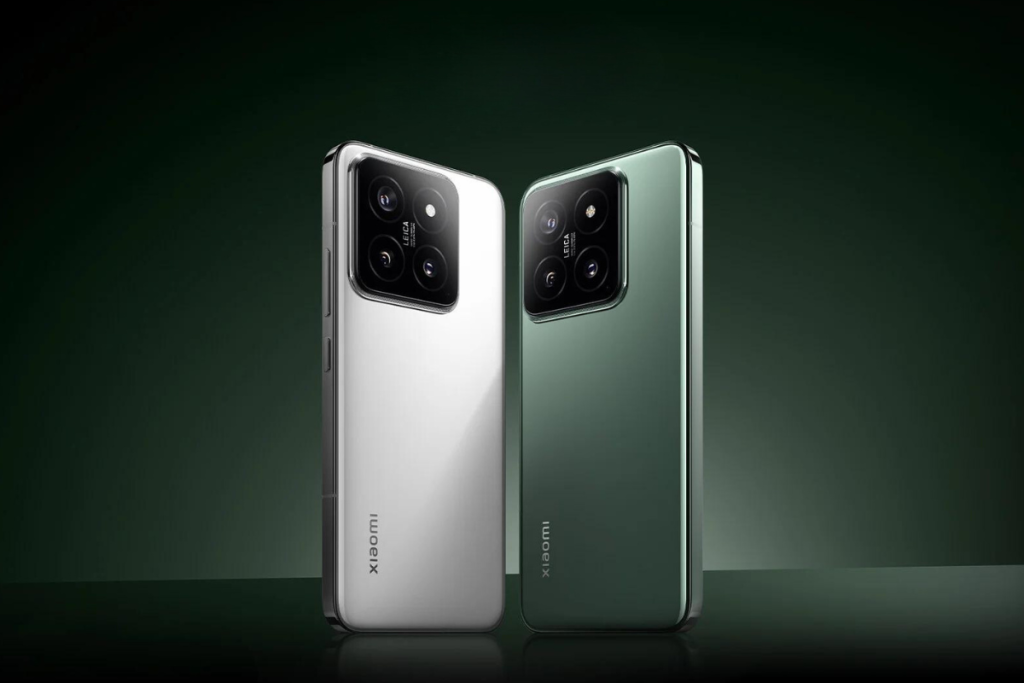
The Xiaomi 14 (review) is also a compact flagship phone. So, it has a slightly smaller screen size but can produce 68 times more colors and supports Dolby Vision. The screen refresh rate is higher on the iQOO phone, though. However, it lacks protection, while the Xiaomi 14 has Corning Gorilla Glass. Also, the Xiaomi phone has a better IP rating for protection against water and dust.
Both smartphones have the Snapdragon 8 Gen 3. So, you get a similar performance. They come with Android 14 out of the box with their version of custom skin at the top — HyperOS on Xiaomi and Funtouch OS on iQOO. However, the Xiaomi phone will get one additional Android upgrade.
The Xiaomi 14 boasts a rectangular camera module on the back. It houses a 50MP primary sensor with OIS, a 50MP telephoto lens with OIS and 3.2x optical zoom, and a 50MP ultrawide lens with 115-degree field of view. For selfies, there’s a 32MP sensor.
Both Xiaomi 14 and iQOO 12 can record up to 8K videos using their rear cameras. However, video recording using the selfie camera is limited to 1080p resolution on the iQOO 12, while the Xiaomi 14 can do 4K.
Both have similar connectivity features, except for a newer USB-C standard on the Xiaomi 14, which offers faster data transfer over a USB cable. The device packs a 4,610mAh battery and supports 90W wired charging, both of which are better on the iQOO 12. However, the Xiaomi phone also supports 50W wireless and 10W reverse wireless charging, which is lacking in the iQOO 12.
| Preview | Product | |
|---|---|---|

|
Xiaomi 14 (Black, 12GB RAM, 512GB Storage) | 50MP Leica Professional Optics | 120 Hz 1.5K LTPO… | Check Price on Amazon |
Please Note: When you buy something using the links in our articles, we may earn a small commission at no cost to you.
3. OnePlus 12
| OnePlus 12 Specs | |
|---|---|
| Body | 164.3 x 75.8 x 9.2mm 220g |
| Display | 6.82″ 120Hz LTPO AMOLED 1440 x 3168 pixels resolution HDR10+, Dolby Vision, 4500nits (peak) Corning Gorilla Glass Victus 2 |
| Chip | Qualcomm Snapdragon 8 Gen 3 (4nm) Adreno 750 GPU |
| Rear Camera | 50MP (main) – OIS, f/1.6, 1/1.4″, 85° FOV 64MP (periscope telephoto) – OIS, f/2.6, 3x optical zoom 48MP (ultrawide) – f/2.2, 114° FOV Video: 8K @ 24fps, 4K/1080p/720p @ 30/60fps |
| Front Camera | 32MP – f/2.4, 90° FOV Video: 4K/1080p/720p @ 30fps |
| RAM/Storage | 12GB/16GB LPDDR5X RAM 256GB/512GB UFS 4.0 storage |
| Battery | 5,400mAh capacity 100W (wired) 50W (wireless) 10W (reverse wireless) |
| Software | Android 14, OxygenOS 14 4 Android upgrades |
| Connectivity | 5G/4G/3G/2G Wi-Fi 7/Wi-Fi 6E Bluetooth 5.4 NFC (supported) USB Type-C 3.2 Gen 1 |
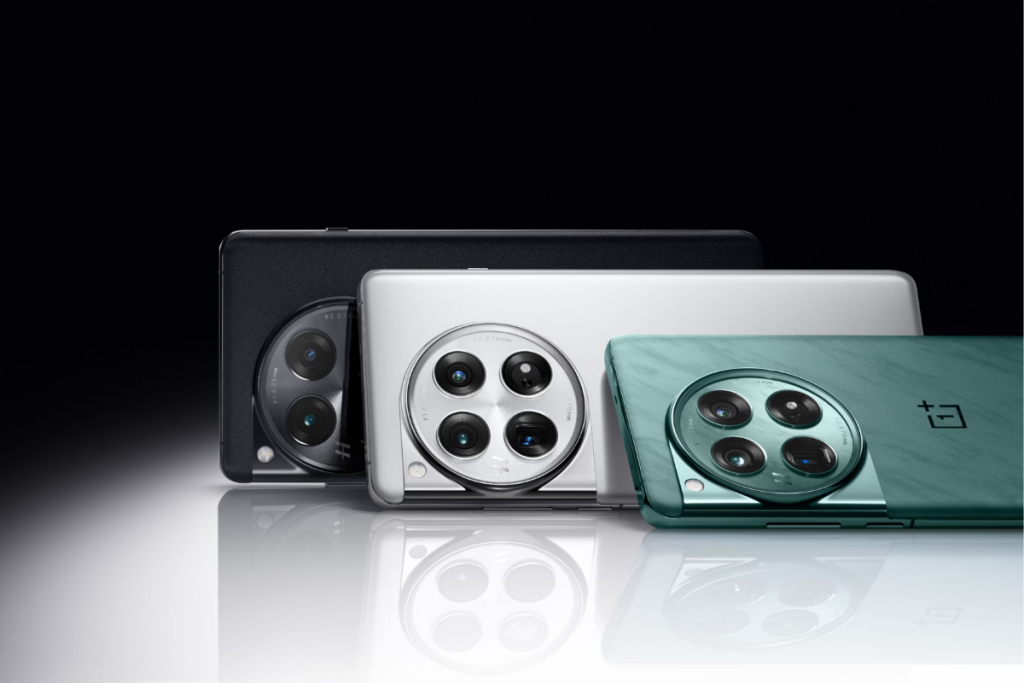
OnePlus 12 (review) is another solid alternative to the iQOO 12, featuring a slightly larger screen, higher resolutions, and peak brightness. It has Gorilla Glass Victus 2 on the front and Gorilla Glass Victus on the back for additional protection against accidental drops. iQOO 12, on the other hand, lacks any protection on either side.
Both smartphones have a similar performance as they are powered by the same Snapdragon 8 Gen 3 chip.
The OnePlus 12 has a circular camera module, whereas the iQOO 12 has a rectangular one. Both have triple cameras on the back. The OnePlus 12 has a 50MP primary sensor with OIS, a 64MP periscope telephoto lens with OIS and 3x optical zoom, and a 48MP ultrawide sensor with a 114-degree field of view. Like the iQOO 12, it can record up to 8K videos.
On the front, you get a 32MP selfie shooter, which can record up to 4K videos, while the iQOO 12 has a 16MP sensor limited to 1080p video recording.
Both phones have similar connectivity features, except for a newer USB-C standard on the OnePlus 12 for faster data transfer. The OnePlus phone has a bigger battery but relatively slower wired charging, though 100W is more than sufficient for most people. The OnePlus phone also supports 50W wireless and 10W reverse wireless charging.

Please Note: When you buy something using the links in our articles, we may earn a small commission at no cost to you.
4. Vivo X100
| Vivo X100 Specs | |
|---|---|
| Body | 164.1 x 75.2 x 8.5mm 206g |
| Display | 6.78″ 120Hz LTPO AMOLED 1260 x 2800 pixels resolution 1B colours, 3000nits (peak) |
| Chip | MediaTek Dimensity 9300 (4nm) Immortalis-G720 MC12 GPU |
| Rear Camera | 50MP (main) – OIS, f/1.6, 1/1.49″ 64MP (periscope telephoto) – OIS, f/2.6, 3x optical zoom 50MP (ultrawide) – f/2.0, 119° FOV Video: 4K/1080p @ 30/60fps, 720p @ 30fps |
| Front Camera | 32MP – f/2.0, 89.6° FOV Video: 1080p @ 30/60fps, 720p @ 30fps |
| RAM/Storage | 12GB/16GB LPDDR5X RAM 256GB/512GB UFS 4.0 storage |
| Battery | 5,000mAh capacity 120W (wired) |
| Software | Android 14, Funtouch OS 14 3 Android upgrades |
| Connectivity | 5G/4G/3G/2G Wi-Fi 7/Wi-Fi 6 Bluetooth 5.4 NFC supported |
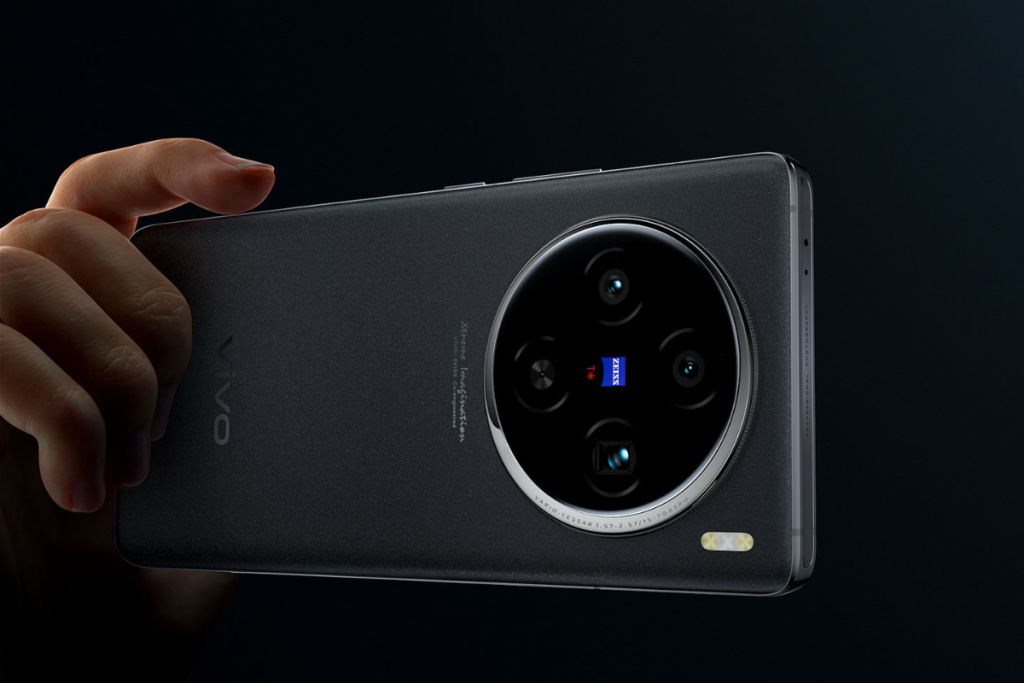
The Vivo X100 shares many specs with the iQOO 12. Both have the same screen size, screen resolution, and peak brightness. However, the iQOO phone has a higher screen refresh rate. The Vivo X100, on the other hand, has better protection against dust and water.
The Vivo X100 is fueled by the MediaTek Dimensity 9300 chip, which has a similar performance to the Snapdragon 8 Gen 3. Both smartphones boot Android 14 out of the box and are promised three Android updates.
The iQOO 12 and Vivo X100 share the same rear camera specs. The Vivo X100’s rear camera setupX100 is made in collaboration with ZEISS to offer better quality and accurate colors.
The Vivo X100 features a 32MP selfie shooter (vs. 16MP on iQOO 12). Notably, the Vivo X100 doesn’t offer 8K recording, but it supports 4K through the selfie camera, which is limited to 1080p on the iQOO 12.
Both smartphones have the same connectivity features. In fact, the battery capacity and charging capacity are also unchanged.
| Preview | Product | |
|---|---|---|

|
Vivo V40 5G Smartphone (Lotus Purple, 8GB RAM, 256GB Storage) |
Please Note: When you buy something using the links in our articles, we may earn a small commission at no cost to you.
5. Vivo V40 Pro
| Vivo V40 Pro Specs | |
|---|---|
| Body | 164.4 x 75.1 x 7.6mm 192g |
| Display | 6.78″ 120Hz AMOLED 1440 x 3168 pixels resolution HDR10+, 4500nits (peak) Schott Xensation Alpha protection |
| Chip | MediaTek Dimensity 9200+ (4nm) Mali-G715 MP11 GPU |
| Rear Camera | 50MP (main) – OIS, f/1.9, 1/1.56″, 85° FOV 50MP (telephoto) – OIS, f/1.9, 2x optical zoom 50MP (ultrawide) – f/2.0, 119° FOV Video: 4K/1080p @ 30fps |
| Front Camera | 50MP – f/2.0 Video: 4K/1080p @ 30fps |
| RAM/Storage | 8GB/12GB RAM 256GB/512GB storage |
| Battery | 5,500mAh capacity 80W (wired) |
| Software | Android 14, Funtouch OS 14 3 Android upgrades |
| Connectivity | 5G/4G/3G/2G Wi-Fi 7 Bluetooth 5.3 USB Type-C 2.0 |
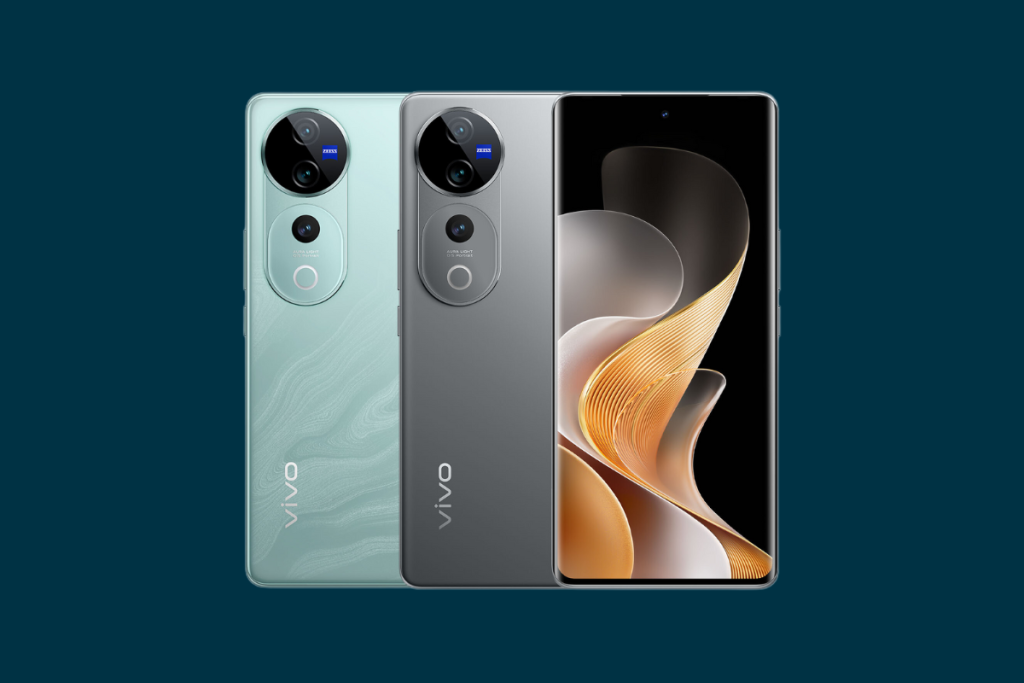
The Vivo V40 Pro has the same screen size and resolution as the iQOO 12 but a higher peak brightness. Both smartphones come with Android 14 out of the box and will receive Android updates for three years.
The Vivo smartphone is driven by the MediaTek Dimensity 9200+ chip, which is not as powerful as the Snapdragon 8 Gen 3 inside the iQOO 12 but offers smoother performance. Vivo V40 Pro is more of a camera phone than a gaming phone, so if you’re into high-end gaming, iQOO 12 is a better option.
The Vivo V40 Pro features a vertical camera setup on the rear side, which is unique in itself. It includes a 50MP primary sensor with OIS, a 50MP telephoto lens with OIS and 2x optical zoom, and a 50MP ultrawide lens with a 119-degree field of view. The device can record up to 4K videos with its rear, as well as, selfie cameras.
The Vivo V40 Pro will give you more screen time on a single charge as it packs a higher battery capacity. However, refilling that battery takes more time because of a relatively slower wired charging — 90W (vs. 120W on iQOO 12).
| Preview | Product | |
|---|---|---|

|
Vivo V40 Pro 5G AI Smartphone (Ganges Blue, 8GB RAM+ 256GB Storage) | Check Price on Amazon |
Please Note: When you buy something using the links in our articles, we may earn a small commission at no cost to you.
So, these are the five best alternatives to iQOO 12. Would you still go for iQOO 12 or pick any of these alternatives? Share your thoughts in the comment section below.


Comments