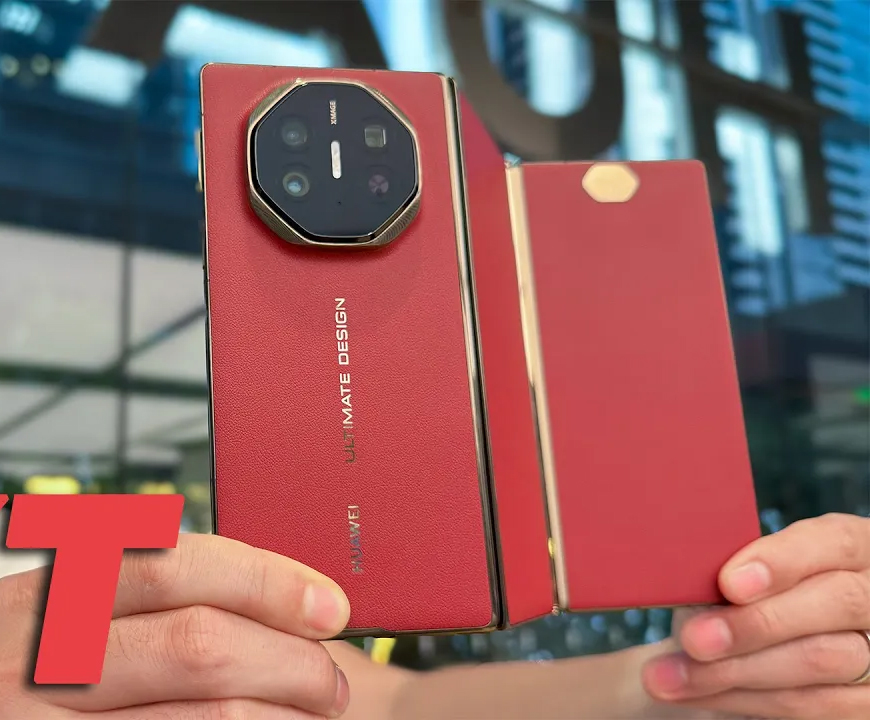
Recently, Samsung issued a rare apology after announcing that it expected to post just $6.78 billion in operating profit for the most recent quarter. This rare admission of faltering performance has led the company to look for ways to bounce back, including the potential venture into new technologies like a tri-foldable phone to take on competitors like Huawei. Huawei’s recent unveiling of the world’s first tri-foldable phone – the Mate XT Ultimate has sent ripples through the tech community, showcasing a blend of cutting-edge features and refined technology. Currently, the Mate XT is only available in China, but the brand has confirmed that it will be released in the global market soon.
As Samsung continues to lead in the foldable smartphone market, there are valuable lessons and features it can integrate from Huawei’s latest marvel. Here are five standout features of the Huawei Mate XT Ultimate that Samsung could adopt to further enhance its smartphone lineup.
The Huawei Mate XT Ultimate redefines foldable technology with its seamless and durable display. One of its key innovations is the advanced hinge mechanism, which ensures a smoother folding experience and greater longevity. Unlike some competitors, Huawei’s foldable screen shows minimal creasing, providing a more consistent and immersive viewing experience.
Samsung, a pioneer in the foldable phone market with its Galaxy Z series, could benefit from refining its hinge technology and display durability. While Samsung’s foldable displays are impressive, integrating a more robust hinge system and reducing screen creases would enhance user satisfaction and device longevity. Adopting Huawei’s advancements could solidify Samsung’s position as a leader in foldable smartphones.
2. Bigger battery with faster charging support
Battery life remains a crucial factor for smartphone users, and the Mate XT Ultimate excels with its high-capacity battery and advanced fast-charging technology. Huawei’s device packs a massive 5,600mAh battery that supports 66W wired fast charging and 50W wireless fast charging, ensuring that users spend less time tethered to a charger and more time enjoying their device.
Samsung’s Galaxy Z-series foldables that have launched in recent years have only offered a 4,400mAh battery with 25W wired and 15W wireless charging speeds. Next year’s Galaxy Z Fold 7 should see a battery size increase to stay competitive, and the same is expected from the company’s first tri-foldable phone.
3. Versatile camera system
The Huawei Mate XT Ultimate features a triple-camera setup with Leica optics, including a 50-megapixel main sensor, 12-megapixel ultra-wide sensor, and a12-megapixel periscope telephoto lens. The camera setup may not be the best, but still promises a good photography experience.
Samsung’s cameras are already highly regarded, but integrating elements from Huawei’s camera system could elevate their capabilities further. None of the foldable phones released by Samsung feature a periscope telephoto camera, which offers a higher optical zoom. So, the brand should consider this lens on its first tri-foldable offering. Additionally, leveraging advanced optics and computational photography techniques could enhance low-light performance, dynamic range, and overall image quality. Additionally, incorporating a more diverse lens selection would provide Samsung users with a broader range of photographic options.
4. Software optimization
Huawei has developed its HarmonyOS specifically for its foldable devices. This allows for seamless multitasking across different screen configurations and optimizes app layouts for the unique form factor. While Samsung has made efforts to optimize its One UI for foldables, it could further enhance the user experience by drawing inspiration from HarmonyOS’s approach to multitasking and app compatibility.
5. Seamless ecosystem integration
Huawei’s Mate XT Ultimate excels in ecosystem integration, providing seamless connectivity and interoperability with other Huawei devices, such as laptops, tablets, and wearables. This integration allows users to easily share files, sync notifications, and extend their workflow across multiple devices without interruption.
Samsung has made strides in creating a connected ecosystem with its Galaxy series, but there is room for improvement. Enhancing seamless integration between Samsung smartphones, tablets, laptops, and wearables could create a more cohesive and user-friendly experience. Adopting Huawei’s approach to ecosystem connectivity would strengthen Samsung’s appeal to users seeking a unified digital experience.
By incorporating some of the Mate XT Ultimate’s key features and embracing a spirit of innovation, Samsung can further enhance its foldable phone offerings and solidify its position as a leader in this rapidly evolving market. The future of foldable phones is bright, and both Huawei and Samsung are poised to play a significant role in shaping it.
We use cookies on our website to give you the most relevant experience by remembering your preferences and repeat visits. By clicking “Accept”, you consent to the use of ALL the cookies.
This website uses cookies to improve your experience while you navigate through the website. Out of these, the cookies that are categorized as necessary are stored on your browser as they are essential for the working of basic functionalities of the website. We also use third-party cookies that help us analyze and understand how you use this website. These cookies will be stored in your browser only with your consent. You also have the option to opt-out of these cookies. But opting out of some of these cookies may affect your browsing experience.
Necessary cookies are absolutely essential for the website to function properly. This category only includes cookies that ensures basic functionalities and security features of the website. These cookies do not store any personal information.
Any cookies that may not be particularly necessary for the website to function and is used specifically to collect user personal data via analytics, ads, other embedded contents are termed as non-necessary cookies. It is mandatory to procure user consent prior to running these cookies on your website.




Comments