Add GIZMOCHINA as Preferred Source on Google
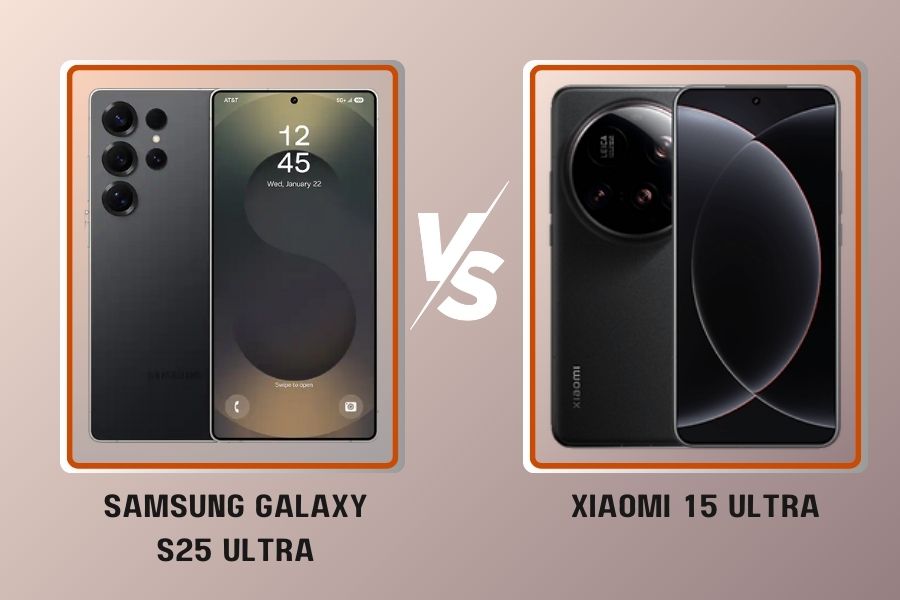
Xiaomi and Samsung are back with their latest premium flagships, the Xiaomi 15 Ultra and Galaxy S25 Ultra. Both phones promise top-tier specs, advanced cameras, and the latest processors. But how do they stack up against each other? Let’s break it down.
1. Design and Build
Neither Xiaomi nor Samsung is reinventing the wheel this year. The Xiaomi 15 Ultra sticks to a curved front and metal frame, while the Galaxy S25 Ultra continues with its now familiar industrial design.
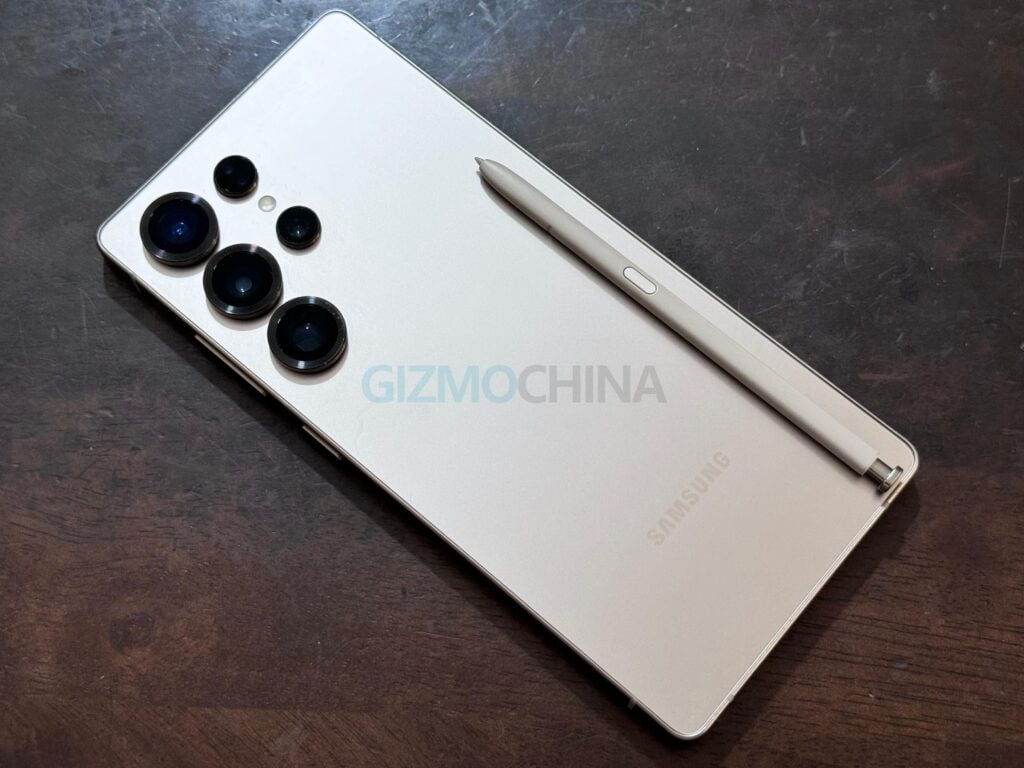
The Galaxy S25 Ultra sports a titanium frame which makes it both lighter and more durable than aluminum. It also features Gorilla Glass Victus 2 on the back and Corning Gorilla Armor 2 on the front. And at 218g, it’s slightly lighter than the Xiaomi 15 Ultra.
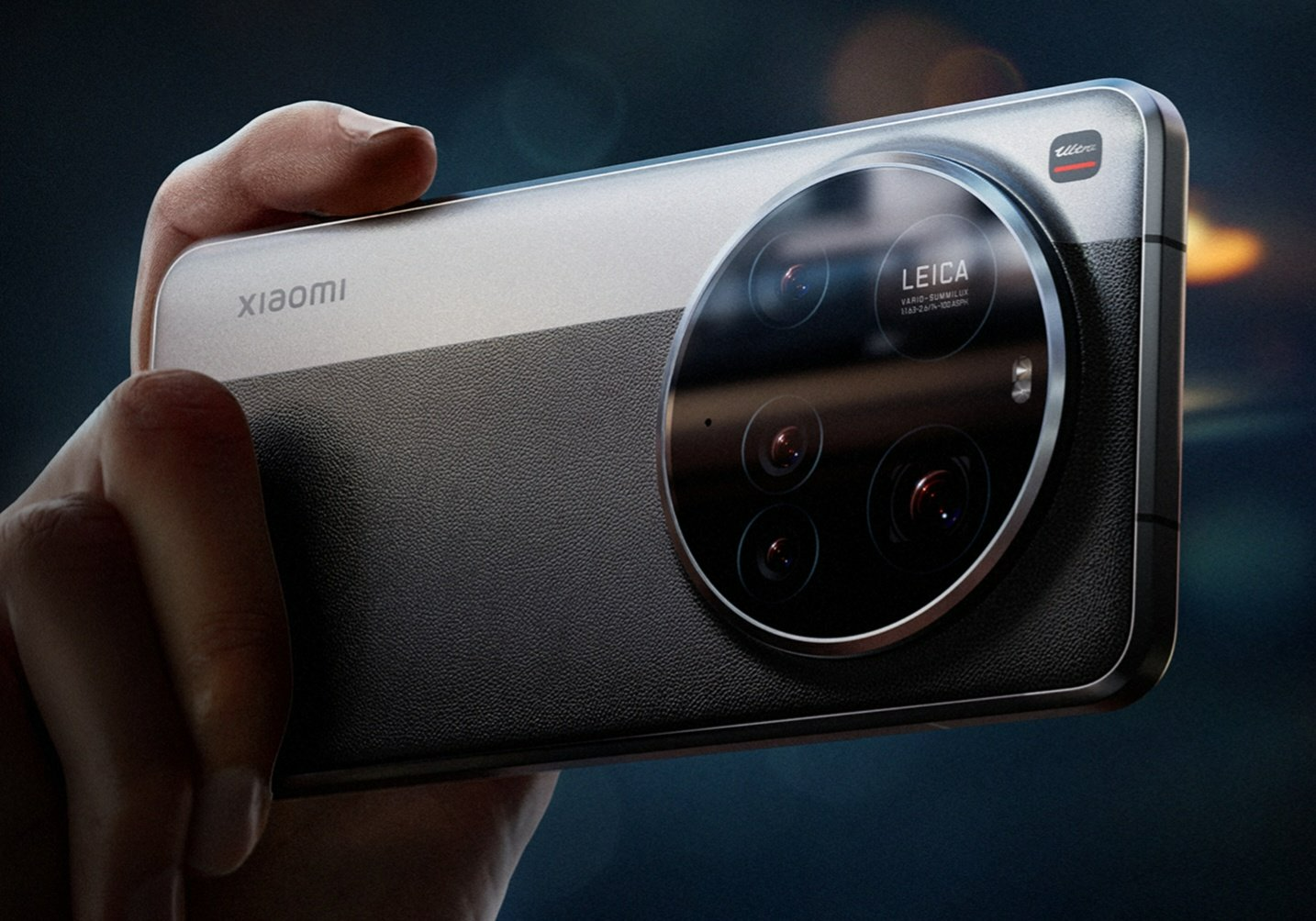
Xiaomi is using an aerospace-grade glass fiber or eco-leather on the back of the 15 Ultra. Its aluminum frame might not be as tough as titanium, but it keeps the weight in check at 226g–229g. It’s a bit thicker at 9.4mm, likely due to its 6000mAh battery.
Both devices are IP68-rated for dust and water resistance, so they can handle the occasional dunk without issue.
2. Display
In terms of display, both offer LTPO AMOLED panels with QHD+ resolution and adaptive 120Hz refresh rates. The Xiaomi 15 Ultra edges ahead in terms of brightness with a 3,200-nit peak compared to S25 Ultra’s 2,600 nits. That said, let’s not get too caught up in the numbers—both should be plenty bright for outdoor use.
One standout feature of the S25 Ultra is, of course, the S Pen—whether you actually use it or not. Samsung did remove its Bluetooth functionality this year, which is a bit of a downgrade, but it’s still handy for quick notes or doodling when boredom strikes. Plus, the S25 Ultra’s display gets an anti-reflective coating, making it even easier on the eyes.
3. Performance
The new flagships run on Snapdragon 8 Elite (3nm), the latest and most powerful chip from Qualcomm. However, Samsung’s variant is clocked slightly higher, with its Oryon V2 Phoenix L cores hitting 4.47 GHz compared to 4.32 GHz on the Xiaomi 15 Ultra.
In real-world use though, the difference is unlikely to be noticeable. Both devices handle gaming, multitasking, and AI-driven features with ease.
On the software side, Samsung promises 7 years of Android updates with One UI 7, giving it a serious longevity advantage. Xiaomi’s HyperOS 2 offers a slick experience but only comes with 4 years of major updates.
4. Cameras
Cameras are where these two flagships show stark differences.
The Galaxy S25 Ultra keeps its 200MP primary sensor, but Xiaomi has gone for a 1-inch type 50MP sensor with a wider f/1.6 aperture, which should capture more light.
For zoom capabilities, the S25 Ultra has:
- 3x optical zoom (10MP sensor)
- 5x periscope zoom (50MP sensor)
Meanwhile, the Xiaomi 15 Ultra offers:
- 3x optical zoom (50MP sensor)
- 4.3x periscope zoom (200MP sensor)
Xiaomi’s Leica-tuned optics and larger periscope sensor should provide better detail and natural bokeh, while Samsung’s AI processing and Best Face feature cater to casual users.
On the selfie front, Samsung sticks with 12MP, while Xiaomi opts for 32MP, giving it an edge in resolution.
5. Battery and Charging
The Xiaomi 15 Ultra packs a 6000mAh battery, making it one of the largest in a flagship phone. But that’s for the Chinese variant; the global model is expected to get a slightly smaller 5,410mAh cell, which still beats the Galaxy S25 Ultra’s 5,000mAh.
Xiaomi also crushes charging speeds with 90W wired and 80W wireless charging, compared to Samsung’s 45W wired and 15W wireless. This means the Xiaomi 15 Ultra can fully charge in under 40 minutes, while the S25 Ultra takes nearly an hour.
6. Extra Features
Alongside S-Pen, DeX mode is an add-on you get on every Samsung flagship that lets you use your phone like a desktop. If you’re into productivity tools, this could be very useful for you.
Meanwhile, Xiaomi offers two-way satellite communication, which lets you send messages even without cellular reception. That could be lifesaving in emergencies.
Both phones have Wi-Fi 7, eSIM support, and ultrasonic fingerprint scanners.
7. Price and Availability
The Galaxy S25 Ultra starts at ₹129,999 in India or $1,300 in the US. Meanwhile, the Xiaomi 15 Ultra is currently only available in China, with a global launch set for March 2. Still for reference, it starts at 6,499 yuan (around $893) in China.
8. Final Thoughts
- If you want the best stylus experience, longer software support, and a refined AI-powered camera, the Galaxy S25 Ultra remains a solid pick.
- If you prefer faster charging, more aggressive camera hardware, and a slightly lower price, the Xiaomi 15 Ultra is compelling—if you can get it in your region.
Both phones are iterative upgrades rather than any major innovations. Unless you’re upgrading from a much older model, last year’s Xiaomi 14 Ultra or Galaxy S24 Ultra may still hold up well. But if you’re choosing between the two, it’s a matter of whether you value hardware advancements or Samsung’s ecosystem consistency more.
For more daily updates, please visit our News Section.
Stay ahead in tech! Join our Telegram community and sign up for our daily newsletter of top stories!