Add GIZMOCHINA as Preferred Source on Google
Despite the launch of the Red Magic 10 Pro, the Red Magic 8 Pro continues to draw attention from mobile gaming enthusiasts. But does it still hold up in 2025, or is the Red Magic 10 Pro a clear-cut upgrade worth the jump? Let’s break it down.
1. Design and Display: Subtle Upgrade
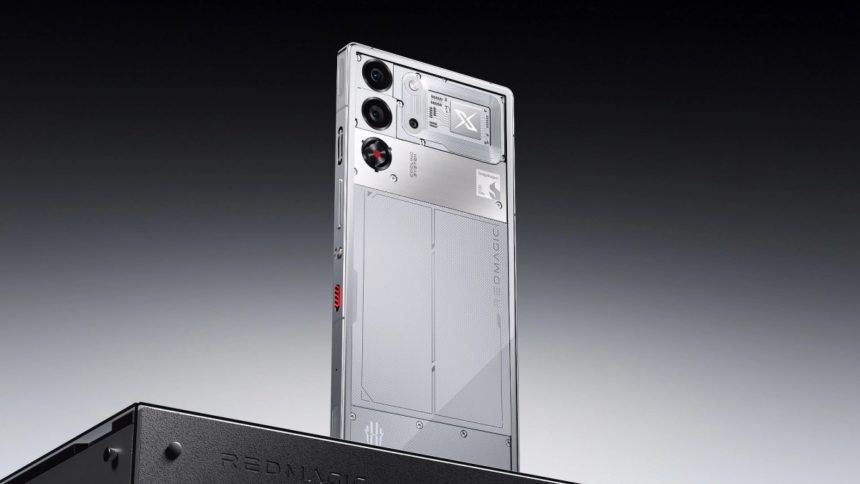
At first glance, the Red Magic 8 Pro and 10 Pro look cut from the same DNA—flat edges, industrial finish, and that signature gaming vibe. But look closer, and you’ll see that the 10 Pro refines the formula. It features a slightly larger 6.85-inch 1.5K OLED BOE Q9+ panel compared to the 8 Pro’s 6.8-inch FHD+ OLED screen. That’s not just about size—the 10 Pro offers a higher resolution, a 144Hz refresh rate (up from 120Hz), and a peak brightness of 2000 nits, nearly 700 nits more than the 8 Pro.
More importantly for gamers, the 10 Pro pushes PWM dimming to a whopping 2592Hz, compared to 1440Hz on the 8 Pro. The screen is gentler on your eyes during long sessions while delivering crisper visuals, faster response, and better color accuracy.
2. Performance: The Numbers Don’t Lie
The 8 Pro is powered by Qualcomm’s Snapdragon 8 Gen 2, which, at launch, was a beast. But the Red Magic 10 Pro steps into the ring with the newer Snapdragon 8 Elite—a 3nm chip boasting an Adreno 830 GPU and a staggering 3.29 million AnTuTu score, compared to 1.34 million on the 8 Pro. It’s not just hype. Games load faster, frames stay locked, and multitasking is seamless.
Red Magic also upped the ante with memory options—up to 24GB of LPDDR5X RAM (9600Mbps) and 1TB of UFS 4.0 PRO storage on the 10 Pro. The 8 Pro tops out at 16GB RAM and the standard UFS 4.0. While most users won’t max out 24GB, it future-proofs the device in a way the 8 Pro simply doesn’t.
3. Cooling and Gaming Features: Turbocharged Everything
Cooling is the unsung hero of gaming phones, and both phones bring serious tech. The 8 Pro’s ICE 11.0 system was already impressive with its 10-layer structure and built-in fan. But the 10 Pro takes it further, using composite liquid metal cooling—13x more thermally conductive than traditional gel. With a revamped 3D VC system and 23,000 rpm fan, it’s built for marathon gaming.
Both devices have 520Hz shoulder triggers, in-game lighting effects, and stereo speakers. But the 10 Pro’s new Red Core R3 chip enhances game rendering with support for 2K+120FPS super-resolution and better concurrency. It’s a big win for competitive players.
4. Cameras and Battery: Marginal Gains
The cameras aren’t the focus here, but the Red Magic 10 Pro does introduce a new 50MP OmniVision OV50E40 main sensor with OIS, paired with a better ultra-wide. It’s still not flagship-level photography, but it’s a step up from the 8 Pro’s Samsung GN5 sensor setup.
Battery-wise, the 10 Pro packs a 7050mAh silicon-carbon cell with 100W fast charging (global version), compared to the 6000mAh + 65W on the 8 Pro. It’s more juice, faster top-ups, and better long-term health—especially handy when you’re running 144Hz all day.
5. Verdict: Red Magic 10 Pro Is the Gamer’s Pick
The Red Magic 8 Pro still holds up remarkably well for a 2023 release—it’s got raw power, a bold design, and solid cooling. But the Red Magic 10 Pro makes a strong case for an upgrade. With a brighter, faster screen, bleeding-edge silicon, next-gen cooling, and more RAM than most laptops, it’s easily one of the most forward-looking gaming phones in 2025.
So why are people still looking up the 8 Pro? Simple: it’s more affordable now and still packs enough punch for most users. But if you want the absolute best gaming experience today—and a phone built to last well into the next few years—the 10 Pro is a no-brainer.
For more daily updates, please visit our News Section.
Stay ahead in tech! Join our Telegram community and sign up for our daily newsletter of top stories! 💡