
Add GIZMOCHINA as Preferred Source on Google
It’s no secret that Poco is plotting the next major move in its F-series lineup. While the company already lifted the curtain on the Poco F7 Pro and F7 Ultra in select global markets, the vanilla Poco F7 has been conspicuously absent—until now. A new listing on India’s BIS (Bureau of Indian Standards) virtually confirms its imminent debut, and if the leaks and rumors hold true, the F7 might just be the brand’s most pragmatic power play in months.
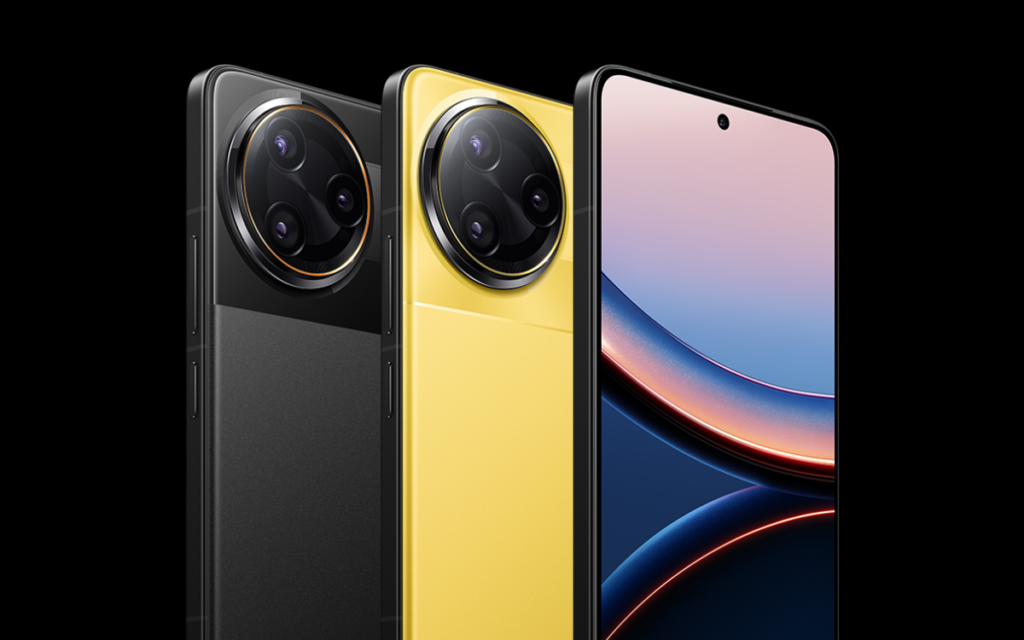
Redmi Turbo 4 Pro Rebrand?
Let’s start with what this phone probably is—a rebranded Redmi Turbo 4 Pro with tweaks for the Indian market. The model number spotted on the BIS site, 25053PC47I, closely mirrors that of the Turbo 4 Pro, a device expected to debut in China later this month. If Poco follows its usual rebranding playbook (as it did with the F6 and Redmi Turbo 3), we already have a good sense of what the F7 might look and feel like.
At its core, the Poco F7 is expected to feature a 6.83-inch flat OLED LTPS panel with a 1.5K resolution and 120Hz refresh rate—sharp, fast, and flat, ticking all the boxes for gamers and streamers who don’t care for curves. There’s a chance it also comes with ultra-narrow bezels, which would help it stand out in a mid-premium segment that often skimps on design finesse.
Snapdragon 8s Gen 4
The real headliner here is Qualcomm’s new Snapdragon 8s Gen 4, a chip aimed at delivering near-flagship performance without the thermal and battery baggage of its elder siblings. Built on a 4nm process and optimized for efficiency, the 8s Gen 4 should be more than capable of handling high refresh rate gaming, multitasking, and advanced AI tasks. And if past benchmarks are anything to go by, it will get very close to the performance of last year’s flagship SoCs.
Couple that with a rumored 7,500mAh battery and 90W fast charging, and the F7 is shaping up to be a marathon runner. These are battery specs that could put most flagships to shame—especially considering the Pro and Ultra versions don’t get that kind of juice. It’s a bit of an ironic twist: the vanilla F7 might outlast its more expensive siblings.
Cameras and Build
On the camera front, expectations are modest but reliable. A 50MP main sensor with OIS should deliver clean daytime shots and passable low-light performance, while the 8MP ultrawide will likely serve as a secondary eye for landscapes and group shots. There’s no word yet on a telephoto lens, and it’s probably safe to assume it won’t have one—keeping with Poco’s cost-effective approach.
Build-wise, the F7 is tipped to offer a metal middle frame, an optical in-display fingerprint scanner, and IP68/IP69 water and dust resistance. That last bit is rare in this price range and might be the key spec that helps Poco sell the phone to a clumsy audience.
No F7 Pro or Ultra for India?
Here’s where it gets a little murky. Despite launching the F7 Pro and Ultra globally, Poco doesn’t seem to have plans to bring them to India—at least not yet. Multiple reports, and now the BIS listing, strongly suggest the vanilla F7 will be the only one arriving. That makes this launch a bit of a solo act, but also a significant one. India was a major market for the F-series last year, and skipping the higher-end variants signals a shift in strategy—perhaps Poco sees more long-term value in pushing powerful mid-rangers than going head-to-head with flagship giants.
Should You Wait for the Poco F7?
If you’re in the market for a sub-₹30K phone that doesn’t compromise on performance, the Poco F7 might be worth the wait. Between the new Snapdragon 8s Gen 4, a big battery, and premium build touches like IP rating and an OLED display, it looks like Poco is aiming to check all the right boxes.
However, it’s also walking a tightrope. The real competition isn’t just the Realmes and iQOOs—it’s last year’s flagships, now heavily discounted, that still offer proven camera systems and longer software support. And let’s not forget the Redmi Turbo 4 Pro will launch in China first—so if anything goes wrong there, it could raise red flags for Indian buyers.
But if Poco nails the pricing—say, somewhere around the ₹30,000 mark like the F6—it could once again disrupt the upper-midrange space.
Bottom line: Yes, it’s probably worth waiting. Especially if you want flagship-grade internals without the flagship price tag. Just don’t expect a Pro or Ultra to follow anytime soon.
For more daily updates, please visit our News Section.
Stay ahead in tech! Join our Telegram community and sign up for our daily newsletter of top stories! 💡




Comments