
Add GIZMOCHINA as Preferred Source on Google
OnePlus just unveiled the 13T, its first attempt at a compact flagship. Even with a smaller footprint, the 13T doesn’t cut back on core hardware. It brings the Snapdragon 8 Elite chip, a battery well over 6000mAh, and a capable dual-camera setup.
On the other side, Xiaomi has its own take on the compact flagship formula with the Xiaomi 15. Both phones are targeting users who want smaller devices without giving up on high-end specs. Here’s a closer look at how the two stack up.

Design and Build
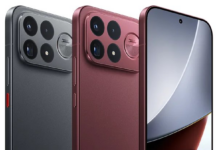
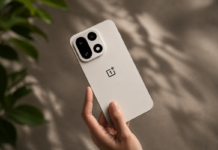
The OnePlus 13T measures 150.8 x 71.7 x 8.2 mm and weighs 185 grams. It uses a glass front with an aluminum alloy frame, protected by what OnePlus calls Crystal Shield Glass. The phone is rated IP65 for basic protection against dust and water.
The Xiaomi 15 is slightly bigger and heavier at 152.3 x 71.2 mm and between 189 and 192 grams, depending on the version. Xiaomi uses its own Xiaomi Shield Glass over the screen and a 6M42-grade aluminum frame. It carries a better IP68 rating, making it water resistant for up to 1.5 meters.
Displays
Both phones have LTPO AMOLED panels with 120Hz refresh rates and Dolby Vision support. The OnePlus 13T’s display measures 6.32 inches, hits 1600 nits in high brightness mode, and offers a resolution of 1216 x 2640 pixels.
The Xiaomi 15 slightly stretches to 6.36 inches, keeps a comparable 1200 x 2670 resolution, and claims a much higher peak brightness at 3200 nits. It also handles a broader 68 billion color palette compared to OnePlus’ 1 billion colors.
Unless you’re pixel-peeping under direct sunlight, these differences won’t always matter. But if you do a lot of outdoor browsing or just want a screen that’s less likely to wash out, the Xiaomi 15 looks a little better prepared.
Performance
Both devices run on the same Qualcomm Snapdragon 8 Elite chipset. The silicon includes an octa-core CPU (2×4.32 GHz performance cores and 6×3.53 GHz efficiency cores) paired with the Adreno 830 GPU.
Storage and RAM options are identical too. The 256GB or 512GB storage is configured with either 12GB or 16GB of RAM. And there’s a 1TB variant with 16GB of RAM. Neither phone supports microSD expansion.
In day-to-day use, they will feel very similar. Gaming, multitasking, app launching all should happen quickly and smoothly.
Your preference might come down to software. OnePlus 13T ships with Android 15 running OxygenOS 15 internationally and ColorOS 15 in China. Xiaomi 15 also starts with Android 15 but uses its in-house HyperOS 2 skin. Xiaomi commits to four major Android upgrades, though OnePlus hasn’t specified an exact policy for the 13T yet.
Both skins have diverged from Google’s clean Android vision in their own ways. It comes down to personal preference which one you prefer now.
Cameras
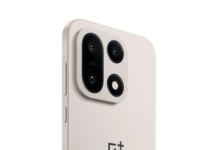
As for the cameras, the OnePlus 13T uses a dual rear camera setup: a 50MP main sensor and a 50MP telephoto with 2x optical zoom. It covers the basics and supports 4K video recording with Dolby Vision HDR.
The Xiaomi 15, meanwhile, offers a triple-camera system including a 50MP main sensor (larger at 1/1.31″), a 50MP telephoto (with 2.6x optical zoom), and a 50MP ultrawide lens. It has Leica branding, laser autofocus, and supports video recording up to 8K, along with multiple HDR formats.
Selfie shooters are different, too. The OnePlus 13T uses a 16MP camera capable of recording 1080p video. Xiaomi fits a 32MP sensor that records up to 4K. All in all, Xiaomi has better camera hardware.
Audio
Both phones ditch the 3.5mm headphone jack, but otherwise take audio seriously. The OnePlus 13T offers stereo speakers and supports aptX HD and LHDC 5 over Bluetooth.
Xiaomi 15 also has stereo speakers and matches those codecs but adds Qualcomm XPAN and 24-bit/192kHz audio playback (both wired and wireless). It leans more toward high-res audio if you have the right equipment.
Connectivity
Again, the differences are subtle. Both devices support Wi-Fi 7, NFC, Bluetooth 5.4 or newer (Xiaomi even hints at 6.0 compatibility), and full dual-frequency GNSS support for location services. Both have an infrared port as well.
However, Xiaomi uses a USB Type-C 3.2 Gen2 port with DisplayPort support. OnePlus 13T, on the other hand, has an older USB Type-C 2.0 spec.
Battery and Charging
Fueling the OnePlus 13T is a 6260mAh battery that supports 80W wired charging. In comparison, Xiaomi 15 has a smaller 5240mAh cell globally and 5400mAh in China. But it makes up for it with 90W wired charging, 50W wireless charging, and 10W reverse wireless.
Final Thoughts
Both the OnePlus 13T and Xiaomi 15 are compact flagships with Snapdragon 8 Elite power, bright LTPO AMOLED displays, and large batteries. But the Xiaomi 15 pushes a little harder in key areas like camera versatility, water resistance, charging flexibility, and audio features.
OnePlus keeps things lighter and simpler, but it also feels like it cuts a few more corners to get there. So if you want a device that stays solid across the board, Xiaomi seems like the safer pick here.
For more daily updates, please visit our News Section.
Stay ahead in tech! Join our Telegram community and sign up for our daily newsletter of top stories! 💡

1. Comments