Add GIZMOCHINA as Preferred Source on Google
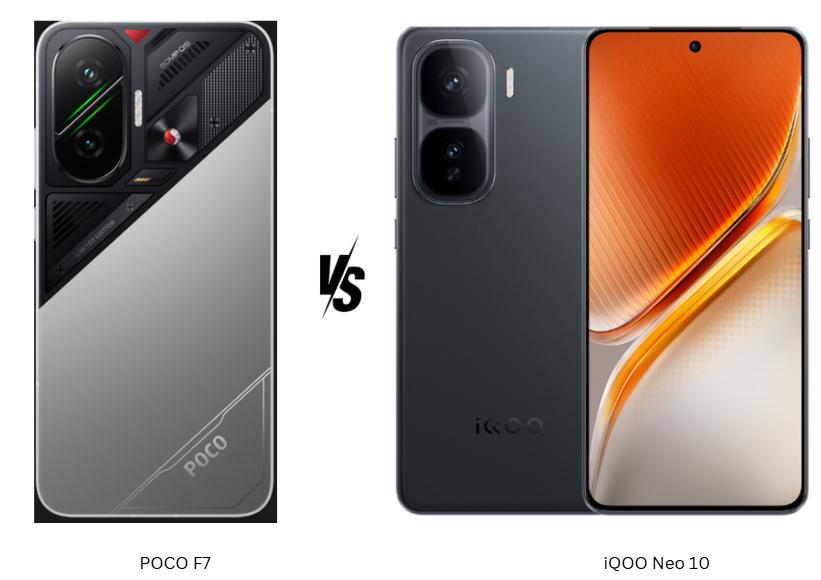
Poco F7 and iQOO Neo 10 are two of the most powerful smartphones under $500, both powered by the Snapdragon 8s Gen 4 and packed with flagship-grade features. This comparison is important for buyers seeking top-tier performance, long battery life, and advanced displays without paying premium prices. With subtle differences in build, cameras, and charging speed, choosing between them isn’t straightforward, making a head-to-head breakdown essential for finding the better value.
1. Design and Display
Build and Feel:
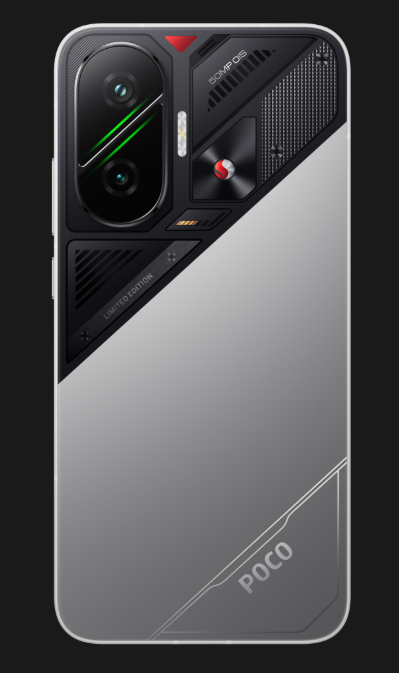
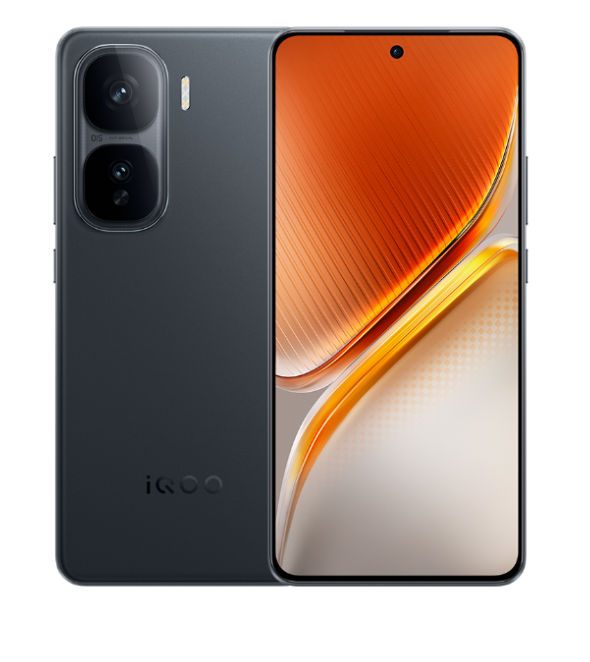
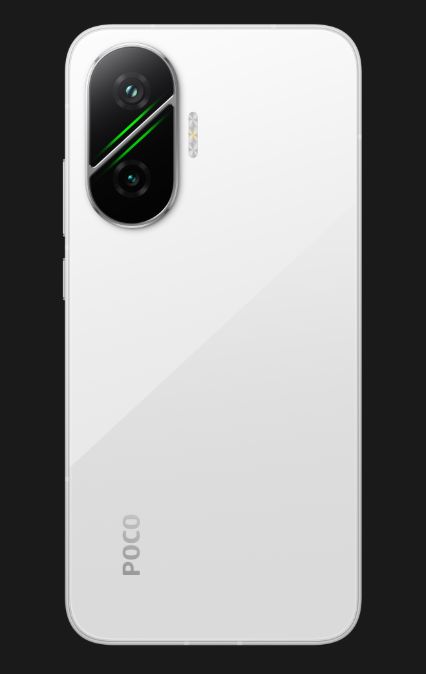
The Poco F7 feels more premium with its glass front and back, protected by Gorilla Glass 7i and an aluminum frame. It also boasts IP68 water and dust resistance, giving it an edge in durability over the iQOO Neo 10, which uses plastic for its back and frame and only has IP65 protection. While the Neo 10 adds MIL-STD-810H compliance, this doesn’t necessarily translate to better real-world ruggedness. Poco’s higher-end materials and tighter ingress protection make it the better-built device for daily use.
Display Quality:
Both phones feature AMOLED panels with high refresh rates, but the iQOO Neo 10 pulls slightly ahead with its 144Hz refresh rate and exceptional 4400-nit peak brightness, compared to Poco’s 120Hz and 3200 nits. iQOO also uses 4320Hz PWM dimming, ideal for sensitive eyes, while Poco offers Dolby Vision and HDR10+, which enhances streaming. However, Poco’s slightly larger 6.83″ display and Dolby Vision support may appeal more to content enthusiasts, while iQOO excels in brightness and fluidity.
Verdict:
Poco F7 wins on build quality with superior materials and IP68 certification. iQOO Neo 10 edges ahead in brightness and fluidity, but overall, Poco delivers a better premium feel.
2. Specifications
Performance:
Both devices share the same Snapdragon 8s Gen 4 chipset and Adreno 825 GPU, ensuring identical flagship-level performance. Whether it’s gaming, multitasking, or demanding apps, both phones are equally capable. However, iQOO offers more RAM in its top variant (up to 16GB), which might benefit power users and futureproofing. Storage types are equal, using UFS 4.1 on higher variants. While real-world speed differences are minimal, Neo 10’s broader configuration range is better for varied user needs.
Battery and Charging:
Poco F7 offers two battery versions, 6500 mAh globally and 7550 mAh in India, with 90W charging and 22.5W reverse wired charging. Meanwhile, the iQOO Neo 10 packs a 7000 mAh cell and much faster 120W wired charging, capable of 50% in just 15 minutes. It also supports bypass charging and 100W PD, making it more versatile. While Poco has a larger battery in India, iQOO’s faster and smarter charging makes it more practical for power users.
Verdict:
Performance is evenly matched, but iQOO Neo 10 takes the lead in battery charging speed, RAM flexibility, and power delivery features, making it a more efficient daily driver.
3. Camera
Main and Secondary Lenses:
Both phones offer a 50MP main camera with OIS and a secondary 8MP ultrawide lens. However, the Poco F7 uses a wider f/1.5 aperture on its main camera, which helps capture better low-light shots and more natural bokeh. In contrast, iQOO’s multi-directional PDAF improves focusing accuracy, but Poco’s camera hardware is tuned for deeper depth and contrast. Video capabilities are nearly identical, though Poco’s 960fps slow-motion adds creative flexibility for some users.
Selfie Camera:
The iQOO Neo 10 wins clearly in the selfie department with a 32MP front camera capable of recording in 4K, compared to Poco’s 20MP sensor limited to 1080p. For users who prioritize vlogging, video calls, or high-res selfies, the Neo 10 offers more detail, better resolution, and superior overall quality. Poco’s camera suffices for casual use but lacks the versatility that iQOO delivers upfront.
Verdict:
Poco F7 has a slight edge in rear camera hardware for stills, while iQOO Neo 10 dominates with its higher-resolution and 4K-capable selfie camera. Overall, the Neo 10 offers a more rounded imaging performance.
4. Pricing
Both smartphones are priced similarly at around $400, offering incredible value given their flagship-grade hardware. The Poco F7 provides better build quality and a larger battery (in India), while the iQOO Neo 10 stands out with faster charging, a better selfie camera, and RAM options up to 16GB. Given these trade-offs, the pricing is fair for both, but the iQOO Neo 10 offers more cutting-edge features for the same price, making it slightly better value overall.
Disclaimer:
Prices are approximate and may vary based on country, region, and applicable taxes.
5. Conclusion

Poco F7 distinguishes itself with Gorilla Glass 7i, IP68 rating, Dolby Vision, and an optional massive 7550 mAh battery in the Indian model. On the other hand, iQOO Neo 10 impresses with a 144Hz display, super-fast 120W charging, 4K selfie video, MIL-STD certification, and more RAM options, including a 16GB variant. Both phones feature “Circle to Search,” NFC, IR blaster, and similar audio setups, but iQOO’s faster charging and smoother display make it more cutting-edge for high-intensity users.
Verdict:
Poco F7 is ideal for those wanting premium build, reliable cameras, and longer endurance. iQOO Neo 10 is better for users who prioritize performance speed, faster charging, and media creation via the selfie camera. Both are excellent picks at $400, but iQOO Neo 10 offers a more performance-centric edge.
Read More;
- Huawei Pura 80 Ultra vs Vivo X200 Ultra: Which Gives You More Value for Money?
- Huawei Pura 80 Ultra vs Pro+: Does the Ultra Justify the Higher Price?
- Xiaomi 15 vs OnePlus 13s: Which Compact Flagship Is Better?