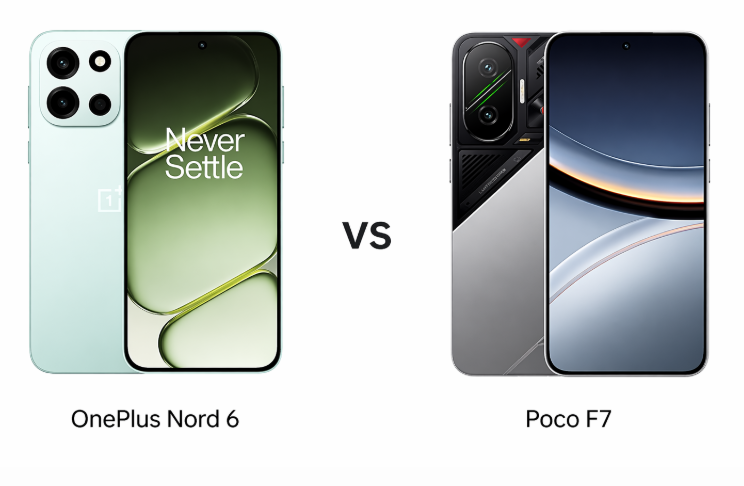
Choosing between the OnePlus Nord 6 and Poco F7 isn’t as simple as it looks. Both pack flagship-level performance at mid-range prices, but take different approaches in design, battery, and overall experience. For buyers looking to get the most value without compromising on power, this comparison highlights which one actually makes more sense.
The OnePlus Nord 6 goes for a practical yet durable approach with its plastic frame and back, but adds strong protection with IP68/IP69K ratings. It feels more rugged and functional than premium. The Poco F7, on the other hand, clearly leans into a flagship-like feel with its aluminum frame and glass back, giving it a more refined and premium in-hand experience. Both are well-built, but Poco’s materials create a more polished impression, while OnePlus prioritizes durability over aesthetics.
Display Quality
The Nord 6 pushes ahead with a 165Hz AMOLED panel, making it noticeably smoother for gaming and scrolling. Brightness levels are also slightly higher, especially outdoors. Poco F7 counters with Dolby Vision and better color depth, delivering richer visuals for streaming and HDR content. The difference comes down to smoothness versus cinematic quality, and both approaches feel intentional.
Verdict
Poco F7 feels more premium in build, while Nord 6 offers a smoother and brighter display. Choice depends on whether fluidity or visual richness matters more.
2. Specifications Including Battery
Performance
Both devices run on the same Snapdragon 8s Gen 4 chipset, so raw performance is nearly identical. Gaming, multitasking, and heavy workloads feel equally fast and stable. However, OnePlus benefits from OxygenOS optimization, which tends to feel cleaner and more consistent over time. Poco’s HyperOS is feature-rich but can feel slightly heavier in comparison. The difference isn’t huge, but it’s noticeable in daily usage smoothness.
Battery and Charging
This is where things get interesting. The Nord 6 offers a significantly larger battery, especially in India, making it ideal for heavy users or gamers. Poco F7 charges faster with 90W, reaching high percentages quickly, which suits users who prefer quick top-ups. OnePlus focuses on endurance, while Poco prioritizes speed. Both approaches are practical depending on usage habits.
Verdict
Performance is equal, but Nord 6 wins on battery life, while Poco F7 leads in charging speed. Endurance vs speed defines this segment.
3. Camera
Main and Secondary Lenses
Both phones feature a 50MP main sensor with OIS, but the Poco F7 has a slightly wider aperture, helping in low-light scenarios. In real-world usage, Poco images tend to look slightly brighter and more contrasty, while OnePlus delivers more balanced and natural tones. Ultrawide cameras are similar on paper, but neither stands out significantly, making them more of a utility feature than a highlight.
Selfie Camera
The Nord 6 clearly takes the lead with a 32MP front camera capable of 4K video, making it a better choice for content creators and video calls. Poco’s 20MP selfie camera is decent but feels more basic, especially with limited video capabilities. This is one area where the difference is easy to notice.
Verdict
Poco F7 has a slight edge in main camera brightness, but Nord 6 wins overall thanks to a stronger selfie camera and more balanced tuning.
4. Pricing
The OnePlus Nord 6 is priced around $460 (₹39,000), while the Poco F7 comes in at about $350 (₹32,000). That’s a noticeable gap, especially considering both share the same chipset and core performance. Poco clearly positions itself as the value-focused option, while OnePlus leans slightly premium.
Value for Money
The Nord 6 justifies its price with a bigger battery, smoother display, and better selfie camera. It feels like a more complete and long-term device. However, Poco F7 offers almost the same performance and a more premium build at a significantly lower price, making it extremely hard to ignore. For most buyers, Poco delivers more for less, while OnePlus focuses on refinement.
Verdict
Poco F7 is the better value pick, while Nord 6 justifies its price with specific upgrades rather than overall superiority.
5. Conclusion
The Nord 6 stands out with its massive battery, 165Hz display, and stronger selfie capabilities, making it ideal for heavy users and content creators. Poco F7 counters with a premium design, Dolby Vision display, faster charging, and aggressive pricing. Both devices feel well-positioned but target slightly different priorities.
Verdict
Poco F7 is the smarter buy for most users due to its pricing and premium feel. However, Nord 6 becomes the better choice for those who prioritize battery life, smoother visuals, and a stronger front camera. The decision ultimately depends on whether value or specific feature upgrades matter more.
We use cookies on our website to give you the most relevant experience by remembering your preferences and repeat visits. By clicking “Accept”, you consent to the use of ALL the cookies.
This website uses cookies to improve your experience while you navigate through the website. Out of these, the cookies that are categorized as necessary are stored on your browser as they are essential for the working of basic functionalities of the website. We also use third-party cookies that help us analyze and understand how you use this website. These cookies will be stored in your browser only with your consent. You also have the option to opt-out of these cookies. But opting out of some of these cookies may affect your browsing experience.
Necessary cookies are absolutely essential for the website to function properly. This category only includes cookies that ensures basic functionalities and security features of the website. These cookies do not store any personal information.
Any cookies that may not be particularly necessary for the website to function and is used specifically to collect user personal data via analytics, ads, other embedded contents are termed as non-necessary cookies. It is mandatory to procure user consent prior to running these cookies on your website.


Comments