
Add GIZMOCHINA as Preferred Source on Google
China continues to lead the world in industrial robotics, installing a record 295,000 robots in 2024 alone, which accounts for over half of all global installations. This growth is part of a global increase in industrial robots, with total new installations reaching 542,000 units worldwide, a 9% rise from 2023.
With 2.03 million robots now in operation, China has the largest industrial robot fleet in the world, far ahead of Japan (450,000), the United States (400,000), and South Korea (392,000).
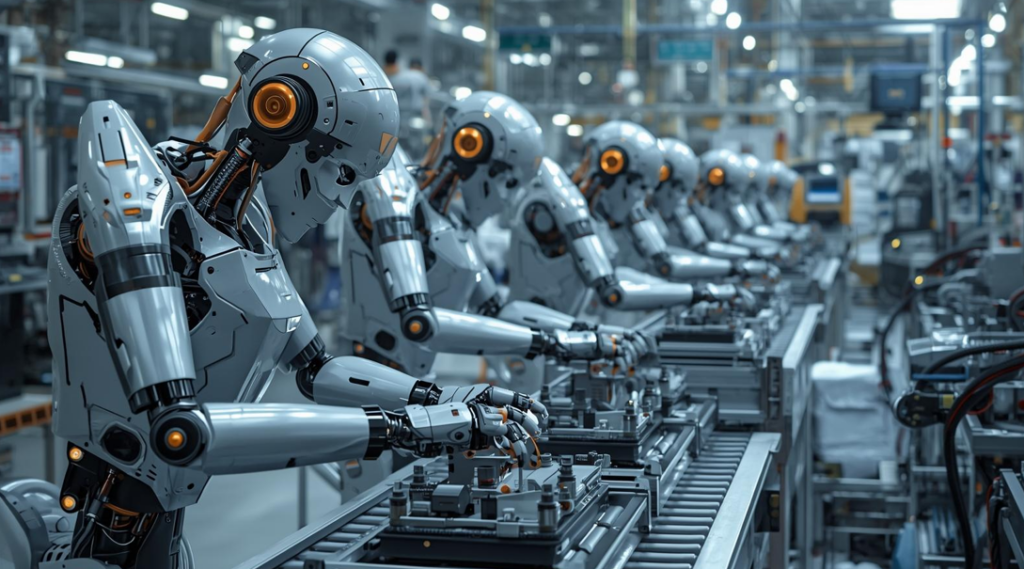
The widespread adoption of robots is helping China maintain high production efficiency in key industries such as automotive manufacturing, electronics assembly, and logistics. These machines handle tasks like welding, heavy material movement, and precise assembly, reducing reliance on human labor for repetitive jobs.
Automation to Counter Population Decline
China’s growing use of robots comes at a time of demographic challenges. In 2024, the country’s population fell by 1.39 million people, contributing to a shrinking workforce. Experts believe that automation is essential to sustain manufacturing output despite fewer workers. Professor Gao Xudong from Tsinghua University notes that while simple and repetitive tasks will increasingly be done by robots, complex and creative work will still rely on human skills.
Looking ahead, China faces a projected shortage of 50 million high-skilled blue-collar workers by 2030, particularly in areas like robot operation, programming, and maintenance. Workforce training is seen as critical to support the next phase of intelligent manufacturing.
Global Leadership in Production and Innovation
China is not just a major consumer of robots; it has also become the world’s largest producer of industrial robots, surpassing Japan in 2024. Its share of global production increased from 25% in 2023 to one-third in 2024. Local manufacturing of key components like motors, sensors, gears, and controllers allows Chinese companies to scale robotics at lower costs. Companies like Xiaomi and BYD operate fully automated “dark factories,” demonstrating China’s growing expertise in smart manufacturing.
The Rise of Humanoid Robots
China is also moving into humanoid robotics. In 2024, Guangdong-based Tiantai Robot received an order for 10,000 humanoid robots, mainly for elderly care services. This marks a shift from research and development to commercial deployment of human-like robots, signaling the next frontier in automation.
Implications for the Global Market
China’s robotics surge highlights a significant gap between it and other nations, especially the United States, which installed only 34,200 robots in 2024. Analysts warn that China’s scale of deployment creates a “flywheel effect,” generating valuable data to refine AI and robotics further. Experts say the U.S. must invest in physical robotics alongside its AI software strengths to remain competitive in global manufacturing.
China’s dominance in industrial robotics reflects a strategic use of automation to offset labor shortages, strengthen manufacturing, and lead innovation. While robot adoption is accelerating, the development of skilled workers remains essential to sustain long-term industrial growth.
Read More:
- Huawei’s Ultra-Thin Smartphone Leak: Slimmer Than iPhone Air?
- Xiaomi 17 Pro vs Huawei Pura 80 Pro: Does Huawei’s $1000 Flagship Fall Short Against Xiaomi?
- Huawei Mate 80 Pro Surfaces in the Wild with a Giant Camera Ring
(via)




Comments