Add GIZMOCHINA as Preferred Source on Google
Vivo’s new flagship, the X300 Pro, feels like the brand’s latest attempt to blur the line between its “mainstream premium” and its “Ultra” lineup. If you looked at it on paper without the name, you might easily mistake it for one of Vivo’s more expensive Ultra models.
And that’s the point. This phone borrows nearly everything that made the X200 Ultra stand out, but brings it to a slightly more approachable tier. Here are the things that make Vivo X300 Pro truly special.
1. A camera system that means business
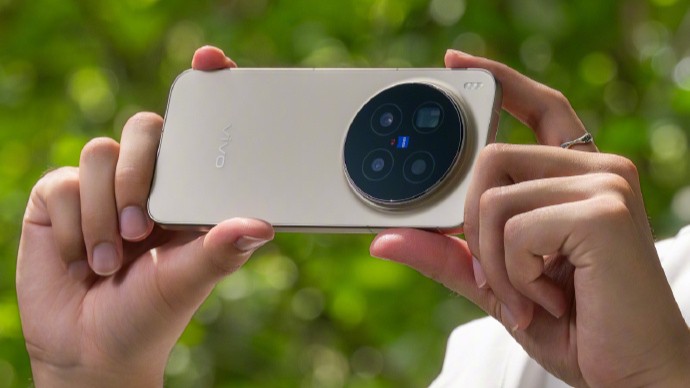
Vivo has made cameras the heart of its flagship phones, and the X300 Pro keeps that focus front and center. On paper, this is one of the most capable camera systems outside of Vivo’s own Ultra range.
It shares a lot of DNA with the X200 Ultra from earlier this year, even supporting the same telephoto extender lens accessory that first debuted with that device.
It’s the telephoto that really tells the story. Vivo worked with Samsung to develop a new 200-megapixel HPB sensor. It’s an 85mm-equivalent lens with optical image stabilization and a 3.7x optical zoom.
On paper, it’s nearly identical to the industry-leading periscope found in the X200 Ultra. The only small trade-off is a slightly narrower f/2.67 aperture, which may let in a bit less light, but most users won’t notice that difference outside of side-by-side tests.
The X300 Pro uses Sony’s new LYT-828 sensor for the main camera. It has a brighter f/1.6 aperture for improved low-light performance and faster shutter response.
Even the 50MP ultrawide, though technically smaller in sensor size than the Ultra’s, supports autofocus, 4K video capture, and macro photography. All three cameras shoot 4K at up to 120 frames per second and can capture 10-bit Log video with Dolby Vision HDR. There’s also 8K recording, and support for Zeiss T* lens coating to reduce glare and ghosting.
2. Support for telephoto extender
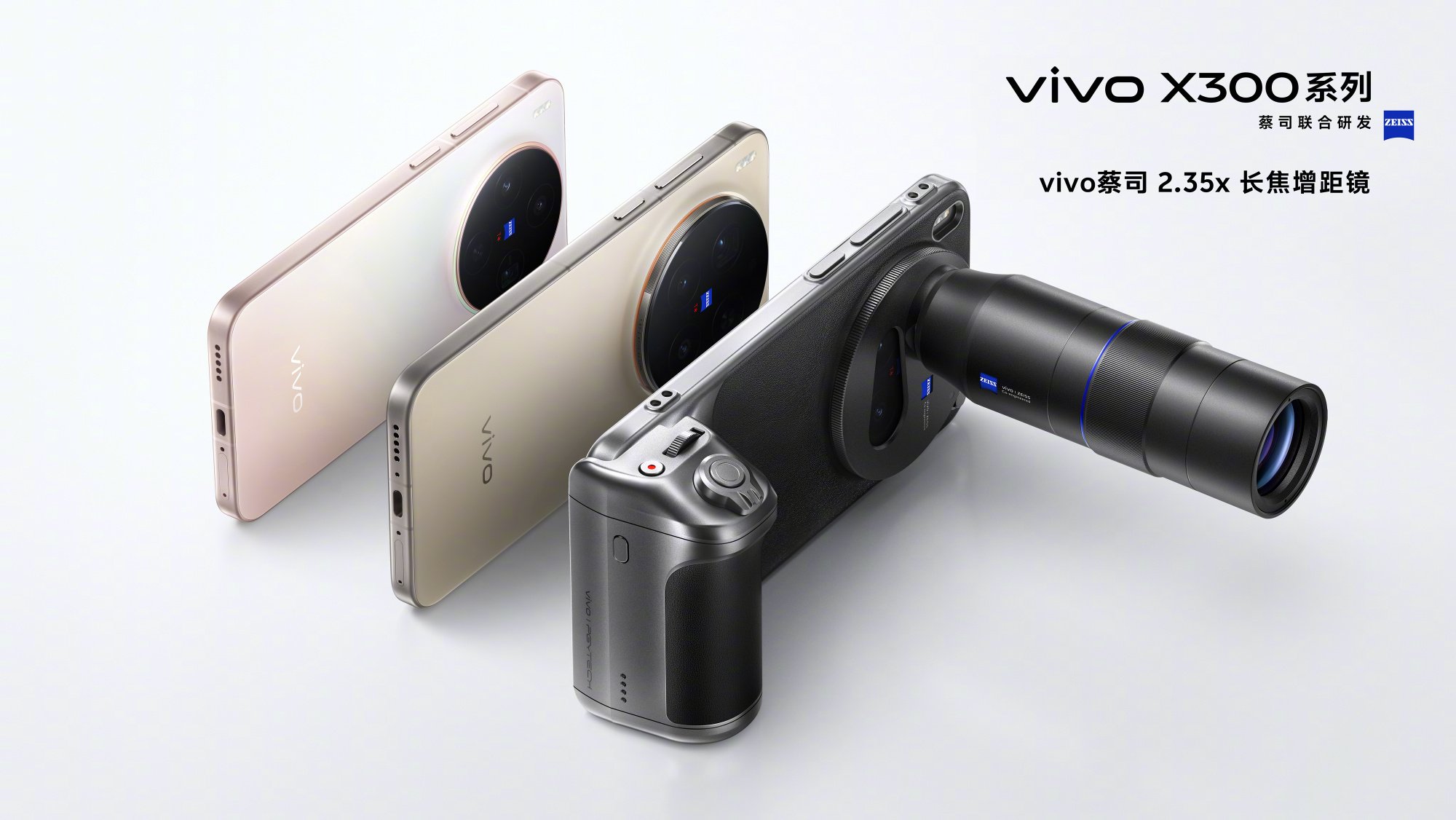
One of the more interesting things Vivo has done is bring support for its clip-on telephoto extender to the X300 Pro. It’s a physical 2.35x optical add-on that mounts over the phone’s telephoto lens via a special case.
The extender turns the phone into a pseudo-compact camera, capable of zooming further than most smartphones without digital cropping.
Now, that same accessory works with both the X300 and X300 Pro. It’s sold separately for ¥1,299 (about $180) or bundled in a Photography Kit that includes a grip and an extra battery.
It’s surprising to see Vivo open up this feature to a non-Ultra phone so soon. Most brands tend to keep these perks exclusive to their top-tier models. Now, I’m excited to see what the Vivo X300 Ultra will bring to differentiate itself from the Pro phones. The telephoto extender was the main highlight of the X200 Ultra.
3. Performance that keeps up with the best
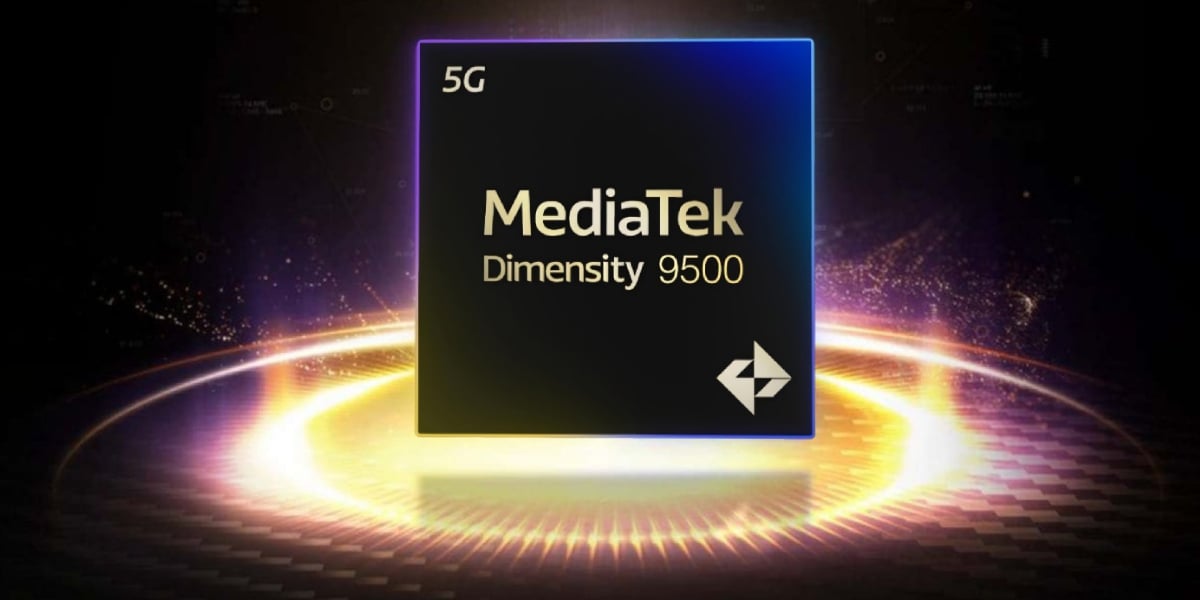
Inside, the X300 Pro runs on MediaTek’s new Dimensity 9500 chipset, built on a 3-nanometer process. The chip goes head-to-head with Qualcomm’s Snapdragon 8 Elite Gen 5.
The Dimensity 9500 features an all-big-core CPU design, with one C1 Ultra core running at 4.21 GHz, three C1-Premium cores at 3.5 GHz, and four C1-Pro cores clocked at 2.7 GHz.
Paired with up to 16GB of RAM and 1TB of UFS 4.1 storage, this is flagship-level hardware through and through. The phone ships with Android 16 running Vivo’s new OriginOS 6, and the company promises four years of major updates.
Everything about the X300 Pro’s internals points to efficiency, and that’s reflected in the battery design too. Vivo uses a 6,510mAh silicon-carbon battery, which the company claims performs like a 7,500mAh cell in traditional lithium-ion terms. It supports 90W wired charging, 40W wireless charging, and both reverse wired and wireless charging.
4. Integration with the Apple ecosystem

Perhaps the most unexpected feature is its integration with Apple’s ecosystem. Vivo claims the X300 Pro is the first Android phone that can seamlessly sync with Apple devices.
Users can access iPhone photos, share files with a shake gesture, or even edit videos across devices. This feature is built into OriginOS 6, though you’ll need to download an additional app from the App Store to enable cross-device communication.
And to be fair, the services it offers make the download worth it. The X300 series can sync health and fitness data directly from an Apple Watch to the Vivo Health app.
More impressively, you can receive call and message notifications from X300 to your Apple Watch, something previously exclusive to only iPhones. You can also track your AirPods without extra software, use your phone as an extended display on a Mac, and more.
At this point, Vivo is leaving no stone unturned to give both Android and iOS users a reason to switch or upgrade to its phones, and that could be a major factor in the X300’s success.
5. Design and Display
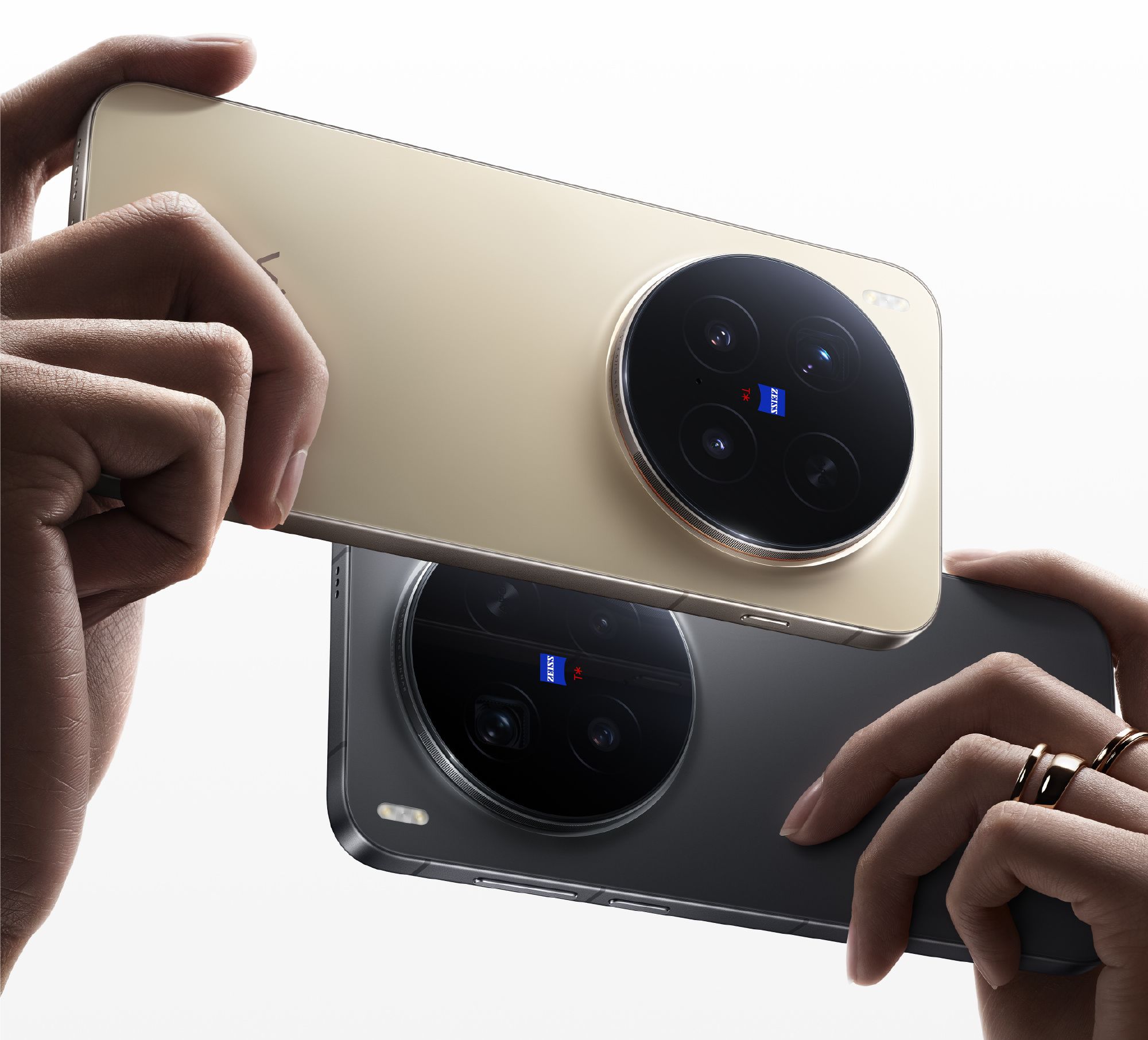
The display is another highlight. It’s a 6.78-inch LTPO AMOLED panel with a 120Hz refresh rate, HDR10+, Dolby Vision, and a claimed peak brightness of 4,500 nits.
The screen supports Ultra HDR image rendering and 2160Hz PWM dimming, which helps reduce flicker for people sensitive to it. Beneath it sits an ultrasonic fingerprint reader, which tends to be faster and more reliable than the optical scanners used in most other Android phones.
Physically, the X300 Pro looks and feels premium. It has a glass back, an aluminum alloy frame, and a large but comfortable body — 161.2mm tall, 8mm thick, and 226 grams.
Vivo has gone further with durability this time, giving the phone both IP68 and IP69 ratings, meaning it can handle not just submersion but also high-pressure water jets. That’s rare, even among high-end phones.
You won’t find a headphone jack here, but Vivo compensates with 24-bit Hi-Res audio through its stereo speakers and wireless support for aptX HD and LHDC 5 codecs. There’s also Wi-Fi 7, Bluetooth 5.4, NFC, infrared, and optional satellite connectivity, depending on the region.
6. A more accessible flagship
The Vivo X300 Pro starts at ¥5,299 (around $745), which makes it significantly cheaper than most “Ultra” phones while offering nearly the same performance and camera capabilities.
The regular X300, which starts at ¥4,399 (about $620), shares most of the same hardware but comes in a smaller 6.31-inch body and slightly different camera arrangement.
For more daily updates, please visit our News Section.
Stay ahead in tech! Join our Telegram community and sign up for our daily newsletter of top stories! 💡