
Add GIZMOCHINA as Preferred Source on Google
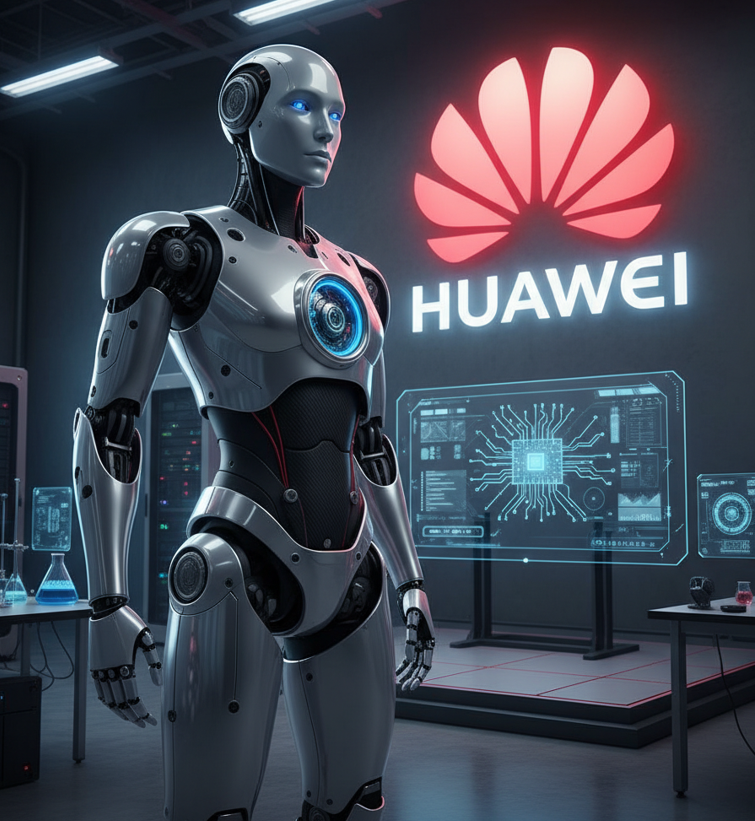
Huawei Habo has made a major move in the field of physical artificial intelligence by investing in GigaAI, a young but fast-growing startup focused on world-model-based general intelligence. The investment marks a key milestone in Huawei’s strategy to expand deeper into embodied intelligence and next-generation autonomous systems.

Funding Overview
GigaAI recently completed its hundred-million-yuan Series A1 funding round in early November. The round was jointly led by Huawei Habo Investment and Huakong Fund, showing strong backing from major industry players.
This comes just two months after GigaVision, part of GigaAI’s ecosystem, secured several hundred million yuan in its Pre-A and Pre-A+ rounds in August. Together, the rapid funding rounds signal rising confidence in GigaAI’s technology and potential.
About GigaAI
Founded in 2023, GigaAI is positioned as China’s first startup dedicated to world model research in physical AI. The company focuses on developing world-model-driven general intelligence that can operate effectively in real-world environments.
Its mission is to build the next generation of intelligent systems that understand, predict, and interact with the physical world, enabling breakthroughs in autonomous driving, robotics, and embodied AI.
GigaAI’s Product Ecosystem and Technology
GigaAI operates through a full-stack ecosystem that combines both software and hardware:
- GigaWorld Platform: Built for driving intelligence and advanced embodied intelligence.
- GigaBrain Foundational Model: A core model enabling adaptive, world-model-based AI decisions.
- Maker General Embodied Ontology: A structured knowledge layer for physical agents and developers.
By integrating these components, GigaAI provides end-to-end solutions for complex physical environments. Its technology is already being applied to areas such as autonomous driving, robotics, and general embodied AI systems.
Huawei’s Strategic Vision Behind the Investment
The investment reflects Huawei’s broader shift from traditional VLA (Vision-Language-Action) models, which rely heavily on language models, to a WA (World Action) strategy.
WA emphasizes using vision and physical signals directly to control vehicles and intelligent agents. This approach, supported by Huawei Intelligent Automotive Solutions BU CEO Jin Yuzhi, is now a central part of Huawei’s long-term AI roadmap.
By backing GigaAI, Huawei aims to accelerate developments in world models, physical AI, and embodied intelligence, strengthening its position in the next wave of autonomous and intelligent mobility technologies.
Impact on Everyday Consumers and Global Competition
For the general public, this development could translate into practical improvements such as safer autonomous vehicles, smarter home and service robots, and more reliable AI assistants that can understand and react to real-world situations, not just digital inputs.
Analysts believe this shift toward physical AI may trigger a technological transformation similar to the rise of smartphones, bringing intelligent machines into daily life in more meaningful ways.
On a global scale, Huawei’s move increases competitive pressure on the United States, particularly in fields like robotics, autonomous driving, and world-model research. As China strengthens its capabilities in physical AI, it could intensify the ongoing technology rivalry and prompt the US to accelerate its own advancements in next-generation autonomous systems.
Industry Significance and Future
Industry experts view this investment as more than financial support. It represents a strategic partnership that could speed up the development of world-model-driven AI and expand Huawei’s capabilities in real-world automation.
GigaAI’s strong full-stack capabilities and rapid funding growth position it as a rising leader in physical AI. The collaboration is expected to drive new advances in autonomous driving, robotics, and large-scale embodied AI deployment, marking a significant step toward the future of intelligent systems in China.

Comments