
Add GIZMOCHINA as Preferred Source on Google
As an Amazon Associate, Gizmochina earns from qualifying purchases. Links on this page may earn us a commission at no extra cost to you.
Vivo X300 Pro and Google Pixel 9 Pro compete for buyers who want a true flagship experience but prioritize very different strengths. This comparison matters because one phone leans heavily into powerful hardware and photography versatility, while the other focuses on smart software, long-term updates, and consistent everyday performance. Shoppers deciding between these two are typically weighing raw capability against refined user experience, making it essential to understand which device better fits their style, priorities, and long-term needs.
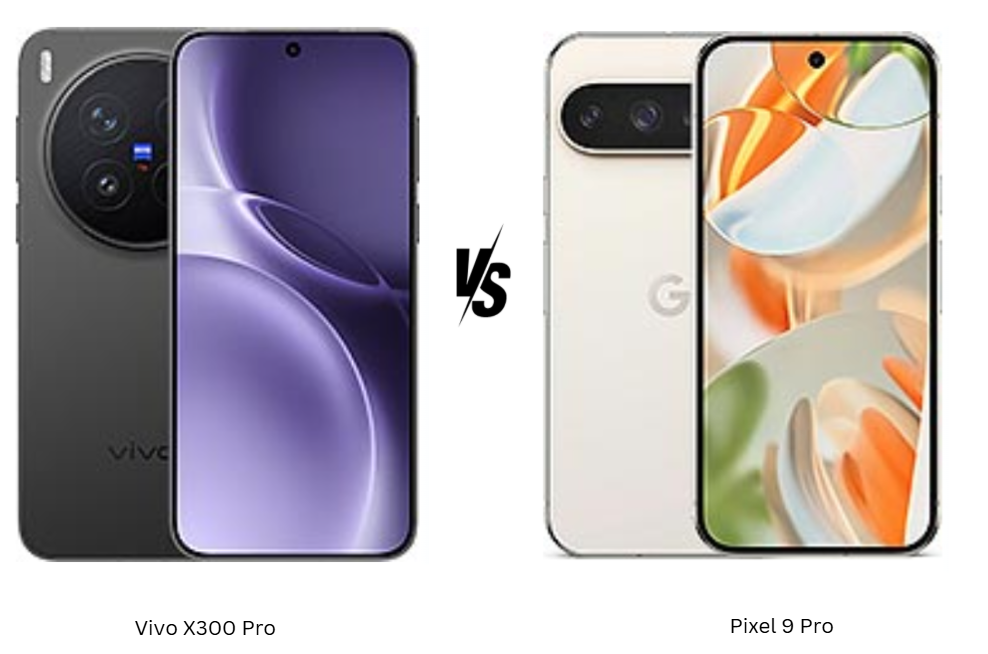
Major Features :
| Feature | Vivo X300 Pro | Google Pixel 9 Pro | Winner |
|---|---|---|---|
| Performance | Dimensity 9500 + UFS 4.1 | Tensor G4 + UFS 3.1 | Vivo X300 Pro |
| Display Quality | Brighter, richer AMOLED | Calibrated, natural OLED | Vivo X300 Pro |
| Camera System | Better telephoto hardware + Zeiss optics | Strong computational imaging | Tie (Hardware vs Software) |
| Battery & Charging | Larger battery + 90W wired + 40W wireless | Smaller battery + slower charging | Vivo X300 Pro |
| Software & Updates | 5 major updates | 7 major updates | Pixel 9 Pro |
1. Design and Display
Build and Feel
The Vivo X300 Pro presents a more premium aesthetic with its metal-and-glass construction and a polished frame that gives it a flagship-level presence. Its overall shape is designed for a confident grip, and the inclusion of enhanced durability ratings adds to its sense of toughness. The Pixel 9 Pro leans toward a minimal, refined style, maintaining Google’s signature clean look with smooth curves and a lighter, more compact footprint. It feels more convenient for long-term handheld use, and its balanced proportions make it easy for casual users who prioritize comfort.
Display Quality
Vivo’s LTPO AMOLED panel delivers richer brightness and deeper contrast, making content pop more dramatically, especially outdoors or in HDR playback. Its high-frequency PWM support offers smoother visual comfort for sensitive users. The Pixel 9 Pro counters with a sharp LTPO OLED screen known for consistent calibration and dependable color accuracy. Google’s tuning favors realism, giving the Pixel a more natural tone that enthusiasts often appreciate.
Verdict
The Vivo X300 Pro offers a more visually striking display and a more luxurious feel, while the Pixel 9 Pro provides a balanced, compact design with excellent color accuracy. Vivo suits media-heavy users; Pixel suits those who prefer clean aesthetics and a more comfortable in-hand experience.

Please Note: When you buy something using the links in our articles, we may earn a small commission at no cost to you.
2. Specifications
Performance
Vivo’s Dimensity 9500 chipset brings higher peak processing power, making it better suited for heavy multitasking and demanding gaming scenarios. Its UFS 4.1 storage further boosts responsiveness, giving the phone an edge in sustained performance. The Pixel 9 Pro’s Tensor G4 focuses on smarter AI-driven tasks, enhancing voice, image, and text processing. While not the fastest, its real-world fluidity feels optimized, especially within Google’s integrated software ecosystem. Users who value speed will lean toward Vivo, while those who prefer AI benefits and software cohesion may appreciate the Pixel’s approach.
Battery and Charging
The Vivo X300 Pro features a significantly larger battery and much faster wired and wireless charging, making it ideal for heavy users who want minimal downtime. Its longevity comfortably stretches through power-intensive days. The Pixel 9 Pro offers moderate endurance and slower charging, but its power efficiency and bypass charging help reduce long-term battery wear. It is engineered for consistent, predictable endurance rather than raw capacity.
Verdict
Vivo leads in raw performance, faster storage, and far better battery endurance and charging speeds. The Pixel is tailored for users who value AI features, system efficiency, and stable everyday performance.
3. Camera
Main and Secondary Lenses
The Vivo X300 Pro brings a stronger hardware advantage with its high-resolution periscope lens and Zeiss-tuned optics. The combination delivers sharper zoom images, richer low-light performance, and higher flexibility for creative shooting. Its color spectrum sensor enhances accuracy, giving images a more cinematic character. The Pixel 9 Pro, however, leans on computational power, using Google’s imaging algorithms to deliver balanced shots with reliable consistency. Its 5x optical zoom performs well, and features like Best Take and Zoom Enhance add convenience for non-professionals. Vivo feels more suited for enthusiasts seeking tangible hardware depth, while Pixel appeals to point-and-shoot users who prefer software-driven results.
Selfie Camera
Vivo’s higher-resolution front camera offers exceptional clarity, especially in challenging lighting, and autofocus ensures crisp results. The Pixel’s ultrawide selfie lens excels at group shots and delivers predictable dynamic range, making it ideal for social media users.
Verdict
Vivo wins for hardware-driven photography and superior zoom. Pixel remains a strong contender for users who want consistent computational results with minimal effort.
4. Pricing
The Vivo X300 Pro enters the market at approximately $800, making it the more affordable flagship in this comparison despite offering stronger hardware in several areas. Its price-to-performance ratio feels more aggressive, especially for users prioritizing camera versatility, battery life, and charging speed.
The Google Pixel 9 Pro, priced around $900, costs more but offers an extended seven-year software update promise, a key advantage for long-term ownership. Its clean Android experience, AI-powered enhancements, and highly optimized ecosystem justify the premium for users who value stability and longevity.
While the Pixel delivers better long-term support, Vivo provides more tangible hardware value upfront. Budget-conscious buyers and power users may find Vivo the better deal, whereas those seeking long-lasting software reliability may prefer Pixel despite the higher price.
Disclaimer:
Prices are approximate and may vary based on country, region, and applicable taxes.
5. Conclusion
For most users, the Google Pixel 9 Pro stands out as the more dependable long-term choice. Its clean software, extended update commitment, and consistently polished performance make it better suited for buyers who value stability and seamless everyday use. The Vivo X300 Pro, however, remains the stronger option for those who prioritize cutting-edge hardware, faster charging, and more versatile camera capabilities.
Verdict
Ultimately, the Pixel 9 Pro offers broader reliability, while the Vivo X300 Pro excels for performance-driven users seeking maximum value.
Read More:

Comments