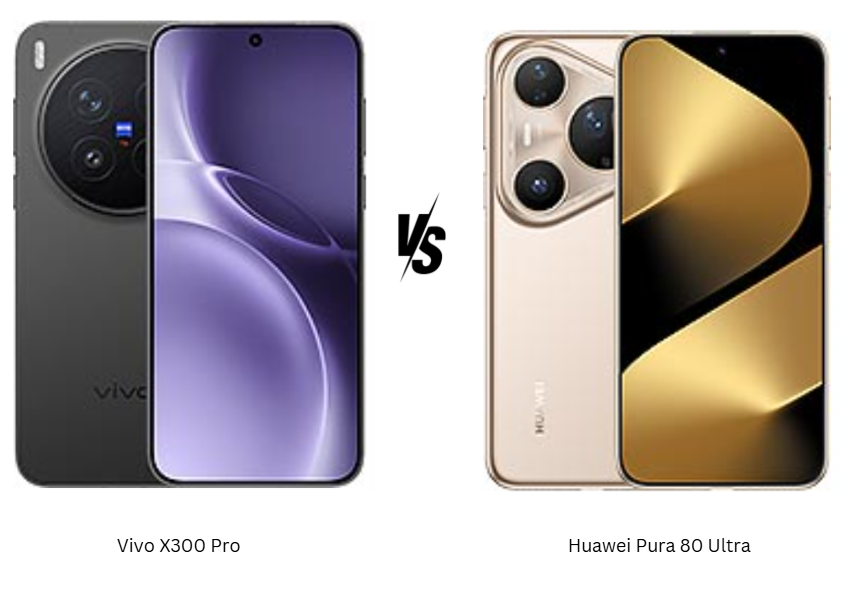
Vivo X300 Pro and Huawei Pura 80 Ultra represent two very different flagship philosophies, making this comparison essential for buyers choosing between raw performance value and high-end luxury innovation. These phones appeal to users who want the best photography, premium design, and future-ready software experiences. Comparing them helps performance-focused buyers understand where Vivo offers stronger practicality, while Huawei’s ultra-premium approach attracts those seeking standout design and advanced imaging capabilities. This matchup matters because both devices redefine what modern flagships can deliver, but for very different kinds of users.
Major Features:
Feature
Vivo X300 Pro
Huawei Pura 80 Ultra
Winner
Performance
Dimensity 9500 (3nm), faster CPU + stronger GPU
Kirin 9020 (7nm), weaker overall performance
Vivo
Display Quality
Brighter panel (up to 4500 nits), Dolby Vision, HDR10+
Both phones offer premium materials and strong protection ratings, giving them the durability expected from ultra-premium flagships. The Vivo X300 Pro feels slightly more polished with its refined curves and minimalistic aesthetic, while the Pura 80 Ultra carries a more striking and artistic rear design. Huawei’s physical finish leans toward a bolder, more iconic identity, making it appealing to buyers who want a visually standout device. Vivo, however, offers a more balanced grip and a cleaner overall feel.
Display Quality
Vivo’s LTPO AMOLED panel delivers extremely high brightness and Dolby Vision support, making it ideal for HDR-heavy content and outdoor usage. Huawei counters with its LTPO OLED display offering slightly higher pixel density and a crisp, elegant visual tone. Vivo’s motion handling feels smoother thanks to its PWM tuning and wide HDR format support, while Huawei’s panel has a more cinematic look that appeals to users who prefer softer, natural contrast.
Verdict
Vivo wins for overall brightness and versatility, while Huawei is better for users who love a bold design and a more cinematic display experience.
2. Specifications
Performance
The X300 Pro’s Dimensity 9500 chipset brings a clear advantage in raw speed, efficiency, and GPU strength, making it better suited for demanding apps, long-term fluidity, and gaming. Huawei’s Kirin 9020 prioritizes stability and thermal control but lacks the sheer performance capability of newer flagship chipsets. EMUI and HarmonyOS run smoothly, though Vivo’s combination of faster CPU and UFS 4.1 storage contributes to a more responsive feel during multitasking and heavy workloads.
Battery and Charging
Vivo’s larger battery capacity ensures better endurance during long days of mixed usage, particularly for camera, social media, and streaming. Huawei compensates with faster wired and wireless charging, appealing to users who value quick top-ups over all-day battery longevity. Both support reverse charging, though Huawei offers more robust reverse speeds, making it more convenient for accessories.
Verdict
Vivo is the stronger option for sustained performance and battery life, while Huawei appeals to users who prioritize faster refueling and broader charging versatility.
3. Camera
Main and Secondary Lenses
Vivo focuses on balanced image quality with Zeiss optics, excelling particularly in low light and portrait accuracy. Its 200MP periscope camera offers stronger detail and a more natural telephoto look. Huawei, on the other hand, pushes boundaries with a 1-inch-type main sensor and a dual-periscope setup that delivers extraordinary zoom versatility. Its long-range telephoto output feels more dramatic and better suited for travel, events, and distant subjects.
Selfie Camera
Vivo provides a high-resolution 50MP selfie shooter with autofocus, delivering consistently sharp and cinematic shots. Huawei’s 13MP ultrawide selfie camera offers flexibility for group photos and wider framing, but trades off fine detail. Users who prioritize crisp clarity will lean toward Vivo, while those who value wider coverage may prefer Huawei’s approach.
Verdict
Huawei wins in zoom versatility and main-sensor power, while Vivo leads in natural color accuracy and superior selfie performance.
4. Pricing
With a price difference of nearly double, the value proposition becomes a key factor. The Vivo X300 Pro, priced around $800, delivers flagship-grade performance, a versatile camera system, and top-tier display capabilities at a significantly lower cost. The Huawei Pura 80 Ultra, roughly $1500, charges a premium for its advanced zoom hardware, luxurious design identity, and ultra-fast charging.
While Huawei undeniably feels more “exotic,” the premium is substantial, making it harder to justify for buyers focused on balanced value. For most users, Vivo offers a more complete flagship package at a far friendlier price.
5. Conclusion
Vivo brings Zeiss enhancements, Dolby Vision video recording, and strong HDR performance, giving it a more creator-friendly personality. Huawei stands out with its dual-periscope configuration, satellite connectivity (region-dependent), and a distinctive design language that feels luxurious and instantly recognizable. Each device targets a different type of premium buyer: Vivo caters to performance-focused users and content creators, while Huawei appeals to those who want exceptional zoom capabilities and a high-end artistic aesthetic.
Verdict
Overall, the Vivo X300 Pro emerges as the more practical and well-rounded flagship for most buyers. The Huawei Pura 80 Ultra remains a compelling choice for zoom enthusiasts and luxury-focused users willing to pay a premium for unique hardware.
We use cookies on our website to give you the most relevant experience by remembering your preferences and repeat visits. By clicking “Accept”, you consent to the use of ALL the cookies.
This website uses cookies to improve your experience while you navigate through the website. Out of these, the cookies that are categorized as necessary are stored on your browser as they are essential for the working of basic functionalities of the website. We also use third-party cookies that help us analyze and understand how you use this website. These cookies will be stored in your browser only with your consent. You also have the option to opt-out of these cookies. But opting out of some of these cookies may affect your browsing experience.
Necessary cookies are absolutely essential for the website to function properly. This category only includes cookies that ensures basic functionalities and security features of the website. These cookies do not store any personal information.
Any cookies that may not be particularly necessary for the website to function and is used specifically to collect user personal data via analytics, ads, other embedded contents are termed as non-necessary cookies. It is mandatory to procure user consent prior to running these cookies on your website.



Comments