
Add GIZMOCHINA as Preferred Source on Google
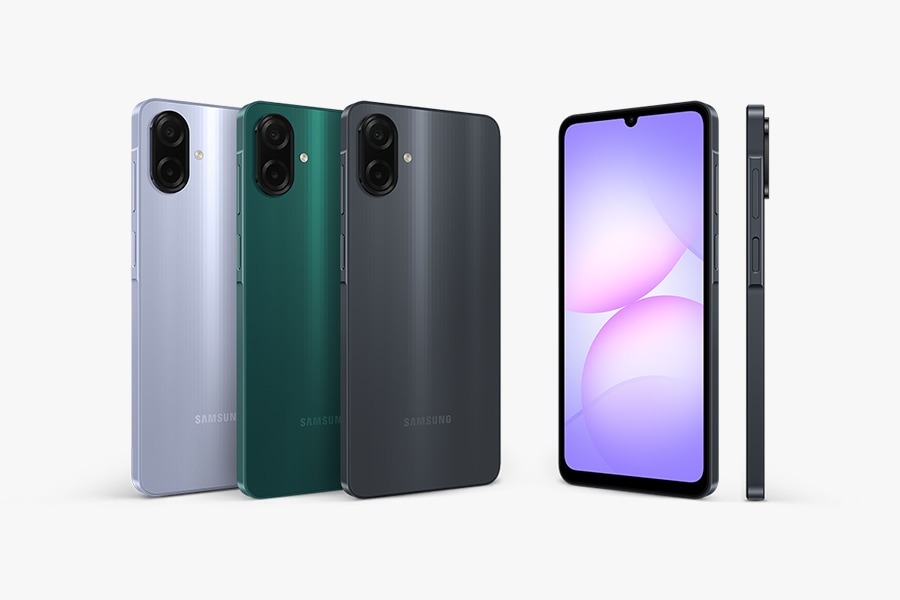
Samsung’s upcoming Galaxy A07 5G has surfaced once again, this time on Geekbench’s GPU Compute Benchmark test, giving us an idea of what to expect from the company’s next entry-level 5G phone. The new listing follows an earlier benchmark that was widely questioned, making this appearance far more interesting for anyone tracking Samsung’s budget lineup.
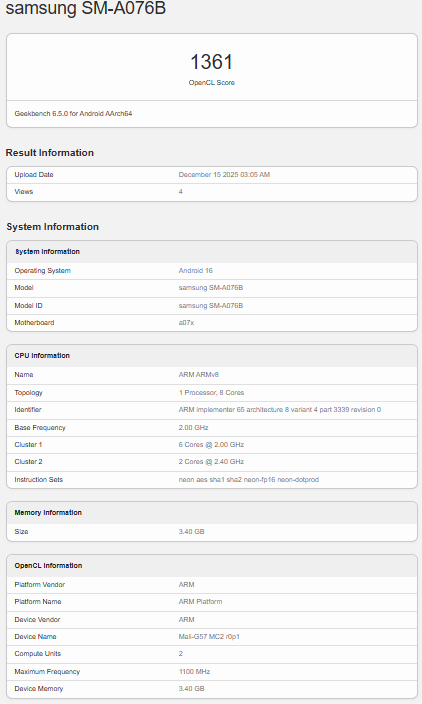
The device shows up under the model number SM-A076B, first spotted by tipster @yabhishekhd. According to the listing, the phone scored 1,361 points in the OpenCL test, offering a rough idea of its GPU performance. The listing further reveals an octa-core CPU setup, with six efficiency cores clocked at 2.0GHz and two performance cores running at 2.4GHz, paired with a Mali-G57 MC2 GPU.
These details strongly suggest the Galaxy A07 5G is powered by the MediaTek Dimensity 6300, the same chip used in the Galaxy A06 5G. If accurate, Samsung appears to be sticking with familiar hardware while likely focusing on slight tweaks or refinements elsewhere. The benchmark also confirms 4GB of RAM and shows the phone running Android 16, which would make it one of the more affordable devices for Galaxy fans to look forward to.
Beyond benchmarks, the Galaxy A07 5G has already started appearing on official Samsung support pages across multiple regions. The phone has also picked up certifications from Nemko and the Bluetooth SIG, further hinting that its launch is getting closer.
As for timing, recent tips point to a launch either later this month or in early January 2026. While Samsung hasn’t confirmed anything yet, the growing number of listings and certifications suggests an announcement isn’t far off. If priced right, the Galaxy A07 5G could become a solid option for buyers looking for basic performance, 5G connectivity, and up-to-date software at a budget price.
Don’t miss a thing! Join our Telegram community for instant updates and grab our free daily newsletter for the best tech stories!
For more daily updates, please visit our News Section.
(Source: Geekbench | Abhishek Yadav)


Comments