
Add GIZMOCHINA as Preferred Source on Google
As an Amazon Associate, Gizmochina earns from qualifying purchases. Links on this page may earn us a commission at no extra cost to you.
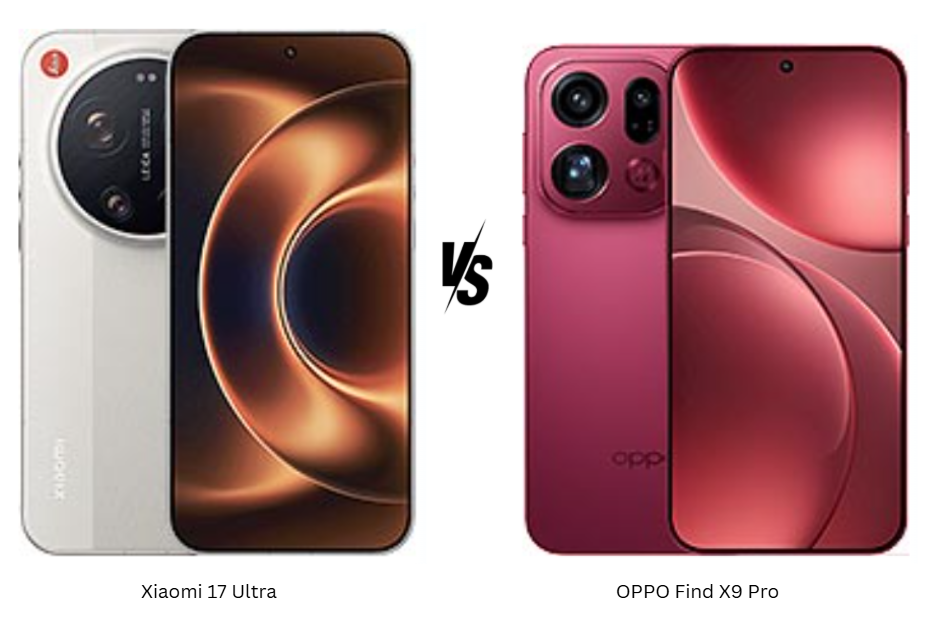
Choosing between the Xiaomi 17 Ultra and OPPO Find X9 Pro isn’t just about picking another flagship; it’s about deciding what kind of premium smartphone experience feels right for the buyer. This comparison matters because both phones appeal to users who want top-tier design, powerful performance, and a device that reflects their lifestyle, but they approach that goal in very different ways. For anyone weighing creativity, style, long-term value, and everyday usability, this matchup helps clarify which direction truly aligns with how they want to use their next premium phone.
Major Features:
| Feature | Xiaomi 17 Ultra | OPPO Find X9 Pro | Winner |
|---|---|---|---|
| Chip / Powered By | Snapdragon 8 Elite Gen 5 | Dimensity 9500 | Xiaomi — stronger peak performance & GPU power |
| Display | 6.9″ LTPO AMOLED, Dolby Vision, 3500 nits peak | 6.78″ LTPO AMOLED, Ultra HDR, 3600 nits peak | Tie — Xiaomi is more cinematic, OPPO is more natural & comfortable |
| Main Camera System | Leica tuning, 50MP main + 200MP continuous zoom periscope + 50MP ultrawide | Hasselblad tuning, 50MP main + 200MP 3x telephoto + 50MP ultrawide | Xiaomi — more creative flexibility & continuous zoom |
| Selfie Camera | 50MP, 4K video, EIS | 50MP, PDAF, 4K video | OPPO — sharper, cleaner focus for portraits & socials |
| Battery & Charging | 6800mAh, 90W wired, 50W wireless, reverse charging | 7500mAh, 80W wired, 50W wireless | OPPO — better endurance & efficient daily runtime |
| Software & Updates | Android 16, HyperOS | Android 16, 5 major updates, ColorOS 16 | OPPO — longer assured update commitment |
| Special Features | Two-way satellite communication, Leica ecosystem | Satellite support (select model), Hasselblad color | Xiaomi — more enthusiast-focused tools |
| Price | ~$1000 | ~$800 | OPPO — significantly better price-to-value |
1. Design and Display
Build and Feel
Xiaomi 17 Ultra carries an enthusiast-centric design with premium materials and a rugged, performance-focused character that feels made for users who prefer a purposeful flagship identity. OPPO Find X9 Pro takes a sleeker and more refined approach, offering a smooth, premium finish and lifestyle-oriented feel that comes across as elegant and understated, making it more appealing to those who value sophistication over bold industrial styling.
Display Quality
Both phones feature LTPO AMOLED panels with fast refresh and advanced HDR. Xiaomi’s tuning leans toward vivid contrast and cinematic brightness, giving content a bold, dramatic feel that enhances movies and gaming. OPPO focuses on balanced tones and visual comfort with Ultra HDR support, producing a natural and controlled viewing experience that feels better suited to reading, social content, and long daily use.
Verdict
Xiaomi feels bold and immersive, while OPPO delivers a refined and visually comfortable display experience.
| Preview | Product | |
|---|---|---|

|
Oppo Find X9 Pro 5G (Titanium Charcoal, 16GB RAM, 512GB Storage) with No Cost EMI/Additional… | Check Price on Amazon |
Please Note: When you buy something using the links in our articles, we may earn a small commission at no cost to you.
2. Specifications
Performance
Xiaomi 17 Ultra prioritizes high-end processing power for gaming, computational photography, and heavy multitasking, making it ideal for users who regularly push performance limits. OPPO Find X9 Pro emphasizes efficiency and sustained smoothness, offering consistent performance that feels stable and controlled during productivity and everyday workflows.
Battery and Charging
Xiaomi offers versatile charging with strong wired, wireless, and reverse-charging support, making it suitable for travelers and users who rely on multiple accessories. OPPO delivers excellent endurance with convenient fast top-ups, creating a comfort-oriented battery experience that feels dependable for long daily use without frequent deep charging cycles.
Verdict
Xiaomi suits intensive, power-centric usage, while OPPO feels better optimized for steady endurance and practical everyday reliability.
3. Camera
Main and Secondary Lenses
Xiaomi 17 Ultra stands out with its large-sensor main camera and continuous-zoom periscope system tuned by Leica, offering creative flexibility that feels tailored for enthusiasts and content creators. OPPO Find X9 Pro provides a cohesive Hasselblad-calibrated system with natural-tone color science, producing images that feel consistent, artistic, and well-balanced, especially appealing for portraits and lifestyle photography.
Selfie Camera
Both phones deliver high-resolution selfies with 4K video support. Xiaomi feels more creator-focused for vlogging and content recording, while OPPO’s PDAF-enabled selfie camera produces sharper focus and polished results that feel social-ready and reliable across different lighting environments.
Verdict
Xiaomi leans toward creative experimentation and versatility, while OPPO prioritizes consistency, natural color, and refined photographic output.
4. Pricing
Xiaomi 17 Ultra is priced around $1000, reflecting its enthusiast-grade hardware, advanced zoom system, and creator-oriented feature set. OPPO Find X9 Pro comes in at around $800, offering a premium design, strong cameras, and long-term value at a more accessible flagship price, making it highly appealing to users who want high-end performance without paying top-tier premiums.
Verdict
Xiaomi justifies its higher cost with specialized features, while OPPO delivers a stronger price-to-value balance for a broader audience.
Disclaimer:
Prices are approximate and may vary based on country, region, and applicable taxes.
5. Conclusion
Xiaomi 17 Ultra distinguishes itself with two-way satellite connectivity, Leica imaging tools, and a creator-focused zoom system that gives it a unique enthusiast identity. OPPO Find X9 Pro emphasizes Hasselblad color tuning, refined software behavior, and smooth daily usability, creating a flagship experience that feels balanced, polished, and widely suitable.
Verdict
Both phones excel, but appeal to users with different priorities. Xiaomi 17 Ultra is ideal for enthusiasts who want maximum performance, depth, and creative flexibility. However, OPPO Find X9 Pro is the overall winner thanks to its refined design, consistent imaging, excellent endurance, and significantly stronger price-value balance, making it the smarter flagship choice for most users.
Read More:

Comments