As an Amazon Associate, Gizmochina earns from qualifying purchases. Links on this page may earn us a commission at no extra cost to you.
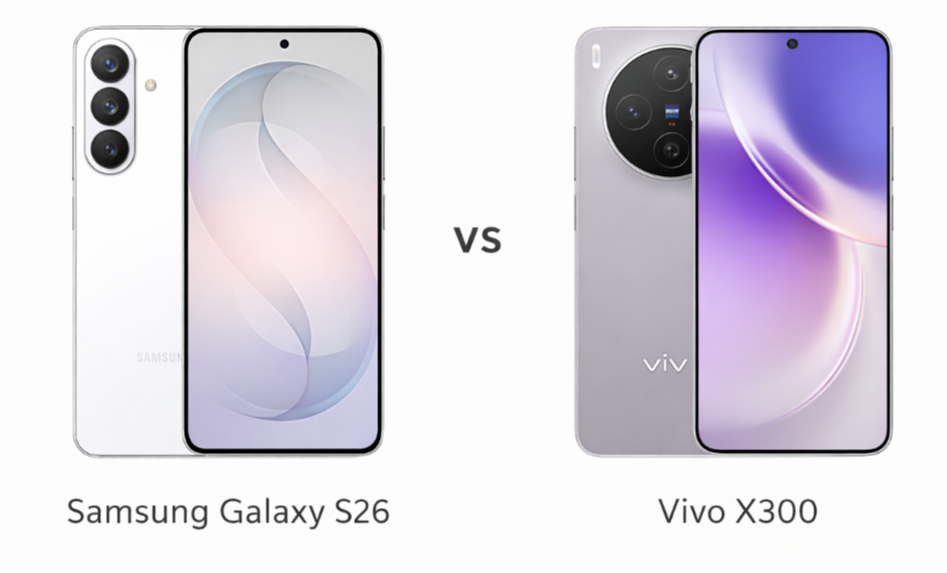
Choosing between the Samsung Galaxy S26 and Vivo X300 isn’t just about specs; it’s about two very different flagship philosophies. One focuses on long-term refinement, software stability, and a polished premium experience, while the other pushes aggressive hardware, faster charging, and bold camera innovation at a lower price. Both aim at serious flagship buyers, but they appeal to different priorities. This comparison breaks down where each phone truly stands, so it’s easier to decide which one actually fits everyday use better.
The Samsung Galaxy S26 follows a clean, premium design with Gorilla Glass Victus 2 and a sturdy aluminum frame. It feels refined and consistent with Samsung’s flagship identity. The Vivo X300 takes a slightly bolder approach with reinforced materials and stronger IP68/IP69 protection, giving it a more modern and experimental vibe. Samsung feels polished and timeless, while Vivo feels more aggressive and tech-focused, which may appeal more to users who prefer a standout flagship style.
Display Quality
Both phones use LTPO AMOLED panels with 120Hz refresh rates, but their tuning differs. The S26 focuses on balanced colors and natural contrast, making it comfortable for long viewing sessions. The X300 pushes higher brightness and sharper visuals, creating a more vivid and punchy look outdoors. Samsung feels more controlled and realistic, while Vivo delivers a stronger visual impact and a more dramatic display experience.
Verdict
Galaxy S26 feels more refined overall, but Vivo X300 offers a more striking and brighter display experience.
2. Specifications Including Battery
Performance
The Galaxy S26 uses Snapdragon 8 Elite Gen 5 or Exynos 2600, depending on region, delivering stable flagship-level performance with strong long-term optimization. Vivo X300 runs the Dimensity 9500, which feels more performance-focused and aggressive in heavy tasks and gaming. Both are extremely fast in daily use, but Samsung prioritizes smooth consistency while Vivo leans toward raw power and responsiveness. The difference is subtle yet noticeable, depending on usage style.
Battery and Charging
Samsung keeps a smaller battery with 25W wired and wireless charging, focusing on efficiency and long-term reliability. Vivo clearly targets power users with a much larger battery and 90W wired plus 40W wireless charging, making quick top-ups effortless. In practical use, Vivo feels more convenient for heavy users, while Samsung keeps things safe and predictable.
Verdict
Galaxy S26 wins for long-term stability, while Vivo X300 stands out for battery life and charging speed.
3. Camera
Main and Secondary Lenses
Samsung uses a balanced triple-camera setup tuned for natural colors and reliable results. Video recording remains a strong point with excellent stabilization and consistent processing. Vivo X300 goes more ambitious with a 200MP main sensor, Zeiss optics, and a larger periscope lens, delivering sharper detail and stronger zoom flexibility. Samsung feels safer and more predictable, while Vivo feels more experimental and exciting for photography enthusiasts.
Selfie Camera
The S26’s 12MP autofocus selfie camera focuses on natural output and dependable video quality. Vivo’s 50MP autofocus selfie camera captures more detail and feels better suited for creators or social media users. The difference is noticeable in sharpness and flexibility, especially in bright conditions.
Verdict
Samsung delivers consistency, but Vivo X300 offers more impressive camera hardware and creative flexibility.
4. Pricing
The Samsung Galaxy S26 is priced at about $900 / ₹88,000, placing it firmly in premium flagship territory. The Vivo X300 comes at roughly $650 / ₹76,000, making it significantly more affordable while still offering high-end hardware. The price gap makes the comparison interesting because both phones target flagship buyers, but with different priorities.
Is the Price Justified?
Samsung’s price feels justified for buyers who want long software support, ecosystem features, and polished optimization. Vivo’s pricing looks more aggressive, offering stronger hardware specs for less money. The X300 feels like a better value on paper, while the S26 focuses more on experience and long-term reliability.
Verdict
Galaxy S26 suits premium buyers; Vivo X300 delivers stronger hardware value for the price.
Disclaimer: Prices are approximate and may vary based on country, region, and applicable taxes.
5. Conclusion
Galaxy S26 stands out with long software support, One UI refinement, and ecosystem features like Samsung DeX that improve productivity. It feels designed for users who value stability and consistency. Vivo X300 focuses on bold hardware choices, including fast charging, a larger battery, and Zeiss-backed imaging, giving it a more performance-driven personality. Both phones are flagship-level but clearly target different user preferences.
Final Verdict
If only one phone has to be chosen, the Samsung Galaxy S26 is the safer overall pick because it offers longer software support, a more refined flagship experience, and better long-term reliability, making it ideal for users planning to keep their phone for years.
The Vivo X300 is the stronger value option with better hardware on paper, faster charging, and more aggressive camera specs for the price.
Choose the Galaxy S26 for long-term stability and polish, or choose the Vivo X300 if maximum specs and value matter more right now.
We use cookies on our website to give you the most relevant experience by remembering your preferences and repeat visits. By clicking “Accept”, you consent to the use of ALL the cookies.
This website uses cookies to improve your experience while you navigate through the website. Out of these, the cookies that are categorized as necessary are stored on your browser as they are essential for the working of basic functionalities of the website. We also use third-party cookies that help us analyze and understand how you use this website. These cookies will be stored in your browser only with your consent. You also have the option to opt-out of these cookies. But opting out of some of these cookies may affect your browsing experience.
Necessary cookies are absolutely essential for the website to function properly. This category only includes cookies that ensures basic functionalities and security features of the website. These cookies do not store any personal information.
Any cookies that may not be particularly necessary for the website to function and is used specifically to collect user personal data via analytics, ads, other embedded contents are termed as non-necessary cookies. It is mandatory to procure user consent prior to running these cookies on your website.





Comments