
Add GIZMOCHINA as Preferred Source on Google
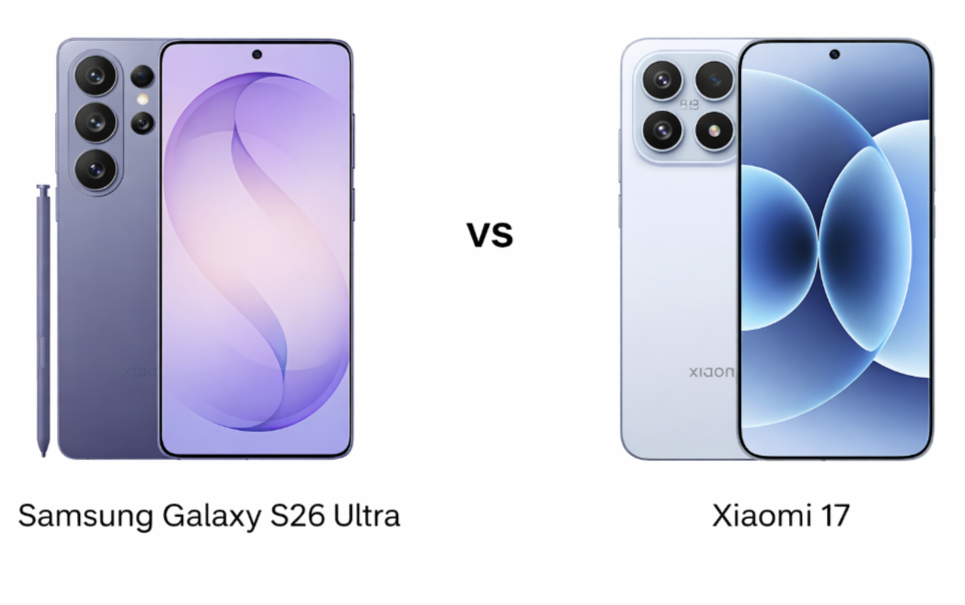
Flagship battles are no longer just about specs: they’re about what actually improves daily use. The Samsung Galaxy S26 Ultra and Xiaomi 17 take two very different approaches: one leans into premium features and productivity, while the other focuses on raw value and cutting-edge upgrades. This comparison breaks down which one truly delivers where it matters most.
| Preview | Product | |
|---|---|---|

|
Samsung Galaxy S26 5G (Black, 12GB RAM, 512GB Storage)_with Other Offers | Check Price on Amazon |
Please Note: When you buy something using the links in our articles, we may earn a small commission at no cost to you.
Major Features:
| Feature | Galaxy S26 Ultra | Xiaomi 17 | Winner |
|---|---|---|---|
| Display | 6.9″ LTPO AMOLED, 1440p, 2600 nits, anti-reflective | 6.3″ LTPO AMOLED, 1220p, 3500 nits, Dolby Vision | Xiaomi – brighter + better HDR |
| Build | Gorilla Armor 2, aluminum frame, S Pen | Dragon Crystal Glass, aluminum frame | Samsung – more premium + stylus |
| Chipset | Snapdragon 8 Elite Gen 5 (higher clocks) | Snapdragon 8 Elite Gen 5 | Samsung – slightly better tuning |
| Storage | UFS 4.X | UFS 4.1 | Xiaomi – faster storage |
| Rear Camera | 200MP + 10MP (3x) + 50MP (5x) + 50MP UW | 50MP + 50MP (2.6x) + 50MP UW | Samsung – superior zoom versatility |
| Selfie Camera | 12MP | 50MP | Xiaomi – sharper selfies |
| Video | 8K, HDR10+, strong stabilization | 8K HDR, Dolby Vision, LOG | Xiaomi – more pro video features |
| Battery | 5000mAh, 60W wired | 6330–7000mAh, 100W wired | Xiaomi – bigger + faster |
| Wireless Charging | 25W | 50W | Xiaomi – significantly faster |
| Software | Android 16, One UI, 7 years updates | Android 16, HyperOS 3 | Samsung – longer support |
| Extras | S Pen, DeX, UWB | IR blaster | Samsung – more features |
| Price | $1300 / ₹1,40,000 | $1000 / ₹90,000 | Xiaomi – much better value |
| Preview | Product | |
|---|---|---|

|
XIAOMI 17 (12GB/512GB)|50MP Leica Triple Camera|Snapdragon 8 Elite Gen 5|6.3″ CrystalRes 1-120Hz… | Check Price on Amazon |
Please Note: When you buy something using the links in our articles, we may earn a small commission at no cost to you.
Design and Display
Build and Feel
The Samsung Galaxy S26 Ultra leans heavily into a premium, productivity-first design with its Armor aluminum frame, Gorilla Armor protection, and integrated stylus. It feels like a device built for power users who value durability and multitasking. In contrast, the Xiaomi 17 offers a more compact and refined approach, with Dragon Crystal Glass and a cleaner, lighter in-hand feel. The Xiaomi device comes across as more practical for daily comfort, while Samsung prioritizes a bold, feature-rich identity.
Display Quality
Samsung delivers a sharp 1440p LTPO AMOLED panel with excellent brightness and anti-reflective coating, making it highly usable outdoors. Meanwhile, Xiaomi pushes display innovation further with a brighter 3500-nit panel, Dolby Vision, and ultra-high PWM dimming, resulting in better eye comfort and richer HDR visuals. The Xiaomi display feels more modern and aggressive in tuning, while Samsung remains balanced and consistent.
Verdict
Xiaomi 17 wins for display innovation and comfort, but Samsung feels more premium and productivity-focused overall.
Specifications Including Battery
Performance
Both devices are powered by the Snapdragon 8 Elite Gen 5, but Samsung’s slightly higher clock speeds and refined One UI optimization give it a marginal edge in sustained performance. It feels more stable under heavy workloads and long gaming sessions. Xiaomi, however, pairs strong hardware with faster UFS 4.1 storage and a lighter HyperOS experience, which often feels quicker in day-to-day use. The difference is subtle, but Samsung leans toward consistency, while Xiaomi feels snappier.
Battery and Charging
Samsung sticks with a 5000mAh battery and relatively modest charging speeds, focusing on reliability. Xiaomi clearly dominates here with a massive 6330–7000mAh battery and 100W wired charging, alongside faster wireless options. The Xiaomi device feels far more future-ready for heavy users who prioritize uptime and speed.
Verdict
Xiaomi 17 clearly wins due to superior battery capacity and significantly faster charging, despite Samsung’s slight performance stability edge.
Camera
Main and Secondary Lenses
Samsung takes a clear lead in versatility with its quad-camera system, including a 200MP main sensor and dual telephoto lenses offering true optical zoom flexibility. It feels built for users who want maximum range and consistency across scenarios. Xiaomi, with its Leica-tuned triple 50MP setup, focuses more on color science and cinematic output. While it lacks Samsung’s zoom depth, it delivers more natural tones and better video flexibility with Dolby Vision and LOG recording.
Selfie Camera
Xiaomi stands out with a 50MP selfie camera, offering sharper detail and better flexibility for content creators. Samsung’s 12MP sensor is reliable and well-optimized, but feels conservative in comparison. Xiaomi’s front camera feels more aligned with modern usage trends like vlogging and high-resolution selfies.
Verdict
Samsung wins for zoom and versatility, while Xiaomi appeals more to creators with better color tuning and a stronger selfie camera.
Pricing
The Samsung Galaxy S26 Ultra is priced around $1300 (₹1,40,000), placing it firmly in the ultra-premium category. The Xiaomi 17, at approximately $1000 (₹90,000), undercuts it significantly while still offering flagship-level hardware. This price gap creates a clear difference in positioning. Samsung targets those wanting everything regardless of cost, while Xiaomi focuses on delivering maximum value.
Is the price justified?
Samsung justifies its pricing with features like the stylus, DeX support, longer software updates, and superior camera versatility. It feels like a complete ecosystem device. Xiaomi, however, delivers exceptional hardware, better battery, faster charging, brighter display, at a lower price, making it feel like a smarter buy for most users.
Verdict
Xiaomi 17 wins easily in value for money, while Samsung remains a premium, feature-packed investment.
Disclaimer:
Prices are approximate and may vary based on country, region, and applicable taxes.
Conclusion
Samsung differentiates itself with the S Pen, DeX desktop experience, ultra-refined software support, and unmatched camera versatility. It feels like a productivity powerhouse rather than just a smartphone. Xiaomi counters with a massive battery, ultra-fast charging, superior display brightness, and Leica-tuned imaging, making it feel more modern and performance-driven. The Xiaomi device leans into practical daily advantages, while Samsung focuses on long-term utility and ecosystem integration.
Verdict
The Samsung Galaxy S26 Ultra is ideal for users who want premium features, productivity tools, and long-term reliability. The Xiaomi 17, however, emerges as the better overall choice for most buyers, offering stronger value, better battery life, and a more advanced display experience at a significantly lower price.
Disclaimer: This comparison is based on the specifications provided and is intended for general informational purposes. Actual performance, camera results, battery life, and overall experience may vary depending on real-world usage, software updates, and individual preferences.
Read More:

Comments