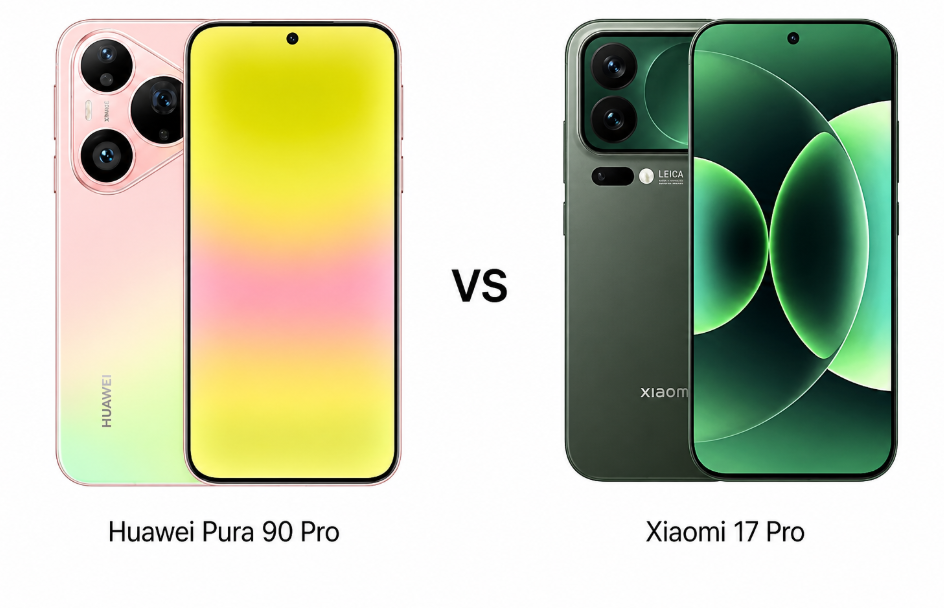
Two flagship phones, two very different approaches to what a premium smartphone should be. The Huawei Pura 90 Pro leans into durability, refined camera control, and a polished ecosystem, while the Xiaomi 17 Pro goes all-in on cutting-edge hardware, performance, and standout features. This comparison matters for buyers deciding between reliability and raw innovation. With both devices sitting in a similar price bracket, the real question isn’t just which is better on paper, but which one actually delivers more value in everyday use.
Please note: Huawei Pura 90 Pro is expected to launch in the second week of May, so some specifications may still change or be refined closer to the official launch.
Both phones use premium materials with glass and aluminum, but the experience differs slightly. The Huawei Pura 90 Pro feels more rugged with IP68/IP69 protection, giving it an edge in durability under harsher conditions. The Xiaomi 17 Pro, while also IP68 rated, focuses more on refinement with its Dragon Crystal Glass and slightly more modern finish. Xiaomi also introduces a secondary rear display, which adds a unique functional touch. Huawei leans toward a solid, dependable flagship feel, while Xiaomi feels more experimental and feature-rich.
Display Quality
Huawei offers a sharp LTPO OLED panel with smooth 120Hz refresh and balanced color output. However, Xiaomi pushes things further with higher brightness, Dolby Vision, HDR10+, and a much higher PWM dimming rate. The display feels more vibrant and versatile, especially for HDR content. The secondary display also adds usability benefits that stand out in daily use.
Verdict
Xiaomi 17 Pro delivers a more advanced and feature-packed display, while Huawei focuses on durability and consistency.
2. Specifications Including Battery
Performance
Huawei’s Kirin 9030S is capable of everyday tasks and optimized for HarmonyOS, but Xiaomi’s Snapdragon 8 Elite Gen 5 is on another level. It delivers significantly higher performance, better efficiency, and stronger GPU output for gaming and heavy workloads. The Xiaomi feels faster and more future-proof, especially with UFS 4.1 storage. Huawei remains smooth, but Xiaomi clearly targets power users.
Battery and Charging
Both phones offer large batteries, but Xiaomi takes the lead with a bigger capacity and much faster 100W wired charging. Wireless charging is equal on paper, but Xiaomi’s reverse wireless charging is far more powerful. Huawei still offers reliable endurance, but Xiaomi feels more aggressive and convenient for fast top-ups.
Verdict
Xiaomi 17 Pro dominates in performance and charging, making it the better choice for demanding users.
3. Camera
Main and Secondary Lenses
Huawei focuses on versatility with a variable aperture main sensor and strong 4x telephoto performance. It excels in controlled lighting and offers consistent image quality. Xiaomi, however, brings a more advanced camera system with a larger sensor, 5x periscope zoom, and Leica tuning. It also supports 8K recording and more advanced video formats, making it feel more complete. Xiaomi’s setup feels more flexible and modern overall.
Selfie Camera
Huawei’s 13MP ultrawide selfie camera is functional and supports 4K video, but Xiaomi’s 50MP front camera offers far more detail and better versatility. It feels more aligned with current flagship expectations, especially for content creators.
Verdict
Xiaomi 17 Pro delivers a more powerful and versatile camera system, while Huawei focuses on consistency and control.
4. Pricing
The Huawei Pura 90 Pro is priced at around $800 (₹75,000), while the Xiaomi 17 Pro comes in lower at about $700 (₹62,000). This creates a noticeable price gap despite Xiaomi offering more advanced hardware in several areas.
Is the Price Justified?
Huawei justifies its price with durability, optimized software, and a refined camera experience. However, Xiaomi clearly offers more aggressive value with a stronger chipset, better display, faster charging, and more advanced camera capabilities. The pricing strategy makes Xiaomi feel like a more competitive flagship option.
Verdict
Xiaomi 17 Pro offers significantly better value for money, while Huawei feels slightly overpriced for what it delivers.
Disclaimer: Prices are approximate and may vary based on country, region, launch timing, and applicable taxes. Always check whether the listed price is for a China unit or a global/international variant when purchasing.
5. Conclusion
Huawei stands out with its rugged IP69 rating, satellite messaging support, and variable aperture camera, which gives it a unique edge in durability and photography control. Xiaomi, on the other hand, pushes innovation with a secondary rear display, top-tier chipset, advanced video capabilities, and ultra-fast charging. It feels more forward-looking and feature-packed overall.
Verdict
Huawei Pura 90 Pro is ideal for users who prioritize durability and stable performance. Xiaomi 17 Pro is the better all-around flagship with stronger performance, better features, and higher value, making it the more sensible choice for most users.
Disclaimer: This comparison is based on the specifications provided and is intended for general informational purposes. Actual performance, camera results, battery life, and overall experience may vary depending on real-world usage, software updates, and individual preferences.
We use cookies on our website to give you the most relevant experience by remembering your preferences and repeat visits. By clicking “Accept”, you consent to the use of ALL the cookies.
This website uses cookies to improve your experience while you navigate through the website. Out of these, the cookies that are categorized as necessary are stored on your browser as they are essential for the working of basic functionalities of the website. We also use third-party cookies that help us analyze and understand how you use this website. These cookies will be stored in your browser only with your consent. You also have the option to opt-out of these cookies. But opting out of some of these cookies may affect your browsing experience.
Necessary cookies are absolutely essential for the website to function properly. This category only includes cookies that ensures basic functionalities and security features of the website. These cookies do not store any personal information.
Any cookies that may not be particularly necessary for the website to function and is used specifically to collect user personal data via analytics, ads, other embedded contents are termed as non-necessary cookies. It is mandatory to procure user consent prior to running these cookies on your website.




Comments