
Add GIZMOCHINA as Preferred Source on Google
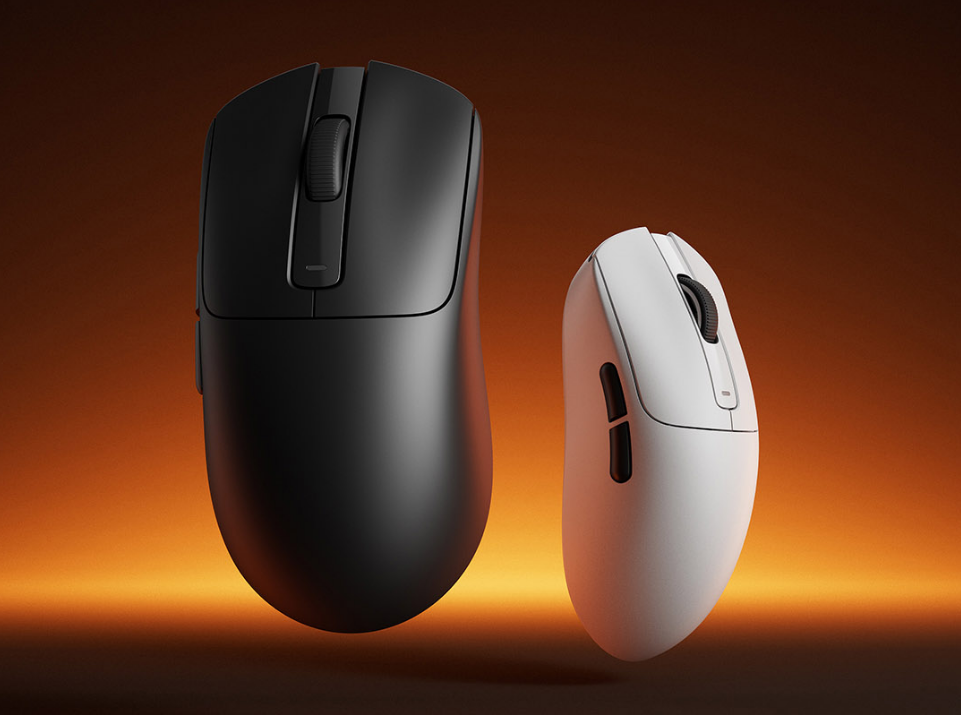
Following a brief teaser campaign, Xiaomi has officially unveiled the Gaming Mouse 2 on its Youpin platform. It is a lightweight, spec-heavy wireless mouse aimed directly at the competitive gaming market, and it arrives with a retail price of 399 yuan ($58) and an introductory price of 349 yuan ($51). The mouse will officially go on crowdfunding sale on May 11.
Xiaomi Gaming Mouse 2 Specifications
The trend of ultra-lightweight gaming peripherals is well-established at this point, and Xiaomi is leaning into it. The Gaming Mouse 2 weighs in at just 58 grams. According to the company, the ergonomic shell was designed using grip data from competitive players to accommodate claw, fingertip, and palm grip styles. To keep the weight down without compromising build quality, the internal structure relies on a lightweight umbrella skeleton frame, which helps maintain a balanced 1:1 front-to-rear weight distribution.
Under the hood, Xiaomi is utilizing a custom PixArt PAW3955XM sensor. The specifications are exactly what you would expect from a modern high-end mouse: up to 40,000 DPI, 750 IPS tracking speed, and 60G acceleration. Xiaomi has also included a dedicated esports mode that pushes the static scan rate over 20,000 FPS.
For players who want granular control, the mouse supports one-step DPI adjustments and comes factory-calibrated with a DPI error rate of less than one percent. It also features Motion Sync for consistent cursor tracking, five levels of lift-off distance adjustment, a 1-degree angle snapping system, and the ability to track on glass surfaces thicker than 4mm.
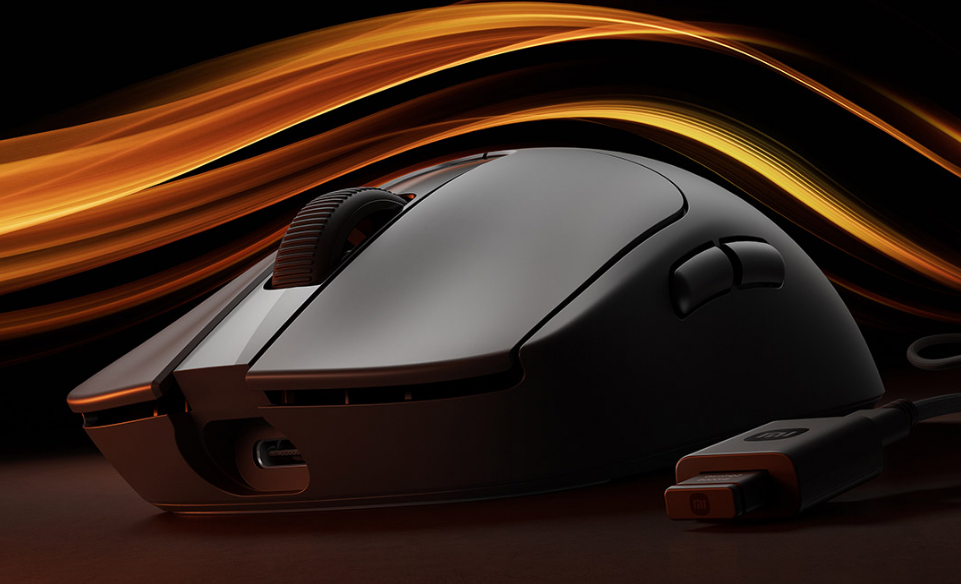
The mouse runs on a Telink TL3228 dual-core controller. This hardware allows it to support an 8000Hz polling rate in both wired and 2.4GHz wireless modes. To help with wireless stability at that speed, the mouse sends duplicate data packets across two channels every 125 microseconds.
For the buttons, Xiaomi went with TTC optical switches for the main left and right clicks, along with a TTC gold wheel encoder for the scroll wheel, which is rated for two million cycles.
You can connect the mouse via a braided USB-C cable, 2.4GHz wireless, or Bluetooth 6.1. It has a 530mAh battery that Xiaomi says lasts up to 160 hours in 2.4GHz mode, though that estimate requires lowering the polling rate to a standard 1000Hz. You can adjust settings like DPI, polling rate, and sensor tuning through a web-based tool or local software, and save them directly to the mouse’s onboard memory.
For more daily updates, please visit our News Section.
Stay ahead in tech! Join our Telegram community and sign up for our daily newsletter of top stories! 💡




Comments