Advertisement

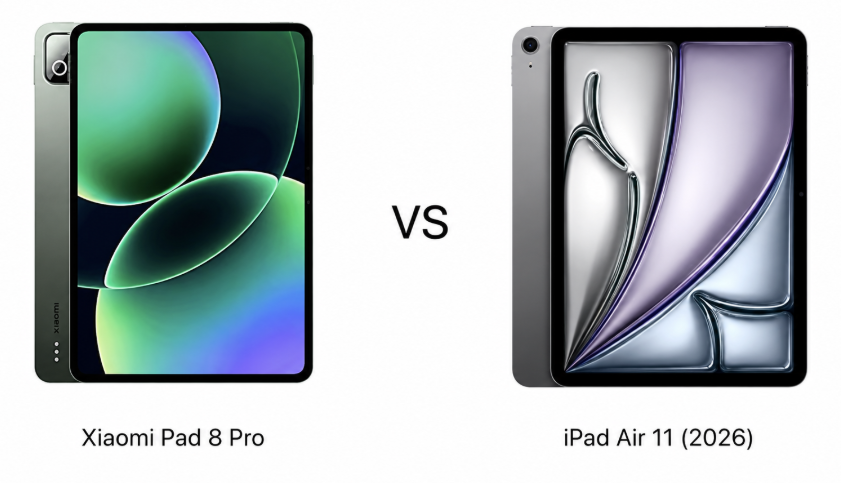
Xiaomi Pad 8 Pro and the Apple iPad Air 11 (2026) represent two very different ideas of a premium tablet. One focuses on flagship hardware and aggressive value, while the other leans on ecosystem polish and professional-grade performance. From gaming and entertainment to productivity and creative work, this comparison breaks down which tablet actually delivers the better experience for the price. 
Major Features:

FeatureXiaomi Pad 8 ProiPad Air 11 (2026)Winner
Display11.2-inch IPS LCD, 144Hz, HDR10, Dolby Vision, 800 nits11-inch Liquid Retina IPS LCD, 60Hz, 500 nitsXiaomi – Smoother refresh rate and richer HDR support
Resolution2136 × 3200 pixels, 345 ppi1640 × 2360 pixels, 264 ppiXiaomi – Sharper and more detailed panel
ChipsetSnapdragon 8 EliteApple M4iPad – Better efficiency and professional performance
GPUAdreno 830Apple 9-core GPUiPad – Stronger optimization for creative apps
RAMUp to 16GB12GBXiaomi – Higher maximum memory option
StorageUp to 512GBUp to 1TBiPad – Higher storage ceiling
Operating SystemAndroid 16, HyperOS 3iPadOS 26iPad – Better tablet app ecosystem
Rear Camera50MP12MPXiaomi – Higher-resolution hardware
Front Camera32MP ultrawide12MP ultrawideXiaomi – Sharper selfies and video calls
Video Recording4K 60fps4K 60fps with gyro-EISiPad – Better stabilization quality
SpeakersQuad stereo speakers, Dolby AtmosStereo speakersXiaomi – More immersive audio setup
Battery9200mAh7606mAhXiaomi – Larger battery capacity
Charging67W wired, reverse chargingStandard wired chargingXiaomi – Much faster charging speeds
ConnectivityWi-Fi 7, Bluetooth 5.4, IR blasterWi-Fi 7, Bluetooth 6.0iPad – Newer Bluetooth standard
USB PortUSB Type-C 3.2USB Type-C 3.1 Gen2 with DisplayPortiPad – Better external display support
Stylus SupportYesYesTie – Both support stylus accessories
Build QualityAluminum frame and backAluminum frame and backTie – Both feel premium
Starting Price₹47,000 / $500₹65,000 / $600Xiaomi – Better hardware value for the price
Overall ValueFlagship specs at lower costPremium ecosystem experienceXiaomi – More features for less money
Disclaimer: Specs are based on available data. Actual performance may vary. Verify details from official sources before buying.

1. Design and Display

Build and Feel

The Xiaomi Pad 8 Pro and the Apple iPad Air 11 (2026) both use premium aluminum builds, but they target slightly different users. Xiaomi focuses on a sharper entertainment-first approach with stylus support, Dolby Atmos quad speakers, and a more aggressive hardware package. The iPad Air 11 feels cleaner and more refined in software integration, especially for users already invested in the Apple ecosystem. The anti-reflective coating on the iPad also helps during long reading or editing sessions.

Display Quality

Xiaomi clearly pushes harder on display specifications. Its 144Hz IPS LCD panel supports HDR10, Dolby Vision, HDR Vivid, and reaches higher brightness levels, making streaming and gaming noticeably smoother. The taller 3:2 aspect ratio also works well for productivity. The iPad Air’s Liquid Retina display still looks accurate and natural, but the 60Hz refresh rate feels conservative in this price range. Apple’s color tuning remains excellent, though Xiaomi’s panel simply feels more modern for media-heavy users.

Verdict

The Xiaomi Pad 8 Pro delivers a more exciting display and entertainment experience, while the iPad Air 11 prioritizes polish and ecosystem consistency. For pure visual value, Xiaomi takes the lead.

2. Specifications Including Battery

Performance

The Xiaomi Pad 8 Pro runs on the Snapdragon 8 Elite chipset paired with up to 16GB RAM and fast UFS 4.1 storage, making it a powerhouse for Android gaming and multitasking. However, the iPad Air 11’s Apple M4 chip still sets the benchmark for tablet-class performance. Video editing, creative workloads, and long-term optimization feel more effortless on iPadOS. Apple’s app ecosystem also remains stronger for professional tablet software.

Battery and Charging

Xiaomi packs a larger 9200mAh battery with 67W fast charging and reverse wired charging support. The charging speed difference is dramatic in daily use, especially for users constantly on the move. Apple’s battery optimization is reliable, but the slower charging experience feels dated compared to modern Android tablets. Xiaomi’s setup simply offers more flexibility and convenience.

Verdict

The iPad Air 11 wins in raw processing efficiency and professional app optimization, but Xiaomi balances flagship performance with faster charging and better battery practicality. For gaming and daily versatility, the Xiaomi Pad 8 Pro feels more complete.

3. Camera

Main and Secondary Lenses

Neither tablet is designed primarily for photography, but both handle casual shooting and document scanning comfortably. Xiaomi uses a 50MP rear camera with HDR support and 4K recording at up to 60fps. The higher resolution helps with sharper detail and better flexibility in bright lighting. Apple counters with a 12MP sensor supported by strong image processing and gyro-EIS, producing cleaner and more natural-looking video stabilization.

Selfie Camera

The Xiaomi Pad 8 Pro includes a 32MP ultrawide front camera that performs well for online classes and video conferencing. It captures more detail and offers a wider field of view for group calls. The iPad Air 11 uses a 12MP ultrawide selfie camera with Apple’s reliable video optimization, resulting in smoother and more consistent FaceTime quality. Apple still feels slightly more polished for video communication.

Verdict

Xiaomi offers better camera hardware overall, especially on the front side, while Apple delivers more refined image processing and stabilization. Users focused on video meetings and casual content creation may prefer Xiaomi’s sharper setup.

4. Pricing

The Xiaomi Pad 8 Pro is priced at around ₹47,000 ($500), while the iPad Air 11 (2026) starts at around ₹65,000 ($600). That pricing gap changes the overall value discussion significantly. Xiaomi offers a flagship Snapdragon chipset, 144Hz display, larger battery, faster charging, quad speakers, and high-resolution cameras at a noticeably lower price. On pure hardware specifications, it delivers exceptional value.

The iPad Air 11 justifies its higher pricing through the Apple M4 chip, longer software support expectations, a premium app ecosystem, and smoother ecosystem integration with other Apple devices. Creative professionals and users deeply tied into macOS or iPhone workflows may still find the premium worthwhile. However, casual users could find the extra cost difficult to justify when Xiaomi already covers most high-end tablet needs.

Verdict

The Xiaomi Pad 8 Pro is the stronger value-for-money option. The iPad Air 11 makes sense mainly for users prioritizing Apple’s ecosystem and professional software advantages.

Disclaimer:
Prices are approximate and may vary based on country, region, launch timing, and applicable taxes. Always check whether the listed price is for a China unit or a global/international variant when purchasing.

5. Conclusion

The Xiaomi Pad 8 Pro stands out with its 144Hz Dolby Vision display, Snapdragon 8 Elite processor, massive battery, and ultra-fast charging. It feels designed for users who want maximum hardware value, gaming power, and multimedia performance without crossing ultra-premium pricing territory. The feature-to-price ratio is difficult to ignore.

The iPad Air 11 focuses more on efficiency, ecosystem continuity, and long-term software refinement. The Apple M4 chip brings desktop-level power to a thin tablet experience, and iPadOS still offers some of the best optimized creative applications available on any tablet platform. The overall experience feels cleaner and more mature for productivity-focused buyers.

Verdict

The Xiaomi Pad 8 Pro is the better all-rounder for entertainment, gaming, and hardware value. The iPad Air 11 remains the stronger choice for professional workflows and ecosystem-driven users. For most buyers comparing specifications against price, Xiaomi delivers the more compelling package.

Disclaimer: This comparison is based on the specifications provided and is intended for general informational purposes. Actual performance, camera results, battery life, and overall experience may vary depending on real-world usage, software updates, and individual preferences.

Read More:

Comments