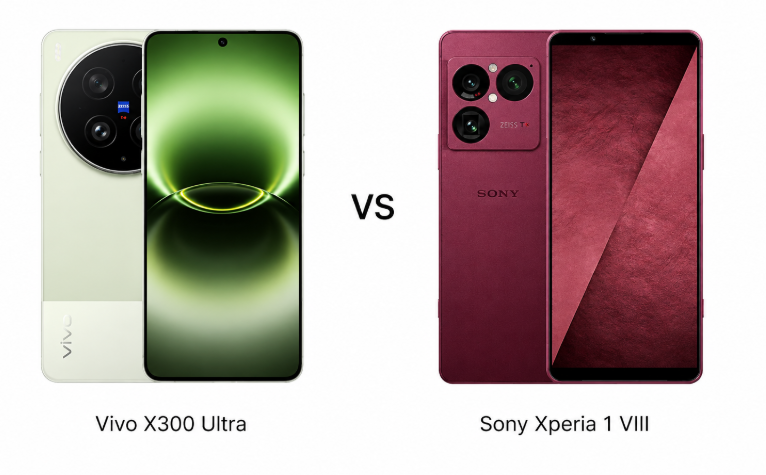
Vivo X300 Ultra and Sony Xperia 1 VIII represent two completely different visions of what an ultra-premium Android flagship should be in 2026. Vivo is chasing maximum hardware dominance with a massive battery, extreme camera setup, and ultra-fast charging, while Sony continues to refine its creator-focused Xperia formula with professional camera tools, expandable storage, and one of the few remaining headphone jacks in a flagship phone.
Both devices sit at the very top of the Android market, but they target very different kinds of users. This comparison breaks down which flagship actually delivers the better overall experience in design, performance, cameras, battery life, and long-term value.
Please note: Since the Sony Xperia 1 VIII is still expected to launch in June 2026, some specifications, features, and pricing could change before the official release.
Major Features:
Feature
Vivo X300 Ultra
Sony Xperia 1 VIII
Winner
Display
6.82-inch LTPO AMOLED, 144Hz, 1440p, Dolby Vision
6.5-inch LTPO OLED, 120Hz, FHD+
Vivo – Sharper resolution, faster refresh rate, and better HDR support
Protection
Armor Glass, IP68/IP69
Gorilla Glass Victus 2, IP65/IP68
Vivo – Stronger water resistance and premium durability focus
Chipset
Snapdragon 8 Elite Gen 5
Snapdragon 8 Elite Gen 5
Tie – Same flagship processor and GPU
RAM & Storage
Up to 16GB RAM, 1TB, UFS 4.1
Up to 16GB RAM, 1TB
Vivo – Faster UFS 4.1 storage performance
Expandable Storage
No
microSDXC support
Sony – Rare expandable storage support in a flagship
Main Camera
200MP + 200MP + 50MP
48MP + 48MP + 48MP
Vivo – Much larger sensors and more advanced camera hardware
Zoom Features
Optional external zoom lenses
Continuous telephoto focus
Vivo – More versatile long-range photography setup
Selfie Camera
50MP AF
12MP
Vivo – Higher resolution with autofocus support
Video Recording
8K, 4K 120fps, Dolby Vision
4K 120fps HDR
Vivo – More advanced recording formats and flexibility
Audio
Stereo speakers, Hi-Res audio
Stereo speakers, 3.5mm jack, Snapdragon Sound
Sony – Better wired audio experience and creator-friendly audio tools
Battery
6600mAh
5000mAh
Vivo – Significantly larger battery capacity
Wired Charging
100W
30W
Vivo – Much faster charging speeds
Wireless Charging
40W
15W
Vivo – Faster wireless charging support
Software
Android 16, OriginOS 6
Android 16, 4 major upgrades
Sony – Longer confirmed software upgrade support
Special Features
Satellite SOS, external lenses
Alpha camera support, bypass charging
Sony – Better ecosystem integration for creators
Approx Price
$1500 / ₹160000
$1600 / ₹140000
Vivo – Delivers stronger hardware value for the price
Disclaimer: Specs are based on available data. Actual performance may vary. Verify details from official sources before buying.
The Vivo X300 Ultra and Sony Xperia 1 VIII approach flagship design very differently. Vivo focuses on a bold ultra-premium camera-centric style with curved edges, a polished aluminum frame, and strong IP68/IP69 protection. The phone feels futuristic and luxurious, especially with the massive camera module that clearly signals its imaging ambitions. Sony, meanwhile, keeps its signature minimalist Xperia identity with flatter sides, Gorilla Glass protection, and a cleaner professional look. The Xperia feels more practical for long-term use thanks to the dedicated microSD slot and headphone jack, which are becoming increasingly rare in flagship phones.
Display Quality
Vivo easily pushes ahead in raw display specifications. Its LTPO AMOLED panel offers a sharper 1440p resolution, smoother 144Hz refresh rate, Dolby Vision support, and extremely high brightness handling. Content consumption and gaming feel more immersive and premium. Sony’s OLED panel is still color-accurate and cinematic with HDR BT.2020 tuning, but the lower resolution and 120Hz refresh rate feel conservative for a 2026 ultra-flagship. Sony’s display is clearly tuned for creators, while Vivo aims for maximum visual impact.
Verdict
The Xperia 1 VIII feels cleaner and more functional, but the Vivo X300 Ultra delivers the more modern and visually impressive flagship experience overall.
2. Specifications Including Battery
Performance
Both phones run on Qualcomm’s Snapdragon 8 Elite Gen 5 chipset paired with the Adreno 840 GPU, so flagship-grade performance is guaranteed on either side. Heavy gaming, AI processing, multitasking, and 4K video editing should run effortlessly. Vivo, however, appears more aggressive with overall optimization. The combination of UFS 4.1 storage, a high-refresh display, and OriginOS tuning makes the phone feel exceptionally fast in daily use. Sony takes a more balanced approach focused on sustained performance and creator-oriented stability. Features like bypass charging and native Sony Alpha support make it especially appealing for photographers and videographers.
Battery and Charging
Battery capacity is one of Vivo’s biggest strengths. The massive 6600mAh battery paired with 100W wired and 40W wireless charging significantly outclasses Sony’s 5000mAh setup with 30W charging. Vivo clearly targets power users who demand long endurance and minimal downtime. Sony’s battery system is more conservative but likely healthier for long-term battery lifespan. Still, charging speeds now matter heavily in premium phones, and Vivo simply feels more future-ready here.
Verdict
Sony offers refined stability and creator-focused features, but Vivo dominates in battery life, charging technology, and overall flagship performance feel.
3. Camera
Main and Secondary Lenses
Camera hardware is where the Vivo X300 Ultra becomes extremely difficult to ignore. Its dual 200MP setup with large sensors, gimbal stabilization, Zeiss optics, and optional external zoom lenses creates a camera system that feels closer to dedicated photography equipment than a smartphone. Low-light shots, zoom quality, and cinematic video recording are likely among the best in the market. Sony takes a different route by focusing on natural color science, eye tracking, Alpha-inspired controls, and balanced lens consistency. The Xperia 1 VIII may produce more realistic photos, especially for creators who prefer manual tuning over aggressive computational photography.
Selfie Camera
Vivo again carries stronger hardware with a 50MP autofocus selfie camera capable of detailed 4K recording. Sony’s 12MP front camera prioritizes natural tones and stable video rather than extreme detail. Content creators who rely heavily on front-camera quality may find Vivo more versatile overall.
Verdict
Sony delivers a professional photography experience with cleaner image processing, but Vivo provides a more advanced and versatile flagship camera package in nearly every hardware category.
4. Pricing
The Vivo X300 Ultra is priced around $1500 or ₹160000, while the Sony Xperia 1 VIII is expected to cost around $1600 or ₹140000, depending on the region and configuration. Interestingly, Sony carries the higher global pricing despite offering a comparatively weaker display and charging specifications on paper. Vivo aggressively packs flagship-grade hardware into nearly every category, making the pricing feel surprisingly competitive for what is included.
Sony justifies its premium through niche creator-focused features like microSD support, headphone jack integration, Alpha ecosystem compatibility, and cleaner Android software support. That approach will appeal strongly to photographers and long-time Xperia enthusiasts. However, mainstream flagship buyers often prioritize battery life, charging speed, and camera hardware, areas where Vivo clearly provides more value.
Verdict
The Xperia 1 VIII feels premium but specialized. The Vivo X300 Ultra offers stronger overall hardware value and feels like the better flagship deal for most buyers at this price level.
Disclaimer: Prices are approximate and may vary based on country, region, launch timing, and applicable taxes. Always check whether the listed price is for a China unit or a global/international variant when purchasing.
5. Conclusion
The Vivo X300 Ultra stands out with its enormous battery, extremely advanced camera hardware, optional zoom lenses, satellite communication support, and ultra-fast charging system. It feels designed for users who want the most cutting-edge smartphone technology available without compromise. The Xperia 1 VIII, on the other hand, continues Sony’s niche flagship philosophy by prioritizing creator tools, expandable storage, professional camera controls, and audio-focused features like the 3.5mm headphone jack and Snapdragon Sound support.
Both phones target premium users, but they cater to different personalities. Vivo feels bold, experimental, and specification-heavy, while Sony feels mature, focused, and intentionally practical. The difference is not just about hardware numbers but also about the kind of user experience each brand wants to deliver.
Verdict
The Sony Xperia 1 VIII remains one of the most creator-friendly Android flagships available, but the Vivo X300 Ultra delivers the more complete ultra-premium experience overall with stronger display, battery, charging, and camera hardware.
Disclaimer: This comparison is based on the specifications provided and is intended for general informational purposes. Actual performance, camera results, battery life, and overall experience may vary depending on real-world usage, software updates, and individual preferences.
We use cookies on our website to give you the most relevant experience by remembering your preferences and repeat visits. By clicking “Accept”, you consent to the use of ALL the cookies.
This website uses cookies to improve your experience while you navigate through the website. Out of these, the cookies that are categorized as necessary are stored on your browser as they are essential for the working of basic functionalities of the website. We also use third-party cookies that help us analyze and understand how you use this website. These cookies will be stored in your browser only with your consent. You also have the option to opt-out of these cookies. But opting out of some of these cookies may affect your browsing experience.
Necessary cookies are absolutely essential for the website to function properly. This category only includes cookies that ensures basic functionalities and security features of the website. These cookies do not store any personal information.
Any cookies that may not be particularly necessary for the website to function and is used specifically to collect user personal data via analytics, ads, other embedded contents are termed as non-necessary cookies. It is mandatory to procure user consent prior to running these cookies on your website.


Comments