
Add GIZMOCHINA as Preferred Source on Google
If you are used to charging your smartwatch every night, looking at Garmin’s spec sheets can be a bit of an adjustment. Instead of measuring battery life in hours, Garmin’s premium outdoor watches measure it in weeks and months.
While they have been on the market for a bit, the Garmin Enduro 3 and Fenix 8 remain two of the most capable options in Garmin’s high-end lineup. Both watches offer excellent battery life, but they take very different approaches to how they manage power and what features they prioritize. If you are trying to decide which one makes sense for your routine, here is a straightforward breakdown of how their batteries actually compare.

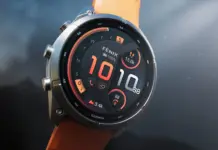
Garmin Fenix 8
The Fenix 8 is Garmin’s flagship, designed to do a little bit of everything. It includes new hardware like a built-in speaker and microphone for taking calls, a dive-rated casing for scuba diving, and a built-in LED flashlight. Because it has so many features, the battery life depends heavily on which version you choose.
To make a fair comparison with the Enduro 3, we have to look at the largest Fenix 8 model, the 51mm. If you choose the vibrant AMOLED display version, you can expect up to 29 days in smartwatch mode, which drops to about 13 days if you leave the screen on all the time. For GPS tracking during workouts, it lasts up to 84 hours.
If you want to maximize the Fenix 8’s battery, you can opt for the 51mm Solar edition. This version swaps the AMOLED screen for a more power-efficient Memory-in-Pixel (MIP) display and adds a solar charging lens. With this setup, smartwatch battery life reaches up to 30 days, or 48 days if you spend a few hours outside in the sun each day. In GPS mode, it provides 95 hours of tracking, stretching to 149 hours with solar assistance. For most users, this is more than enough capacity for regular training, long hikes, and daily wear.
Garmin Enduro 3
The Enduro 3, on the other hand, is built with a very specific goal: to last as long as possible between charges. To achieve this, Garmin made some practical trade-offs. The Enduro 3 skips the built-in microphone, speaker, and dive-proof hardware found on the Fenix 8. It also uses a lightweight titanium bezel and a nylon band, bringing its weight down to just 63 grams (compared to the 51mm Fenix 8 Solar’s 95 grams).
By streamlining the hardware and focusing entirely on efficiency, the Enduro 3 delivers notable numbers. In standard smartwatch mode, it lasts up to 36 days. If you are outdoors enough to take advantage of the solar charging, that number extends to a very impressive 90 days.
When it comes to continuous GPS tracking, which is the most important metric for ultrarunners and thru-hikers, the Enduro 3 provides 120 hours of battery life. With solar assistance, that figure climbs to 320 hours.
Which one fits your needs?
If we are looking strictly at which watch has the longer battery life, the Enduro 3 is the clear winner. It offers more than double the maximum solar GPS battery life of the Fenix 8 (320 hours compared to 149 hours) and nearly doubles the solar smartwatch life (90 days compared to 48 days).
However, the right choice depends on how you plan to use the watch. If you want the convenience of voice commands, the ability to answer phone calls from your wrist, and a watch that can handle recreational scuba diving, the Fenix 8 is the more versatile daily device, and its battery life is still excellent.
But if your main priority is minimizing how often you need to plug your watch in, or if you regularly participate in multi-day outdoor events where charging simply isn’t an option, the Enduro 3 is the more practical tool for the job.
For more daily updates, please visit our News Section.
Stay ahead in tech! Join our Telegram community and sign up for our daily newsletter of top stories! 💡



1. Comments