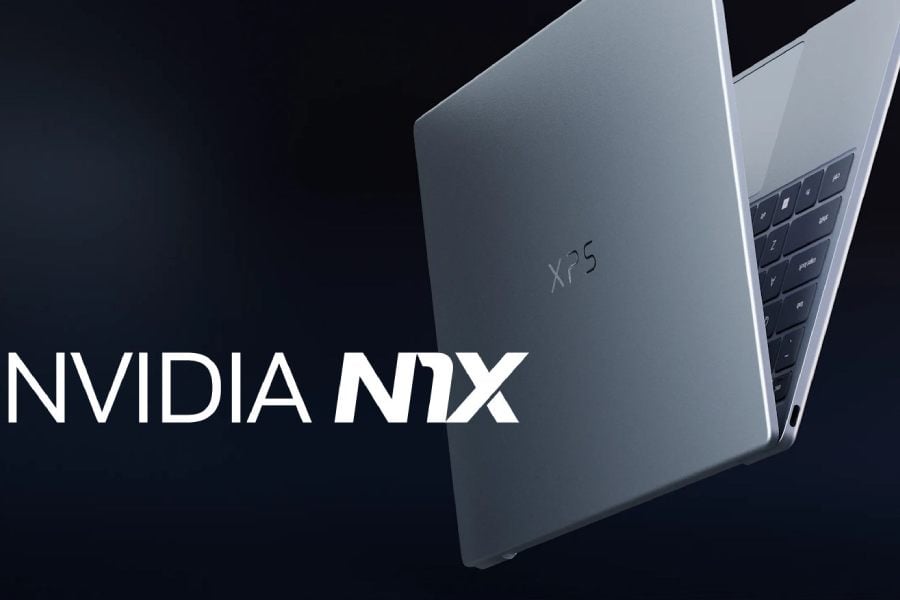
Nvidia is about to announce its first Arm chips for Windows laptops at Computex tomorrow. However, someone may have spoiled the surprise for Nvidia.
Just a day before the expected announcement, detailed specifications of Nvidia’s upcoming N1-series Arm processors for PCs and laptops have surfaced online, courtesy of VideoCardz, which cited internal Nvidia documents.
The leak reveals at least four chip variants in the N1 family, covering everything from high-performance workhorses to power-efficient options for thin, mainstream laptops.
For quite a while now, the Windows-on-Arm story has mostly been Qualcomm’s story. The company’s Snapdragon X Elite chips, built on a 4nm process with Qualcomm’s own Oryon CPU cores, brought real competition to Intel and AMD for the first time in years on thin-and-light laptops.
Qualcomm made big claims about beating Intel Core i7 chips on multi-threaded benchmarks, and for the most part, the real-world results backed that up.
Now Nvidia wants in. And Nvidia isn’t just bringing a CPU to the fight; it’s bringing a Blackwell GPU along for the ride.
2. Nvidia N1X
The top-tier N1X reportedly shares its core design with the GB10 processor inside Nvidia’s DGX Spark desktop AI supercomputer. That’s not a casual comparison. The full-fat N1X is said to pack a 20-core CPU — ten Cortex-X925 performance cores and ten Cortex-A725 efficiency cores — paired with a Blackwell 2.0 GPU featuring 48 Streaming Multiprocessors, which works out to 6,144 CUDA cores.
A slightly trimmed N1X variant is also in the works, dropping to 18 CPU cores (nine performance, nine efficiency) and a 40-SM GPU with 5,120 CUDA cores. Both N1X chips are designed to run at 45W to 80W. Crucially, though, that power figure covers the entire chip package: CPU and GPU together.
3. Nvidia N1
The standard N1 lineup is for thinner, more affordable devices. Two variants have reportedly been planned. The higher-end one pairs eight Cortex-X925 performance cores and four Cortex-A725 efficiency cores with a 20-SM GPU delivering 2,560 CUDA cores.
The second, more entry-level option steps down to a 10-core CPU (seven performance, three efficiency) and a 16-SM GPU with 2,048 CUDA cores. The whole N1 family runs within an 18W to 45W power envelope.
4. Memory and Storage
The two families differ significantly under the hood. The N1X supports up to 128GB of LPDDR5X memory across a 16-channel interface, while the standard N1 caps at 64GB with an 8-channel setup.
Likewise, N1X supports up to three M.2 SSDs, while the N1 tops out at two.
5. How Long Has This Been Cooking?
According to VideoCardz, at least one of the leaked slides is dated 2024, meaning Nvidia may have been working on this for two years or more. Not every chip listed in these documents is guaranteed to ship; roadmaps change, and some variants may quietly disappear. But the scale of what’s been leaked suggests Nvidia had serious, long-term ambitions here.
For more daily updates, please visit our News Section.
We use cookies on our website to give you the most relevant experience by remembering your preferences and repeat visits. By clicking “Accept”, you consent to the use of ALL the cookies.
This website uses cookies to improve your experience while you navigate through the website. Out of these, the cookies that are categorized as necessary are stored on your browser as they are essential for the working of basic functionalities of the website. We also use third-party cookies that help us analyze and understand how you use this website. These cookies will be stored in your browser only with your consent. You also have the option to opt-out of these cookies. But opting out of some of these cookies may affect your browsing experience.
Necessary cookies are absolutely essential for the website to function properly. This category only includes cookies that ensures basic functionalities and security features of the website. These cookies do not store any personal information.
Any cookies that may not be particularly necessary for the website to function and is used specifically to collect user personal data via analytics, ads, other embedded contents are termed as non-necessary cookies. It is mandatory to procure user consent prior to running these cookies on your website.