
Add GIZMOCHINA as Preferred Source on Google
Samsung Display has shown off a new OLED panel technology that could make future laptops noticeably thinner and lighter.

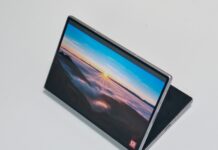
The company unveiled its “Ultra Slim” laptop OLED panel at Computex Taipei 2026, where it demonstrated a design that reduces the panel’s outer-edge thickness by roughly 20% compared to current mass-produced OLED laptop displays.
That might not sound like a huge difference at first, but shaving millimeters from a laptop is rarely straightforward.
According to Samsung, the improvement comes from reducing the thickness of both the TFT substrate glass and the encapsulation glass by more than 30%. The challenge, of course, is maintaining durability. Thinner glass can be more susceptible to flexing, warping, or other structural issues, which is why Samsung says it had to develop additional manufacturing techniques to make the design practical.
The display itself does not appear to sacrifice any of the characteristics OLED panels are known for. Samsung says the technology supports refresh rates ranging from 165Hz to 240Hz and carries VESA DisplayHDR True Black 1000 certification.
That combination makes it particularly relevant for gaming laptops, where manufacturers are constantly trying to balance performance, portability, battery size, cooling requirements, and display quality. Saving space inside the chassis can have a ripple effect on the rest of the design.
In recent years, laptop makers have spent a lot of effort trimming bezels, reducing motherboard footprints, and developing more compact cooling systems. Displays have not always received the same attention, partly because there are physical limits to how thin panel structures can become.

Samsung’s latest prototype suggests there may still be room to push that further.
The company has not announced any products that will use the panel yet, nor has it shared a timeline for mass production. For now, the technology remains a preview of what future premium and gaming laptops could look like.
Still, if manufacturers can cut display thickness without introducing durability concerns, users may eventually end up with lighter machines without giving up screen size, battery capacity, or performance. That’s usually a trade-off laptop makers are happy to avoid.
Don’t miss a thing! Join our Telegram community for instant updates and grab our free daily newsletter for the best tech stories!
For more daily updates, please visit our News Section.
(Source: Samsung Display Newsroom)



Comments