As an Amazon Associate, Gizmochina earns from qualifying purchases. Links on this page may earn us a commission at no extra cost to you.
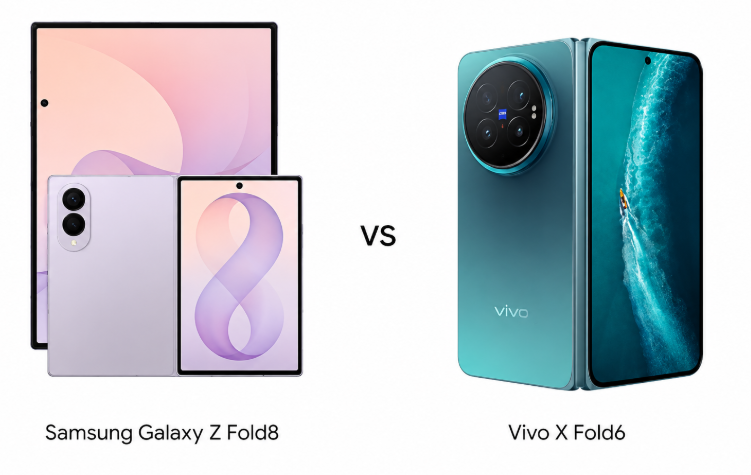
The biggest battle in the foldable world isn’t about who folds better, it’s about who delivers the complete package. Samsung arrives with years of software refinement, while Vivo answers with bigger hardware and aggressive value. This comparison breaks down where each flagship truly stands.
MajorFeatures:
Category
Samsung Galaxy Z Fold8
Vivo X Fold6
Winner
Design & Build
Gorilla Glass Victus Ceramic 3, Armor Aluminum, IP48
Reinforced build, IP58/IP59 protection
Vivo – Better durability
Main Display
7.6-inch Dynamic LTPO AMOLED 2X, 120Hz
8.02-inch LTPO AMOLED, Dolby Vision, 120Hz
Vivo – Larger, brighter display
Cover Display
5.5-inch LTPO AMOLED
6.51-inch LTPO AMOLED
Vivo – Bigger cover screen
Performance
Snapdragon 8 Elite Gen 5
Dimensity 9500 Super
Samsung – Better software optimisation
Software Support
Android 17, 7 major updates
Android 16, OriginOS 6 Fold
Samsung – Longer updates
RAM & Storage
Up to 16GB/1TB UFS 4.x
Up to 16GB/1TB UFS 4.1
Vivo – Faster storage
Battery
4,800mAh
7,000mAh
Vivo – Much larger battery
Charging
45W wired, 20W wireless
80W wired, 40W wireless
Vivo – Much faster charging
Rear Cameras
Dual 50MP
200MP + 50MP Periscope + 50MP Ultrawide
Vivo – More versatile camera system
Selfie Cameras
Dual 10MP, 4K video
Dual 20MP, 1080p video
Samsung – Better selfie video
Connectivity
Wi-Fi 7, Bluetooth 6.0, DeX, UWB
Wi-Fi 7, IR Blaster, DisplayPort
Samsung – Better productivity features
Price / Value
Around $1,900 / ₹180,000
Around $1,200 / ₹111,000
Vivo – Outstanding value
Disclaimer: Specs are based on available data. Actual performance may vary. Verify details from official sources before buying.
The Samsung Galaxy Z Fold8 and Vivo X Fold6 both represent premium foldable engineering, but they take different approaches. Samsung focuses on refinement with an Advanced Armor aluminum frame, Gorilla Glass Victus Ceramic 3 protection, and IP48 dust and water resistance. Its polished hinge mechanism and long-standing foldable experience make it feel exceptionally refined in daily use. Vivo counters with an aluminum frame, reinforced glass-fiber back, and stronger IP58/IP59 protection against dust and high-pressure water, giving it a more rugged appeal. Samsung feels like the more mature foldable, while Vivo prioritises durability and practicality.
Display Quality
Samsung offers a 7.6-inch Dynamic LTPO AMOLED 2X display with HDR10+, 120Hz refresh rate, and up to 3,000 nits peak brightness. The cover screen is equally premium with a 120Hz LTPO panel. Vivo steps ahead with a larger 8.02-inch LTPO AMOLED display supporting Dolby Vision, HDR Vivid, one billion colours, and a brighter 5,000-nit cover display. The larger canvas makes multitasking and media consumption more immersive, while Samsung’s panel remains among the most colour-accurate displays available.
Verdict
Samsung delivers the more polished foldable experience, but Vivo’s larger, brighter displays and stronger environmental protection make it slightly more appealing for users who prioritise entertainment and durability.
2. Specifications Including Battery
Performance
The Galaxy Z Fold8 is powered by Qualcomm’s Snapdragon 8 Elite Gen 5 paired with Adreno 840 graphics and promises seven major Android upgrades, making it one of the longest-supported Android devices available. Performance is exceptional for gaming, AI tasks, productivity, and Samsung DeX. Vivo equips the X Fold6 with the MediaTek Dimensity 9500 Super, UFS 4.1 storage, and OriginOS 6 Fold. The chipset is equally flagship-grade and should comfortably handle demanding workloads. Samsung’s software longevity gives it an important advantage for buyers planning to keep their device for several years.
Battery and Charging
Battery life strongly favours Vivo thanks to its massive 7,000mAh silicon-carbon battery. Combined with 80W wired and 40W wireless charging, it significantly reduces charging downtime. Samsung retains a 4,800mAh battery with 45W wired and 20W wireless charging, which feels conservative compared to newer foldable standards. While Samsung remains dependable for everyday use, Vivo clearly focuses on endurance.
Verdict
Samsung wins for long-term software support and ecosystem features, but Vivo offers substantially better battery life and much faster charging, making it the stronger all-round hardware package.
3. Camera
Main and Secondary Lenses
Samsung simplifies things with dual 50MP cameras covering wide and ultrawide photography. Image processing remains one of Samsung’s greatest strengths, producing vibrant colours, reliable HDR, and excellent video quality with support up to 8K and 4K at 120fps. Vivo takes a more ambitious approach with a 200MP main sensor, a 50MP Zeiss periscope telephoto offering 3x optical zoom, and a 50MP ultrawide camera. Zeiss optics, laser autofocus, and colour spectrum sensing provide a versatile flagship photography system that covers nearly every shooting scenario.
Selfie Camera
Samsung includes dual 10MP selfie cameras for both the inner and outer displays and supports 4K recording, making it better suited for video calls and content creation. Vivo uses higher-resolution 20MP cameras on both displays but limits video recording to 1080p. The additional detail is welcome, although Samsung’s superior video capability remains valuable.
Verdict
Vivo delivers the more complete rear camera system with better zoom versatility and higher-resolution hardware, while Samsung maintains an advantage for selfie video recording and consistent image processing.
4. Pricing
The Samsung Galaxy Z Fold8 is priced around $1,900 / ₹180,000, positioning it among the most expensive foldables available. The Vivo X Fold6 is priced around $1,200 / ₹111,000, creating a substantial price difference despite offering flagship hardware throughout. Vivo provides a larger display, a significantly bigger battery, faster charging, and a more versatile triple-camera system at a much lower asking price. Samsung, however, includes premium software optimisation, seven years of Android upgrades, DeX support, and a mature foldable ecosystem that many productivity users value.
Verdict
Samsung’s premium is justified for buyers seeking long-term software support and ecosystem integration. However, Vivo offers exceptional flagship hardware at a far lower price, making it one of the strongest value propositions in the premium foldable market.
Disclaimer: Prices are approximate and may vary based on country, region, launch timing, and applicable taxes. Always check whether the listed price is for a China unit or a global/international variant when purchasing.
5. Conclusion
Samsung distinguishes itself through One UI 9, seven generations of Android updates, Samsung DeX desktop mode, UWB support, and a highly refined foldable software experience. These features make it particularly attractive for productivity-focused users and those already invested in Samsung’s ecosystem. Vivo answers with a larger foldable display, Zeiss-powered triple cameras, a massive 7,000mAh silicon-carbon battery, Dolby Vision support, infrared remote functionality, and much faster wired and wireless charging. Both devices showcase flagship innovation, but they target different priorities rather than competing on identical strengths.
Verdict
Choose the Samsung Galaxy Z Fold8 for productivity, software longevity, and a polished foldable ecosystem that should remain competitive for years. Choose the Vivo X Fold6 if display size, battery life, camera versatility, and overall hardware value matter most.
Considering the significantly lower price and stronger hardware package, the Vivo X Fold6 offers the better overall value, while the Galaxy Z Fold8 remains the premium choice for users seeking the most refined software experience.
Disclaimer: This comparison is based on the specifications provided and is intended for general informational purposes. Actual performance, camera results, battery life, and overall experience may vary depending on real-world usage, software updates, and individual preferences.
We use cookies on our website to give you the most relevant experience by remembering your preferences and repeat visits. By clicking “Accept”, you consent to the use of ALL the cookies.
This website uses cookies to improve your experience while you navigate through the website. Out of these, the cookies that are categorized as necessary are stored on your browser as they are essential for the working of basic functionalities of the website. We also use third-party cookies that help us analyze and understand how you use this website. These cookies will be stored in your browser only with your consent. You also have the option to opt-out of these cookies. But opting out of some of these cookies may affect your browsing experience.
Necessary cookies are absolutely essential for the website to function properly. This category only includes cookies that ensures basic functionalities and security features of the website. These cookies do not store any personal information.
Any cookies that may not be particularly necessary for the website to function and is used specifically to collect user personal data via analytics, ads, other embedded contents are termed as non-necessary cookies. It is mandatory to procure user consent prior to running these cookies on your website.




Comments