
Add GIZMOCHINA as Preferred Source on Google
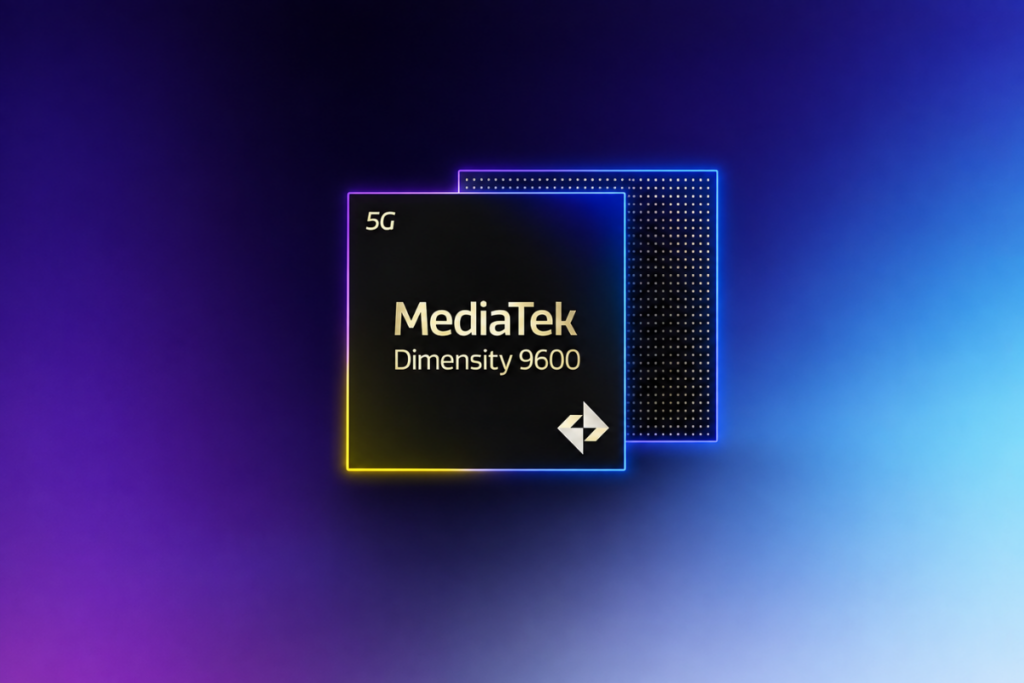
The Dimensity 9600 is expected to be unveiled in September and is poised to be one of the most significant upgrades in recent years. One of the biggest highlights will be the move to a 2nm node, which alone brings a major boost to performance and efficiency. Plus, a radical new CPU structure would strongly challenge Apple’s historical lead in single-core dominance.
The official debut is still at least a month away, but there have been extensive leaks about Dimensity 9600. So, we already know how big an upgrade this could be over last year’s Dimensity 9500.
Dimensity 9600 vs Dimensity 9500: The upgrades look promising
Note: A recent leak suggested MediaTek may not release the standard Dimensity 9600. It could be released as the Dimensity 9600 Pro, alongside the Dimensity 9600 Pro Max. Since we don’t have solid evidence yet, we’re still going with Dimensity 9600 for this article, but the leak is worth keeping in mind.
The move to a 2nm node
The Dimensity 9600 is almost certain to use TSMC’s latest and most advanced 2nm node. It won’t just be just a standard size reduction, but will mark a major architectural revolution in chip design in over a decade.
TSMC’s 2nm node switches to a completely new structure called GAA (Gate-All-Around), which offers near-perfect control over the flow of power and stops energy leakages that plague 3nm chips. The new node is expected to consume about 25–30% less power.
At the same power level, the Dimensity 9600 would consume much less power than its predecessor. This allows chips to offer higher peak performance, which is why the Dimensity 9600 is rumored to hit nearly 5.0 GHz in peak CPU speed.
Moving beyond the single super core limitation
The Dimensity 9500 and previous MediaTek chips have relied on a single super core for the heavy lifting and smaller cores for everything else. The upcoming Dimensity 9600 reportedly moves to a 2+3+3 design, featuring two super cores. This effectively doubles the chip’s capacity for burst tasks, such as launching heavy apps or processing instant computational photography.
The Dimensity 9600’s CPU cluster could look like:
- 2 x Cortex-X series super cores (codenamed “Canyon”)
- 3 x Cortex-A series performance cores (codenamed “Gelas-B”)
- 3 x Cortex-A series efficiency cores (codenamed “Gelas”)
The Dimensity 9600 Pro is rumored to hit 5.0 GHz in peak CPU speed, while the standard Dimensity 9600 is expected to get a lower-clocked version. However, both versions are expected to feature the same CPU layout.
Once it lands, expect the Dimensity 9600 to shake up rankings like our guide to best Snapdragon chipsets in 2026.
The new GPU brings essential upgrades
The Dimensity 9600 is expected to offer ARM’s next-generation Immortalis GPU, codenamed “Magni,” with hardware-level frame interpolation, allowing the chip to insert frames at the silicon level rather than through software tricks. This means games running at 60 fps can target 120 fps with better visuals and lower latency than software-based frame interpolation.
Ray tracing capabilities have also reportedly been enhanced to deliver more realistic lighting and shadows, bringing them closer to PC-and console-level experiences.
Major NPU upgrades tag along
The Dimensity 9600 is said to bring major upgrades to NPU architecture, specifically designed to elevate agentic AI capabilities. This could be why OpenAI is rumored to use the same chip in its upcoming agent-focused smartphone.
According to leaks, the Dimensity 9600 will introduce a Dual-NPU design that splits tasks between a high-power NPU for heavy generation and a low-power NPU for always-on listening and context awareness. The new chip is also expected to introduce a Neural Shader Scheduler, which will intelligently decide whether a task is suited for NPU or the GPU, to reduce power draw.
The Dimensity 9600 is also said to add hardware support for Scalable Matrix Extension 2 (SME2), which is expected to significantly accelerate the matrix math used by large language models (LLMs) like Gemini Nano.
Dimensity 9600 vs Dimensity 9500: Spec sheet
The spec sheet has been prepared based on the leaked details of Dimensity 9600. So, it’s better to consume the details with a pinch of salt.
| Dimensity 9600 (rumored) | Dimensity 9500 | |
| Launch | September 2026 | September 2025 |
| Process node | 2 nm (TSMC) | 3 nm (TSMC) |
| CPU | 2 x Cortex-X super cores (codenamed “Canyon”) 3 x Cortex-A performance cores (codenamed “Gelas-B”) 3 x Cortex-A efficiency cores (codenamed “Gelas”) | 1 x 4.21 GHz (C1-Ultra) 3 x 3.5 GHz (C1-Premium) 4 x 2.7 GHz (C1-Pro) |
| GPU | next-gen Immortalis GPU (codenamed “Magni”) hardware-based resolution upscaling improved ray tracing capabilities | Mali-G1 Ultra MP12 software-based frame interpolation ray tracing support |
| Memory | LPDDR5X | LPDDR5X |
| Storage | UFS 4.0 | UFS 4.0 |
We’ll update the post regularly as we receive more details. You can bookmark the page or join our Telegram channel to stay updated.


Comments