Advertisement

Add GIZMOCHINA as Preferred Source on Google

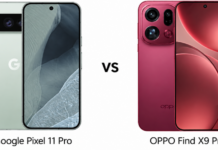
Google Pixel 11 Pro and iPhone 17 Pro represent two different approaches to the premium smartphone experience. Both offer 6.3-inch 120Hz OLED displays, flagship processors, versatile triple-camera systems, and long-term software support. The Pixel leans into AI, computational photography, and Android flexibility, while the iPhone emphasizes performance, video capabilities, and a tightly integrated ecosystem.

Major Features:

CategoryGoogle Pixel 11 ProiPhone 17 ProWinner
Display6.3-inch LTPO OLED, 120Hz, 3600 nits peak6.3-inch LTPO OLED, 120Hz, 3000 nits peakGoogle — Brighter display
BuildGorilla Glass Victus 2, aluminum frame, IP68Ceramic Shield 2, aluminum frame, IP68Apple — Stronger protection
PerformanceTensor G6, up to 16GB RAMA19 Pro, 12GB RAMApple — Faster performance
Storage256GB, 512GB, 1TB256GB, 512GB, 1TBGoogle — More RAM
Main Camera50MP main, 48MP ultrawide, 48MP 5x telephoto48MP main, 48MP ultrawide, 48MP 4x telephotoGoogle — Better zoom
VideoUp to 8K, 10-bit HDRUp to 4K 120fps, Dolby Vision, ProRes RAWApple — Better pro video
Selfie Camera42MP ultrawide, PDAF, 4K video18MP multi-aspect, PDAF, 4K videoGoogle — Higher resolution
Battery4850mAhUp to 4252mAhGoogle — Larger battery
Wireless Charging25W Qi2.2 magnetic25W MagSafe/Qi2Tie — Similar speeds
Unique FeaturesUltrasonic fingerprint, bypass charging, Pixel AIFace ID, LiDAR, MagSafe, spatial videoGoogle — More practical extras
PricePriced around $1,100 / ₹120,000Priced around $1,100 / ₹135,000Google — Better value
Disclaimer: Specs are based on available data. Actual performance may vary. Verify details from official sources before buying.

1. Design and Display

Build and Feel

The Pixel 11 Pro combines Gorilla Glass Victus 2 with an aluminum frame and carries an IP68 rating. The iPhone 17 Pro uses Ceramic Shield 2 on the front, an aluminum frame, and improved water resistance up to 6 meters. Both feel suitably premium, but the iPhone’s construction feels more refined. The Pixel’s ultrasonic fingerprint sensor is a practical advantage, especially for users who prefer quick biometric unlocking.

Both phones also support advanced connectivity features, including Wi-Fi 7, Bluetooth 6.0, NFC, UWB, and USB-C. The Pixel offers a more conventional Android experience, while the iPhone benefits from Apple’s broader hardware and software integration. For everyday usability, the Pixel’s fingerprint authentication feels more convenient, while the iPhone remains the more cohesive ecosystem choice.

Display Quality

Both phones use 6.3-inch LTPO OLED panels with 120Hz refresh rates. The Pixel reaches a claimed 3,600-nit peak brightness and offers HDR10+, while the iPhone reaches 3,000 nits and adds Dolby Vision alongside HDR10. The Pixel has the sharper panel on paper, but Apple’s anti-reflective coating improves outdoor visibility.

Verdict

The Pixel 11 Pro wins narrowly for display brightness and biometric convenience, while the iPhone 17 Pro counters with excellent protection and stronger ecosystem integration.

2. Specifications Including Battery

Performance

The Pixel 11 Pro uses Google’s Tensor G6 built on a 3nm process, paired with up to 16GB RAM. The iPhone 17 Pro uses Apple’s A19 Pro chip with 12GB RAM. Raw performance should favor the iPhone, particularly for demanding gaming and sustained workloads, while the Pixel’s hardware is optimized heavily around Google’s AI features and Android software.

The Pixel offers 256GB, 512GB, and 1TB storage options with UFS 4.x, while the iPhone provides the same capacities using NVMe storage. Both support seven major OS updates or extensive software support, but their priorities differ. The iPhone is the stronger choice for maximum processing performance, while Pixel hardware feels more purpose-built around AI-powered features.

Battery and Charging

The Pixel packs a 4,850mAh battery with 30W wired charging and 25W magnetic Qi2.2 wireless charging. The iPhone’s battery capacity varies by SIM configuration, while wired charging reaches 50% in 20 minutes and wireless charging supports up to 25W through MagSafe or Qi2. The Pixel has the larger battery, but Apple’s efficiency could narrow the practical gap.

The Pixel also supports reverse wired charging and bypass charging, giving it useful flexibility for accessories and sustained gaming. The iPhone responds with a more mature charging ecosystem. For charging versatility, the Pixel feels more practical, although neither phone offers class-leading wired charging speeds.

Verdict

The iPhone 17 Pro wins performance, while the Pixel 11 Pro takes the battery and charging versatility advantage. For power users, Apple’s chip is the stronger overall package.

3. Camera

Main and Secondary Lenses

The Pixel 11 Pro features a 50MP main camera, 48MP ultrawide, and 48MP periscope telephoto with 5x optical zoom. The iPhone 17 Pro uses 48MP sensors across its main, ultrawide, and telephoto cameras, with 4x optical zoom. Pixel’s 5x telephoto gives it an advantage for distant subjects, while Google’s computational photography tools add features such as Best Take, Zoom Enhance, Pixel Shift, and Ultra-HDR.

The iPhone counters with a much stronger professional video toolkit. It supports 4K recording at up to 120fps, Dolby Vision HDR, ProRes, ProRes RAW, Apple Log 2, and spatial video. The Pixel can record 8K video and offers 10-bit HDR, making it highly capable for everyday shooting. Still, the iPhone is the more compelling option for serious mobile videography.

Selfie Camera

Google equips the Pixel with a 42MP ultrawide selfie camera supporting PDAF and 4K video at 60fps. The iPhone uses an 18MP multi-aspect camera with PDAF, alongside its SL 3D sensor system for Face ID and depth features. Pixel offers substantially higher resolution, while Apple’s system provides sophisticated biometric and video capabilities.

Verdict

The Pixel 11 Pro looks stronger for computational photography and zoom, but the iPhone 17 Pro is the better all-round camera phone, particularly for professional-quality video.

4. Pricing

The Google Pixel 11 Pro is priced around $1,100 / ₹120,000, while the iPhone 17 Pro is priced around $1,100 / ₹135,000. That makes the Pixel considerably more attractive in the Indian market, despite both sitting in the same premium flagship class internationally.

Both phones provide 256GB as the starting storage option and offer larger 512GB and 1TB configurations. The Pixel also brings 16GB RAM at higher capacities, while the iPhone stays at 12GB. However, Apple’s hardware-software optimization means RAM figures alone do not determine real-world performance.

Is the price justified? 

The Pixel’s lower Indian pricing makes its combination of a bright LTPO display, large battery, 5x telephoto camera, 16GB RAM, and extensive AI features particularly compelling. It delivers a lot of flagship hardware without pushing the price as aggressively.

The iPhone 17 Pro justifies its premium through the A19 Pro chip, advanced video recording, Face ID, MagSafe, and Apple’s wider ecosystem. For buyers already invested in Apple devices, the additional cost can make more sense. For most buyers comparing hardware directly, however, the Pixel offers better value.

Verdict

The Pixel 11 Pro is the clear value winner. Its lower price, larger battery, stronger telephoto specification, and generous memory make the overall package easier to recommend.

Disclaimer:
Prices are approximate and may vary based on country, region, launch timing, and applicable taxes. Always check whether the listed price is for a China unit or a global/international variant when purchasing.

5. Conclusion

The Pixel 11 Pro stands out with its 3,600-nit display, 4,850mAh battery, 5x optical telephoto camera, ultrasonic fingerprint reader, 16GB RAM options, and Google-focused AI features. Its bypass charging and 25W Qi2.2 magnetic wireless charging add practical advantages that appeal to power users.

The iPhone 17 Pro counters with the A19 Pro chip, Face ID, LiDAR, MagSafe, Dolby Vision video, ProRes RAW, Apple Log 2, and spatial video capabilities. These features make it particularly attractive for creators and users already inside Apple’s ecosystem. However, the Pixel delivers a broader mix of hardware advantages for the money.

Verdict

Overall winner: Google Pixel 11 Pro. It offers the better combination of display, battery, zoom photography, AI features, charging flexibility, and value. The iPhone 17 Pro remains the better pick for performance, video, and Apple ecosystem users.


FAQs

1. Which phone is better for gaming, Pixel 11 Pro or iPhone 17 Pro?
The iPhone 17 Pro is better for gaming, thanks to the A19 Pro chip and stronger graphics performance.

2. Which phone takes better zoom photos?
The Pixel 11 Pro offers better zoom flexibility with its 5x optical periscope telephoto camera.

3. Which phone charges faster?
The iPhone 17 Pro reaches 50% in about 20 minutes with compatible wired charging.

4. Which phone is better for battery-heavy users?
The Pixel 11 Pro is better suited to heavy users, thanks to its larger battery and bypass charging support.

5. Which phone is better for long-term value?
The Pixel 11 Pro offers stronger hardware value, while the iPhone can be more valuable within Apple’s ecosystem.

Disclaimer: Prices, specifications, and availability may vary by region and retailer. Recommendations in this article are based on editorial opinion, feature-based value, and market positioning at the time of writing. Readers are advised to do their own research before making a purchase.

Read More:

Comments