
Add GIZMOCHINA as Preferred Source on Google
Huawei’s new Mate 90 Pro Max is turning heads for a pretty interesting reason: its Kirin 9050 Pro chip is surprisingly efficient in the real world, especially when you’re gaming.
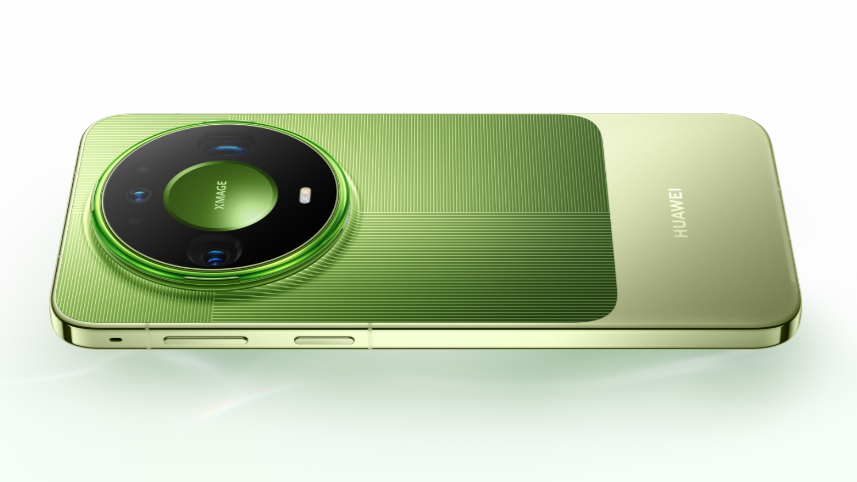
This is the first phone to ship with Huawei’s LogicFolding design, kind of like a stacked dual-layer processor. At the October 1 launch, the company said the whole system delivers a 31% overall performance boost compared with the previous generation. The CPU is a nine-core, four-cluster setup: one prime core, two big performance cores, four efficiency cores, and two tiny ultra-low-power cores. Official numbers put multi-core gains at around 23%, GPU rendering up 40%, and the NPU jumping a massive 140%.
The LogicFolding trick stacks two layers of logic circuits and connects them with dense hybrid bonding. That lets Huawei pack more transistors into the same space and push higher frequencies than a normal flat design. The regular Mate 90 and Mate 90 Pro use related (but non-stacked) Kirin 9030 and 9035 chips. Those still share the same core architecture and HarmonyOS optimizations, and Huawei claims roughly 27% and 20% gains respectively over the last Mate series.
Early independent testing, including teardowns and numbers from Geekerwan, backs up the stacked design and shows the Pro Max is especially strong on efficiency in native HarmonyOS games. In Genshin Impact running at 890P, the phone held full frame rates while drawing only about 4.2 W system power. That’s better than some Snapdragon 8 Elite Gen 5 devices and sits right next to the iPhone 17 Pro Max (A19 Pro) and the higher-end Snapdragon 8 Elite Extreme Gen 6 configs.
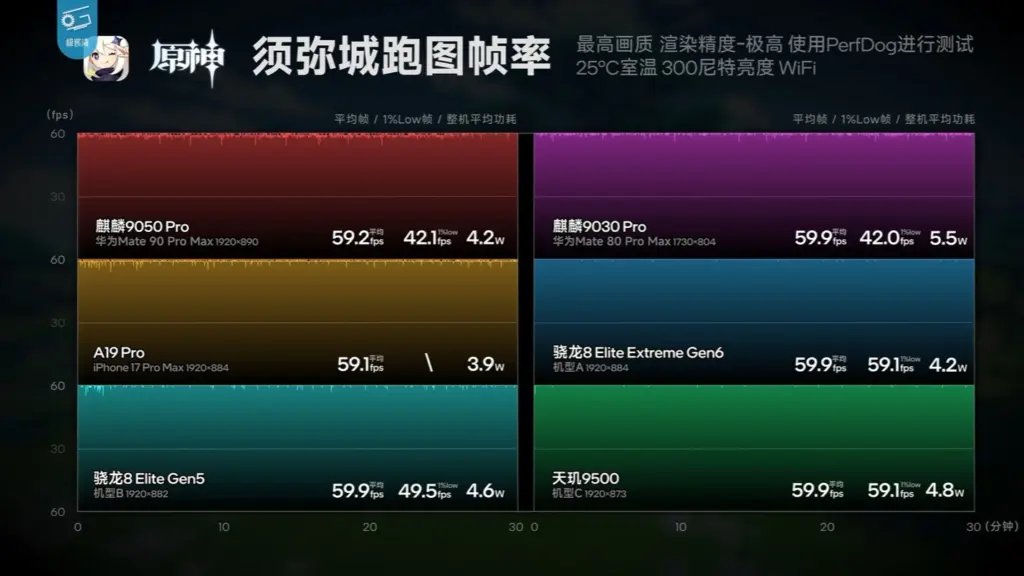
You see similar behavior in Wuthering Waves (still locked to lower resolution on the Huawei for now) and a few other titles. The catch? These results are with native ports. Games that have to go through translation layers still run fine, but the efficiency edge shrinks a bit.
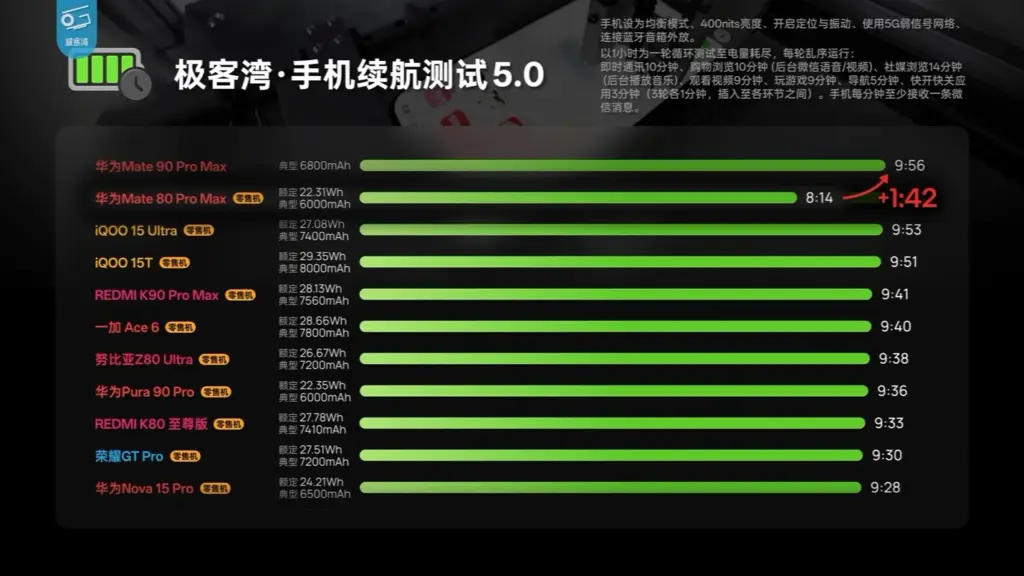
Pure synthetic CPU scores still trail the absolute top Snapdragon and Apple chips; manufacturing limits are still a thing, but the combination of the new architecture, deep system-level tuning, and the measured gaming efficiency is a clear step forward for Huawei’s in-house silicon.
If you care more about sustained performance and battery life in well-optimised native games than about topping every benchmark chart, the Mate 90 Pro Max makes a pretty strong case for what the Kirin 9050 Pro can do.
Don’t miss a thing! Join our Telegram community for instant updates and grab our free daily newsletter for the best tech stories!
For more daily updates, please visit our News Section.
(Source: Geekerwan)




Comments