Advertisement

Add GIZMOCHINA as Preferred Source on Google

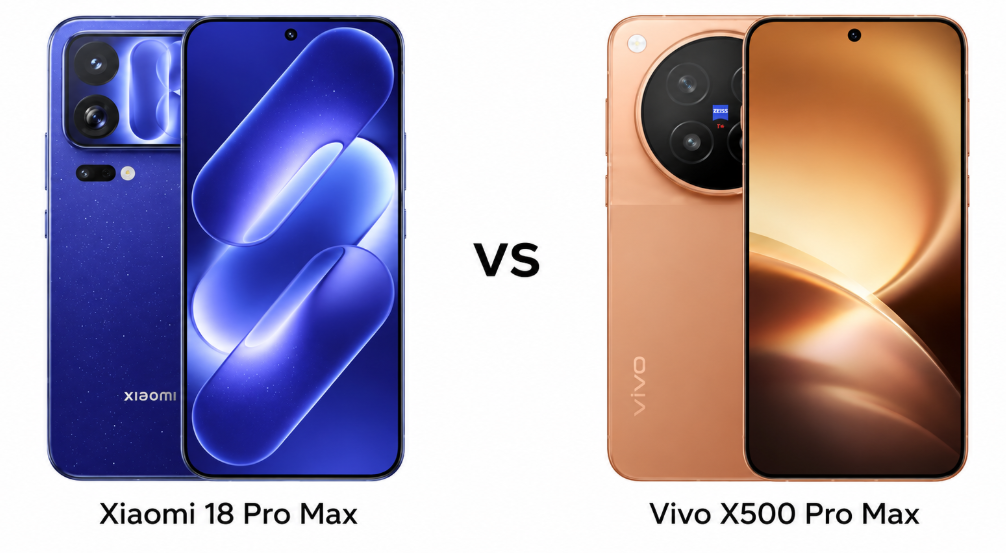
Xiaomi 18 Pro Max and Vivo X500 Pro Max target buyers who want a no-compromise Android flagship, but they take different routes to get there. Xiaomi emphasizes extreme performance, a huge battery, and a versatile secondary rear display, while Vivo focuses heavily on display sharpness and Zeiss-powered camera hardware. With both using 2nm-class flagship chipsets, this is a particularly close battle.
Major Features:

CategoryXiaomi 18 Pro MaxVivo X500 Pro MaxWinner
BuildDragon Crystal Glass 3, aluminum frame, IP68Glass/aluminum or glass-fiber reinforced plastic, IP68/IP69Xiaomi — premium build; Vivo — stronger IP protection
Display6.9-inch LTPO AMOLED, 120Hz, 4000 nits, Dolby Vision, HDR10+6.85-inch LTPO AMOLED, 144Hz, 4400 nits, Dolby Vision, HDR10+Vivo — higher resolution, refresh rate and peak brightness
Rear Display2.9-inch secondary AMOLED displayNo secondary displayXiaomi — unique rear display adds functionality
PerformanceSnapdragon 8 Elite Extreme Gen 6, Adreno 850Dimensity 9600 Pro, Mali-G2-Ultra-NXXiaomi — stronger flagship performance platform
RAMUp to 16GBUp to 16GBTie — both offer up to 16GB RAM
StorageUp to 1TB, UFS 4.1Up to 1TB, UFS 4.1Tie — matching storage technology and capacity
Main Camera200MP, f/1.7, OIS, 1/1.28-inch, Leica50MP, f/1.6, OIS, 1/1.28-inch, ZeissXiaomi — higher-resolution main camera and Leica system
Telephoto200MP periscope, 3.2x optical zoom, OIS200MP periscope, 3.5x optical zoom, OISVivo — larger telephoto sensor and longer optical zoom
Ultrawide50MP, 102°, PDAF50MP, 119°, AFVivo — wider field of view and autofocus
Camera FeaturesLeica optics, Laser AF, color spectrum sensorZeiss optics, T* coating, Laser AF, 3D LUTVivo — stronger imaging-focused feature set
VideoUp to 8K 30fps, 4K 120fps, Dolby Vision, 10-bit LOGUp to 8K 30fps, 4K 240fps, Dolby Vision, 10-bit LogVivo — higher-frame-rate video capability
Selfie Camera50MP AF, 4K 60fps, HDR10+50MP AF, 4K 60fpsXiaomi — stronger selfie-video features
Battery8500mAh8000mAhXiaomi — larger battery capacity
Wired Charging100W90WXiaomi — faster wired charging
Wireless Charging50W40WXiaomi — faster wireless charging
Reverse Charging27W reverse wirelessReverse wireless and reverse wiredVivo — more flexible reverse-charging options
AudioThree speakers, Dolby Atmos, Hi-ResStereo speakers, Hi-ResXiaomi — stronger speaker setup and Dolby Atmos
ConnectivityWi-Fi 7, Bluetooth 6.0, USB 3.2, DisplayPort, UWBWi-Fi 7, Bluetooth 6.0, USB 3.2Xiaomi — adds DisplayPort and UWB
BiometricsUltrasonic fingerprintUltrasonic fingerprintTie — both use ultrasonic in-display fingerprint sensors
SoftwareAndroid 17, HyperOS 4Android 17, OriginOS 7, up to 5 major OS updatesVivo — clearer long-term update commitment
PriceApprox. $1,200 / ₹150,000Approx. $1,000 / ₹100,000Vivo — significantly better value
OverallPerformance-focused flagship with huge battery and rear displayCamera-focused flagship with superior display and aggressive pricingVivo — better overall balance and value
Disclaimer: Specs are based on available data. Actual performance may vary. Verify details from official sources before buying.

1. Design and Display

Build and Feel

The Xiaomi 18 Pro Max combines Dragon Crystal Glass 3 with an aluminum frame and IP68 protection, giving it a premium, durable flagship construction. Its standout design element is the secondary 2.9-inch rear display, which adds functionality beyond the conventional smartphone format. Xiaomi also offers three-speaker Dolby Atmos audio and an ultrasonic fingerprint scanner.

The Vivo X500 Pro Max uses a glass-and-aluminum construction, with some versions offering a glass-fiber reinforced plastic back. Its IP68/IP69 rating provides stronger resistance against high-pressure water, while the Armor Glass front adds durability. Vivo’s design is more conventional, but that makes it feel cleaner and more focused. For everyday practicality, Vivo’s simpler approach is arguably easier to live with.

Display Quality

Xiaomi’s 6.9-inch LTPO AMOLED panel offers 120Hz refresh rate, Dolby Vision, HDR10+, BT.2020 and an impressive 4000-nit peak brightness. The 2160Hz PWM system should also appeal to users sensitive to display flicker. The rear display adds another layer of functionality for photography and quick interactions.

Vivo counters with a 6.85-inch LTPO AMOLED display running at up to 144Hz, alongside Dolby Vision, HDR10+ and a higher 4400-nit peak brightness. Its 1440p resolution also delivers noticeably greater pixel density. For pure viewing quality and fluidity, Vivo has the more impressive panel.

Verdict

Vivo wins the display battle with its sharper 144Hz panel and higher peak brightness, while Xiaomi counters with excellent HDR support and its useful rear display.

2. Specifications Including Battery

Performance

The Xiaomi 18 Pro Max uses the Snapdragon 8 Elite Extreme Gen 6, paired with up to 16GB RAM and UFS 4.1 storage. Its high-clocked CPU and Adreno 850 GPU make it particularly attractive for demanding gaming, sustained multitasking and heavy AI workloads. Wi-Fi 7, Bluetooth 6.0 and USB 3.2 with DisplayPort further strengthen its flagship credentials.

The Vivo X500 Pro Max relies on the Dimensity 9600 Pro, also built on a 2nm process, with up to 16GB RAM and UFS 4.1 storage. It is clearly designed as a performance flagship, while OriginOS 7 and long-term software support add practical appeal. Still, Xiaomi’s Snapdragon platform has the stronger enthusiast profile and connectivity package.

Battery and Charging

Xiaomi packs an enormous 8500mAh silicon-carbon battery with 100W wired charging, 50W wireless charging and 27W reverse wireless charging. That combination is difficult to fault and should deliver excellent endurance without sacrificing charging convenience. It is particularly compelling for power users who regularly push demanding apps and games.

Vivo uses an 8000mAh silicon-carbon battery with 90W wired and 40W wireless charging, plus reverse charging support. Endurance should still be excellent, but Xiaomi offers more capacity and faster wired charging. For users who prioritize battery longevity and rapid top-ups, Xiaomi feels like the more complete package.

Verdict

Xiaomi wins overall for performance and battery versatility, combining a stronger Snapdragon platform with a larger battery, faster wired charging and more capable connectivity.

3. Camera

Main and Secondary Lenses

Xiaomi pairs a 200MP main camera with a 200MP 3.2x periscope telephoto and 50MP ultrawide. Leica optics, laser autofocus and color-spectrum sensing add imaging sophistication, while 8K and Dolby Vision recording make it highly capable for video creators. The dual high-resolution camera setup is especially interesting for detailed zoom photography.

Vivo takes a different approach with a 50MP main camera, 200MP 3.5x periscope and 50MP ultrawide. The large telephoto sensor, Zeiss optics, T* coating and multidirectional PDAF give it a strong portrait and zoom proposition. Its ultrawide also offers a wider field of view. Vivo arguably has the more photography-focused camera system.

Selfie Camera

The Xiaomi 18 Pro Max features a 50MP autofocus selfie camera capable of 4K recording at 60fps, with HDR10+ and gyro-EIS. That makes it well suited to creators who regularly record themselves or produce social-media video.

Vivo also uses a 50MP autofocus selfie camera, but its implementation has a slightly wider aperture and larger pixel size. It supports 4K recording at 60fps, although the specification list does not include the same HDR10+ support. Xiaomi therefore has the stronger video-oriented selfie feature set.

Verdict

Vivo wins the camera battle with its large 200MP telephoto, Zeiss imaging system and wider ultrawide, while Xiaomi remains an excellent choice for high-resolution photography and advanced video recording.

4. Pricing

The Xiaomi 18 Pro Max is priced around $1,200 or ₹150,000, placing it firmly in premium flagship territory. The higher asking price reflects its Snapdragon performance platform, enormous battery, 100W charging, Leica camera system and unusual rear display. It is positioned as a feature-packed flagship rather than a value-focused alternative.

The Vivo X500 Pro Max is priced around $1,000 or ₹100,000, making it significantly more affordable based on the supplied pricing. Despite the lower price, it retains a 2nm flagship chipset, 200MP telephoto, 144Hz AMOLED display, 8000mAh battery and Zeiss imaging hardware. That makes the Vivo considerably more aggressive on specifications per dollar.

Is the price justified?

Xiaomi’s premium is easier to justify for buyers who specifically want maximum performance, 100W charging, the larger battery and its secondary rear display. However, those features will not matter equally to every buyer.

Vivo delivers a more balanced flagship experience for less money. Its sharper display and sophisticated camera hardware directly benefit everyday use, while its performance remains firmly in flagship territory. For most buyers, the lower price makes Vivo the smarter purchase.

Verdict

Vivo offers better value for money, delivering a flagship-grade display, camera system and performance platform at a substantially lower price than Xiaomi.

Disclaimer:
Prices are approximate and may vary based on country, region, launch timing, and applicable taxes. Always check whether the listed price is for a China unit or a global/international variant when purchasing.

5. Conclusion

The Xiaomi 18 Pro Max stands out with its 2.9-inch rear display, Snapdragon 8 Elite Extreme Gen 6, 8500mAh battery, 100W wired charging and three-speaker Dolby Atmos system. It is the more extreme specification package and particularly appealing to performance-focused users.

The Vivo X500 Pro Max counters with a 144Hz high-resolution display, 4400-nit peak brightness, Zeiss T* optics, a large-sensor 200MP telephoto and IP68/IP69 protection. Its combination of imaging capability and lower pricing gives it broader appeal. For most consumers, the Vivo strikes the better balance.

Verdict

Overall winner: Vivo X500 Pro Max. It delivers the better display and camera package while costing less. Xiaomi wins performance and battery versatility, but Vivo offers the stronger overall flagship value.

Disclaimer: Prices, specifications, and availability may vary by region and retailer. Recommendations in this article are based on editorial opinion, feature-based value, and market positioning at the time of writing. Readers are advised to do their own research before making a purchase.

Read More:

Comments