
Add GIZMOCHINA as Preferred Source on Google
Huawei is claiming a pretty big win on home turf. The company says its Ascend AI chips have now overtaken Nvidia’s sales inside China. That’s a bold statement, and it lines up with Beijing’s bigger push to reduce its reliance on foreign semiconductor tech while US export restrictions keep tightening.
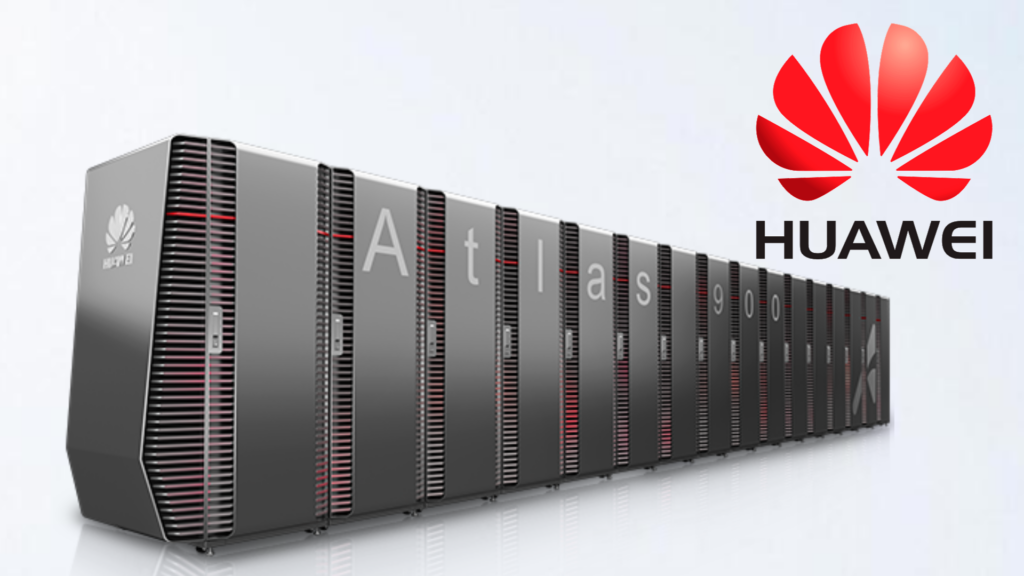
Rotating chairman Eric Xu made the claim in a transcript released after the Huawei Connect conference. He didn’t sugarcoat the performance gap: Ascend chips still trail Nvidia on raw single-chip power. Analysts say the latest versions only deliver a fraction of what Nvidia’s top silicon can do.
Huawei’s answer? Volume and system-level scale. Xu’s argument is basically that having plenty of domestic chips available beats having the absolute fastest ones if those can be cut off by sanctions at any moment.
At the same event, Huawei showed off the Atlas 950 SuperPoD, which runs on its new Peerium architecture. Peerium drops the old master-slave setup. Instead, it treats CPUs, NPUs, memory, SSDs, network cards, and switches as equals and links them all through UnifiedBus interconnects.
Supply is still the real bottleneck. Xu admitted Huawei can’t even keep up with Chinese demand right now, so there’s no plan for big international exports. A few countries with urgent needs get limited volumes, but that’s about it.
On the manufacturing side, consumer chief Richard Yu was more blunt. Advanced EUV lithography machines are still off-limits, so China is stuck with DUV processes for now. Huawei’s workaround is something called LogicFolding, part of its Tau-law approach. It’s already in the Kirin 9050 chips that power the Mate 90 Pro Max. The company is shooting for transistor densities that could rival a 1.4 nm process by 2031, ambitious given where production actually stands today.
Software is the other half of the independence story. HarmonyOS now runs on phones, tablets, wearables, PCs, and cars. Huawei says it’s on more than 90 million devices, with 450,000 apps and services and 11 million developers. Yu hinted that a gradual global push is on the table, and they’re positioning HarmonyOS as a possible third major mobile ecosystem next to iOS and Android, even though earlier attempts like Windows Phone and Symbian didn’t exactly stick.
Don’t miss a thing! Join our Telegram community for instant updates and grab our free daily newsletter for the best tech stories!
For more daily updates, please visit our News Section.
(Source: Huawei)


Comments