
Add GIZMOCHINA on Google:
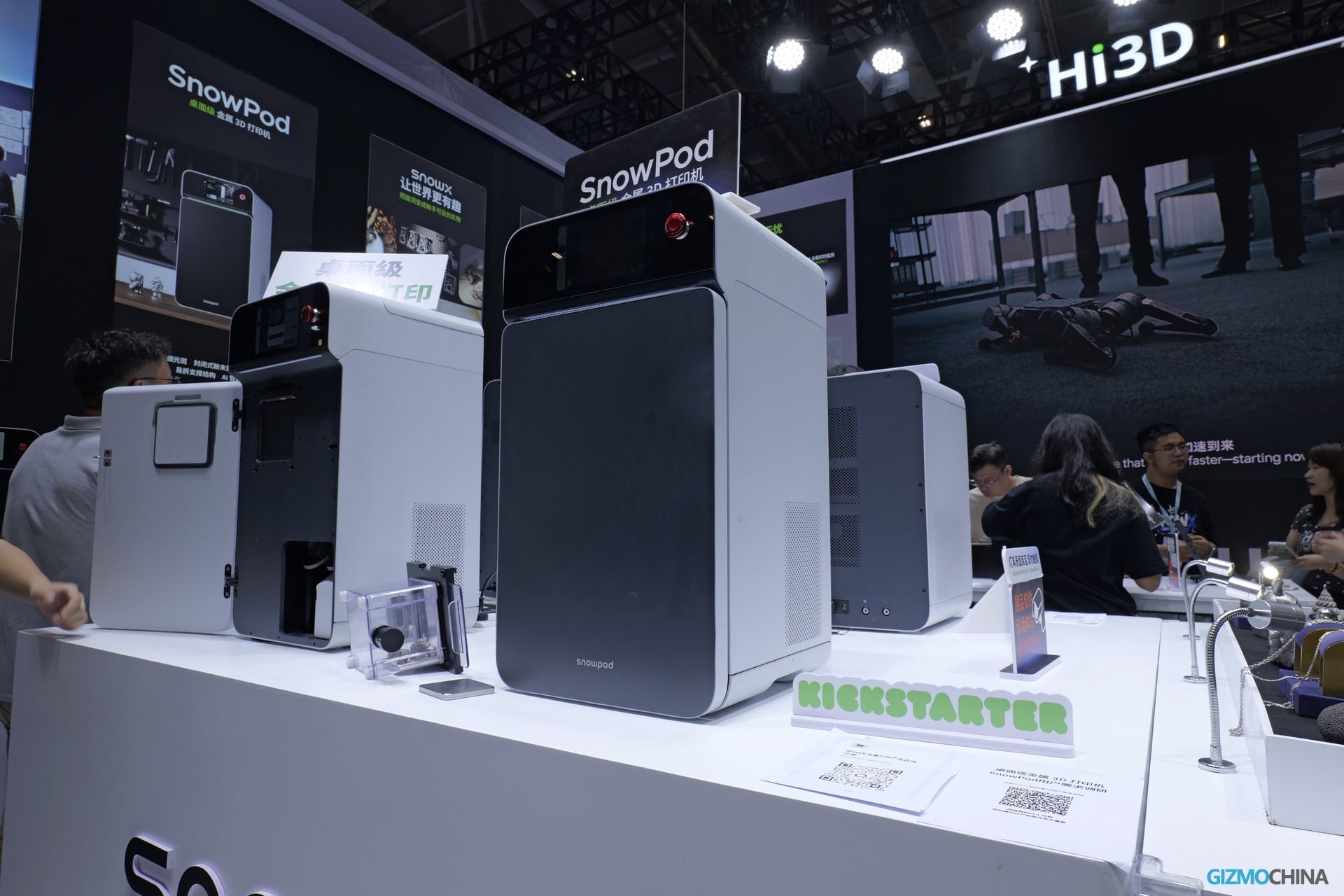
At TCT Shenzhen, SnowX wasn’t showing a mockup. The SnowPod was mid-build on the booth table — a laser fusing 316L stainless steel, layer by layer, inside a box the size of a PC tower. The Kickstarter price: US$5,299.
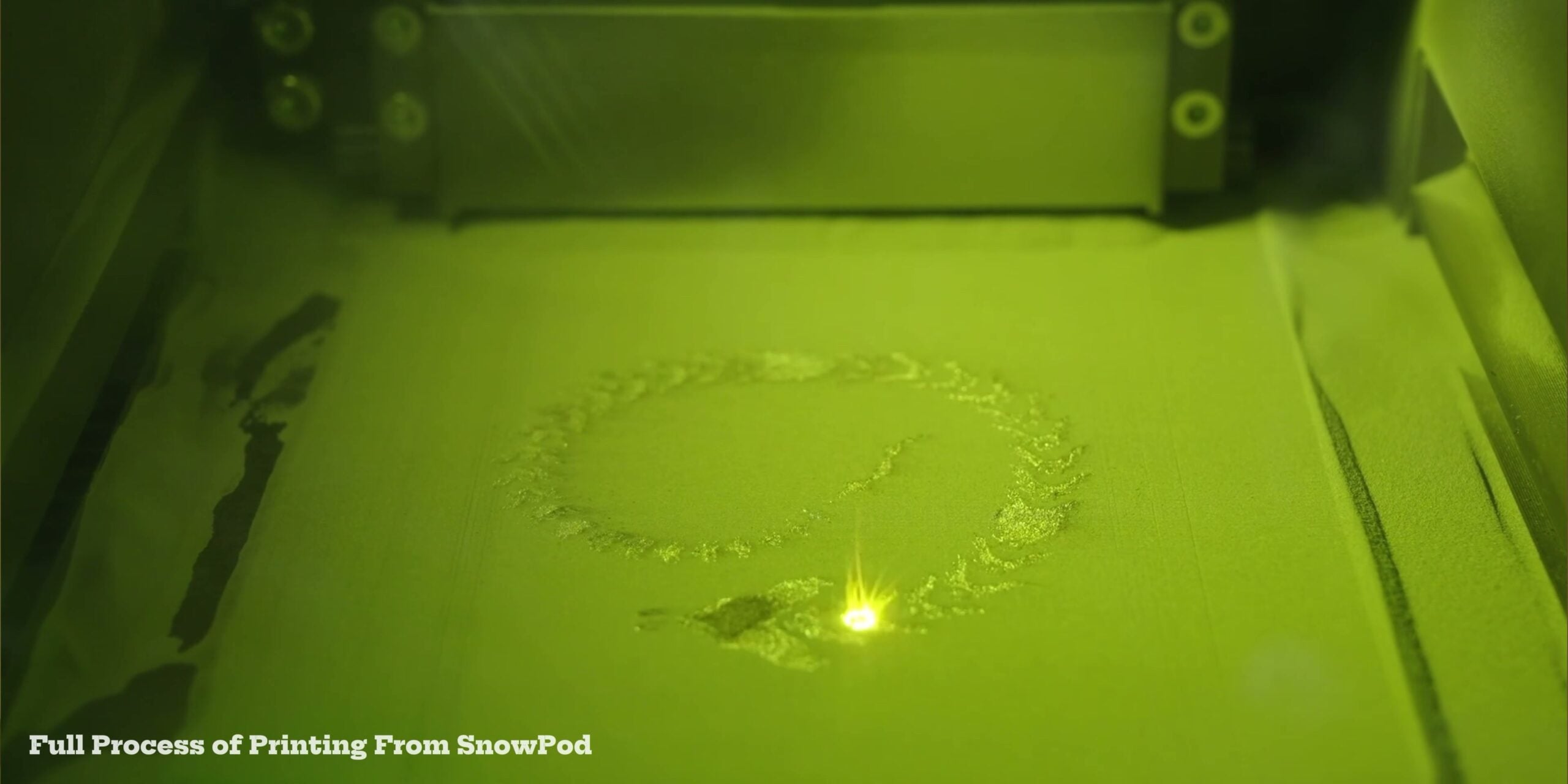
Shenzhen, China — Most metal printing stands at a trade show give you a machine behind glass and a spec sheet on an easel. The SnowX booth gave you a working printer. Through the front window of the SnowPod, a laser traced across a bed of stainless steel powder, fusing one thin slice at a time, with the part visibly growing in the chamber.
“It’s actually printing right now,” said Fangda Xu, SnowX’s CEO, pointing at the window. “The principle behind it is a powder-based technology called laser powder bed fusion.”
A Metal Printer for the Workbench
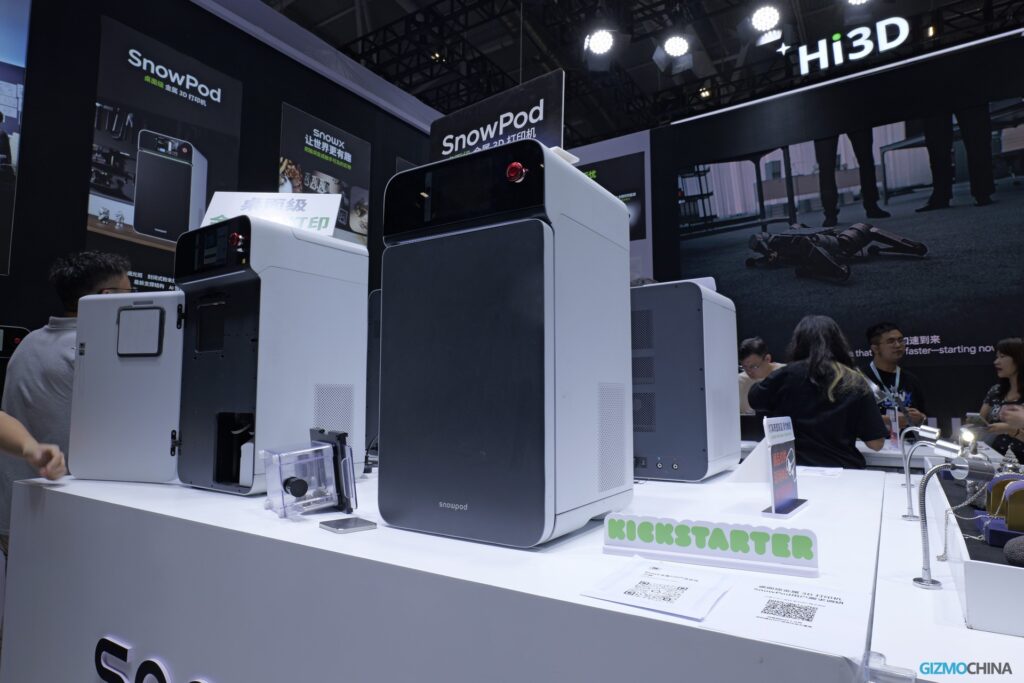
The SnowPod is a compact selective laser melting (SLM) machine housed in a 360 × 360 × 660 mm enclosure weighing 40 kg. Its build volume is 80 × 80 × 100 mm, making it less a miniature production machine than a tool for single parts, jewelry, prototypes and small mechanical components.
What separates it from a shrunken industrial printer is the packaging. Powder arrives in sealed cartridges. The chamber stays enclosed What separates it from a shrunken industrial printer is the packaging. Powder arrives in sealed cartridges, and the chamber remains enclosed through the print and retrieval process. Air quality, including PM2.5 levels, is monitored, with an interlock designed to pause the machine if readings move outside operating limits. SnowX has also developed its own nitrogen generator, the NitroPod, for workshops without a dedicated nitrogen supply.
That combination — sealed powder, on-demand nitrogen, breakaway supports, in-house slicing software — is the actual product. The laser is almost the easy part.

“Here is our machine, the SnowPod. I think it’s the first of its kind — that’s our metal 3D printer.”
Fangda Xu, CEO, SnowX
Inside the Print
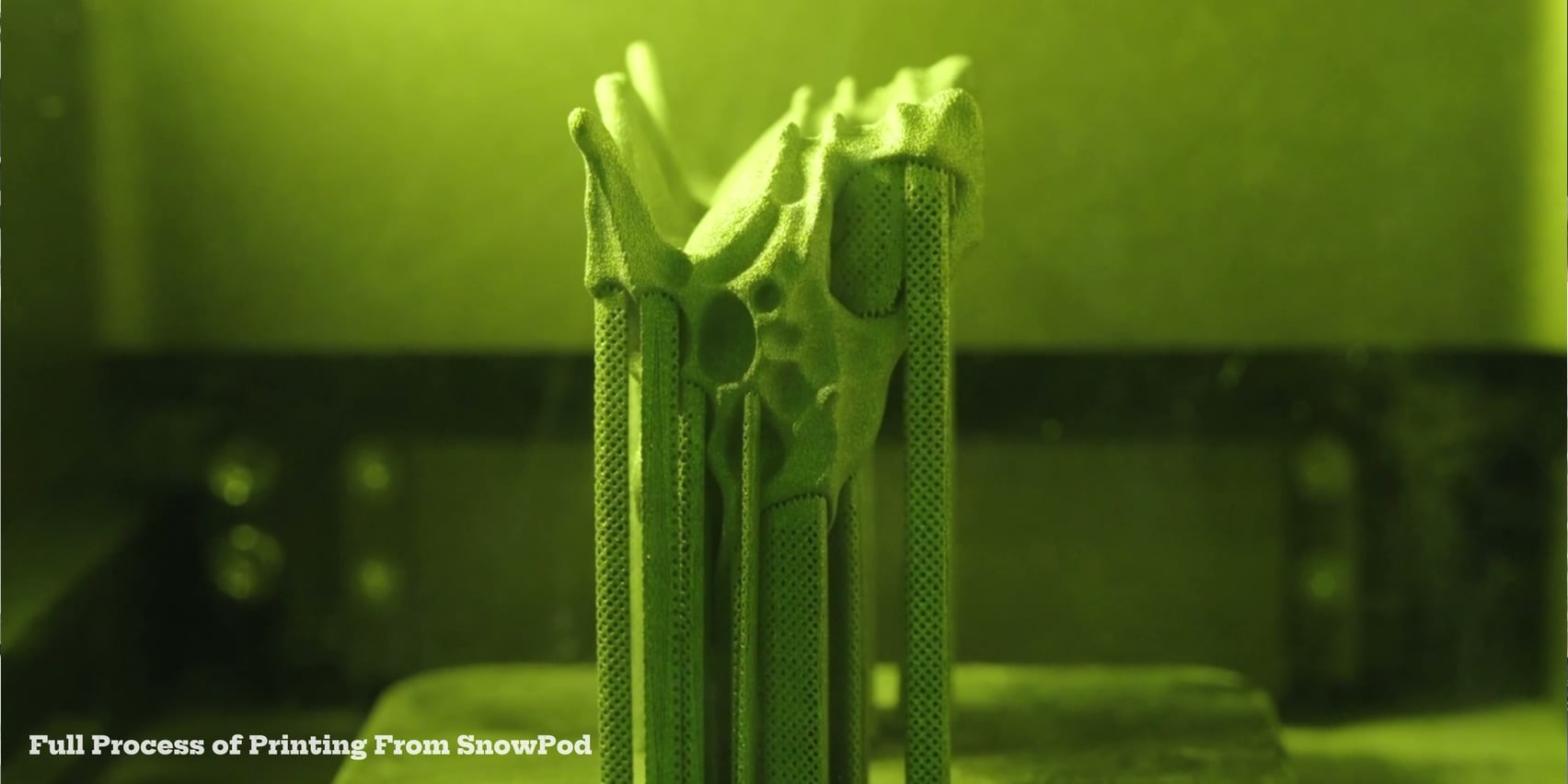
The process follows the SLM approach. A recoater spreads a thin layer of metal powder across the build plate, and a laser melts the powder wherever the digital slice calls for material. The plate lowers, fresh powder is spread, and the cycle repeats until the part is built inside a bed of loose powder.
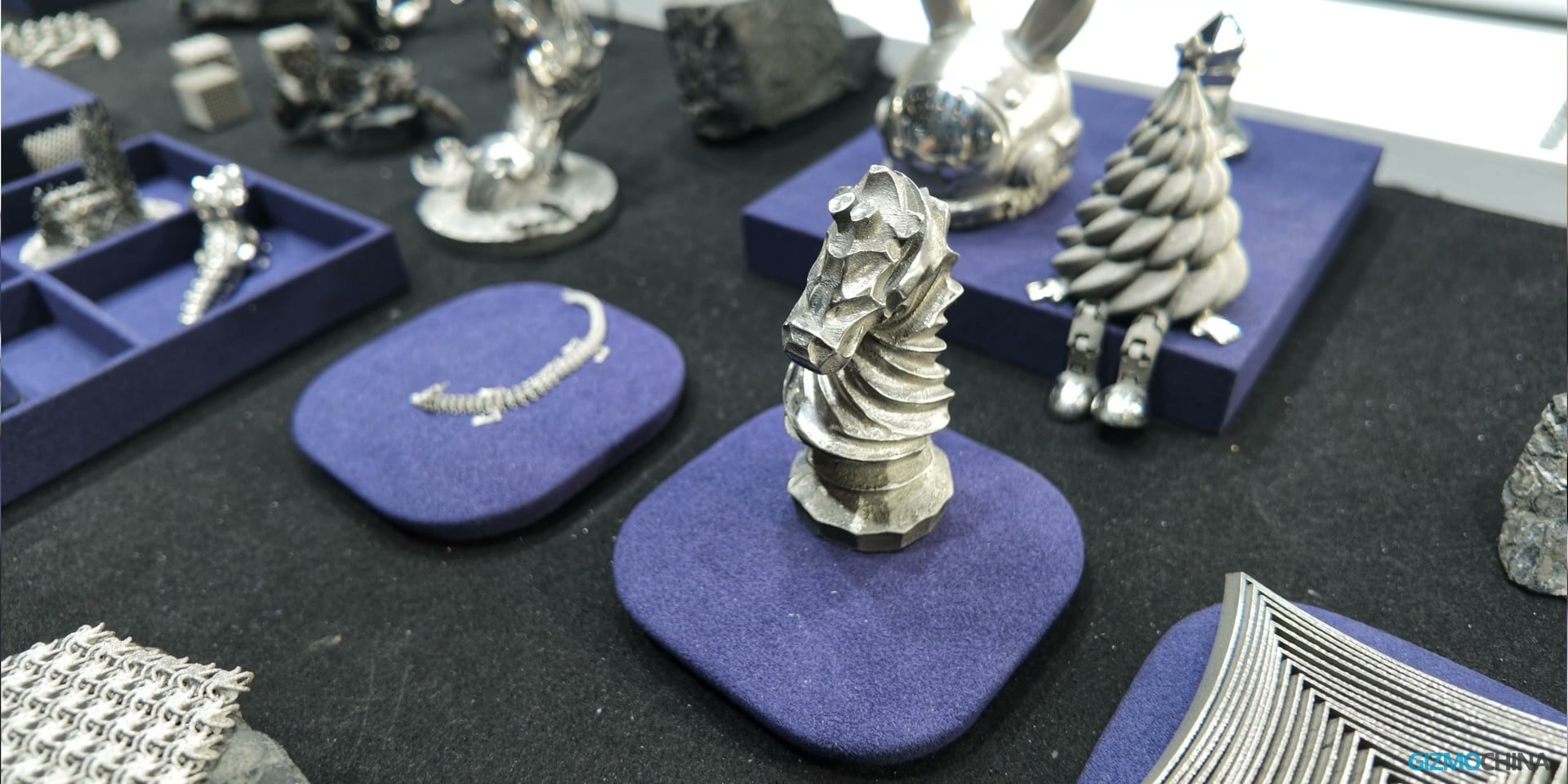
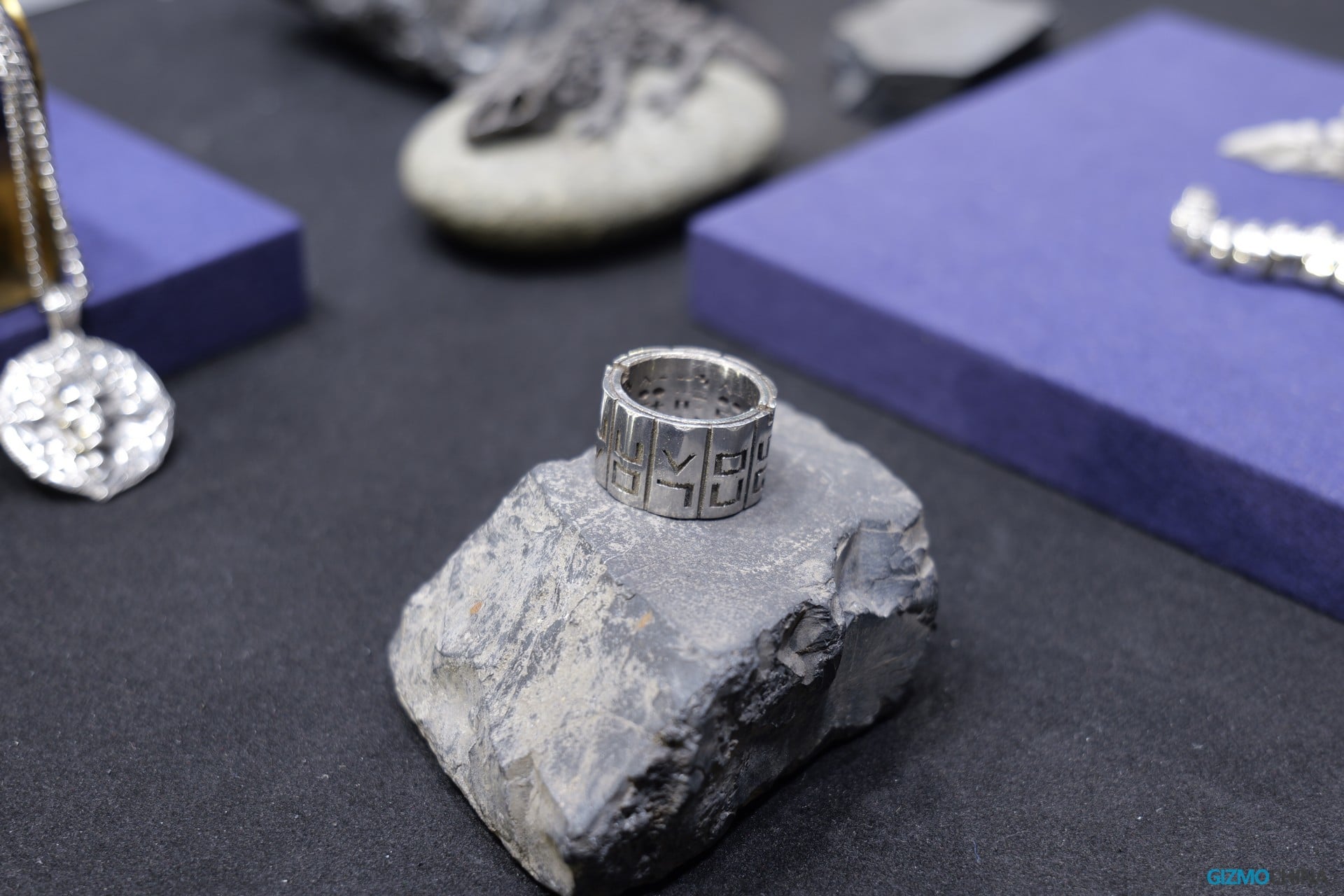
“It can rotate right after the printing,” Xu said of a print-in-place assembly displayed at the booth. Once printing is complete, SnowX removes the part from the build plate and strips away the supports easily. For a smoother surface, the part can then undergo additional post-processing, such as polishing.
The machine uses a 200 W fiber laser with an approximately 40 µm spot, adjustable layer thicknesses of 30–60 µm, and 3 µm Z-axis precision. SnowX reports dimensional accuracy of approximately ±0.05 mm based on its own laboratory measurements, with results varying according to part geometry.
The machine uses a 200 W fiber laser with an approximately 40 µm spot, adjustable layer thicknesses of 30–60 µm, and 3 µm Z-axis precision. SnowX reports dimensional accuracy of approximately ±0.05 mm based on its own laboratory measurements, with results varying according to part geometry.
From File to Finished Part
The workflow is designed to be straightforward, with the key steps handled through SnowX’s own software and built-in systems.
Before the print. SnowPath, SnowX’s own slicer, handles file import, support generation, slicing and job dispatch. The listed formats include STL, STEP, 3MF and SVG. Users can choose a standard, quality or efficiency profile before sending the job to the printer. The software comes with the machine. Xu’s summary: “Import, slice, print.”
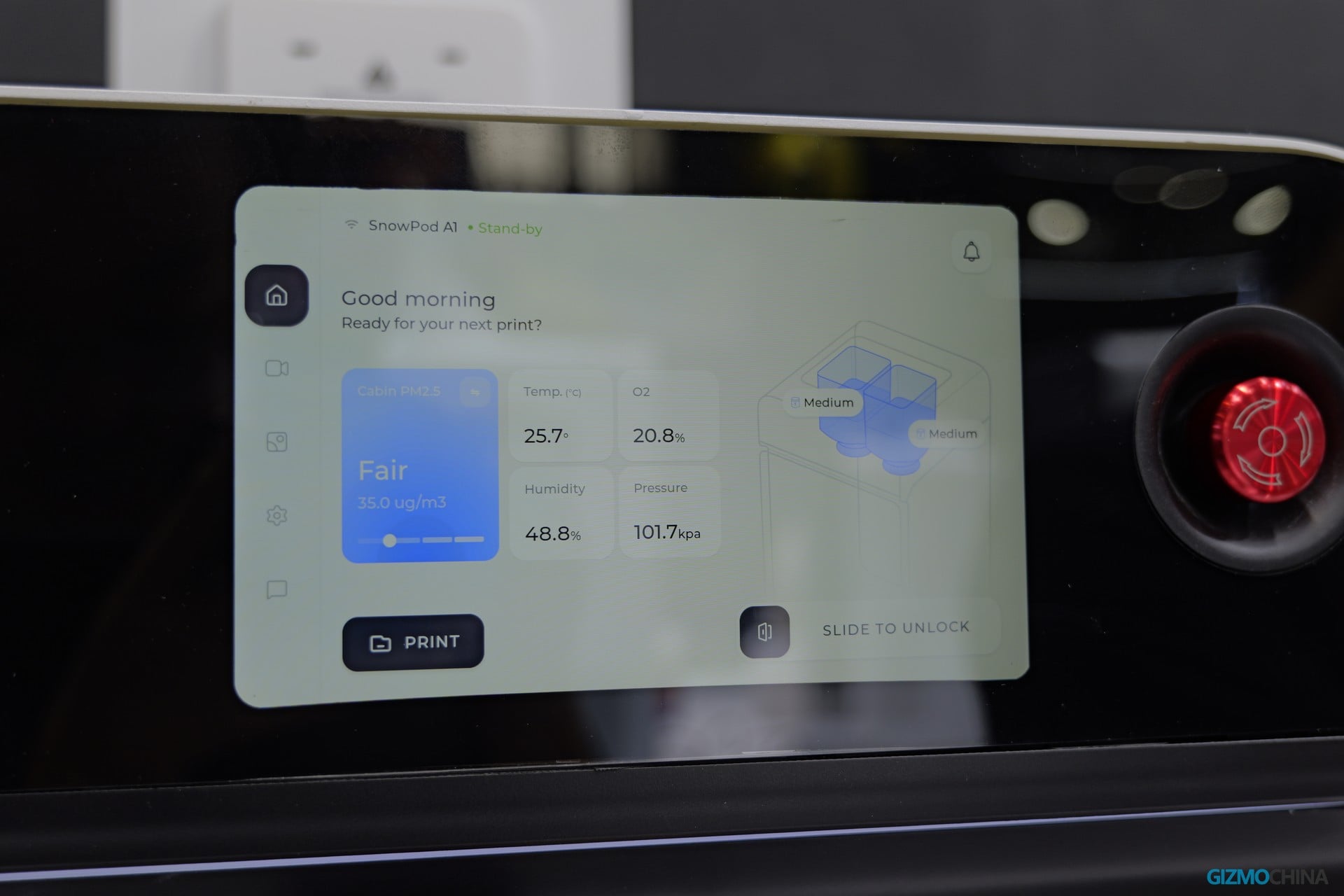
Starting up. The machine runs its checks before printing, including a laser-source check and a broader subsystem inspection, followed by an air purge. Nitrogen is introduced to reduce the oxygen level in the chamber for the printing process.
During the build. A camera monitors the chamber, while AI-based vision is designed to flag potential problems such as lifting edges or insufficient powder delivery. PM2.5, gas, temperature and humidity sensors monitor conditions throughout the build. A hardware interlock is designed to pause the printer if monitored air-quality conditions fall outside configured limits.
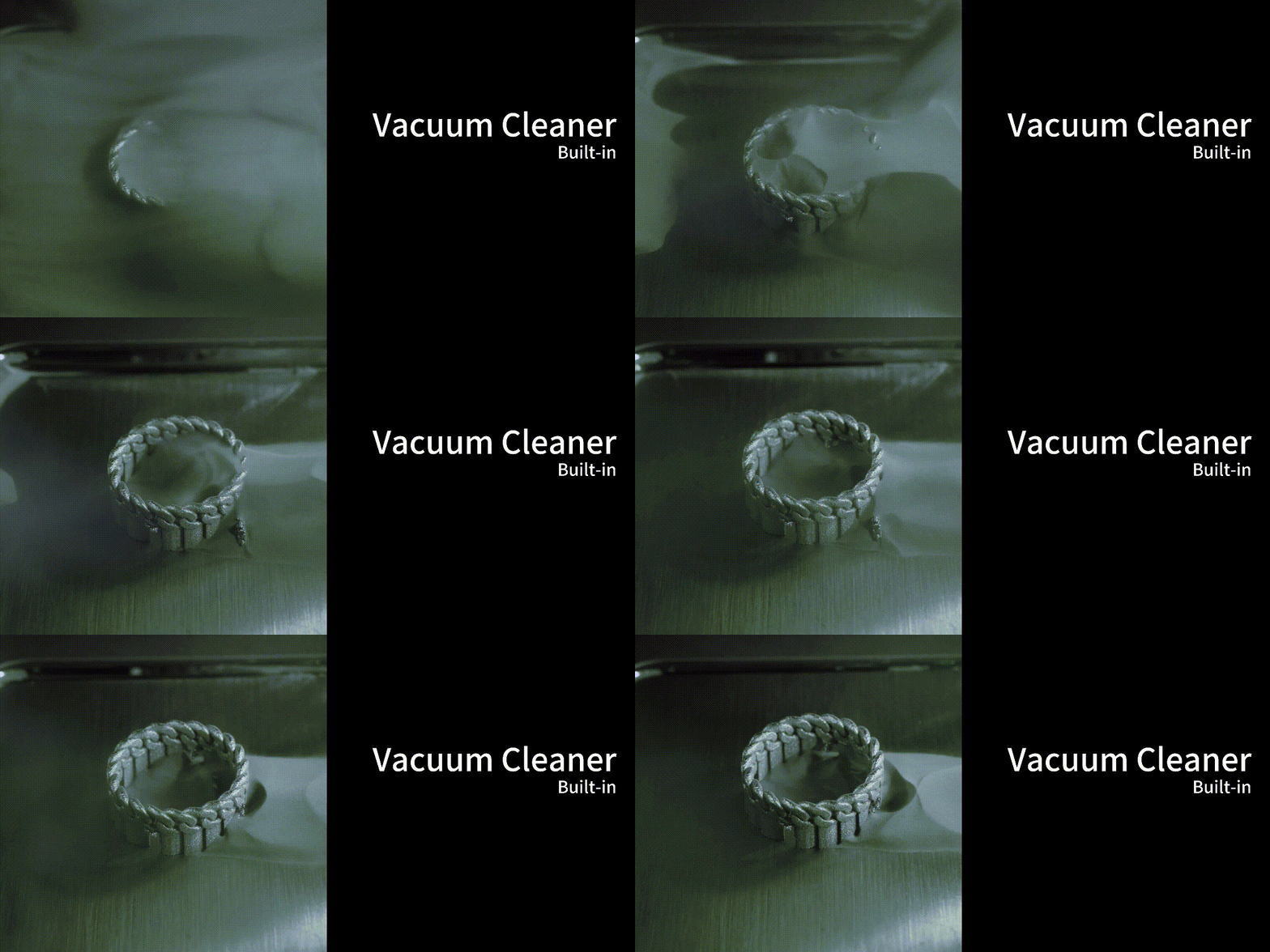
After the build. A vacuum system recovers loose powder from the chamber for reuse. The part is transferred through a sealed transfer box: an inner door opens, the plate is pushed across, and the door closes. Add water and the residual powder becomes a slurry, safe to open.
SnowX recommends protective equipment, including laser goggles and nitrile gloves, and anti-static clothing for maintenance.
Supports, Material & Real cost
Removing parts from the build plate and taking off supports can be major hurdles for desktop metal printing. Industrial SLM parts are often attached to their build plates and need to be cut free using equipment such as a wire cutting machine — a significant hurdle for small workshops that do not have one.
SnowX’s answer is a patented support structure designed to hold the part firmly during printing while being easier to break away afterward. At the booth, Xu used pliers to remove a support from a sample, demonstrating the approach in practice.
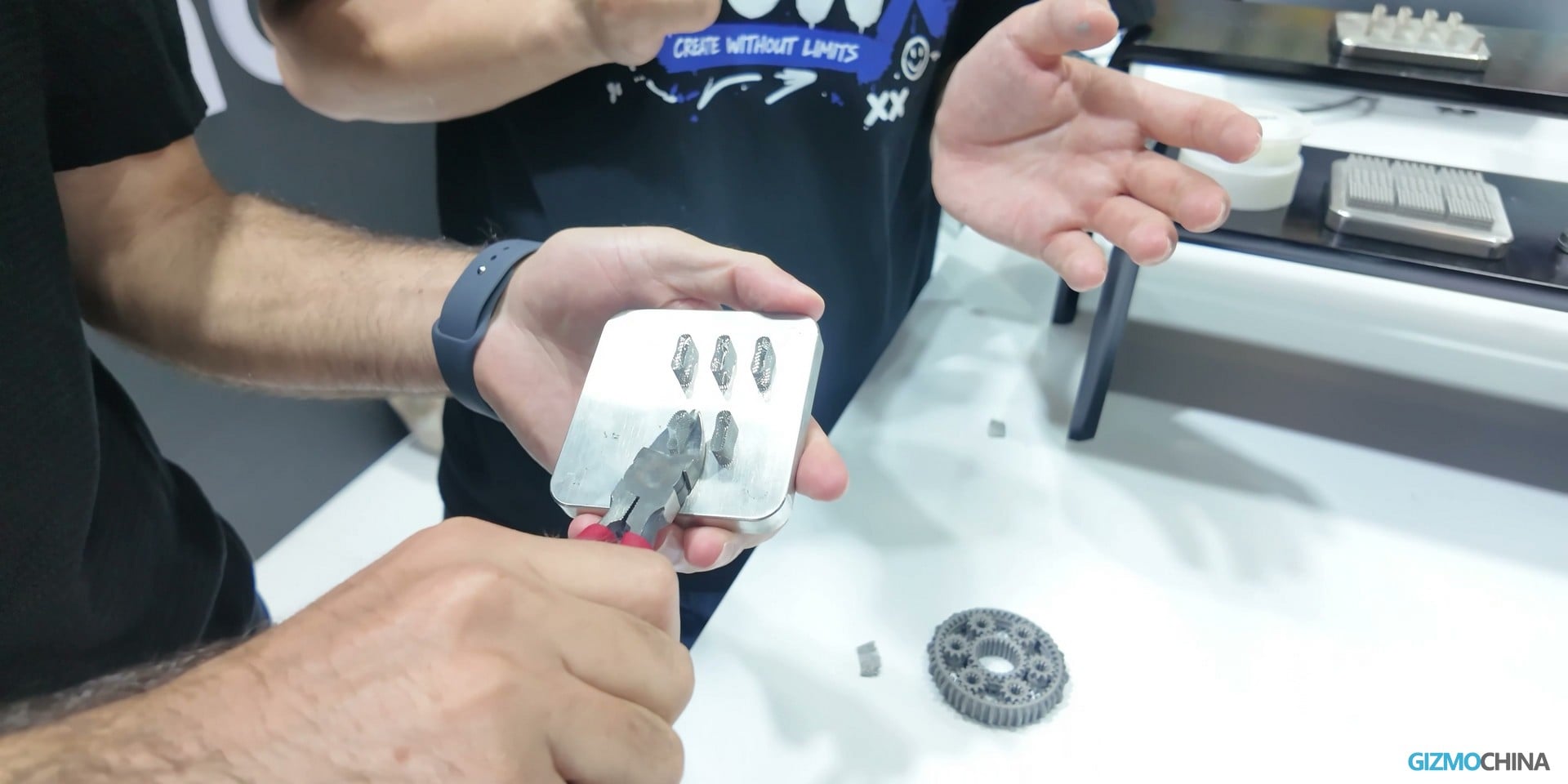
At launch, the SnowPod is specified for 316L stainless steel only. Copper alloy is planned — the SnowX’s CEO, Xu says additional materials will arrive through software and process updates. Worth noting for jewelry makers: 316L contains nickel, and SnowX says it will publish more detail after testing.
Consumables are where the arithmetic gets interesting. Xu quoted roughly US$50 for a 2.5 kg stainless cartridge, which puts a 20–25 g ring at about 50 cents of powder. SnowX reports powder recovery of more than 90%, allowing unused powder to be collected for reuse.
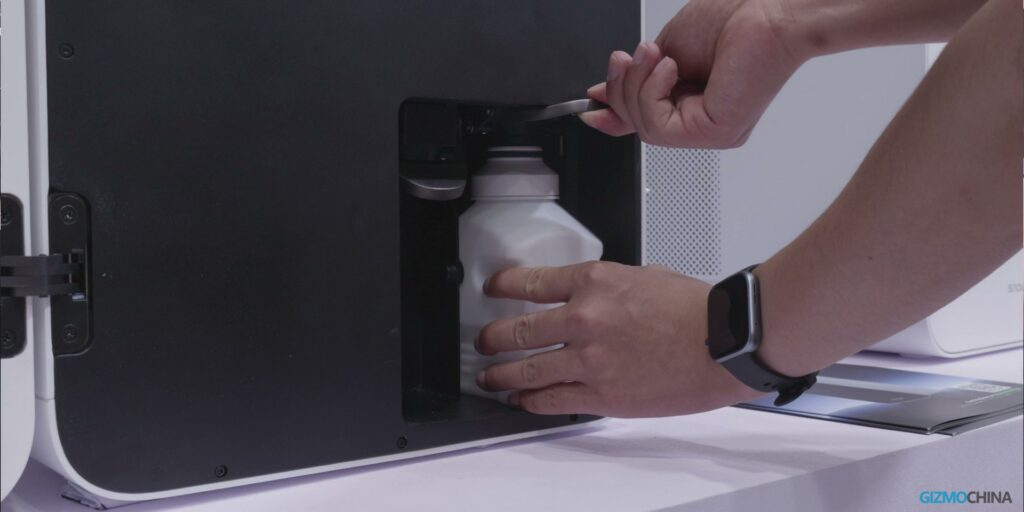
The printer builds at a rate of roughly 1 cm in height per hour, according to Xu. The 44 mm name model queued at the booth took 3 hours and 44 minutes to print.
NitroPod, Two bundles & price
NitroPod is the printer’s quieter half — a generator that separates nitrogen from ambient air and supplies it to the chamber. SnowX quotes a nitrogen purity of 99.9% at a flow rate of 3 L/min. Workshops that already have a suitable nitrogen supply can skip the add-on; for others, NitroPod is designed to replace the need for a separate nitrogen cylinder.
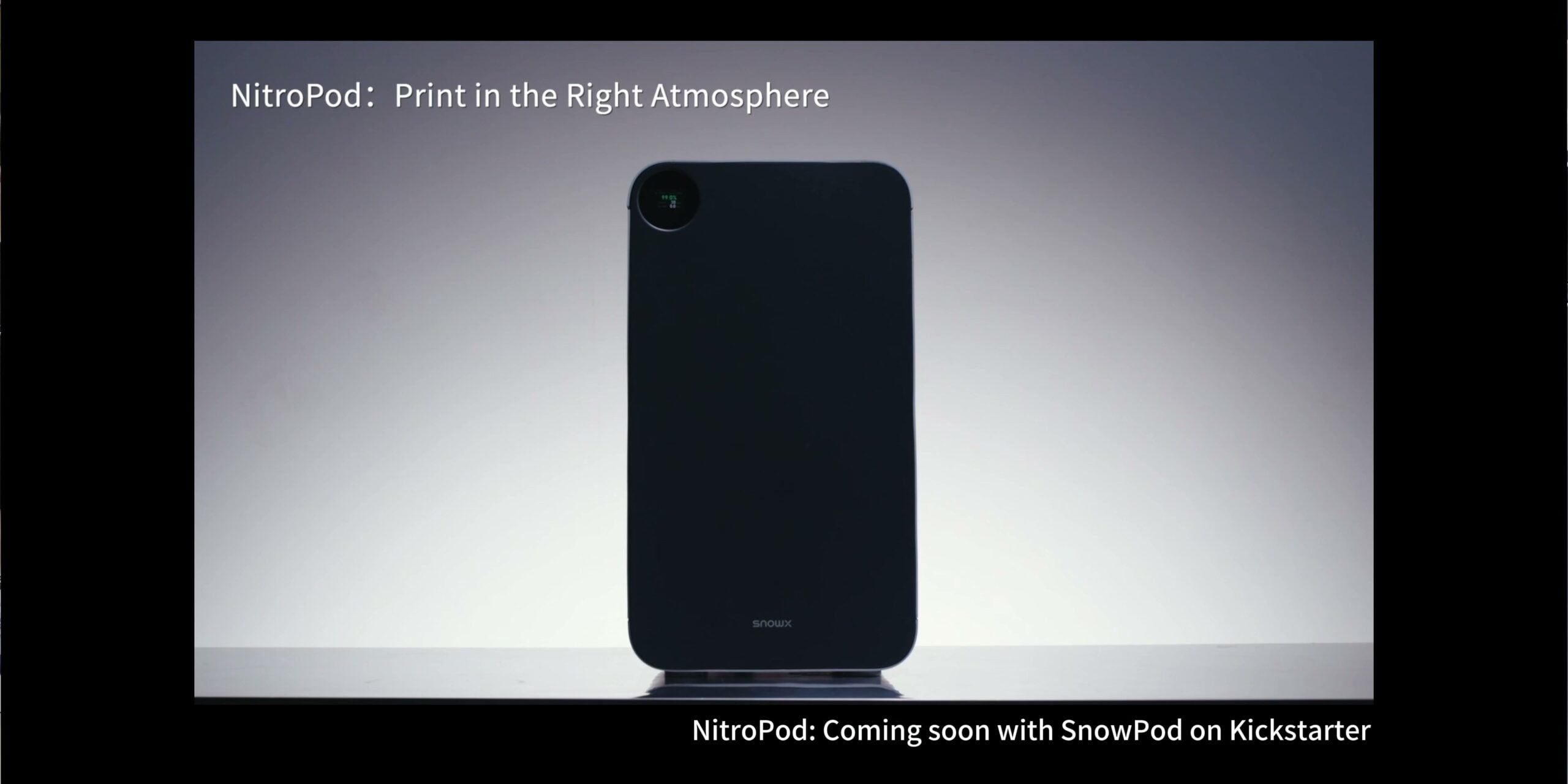
SnowX has now published planned Kickstarter pricing for both packages: $5,299 for the SnowPod Printer Kit, $5,899 for the SnowPod with NitroPod. A refundable $50 deposit through SnowX’s reservation page takes the VIP price down to $4,999 and $5,599 respectively.

Verdict
The SnowPod is the most complete attempt at desktop metal printing we have seen at a Chinese trade show, and not because the laser is remarkable. It is because SnowX designed the boring parts — powder logistics, retrieval, supports, gas supply, slicer — around someone who has never handled metal powder.

Comments