
Add GIZMOCHINA on Google:
As an Amazon Associate, Gizmochina earns from qualifying purchases. Links on this page may earn us a commission at no extra cost to you.
Vivo X500 Pro and iPhone 17 Pro take different approaches to the compact flagship experience. While Vivo focuses on display technology, versatile cameras, and fast charging, Apple prioritizes processing power, video capabilities and long-term software support. Both offer premium hardware, but their differences become more noticeable when comparing camera versatility, battery life and overall value.
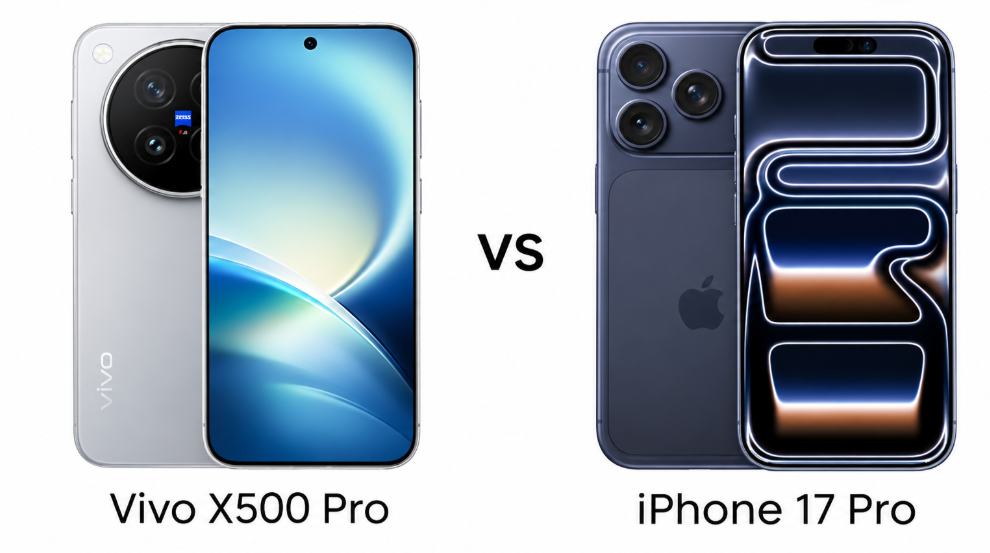
1. Major Features:
| Category | Vivo X500 Pro | iPhone 17 Pro | Winner |
|---|---|---|---|
| Build | Glass front, aluminum frame, glass or glass-fiber back | Ceramic Shield 2 front, aluminum frame and back | Apple – Ceramic Shield 2 protection |
| Water Resistance | IP68/IP69 | IP68 | Vivo – Higher water-resistance certification |
| Display | 6.36-inch LTPO AMOLED, 144Hz | 6.3-inch LTPO OLED, 120Hz | Vivo – Higher refresh rate and peak brightness |
| Resolution | 1216 × 2660 pixels | 1206 × 2622 pixels | Vivo – Slightly higher resolution |
| Processor | Dimensity 9600 Pro (2nm) | Apple A19 Pro (3nm) | Apple – Stronger optimized processing platform |
| RAM | 12GB | 12GB | Tie – Equal RAM capacity |
| Storage | 256GB, 512GB, 1TB | 256GB, 512GB, 1TB | Tie – Identical storage options |
| Operating System | Android 17, OriginOS 7 | iOS 26 | Tie – Depends on ecosystem preference |
| Rear Camera | 50MP + 64MP periscope + 50MP ultrawide | 48MP + 48MP periscope + 48MP ultrawide | Vivo – Higher-resolution camera sensors |
| Optical Zoom | 3.5x | 4x | Apple – Greater optical zoom |
| Front Camera | 50MP with autofocus | 18MP multi-aspect with autofocus | Vivo – Higher resolution and 4K 60fps recording |
| Video Recording | Up to 8K@30fps, 4K@240fps | Up to 4K@120fps, ProRes RAW | Apple – More advanced professional video formats |
| Battery | 6510mAh | 3998mAh or 4252mAh | Vivo – Considerably larger battery |
| Wired Charging | 90W | Fast wired charging, 50% in 20 minutes | Vivo – Higher charging power |
| Wireless Charging | 40W | 25W MagSafe/Qi2 | Vivo – Faster wireless charging |
| Connectivity | Wi-Fi 7, Bluetooth 5.4/6.0, USB-C 3.2 | Wi-Fi 7, Bluetooth 6.0, USB-C 3.2 Gen 2 | Tie – Comparable connectivity |
| Additional Features | Ultrasonic fingerprint scanner, IR blaster, reverse wireless charging | Face ID, LiDAR, UWB, satellite connectivity | Apple – More advanced ecosystem features |
| Software Support | Up to 5 major Android updates | iOS 26, upgradable to iOS 27.2 | Vivo – Explicit five-major-update commitment versus unspecified total iOS support |
| Price | Around $950 / ₹93,000 | Around $1,100 / ₹1,35,000 | Vivo – Lower starting price and better hardware value |
| Overall Winner | Better display, battery, charging and camera versatility | Better video capabilities, ecosystem and processing integration | Vivo – More complete hardware package for the price |
Disclaimer: The comparison table primarily evaluates hardware specifications and features. While Vivo X500 Pro offers better value and advantages in several hardware categories, the iPhone 17 Pro remains the stronger overall choice when considering software optimization, ecosystem integration, long-term support and the complete user experience.
2. Design and Display
Build and Feel
The Vivo X500 Pro features a premium glass-and-aluminum construction, with an option for a glass-fiber reinforced plastic back. Its IP68/IP69 rating provides stronger protection against dust and high-pressure water jets. The iPhone 17 Pro uses Ceramic Shield 2 on the front, an aluminum frame and a refined rear design. Its IP68 rating supports immersion at greater depths. Both phones deliver flagship-level durability, although Vivo offers better protection against demanding water conditions. Apple’s Ceramic Shield 2 protection adds reassurance against everyday scratches and accidental drops.
Display Quality
Vivo takes the lead in display specifications with a 6.36-inch LTPO AMOLED panel featuring a 144Hz refresh rate, Dolby Vision and a claimed peak brightness of 4500 nits. The iPhone 17 Pro offers a 6.3-inch Super Retina XDR OLED display with a 120Hz refresh rate, Dolby Vision and up to 3000 nits of peak brightness. Both deliver sharp visuals with similar pixel densities. However, Vivo’s higher refresh rate and brightness give it an advantage for gaming, outdoor visibility and smoother scrolling. Apple’s anti-reflective coating helps maintain visibility in challenging lighting conditions.
Verdict
The Vivo X500 Pro wins this section with its brighter 144Hz display, Dolby Vision support and stronger water protection. The iPhone remains an excellent alternative for everyday viewing.
3. Specifications Including Battery
Performance
The Vivo X500 Pro runs on the MediaTek Dimensity 9600 Pro, a 2nm chipset featuring an octa-core CPU and Mali-G2-Ultra-NX GPU. It pairs this processor with 12GB RAM and UFS 4.1 storage. The iPhone 17 Pro uses Apple’s A19 Pro chipset, backed by 12GB RAM and NVMe storage. Both are designed for demanding applications, multitasking and high-end gaming. Apple’s advantage lies in its tightly integrated hardware and software, while Vivo offers a powerful Android platform with advanced multitasking capabilities. The A19 Pro is particularly attractive for sustained creative workloads and demanding mobile applications.
Battery and Charging
Vivo has a considerable advantage in battery capacity with its 6510mAh silicon-carbon battery. It supports 90W wired charging, 40W wireless charging and reverse wireless charging. The iPhone 17 Pro has a smaller market-dependent battery capacity of 3998mAh or 4252mAh. It supports wired fast charging, 25W MagSafe/Qi2 wireless charging and reverse wired charging. Vivo is the more practical choice for users who prioritize battery endurance and shorter charging breaks. Apple’s charging system is considerably slower, although its optimized iOS experience helps manage power consumption efficiently.
Verdict
The Vivo X500 Pro wins on battery capacity, charging speeds and overall convenience. However, the iPhone 17 Pro remains a strong performer for users prioritizing Apple’s processing efficiency.
4. Camera
Main and Secondary Lenses
The Vivo X500 Pro features a 50MP primary camera with OIS, a 64MP periscope telephoto camera offering 3.5x optical zoom and a 50MP ultrawide camera with autofocus. Zeiss optics, T* lens coating and a color spectrum sensor further enhance its photography capabilities. The iPhone 17 Pro uses three 48MP cameras, including a primary sensor, a 4x optical zoom periscope telephoto and an ultrawide camera. Apple’s LiDAR scanner adds depth-sensing capabilities. Vivo offers greater telephoto flexibility and a strong photography-focused hardware package, while Apple benefits from consistent image processing and advanced computational photography. Both are compelling options for mobile photography enthusiasts.
Selfie Camera
Vivo equips the X500 Pro with a 50MP autofocus selfie camera capable of recording 4K videos at 60fps. This makes it particularly appealing for high-resolution selfies, video calls and content creation. The iPhone 17 Pro features an 18MP multi-aspect front camera with autofocus, supported by a depth sensor and advanced video features. It also supports Dolby Vision HDR recording, spatial audio and ProRes RAW capabilities. Vivo offers higher resolution and 4K recording at 60fps, while Apple’s front camera benefits from its versatile framing options and sophisticated video processing. For creators who frequently record themselves, both phones offer useful advantages.
Verdict
The Vivo X500 Pro offers greater photography versatility with its high-resolution sensors and periscope zoom. However, the iPhone 17 Pro is particularly strong for professional video recording.
5. Pricing
The Vivo X500 Pro is priced around $950 (approximately ₹93,000), making it the more affordable option between these two compact flagships. The iPhone 17 Pro is priced around $1,100 (approximately ₹1,35,000), placing it considerably higher in the premium smartphone segment. The difference becomes significant for buyers comparing overall hardware and everyday usability.
Vivo offers more display technology, a larger battery and faster charging at a lower starting price. Apple commands a premium for its ecosystem, processing capabilities and advanced video features. The Vivo is clearly more accessible for buyers seeking flagship specifications without spending as much.
Verdict
The Vivo X500 Pro is the better value-for-money flagship, offering stronger hardware in several areas at a lower price. The iPhone suits ecosystem-focused buyers.
Disclaimer:
Prices are approximate and may vary based on country, region, launch timing, and applicable taxes. Always check whether the listed price is for a China unit or a global/international variant when purchasing.
6. Conclusion
The Vivo X500 Pro stands out with its 144Hz LTPO AMOLED display, 6510mAh silicon-carbon battery, 90W wired charging, and Zeiss-backed camera system. Its 64MP periscope camera and 50MP autofocus selfie camera also make it an appealing option for photography enthusiasts.
The iPhone 17 Pro counters with the A19 Pro chipset, Ceramic Shield 2 protection, Face ID, LiDAR scanning and advanced video capabilities, including ProRes RAW and Dolby Vision recording. Apple’s ecosystem integration, satellite connectivity, and long-term software support add further appeal. Both phones offer distinctive strengths, but Vivo delivers a more impressive hardware package for everyday flagship users.
Verdict
Vivo X500 Pro wins overall thanks to its superior display specs, versatile camera hardware, significantly larger battery, and faster charging. It also costs less, making it the stronger all-round purchase. However, the iPhone 17 Pro remains the better choice for users who prioritize iOS, ecosystem integration, powerful video tools, and Apple’s optimized software experience.
Disclaimer: Prices, specifications, and availability may vary by region and retailer. Recommendations in this article are based on editorial opinion, feature-based value, and market positioning at the time of writing. Readers are advised to do their own research before making a purchase.
Read More:
- OnePlus 16 vs Xiaomi 18 Pro: Bigger Battery or Better Cameras?
- Redmi Band 4 vs Xiaomi Smart Band 11: Which Fitness Band Should You Buy?
- RedMagic 12 Pro+ vs OnePlus 16: Dedicated Gaming Fan vs 200MP Camera
Get Gizmochina Daily
Every morning: the phone and gadget news that matters, with our take. Free, 4 minutes.

Comments