
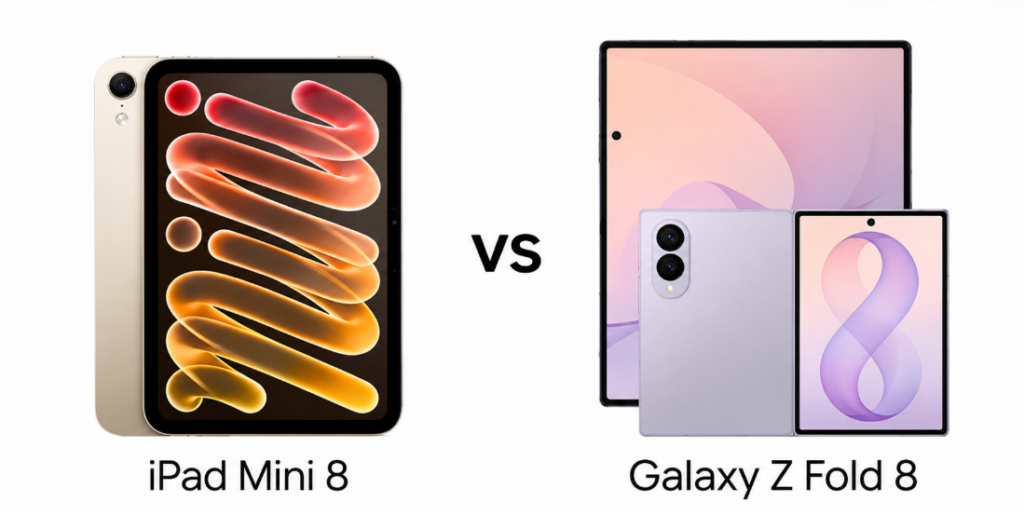
A $700 tablet or a $1900 foldable phone that opens into a tablet-like screen? The iPad Mini 8 and Samsung Galaxy Z Fold 8 make for an unusual comparison, but both target users who want a bigger screen without carrying a full-sized tablet. The interesting question is whether Samsung’s foldable is worth the premium or if Apple’s dedicated tablet remains the smarter buy.
Major Features:
| Category | iPad Mini 8 | Galaxy Z Fold 8 |
| Main display | 8.5-inch OLED, 120Hz | 7.6-inch Dynamic AMOLED 2X, 120Hz |
| Cover display | — | 5.5-inch AMOLED, 120Hz |
| Resolution | 1512 × 2316 | 2448 × 1848 |
| Processor | Apple A20 Pro (2nm) | Snapdragon 8 Elite Gen 5 (3nm) |
| Operating system | iPadOS 27.2 | Android 17, One UI 9 |
| RAM | 12GB | 12GB / 16GB |
| Storage | 128GB / 256GB / 512GB | 256GB / 512GB / 1TB |
| Rear cameras | 12MP | 50MP + 50MP |
| Front cameras | 12MP ultrawide | 10MP inner + 10MP cover |
| Battery | 4,900mAh | 4,800mAh |
| Wired charging | 50% in 30 minutes | 45W, 63% in 30 minutes |
| Wireless charging | — | 20W |
| Connectivity | Wi-Fi 7, Bluetooth 6.0 | Wi-Fi 7, Bluetooth 6.0, NFC, UWB |
| Protection | IP67 | IP48 |
| Stylus support | Yes | — |
| Price | Around $700 / ₹83,000 | Around $1,900 / ₹1,80,000 |
Design and Display
Build and Form Factor
The iPad Mini 8 features an aluminium frame, glass front and IP67 protection. Its conventional tablet design and stylus support make it suitable for reading, note-taking, gaming and everyday productivity. It makes more sense for people who already own a smartphone and want a dedicated portable tablet.
The Galaxy Z Fold 8 offers a foldable design with Armor Aluminum construction and IP48 protection. Its cover screen works like a regular smartphone, while the inner display provides a larger workspace. It is more practical for people who want smartphone convenience without giving up a larger screen.
Display Quality
Apple equips the iPad Mini 8 with an 8.5-inch Super Retina XDR OLED display, a 120Hz refresh rate and up to 1,200 nits brightness. Its 3:2 aspect ratio is particularly useful for reading, browsing and note-taking.
Samsung offers a 7.6-inch Dynamic LTPO AMOLED 2X inner display with a 120Hz refresh rate, HDR10+ and up to 3,000 nits peak brightness. The additional 5.5-inch cover display makes it more flexible.
The iPad suits dedicated tablet use, while the Fold is better for switching between smartphone and larger-screen experiences.
Performance and Software
Processing Power and Productivity
The iPad Mini 8 runs on Apple’s 2nm A20 Pro chipset with 12GB RAM and up to 512GB storage. iPadOS 27.2 provides a tablet-focused experience suited to gaming, creative applications and productivity. It is a sensible choice for users who primarily need a compact tablet.
The Galaxy Z Fold 8 uses the Snapdragon 8 Elite Gen 5 processor, with up to 16GB RAM and 1TB storage. Android 17, One UI 9, multitasking features and Samsung DeX make it better suited to users who want smartphone convenience alongside desktop-style productivity.
Connectivity
Both support Wi-Fi 7 and Bluetooth 6.0. Apple offers USB-C 3.1 Gen 2 with DisplayPort, while Samsung provides USB-C 3.2, NFC, UWB and built-in cellular connectivity. The iPad requires its cellular variant for mobile connectivity, making the Fold 8 more convenient as a standalone device. Existing smartphone users may find Apple’s tablet connectivity sufficient, though.
Cameras and Multimedia
Main and Selfie Cameras
The iPad Mini 8 features a 12MP rear camera with autofocus and 4K video recording at 60fps. Its 12MP ultrawide front camera is useful for video calls, but the single rear camera limits photographic versatility. It is better suited to document scanning and occasional photography than serious camera use.
Samsung offers a 50MP primary camera with OIS and a 50MP ultrawide lens. It also supports 8K video recording at 30fps. The two 10MP selfie cameras, positioned on the inner and cover displays, provide additional flexibility. The Fold 8 makes more sense for users who regularly capture photos and videos.
Audio Experience
Both devices offer stereo audio experiences without a 3.5mm headphone jack. Samsung includes stereo speakers, while Apple uses Acoustic Display technology. Both are suitable for streaming and entertainment, but the Fold’s smartphone-oriented design makes it more convenient for watching content on the move. The iPad is better suited to dedicated tablet viewing sessions.
Battery and Charging
The iPad Mini 8 packs a 4,900mAh battery with wired charging that reaches 50% in approximately 30 minutes.
Samsung includes a 4,800mAh silicon-carbon battery with 45W wired charging, reaching 63% in around 30 minutes. It additionally supports 20W wireless charging and 4.5W reverse wireless charging.
Their similar battery capacities do not necessarily translate into similar endurance. The iPad makes more sense for dedicated tablet sessions, while Samsung’s wireless and reverse wireless charging offer greater convenience for users with multiple devices.
Pricing and Value
The iPad Mini 8 is priced around $700 (approximately ₹83,000), while the Samsung Galaxy Z Fold 8 is priced around $1,900 (approximately ₹1,80,000). The significant difference reflects their fundamentally different designs and capabilities.
Is the Price Justified?
The iPad Mini 8 offers better value for anyone who already owns a smartphone and wants a dedicated compact tablet. The Fold 8 costs substantially more, but its ability to function as both a smartphone and tablet makes the premium more understandable for users who prioritise convenience. Buying the iPad alongside a separate smartphone can still be considerably cheaper.
Conclusion
The iPad Mini 8 stands out with its A20 Pro chipset, dedicated iPadOS experience, stylus support and more accessible price. The Galaxy Z Fold 8 counters with its foldable AMOLED display, Snapdragon processor, versatile cameras, Samsung DeX and wireless charging.
Final Verdict
The Galaxy Z Fold 8 can replace a compact tablet for users who want an all-in-one device, but it cannot completely replicate the dedicated tablet experience. The iPad Mini 8 remains the smarter purchase for existing smartphone owners who want a capable, affordable second screen. Ultimately, the choice depends on whether tablet functionality or smartphone-and-tablet convenience matters more.
Disclaimer: Prices, specifications, and availability may vary by region and retailer. Recommendations in this article are based on editorial opinion, feature-based value, and market positioning at the time of writing. Readers are advised to do their own research before making a purchase.
Read More:
- iPad Mini 8 vs iPhone Duo: Small Tablet or Foldable Phone?
- Xiaomi Smart Band 11 vs Xiaomi Watch S5 41mm: What’s the Difference?
- Vivo Buds Clip vs Huawei FreeClip 2: Which Open-Ear Clip-On Earbuds Should You Buy?
FREE DAILY NEWSLETTER
Joel Explains
What matters in phones and gadgets, before it reaches you. From Gizmochina’s editor-in-chief, every morning.
Join 1,500+ readers. One email a day, unsubscribe in one click.



Comments