
Add GIZMOCHINA as Preferred Source on Google
The Wireless Power Consortium (WPC) recently concluded a technical conference at Xiaomi’s Beijing headquarters to develop the upcoming Qi 50W wireless charging standard. The event, which ran from June 22nd to June 25th, brought together engineers from across the consumer electronics industry, including representatives from Apple, Google, Huawei, Honor, Oppo, and Vivo.
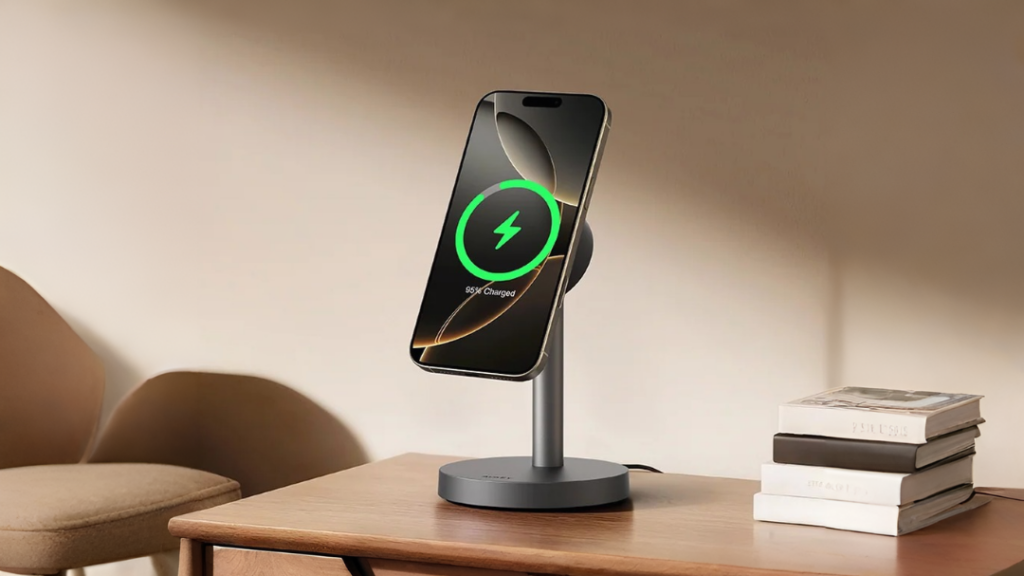
The primary objective of the meeting was to address the technical specifications, prototype testing, and interoperability requirements for 50W wireless charging. The WPC, which oversees the Qi standard, has been incrementally increasing power limits over the past few years. Following the adoption of the 15W magnetic Qi2 standard as an IEC international standard in late 2024, the consortium introduced a 25W specification in 2025. The 50W standard is the next target, with an expected release date in 2028.
Much of the discussion at the Beijing conference centered on Xiaomi’s proposed hardware architecture for the upcoming Qi 50W standard. According to Xiaomi, the existing coil design requirements for the Qi2 standard are restrictive and present thermal management challenges, particularly for foldable phones and automotive charging pads. To address this, Xiaomi spent two years developing a low-inductance, low-voltage charging architecture.
This alternative design is intended to reduce coil loss and improve heat dissipation while making the charging modules easier to integrate into modern devices. Xiaomi submitted the proposal to the WPC in late 2024 and completed cross-vendor testing with 25W and 50W prototypes throughout 2025. In the first quarter of 2026, the WPC officially incorporated this architecture into the drafting process for the Qi 50W standard.
During the recent four-day event, more than 20 companies participated in a Plugfest. This standard industry testing process involves checking different chips, coils, and devices against one another to identify compatibility issues. Companies like Anker, NXP, and Southchip tested their prototype hardware to ensure that future 50W chargers will work safely and reliably across different device brands.
For Chinese hardware manufacturers, getting their low-inductance charging technology integrated into the global Qi standard is a practical business requirement. It ensures their domestic supply chains remain compatible with international markets, preventing regional fragmentation in wireless charging standards.
For more daily updates, please visit our News Section.
Stay ahead in tech! Join our Telegram community and sign up for our daily newsletter of top stories!
(Via)

Comments