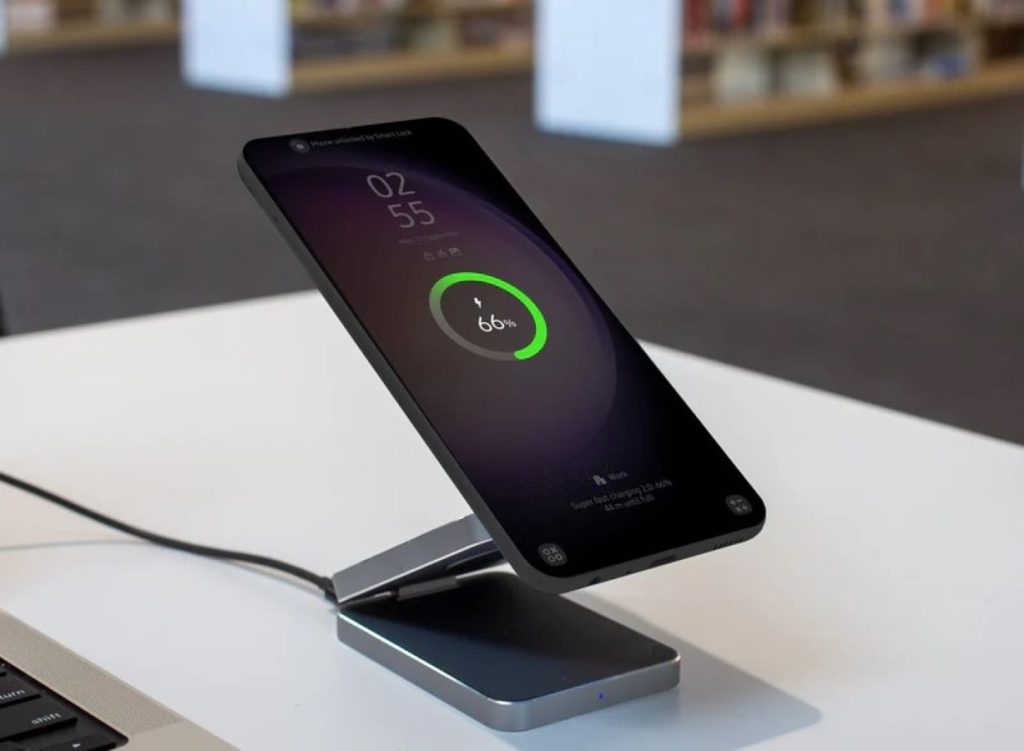
The wireless charging game is finally getting a meaningful upgrade. While the wired fast charging speeds have seen great improvements, the wireless counterpart only saw practical speeds on Chinese smartphones. But the standard for wireless charging as a whole is seeing an upgrade with the Qi2 update. Next-gen smartphones will soon be able to charge up at 25W. So here’s everything you need to know.
Note: Chinese smartphones are typically Qi certified, so they do support the charging standard. But these offer faster charging speeds from their respective accessories (wireless chargers/pads). At the moment, Qi2 isn’t as widely supported on the Android market.
Qi2 is the next evolution of the Qi wireless charging standard, developed by the Wireless Power Consortium (WPC). Officially introduced in 2023 and rolling out more widely in 2024–2025. Qi2 improves on the original Qi spec by offering faster charging (up to 25W) and magnetic alignment similar to Apple’s MagSafe. Thanks to this magnetic alignment, your device can perfectly line up with the charger every time, reducing power loss and heat. Both of these were common issues with older Qi pads.
2. 25W Wireless Charging
The headline upgrade with Qi2 is 25W charging support. This is a welcome bump from the older 15W limit found in many Qi-compatible devices. While this still won’t beat the crazy-fast 50W+ wired charging speeds on some Chinese Android phones, this is still a lot more practical than its predecessor. Realistically, one can charge an average phone in a little over an hour.
3. Built on Apple’s MagSafe Tech
Apple isn’t quite known for its crazy charging tech, but its MagSafe was undoubtedly a notable advantage in wireless charging. Qi2 borrows from Apple’s MagSafe system, using a Magnetic Power Profile (MPP) that ensures better contact between the charger and device. So the new Qi2 standard means that this isn’t locked to Apple anymore. Meaning, even Android devices can adopt the same precise, snap-on alignment tech. We can expect a future where a single Qi2 compatible charger can juice up your iPhone, Android, TWS earbuds, and more.
4. When Will Qi2 Devices Be Available?
Adoption of the Qi2 wireless charging standard is still a bit slow on the Android side. While Apple’s latest iPhone supports this standard, it is still limited to 15W charging rates. Samsung’s current flagship Galaxy S25 series also features Qi2 charging standard, but with the same slower 15W speeds. However, these models arrive are only “Qi2 Ready”, meaning the phone lacks built-in magnets and requires a compatible case with a magnetic ring for magnetic alignment and the full Qi2 experience. The next generation of smartphones are rumored to bring support for this standard, which could include brands like Xiaomi, OnePlus, and others. Meanwhile, the accessories makers have already begun rolling out Qi2 certified products.
For more daily updates, please visit our News Section.
We use cookies on our website to give you the most relevant experience by remembering your preferences and repeat visits. By clicking “Accept”, you consent to the use of ALL the cookies.
This website uses cookies to improve your experience while you navigate through the website. Out of these, the cookies that are categorized as necessary are stored on your browser as they are essential for the working of basic functionalities of the website. We also use third-party cookies that help us analyze and understand how you use this website. These cookies will be stored in your browser only with your consent. You also have the option to opt-out of these cookies. But opting out of some of these cookies may affect your browsing experience.
Necessary cookies are absolutely essential for the website to function properly. This category only includes cookies that ensures basic functionalities and security features of the website. These cookies do not store any personal information.
Any cookies that may not be particularly necessary for the website to function and is used specifically to collect user personal data via analytics, ads, other embedded contents are termed as non-necessary cookies. It is mandatory to procure user consent prior to running these cookies on your website.