
Add GIZMOCHINA as Preferred Source on Google
Buying a smartphone in 2026 often involves watching several reviews before making a decision. Buyers may move between first-impression videos, camera comparisons, gaming tests, battery reviews, and long-term coverage. The challenge is that useful information can be spread across hours of video, making it difficult to remember specific claims or compare different reviewers.
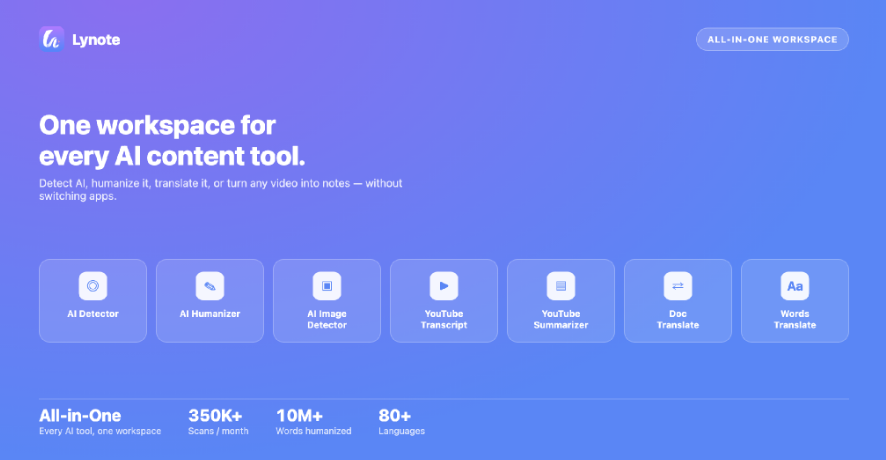
Lynote is an AI-powered note-taking and transcription tool designed to solve this problem by turning long YouTube reviews and other source material into searchable, structured notes, making it easier to find, organize, and compare information.
Why Smartphone Research Has Become Complicated
A single phone can generate a large amount of review content. One reviewer may focus on cameras, another on gaming performance, while others examine battery life, charging or software. Follow-up videos can also appear after software updates, adding new information to the original reviews.
Reviewers do not always agree, either. One may report better low-light photography, while another notices shutter lag. A third may focus on sustained gaming performance or chipset throttling. Battery endurance and real-world software performance can also produce different observations depending on how a device is tested.
Finding these differences can require repeatedly reopening several videos. An important comment may be buried 30 or 40 minutes into a review, forcing viewers to scrub through long sections just to confirm a particular claim.
From YouTube Videos to Searchable Text
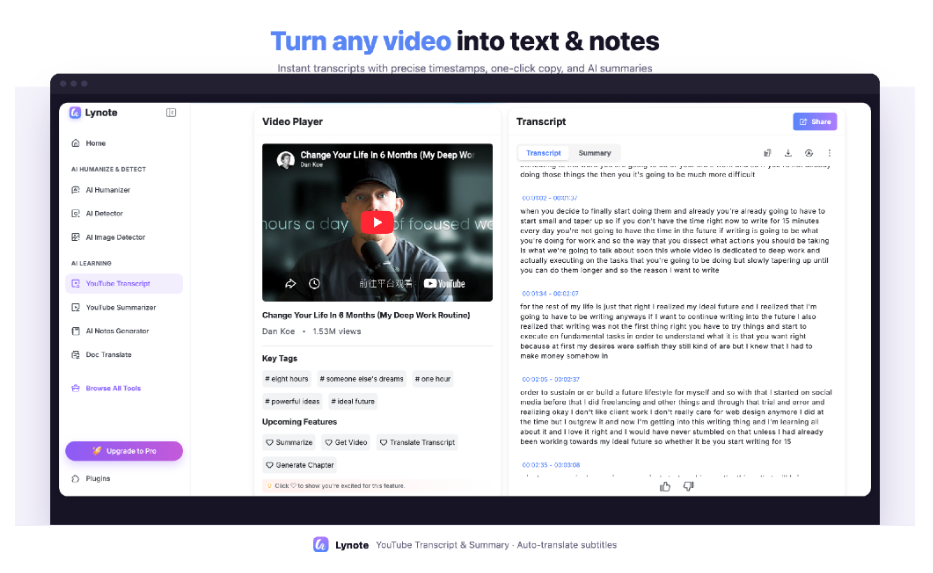
Lynote’s approach begins with transcription. Its YouTube transcript generator can convert videos into full, timestamped text, allowing users to locate specific parts of a review without relying entirely on memory.
The workflow is intended to work with multiple videos, which can be useful when researching several reviews of the same smartphone. A buyer could gather a full review, camera test, gaming analysis, battery test, and long-term review and turn their spoken information into text.
This does not eliminate the original videos. Instead, transcripts provide another way to access information when users need to find a particular statement or return to a specific section.
AI Adds Structure to the Information
A transcript alone does not completely solve the problem. Long transcripts can still contain thousands of words, requiring users to search through different documents individually.
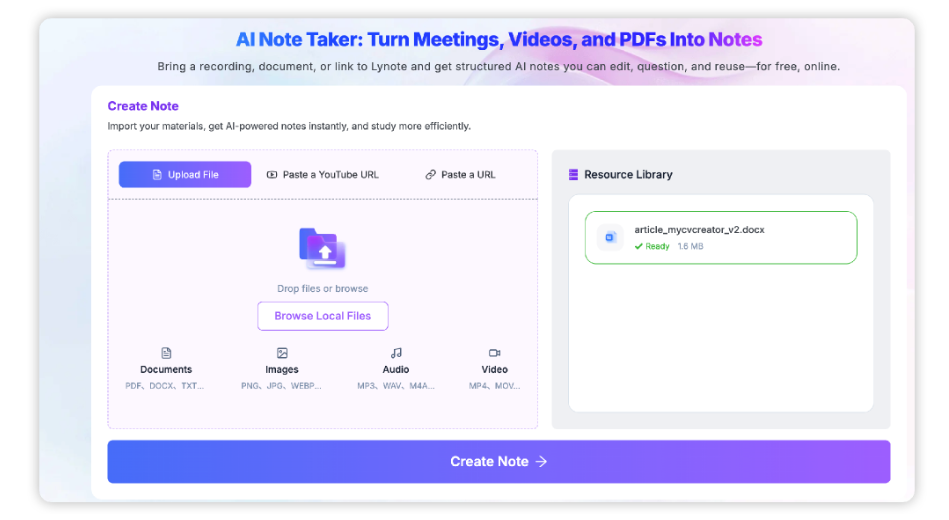
Lynote’s AI note-generation workflow adds an organizational layer. It can work with recordings, documents and pasted YouTube links, turning source material into structured notes. The aim is to make information easier to skim, search and compare.
For smartphone research, notes can help organize observations around areas such as performance, cameras, gaming, battery life, charging and software. Keeping notes associated with individual reviewers also makes it easier to identify where sources agree and where their experiences differ.
Creating One Research Trail From Several Reviews
The process can be viewed as a simple research chain: collect relevant reviews, generate transcripts, create structured notes, and compare the information by topic.
For example, a buyer researching two phones could examine what different reviewers said about sustained performance, camera behavior, battery endurance, and software. If reviewers reach similar conclusions, those observations are easier to identify. If they disagree, the buyer can return to the original video to examine the testing or context behind the claim.
The result is closer to a personal research document than a collection of separate videos. Users can search the notes for a specific issue and return to the original source when they need additional context.
The Research Continues After Launch
Smartphone coverage is also becoming a continuing process rather than a single launch-day event. A device can receive early hands-on coverage, initial reviews, deeper retail-unit testing, camera comparisons, gaming tests, software-update coverage, long-term reviews, and even teardowns.
That means the same research method can remain useful after a phone has been purchased. Owners may later search for information about firmware updates, camera algorithm changes, battery health, charging behavior, or software bugs. Some of this information can appear first in videos rather than traditional written articles.
Multilingual Reviews Create Another Challenge
Research can become even more fragmented for Chinese-market smartphones. Detailed coverage may appear on Mandarin-language channels, while global versions are reviewed separately in English, Hindi, Indonesian, and other languages.
Lynote’s transcript workflow supports video sources across languages. This could help users organize information from different regional sources while researching the same device. Such comparisons can be important because Chinese and global versions may differ in hardware, software, connectivity, or availability.
AI Notes Still Have Limits
AI-generated notes are not a replacement for watching important reviews. Some aspects of smartphone testing are difficult to capture fully in text. Camera color science, for example, is partly subjective, while gaming performance and camera samples are often better understood by seeing the original footage.
A structured note can tell a buyer what a reviewer said, but the original video may still be necessary to evaluate visual samples, demonstrations, and the reviewer’s overall experience. The workflow therefore works more as a research and organization layer than a substitute for the original content.
AI Note-Taking Moves Into Consumer Research
AI note-taking is also expanding beyond meetings, lectures and workplace discussions. Data projects the AI note-taking category to cross $740 million in 2026. The broader note-taking app market is projected to grow from approximately $11 billion in 2025 to around $13.3 billion in 2026, representing a projected 20.6% compound annual growth rate.
Consumer research is one area where that growth could have practical applications, particularly when information is scattered across lengthy videos and multiple sources.
For smartphone buyers, the main purpose of this workflow is to reduce the effort involved in finding and remembering information. Instead of keeping track of which reviewer discussed throttling, night photography, battery behavior, or software problems, users can organize those observations into searchable notes.
The basic process remains straightforward: video to transcript, transcript to structured notes, notes to comparison, and back to the original video when verification is needed. As smartphone coverage becomes more detailed, multilingual and spread across longer periods, tools such as Lynote are targeting the growing challenge of organizing all that information without removing the original reviews from the process.

Comments