Advertisement

Add GIZMOCHINA as Preferred Source on Google

As an Amazon Associate, Gizmochina earns from qualifying purchases. Links on this page may earn us a commission at no extra cost to you.

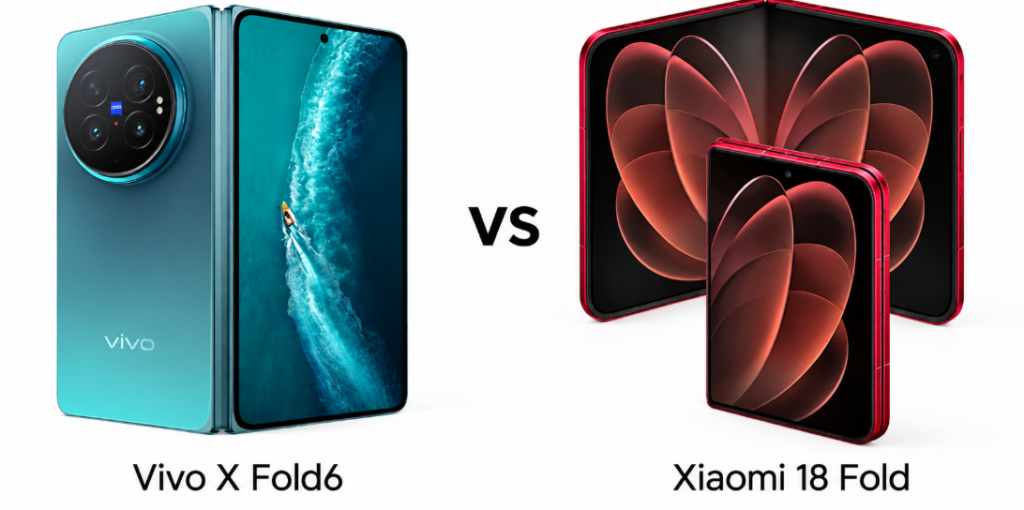
Vivo X Fold6 and Xiaomi 18 Fold approach the premium foldable market differently, combining flagship performance, versatile cameras, and large inner displays. Vivo focuses on Zeiss-tuned photography, a larger internal screen, and a substantial battery, while Xiaomi counters with Leica optics, Dolby Vision video, and a distinctive compact design. The differences extend to charging, software, and pricing, making this comparison useful for buyers deciding which foldable delivers the better overall experience.
Major Features:

CategoryVivo X Fold6Xiaomi 18 FoldWinner
Design and BuildAluminum frame, glass-fiber-reinforced plastic backAluminum frame, glass back, Dragon Crystal Glass 3 coverXiaomi – Premium glass construction
Water and Dust ResistanceIP58/IP59IP58/IP59Tie – Same protection rating
Inner Display8.02-inch LTPO AMOLED, 120Hz, Dolby Vision7.58-inch LTPO AMOLED, 120Hz, Dolby VisionVivo – Larger display
Cover Display6.51-inch LTPO AMOLED, 120Hz, 5,000 nits peak5.38-inch LTPO AMOLED, 120Hz, 4,000 nits peakVivo – Larger and brighter display
Operating SystemAndroid 17, OriginOS 7 Fold (international); Android 16, OriginOS 6 Fold (China)Android 17, HyperOS 4Vivo – Newer listed international OS version
ProcessorMediaTek Dimensity 9500 Super, 3nmXiaomi XRing O3, 3nmVivo – Promising flagship performance; benchmarks needed
GPUMali-G1 Ultra MC12Arm G2-Ultra NX MC16Xiaomi – Stronger listed graphics configuration on paper
RAMUp to 16GBUp to 16GBTie – Same maximum RAM
StorageUp to 1TB UFS 4.1Up to 1TB UFS 4.1Tie – Same maximum storage and standard
Main Camera200MP, OIS, Zeiss optics200MP, OIS, Leica lensesTie – Different camera tuning approaches
Telephoto Camera50MP periscope, 3x optical zoom, OIS50MP telephoto, approximately 3x optical zoom, OISVivo – Dedicated periscope telephoto hardware
Ultrawide Camera50MP, 119-degree field of view50MPVivo – Wider specified field of view
Selfie CamerasDual 20MP camerasDual 16MP camerasVivo – Higher resolution
Video RecordingUp to 8K at 30fps; 4K at 60fpsUp to 8K at 24fps; 4K at 60fps with Dolby VisionXiaomi – Dolby Vision video recording
SpeakersStereo speakers, Hi-Res audioStereo speakers, Dolby Atmos, Hi-Res audioXiaomi – Dolby Atmos support
Battery6,900mAh or 7,000mAh, depending on version6,000mAhVivo – Higher battery capacity
Wired Charging80W67WVivo – Faster wired charging
Wireless Charging40W50WXiaomi – Faster wireless charging
Reverse ChargingReverse wired and 5W reverse wirelessReverse wiredVivo – Additional reverse wireless charging
ConnectivityWi-Fi 7, Bluetooth 5.4/6.0, NFC, IR blasterWi-Fi 7, Bluetooth 6.0, NFC, IR blaster, UWBXiaomi – Ultra Wideband support
USBUSB-C 3.2 Gen 2, DisplayPort, OTGUSB-C 3.2 Gen 2, OTGVivo – DisplayPort output support
Price/ValuePriced around $1,200 / ₹111,000Priced around $1,600 / ₹155,000Vivo – More features at a lower price
Overall WinnerLarger displays, bigger battery, faster wired chargingLeica imaging, Dolby Vision, faster wireless chargingVivo – Better overall value and versatility
Disclaimer: Specs are based on available data. Actual performance may vary. Verify details from official sources before buying.

1. Design and Display

Build and Feel

The Vivo X Fold6 combines an aluminum frame with a glass front when folded and a glass-fiber-reinforced plastic back. Its IP58/IP59 rating provides protection against dust and water, making it suitable for users who want a premium foldable without sacrificing durability. The Xiaomi 18 Fold uses Dragon Crystal Glass 3 on its cover, a glass back, and an aluminum frame, with a plastic front when unfolded. It carries the same IP58/IP59 rating. Xiaomi’s reinforced cover glass is appealing, while Vivo’s glass-fiber construction offers a different approach to managing the demands of a foldable design.

Display Quality

Vivo has an advantage in screen real estate with its 8.02-inch inner LTPO AMOLED panel, which supports 120Hz refresh rates, HDR10+, HDR Vivid, and Dolby Vision. Its 6.51-inch cover display also supports 120Hz and boasts a claimed 5,000-nit peak brightness. Xiaomi offers a 7.58-inch inner LTPO AMOLED display with the same major HDR formats and a 120Hz refresh rate. Its 5.38-inch cover screen reaches a claimed 4,000 nits. Vivo’s larger panels make multitasking and reading more comfortable, while Xiaomi’s smaller format may appeal to users who prefer a more compact cover screen.

Verdict

Vivo X Fold6 wins this round with its larger inner and outer displays, higher claimed cover-screen brightness, and equally strong water and dust resistance.

2. Specifications Including Battery

Performance

The Vivo X Fold6 uses the MediaTek Dimensity 9500 Super, a 3nm chipset paired with a Mali-G1 Ultra MC12 GPU. The Xiaomi 18 Fold runs on Xiaomi’s 3nm XRing O3 processor, featuring a 10-core CPU and Arm G2-Ultra NX MC16 graphics. Both devices offer up to 16GB of RAM and 1TB of UFS 4.1 storage, giving them a strong foundation for demanding applications, multitasking, and large files. However, direct performance comparisons require reliable independent benchmarks, particularly because these chipsets use different architectures. Vivo’s MediaTek platform is an appealing choice, while Xiaomi’s in-house silicon could deliver tighter integration with HyperOS 4.

Battery and Charging

Vivo packs a silicon-carbon battery rated at 6,900mAh or 7,000mAh, depending on the version, with 80W wired and 40W wireless charging. It also supports reverse wired and 5W reverse wireless charging. Xiaomi has a 6,000mAh silicon-carbon battery, 67W wired charging, and faster 50W wireless charging, plus reverse wired charging. Vivo’s larger battery and quicker wired charging should suit users who spend long hours working or travelling. Xiaomi counters with higher wireless charging output, which is convenient for compatible charging accessories. Actual endurance will depend on software optimisation, display usage, and network conditions.

Verdict

Vivo X Fold6 wins for battery capacity and wired charging speed, while Xiaomi 18 Fold offers faster wireless charging. Vivo is the more practical choice for heavy users.

3. Camera

Main and Secondary Lenses

The Vivo X Fold6 features a 200MP main camera with optical image stabilisation, a 50MP periscope telephoto camera offering 3x optical zoom, and a 50MP ultrawide lens. Zeiss optics, T* lens coating, laser autofocus, and a colour spectrum sensor strengthen its photography credentials. Xiaomi counters with a 200MP main camera, a 50MP telephoto camera with approximately 3x optical zoom, and a 50MP ultrawide lens. Leica lenses, laser autofocus, and a colour spectrum sensor provide a distinct imaging approach. Vivo’s dedicated periscope system is promising for zoom photography, while Xiaomi’s Leica collaboration could appeal to users who prefer its colour science. Both offer flagship-level versatility, but real-world image quality depends on processing and lighting.

Selfie Camera

Vivo equips both the inner and cover displays with 20MP selfie cameras, while Xiaomi uses 16MP cameras on both screens. Vivo’s higher resolution could retain more detail in selfies and video calls, although sensor quality and image processing matter just as much. Both phones support HDR, and their front cameras record at 1080p. Xiaomi offers 1080p recording at up to 60fps, whereas Vivo lists 30fps recording. Xiaomi therefore has an advantage for smoother front-camera video, while Vivo looks stronger on paper for still-image detail. Neither specification alone guarantees superior skin tones or low-light selfies.

Verdict

Vivo X Fold6 takes the camera round for its periscope hardware, Zeiss optics, and higher-resolution selfie cameras. Xiaomi remains compelling for Leica-inspired imaging and smoother selfie video.

4. Pricing

The Vivo X Fold6 is priced around $1,200 (₹111,000), positioning it as the more affordable option in this premium foldable comparison. The Xiaomi 18 Fold is priced around $1,600 (₹155,000), commanding a considerable premium. That difference gives Vivo a stronger starting position for buyers who want a high-end foldable without moving into the most expensive segment. Both devices offer 200MP main cameras, advanced LTPO AMOLED displays, flagship-oriented processors, and generous storage configurations. However, regional taxes, import costs, availability, and variant differences can affect actual retail prices. Buyers should verify local pricing and warranty coverage before making a purchase, especially if either device is sold through unofficial channels.

Is the price justified? 

Xiaomi’s premium may appeal to buyers who specifically want Leica camera tuning, HyperOS 4, Dolby Vision video recording, and 50W wireless charging. Its compact cover-screen approach also provides a different everyday experience. However, Vivo offers a larger inner display, a higher-capacity battery, faster wired charging, and Zeiss-branded camera features for substantially less. Those advantages are more immediately useful to a broad range of foldable users. Xiaomi could justify its higher price through software refinement and imaging performance, but those benefits need real-world testing. On the supplied specifications alone, Vivo provides the more balanced package for the money.

Verdict

Vivo X Fold6 wins on value, delivering larger displays, a bigger battery, and versatile cameras at a lower price. Xiaomi suits buyers prioritising its specific software and imaging features.

Disclaimer:
Prices are approximate and may vary based on country, region, launch timing, and applicable taxes. Always check whether the listed price is for a China unit or a global/international variant when purchasing.

5. Conclusion

Vivo X Fold6 stands out with its 8.02-inch inner display, 6.51-inch cover screen, 200MP main camera, 3x periscope telephoto lens, and battery rated up to 7,000mAh. Its 80W wired charging and Zeiss camera collaboration further strengthen its flagship credentials. The Xiaomi 18 Fold offers its own distinct advantages, including Leica optics, Dolby Vision video recording, 50W wireless charging, Ultra Wideband support, and HyperOS 4. Its Dragon Crystal Glass 3 cover glass also adds to its appeal. 

Both devices support 120Hz inner displays, IP58/IP59 protection, and up to 1TB of storage. The deciding factor is how those features translate into everyday use. Vivo’s larger screens and battery favour productivity and extended use, while Xiaomi offers an attractive alternative for buyers who value its camera partnership and software ecosystem.

Verdict

Overall winner: Vivo X Fold6. It offers the stronger all-round package with larger displays, a bigger battery, faster wired charging, versatile camera hardware, and a significantly lower starting price. Xiaomi 18 Fold remains a capable alternative for Leica photography enthusiasts and users who prioritise faster wireless charging, Dolby Vision video, and HyperOS 4. 

Check price →
Where to buy
Vivo X Fold6
Latest price on Amazon

However, based on the supplied specifications and pricing, Vivo delivers more practical flagship features for the money. Unless Xiaomi’s software experience or camera processing proves substantially better in independent testing, the Vivo X Fold6 is the more sensible choice for most premium foldable buyers.


FAQs: Vivo X Fold6 vs Xiaomi 18 Fold

1. Which phone is better for photography, Vivo X Fold6 or Xiaomi 18 Fold?

The Vivo X Fold6 offers a periscope telephoto camera and Zeiss optics, while Xiaomi features Leica-tuned imaging and Dolby Vision video.

2. Which foldable has better gaming performance?

Both feature 3nm flagship chipsets, but independent benchmarks are needed to determine which delivers better gaming performance and sustained thermals.

3. Which phone lasts longer on a single charge?

The Vivo X Fold6 has a larger 6,900mAh or 7,000mAh battery, giving it a potential endurance advantage over Xiaomi’s 6,000mAh battery.

4. Is the Xiaomi 18 Fold worth its higher price?

It may suit buyers prioritising Leica imaging, Dolby Vision recording, Ultra Wideband, and faster wireless charging, but Vivo offers better value on paper.

5. Which foldable should you buy in 2026?

The Vivo X Fold6 suits most buyers, while the Xiaomi 18 Fold is worth considering for its camera features and software ecosystem.

Disclaimer: Prices, specifications, and availability may vary by region and retailer. Recommendations in this article are based on editorial opinion, feature-based value, and market positioning at the time of writing. Readers are advised to do their own research before making a purchase.

Read More:

Comments